London

Jeremy King has done it again: The Park, reviewed

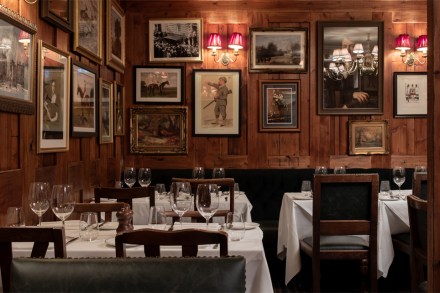
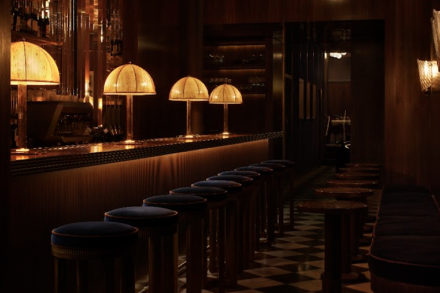
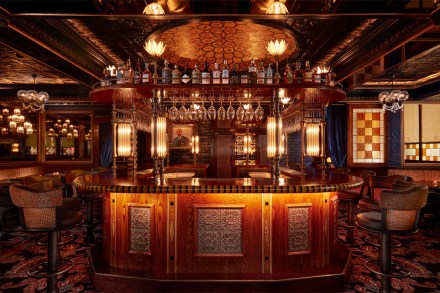
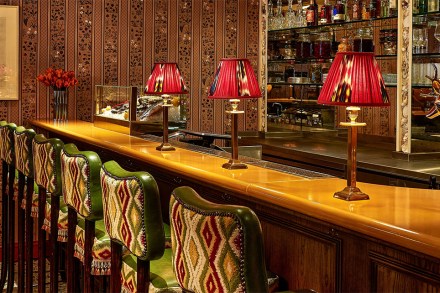
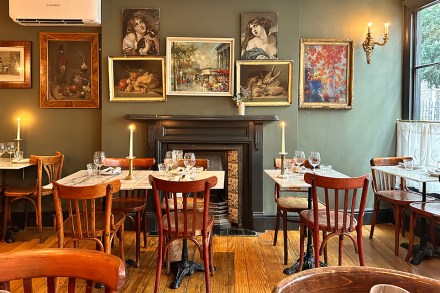
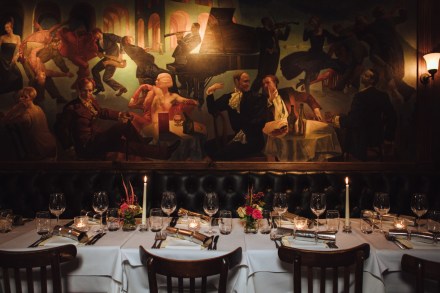
The Park is the new restaurant from Jeremy King, and it sits in a golden building to the north of Hyde Park, just off Queensway. This is an interesting district compared with Knightsbridge – it is still capable of reality – but isn’t every-where interesting compared with Knightsbridge? The Park is Art Deco of course: the presiding aesthetic of familiarity, snatched joy and inevitable doom. It looks like an exquisitely appointed cruise ship of the mid-20th century King is a specialist in grand cafés. He opened the Wolseley in Piccadilly and the Delaunay on the Aldwych, though he lost them to his feckless backers in 2022, and has begun again with Arlington by the Ritz, Simpson’s on the Strand, pending, and this. Queensway has a grand café now, and I am pleased for it.

My Martin Amis FOMO

From our US edition

There’s a form of social anxiety that a lot of people suffer from — FOMO, Fear of Missing Out. “Fear” suggests something imaginary, that isn’t really happening. Not so. I don’t fear missing out, because I know I am. Friends are always asking me: are you appearing at the Hay Literary festival? No! Am I speaking at the Idler festival? No! Am I reading extracts from my book at the Cambridge Literary festival? No! “What?!” they exclaim in mock disbelief — and then ask why I’m not appearing at some small, obscure, local village literary fête, somewhere in the rectum of rural England. I’ve gotten used to the seasonal snub from the lit-festival establishment. And there are literary events all over London that I haven’t been invited to as well. OK, I’ll live.

Amis

How Margaret Thatcher could have saved London’s skyline

Looking around London on the eve of the millennium, it would have been difficult to think that the UK government had an adviser on architectural design. The 1990s had been a dismal decade. Yet such a body existed in the quaintly named Royal Fine Art Commission, refounded in 1924. The original Commission had been created as a way of giving Prince Albert, recently married to Queen Victoria, something to do – contriving the decorative scheme for the new Palace of Westminster. Fresco, the chosen medium, was not ideal in that damp position beside the Thames since the plaster took three years to dry; and the Duke of Wellington did not help the project by declaring he could not remember having met Blücher on the field of Waterloo, as depicted by Daniel Maclise.

More Mr Pooter than Joe Orton: George Lucas’s gay life in London

In January 1948, George Lucas, an unremarkable 21-year-old Roman Catholic who had just been demobbed from the Pay Corps, was living unhappily in Romford with his ill-matched parents, who relentlessly taunted him about his homosexuality. He would shortly get a job at the War Office and so embark on a lifetime’s career as a civil servant, commuting to central London every day to work at his desk and spend his evenings in search of sex and companionship, largely among the servicemen who hung around Marble Arch. In later life Lucas would trawl the pubs, streets and urinals of central London, more often than not paying for sex, and always keeping a detailed account of his exploits and expenses in his diaries.

Women don’t want women-only clubs

In my experience, men offer this infuriating comeback when challenged about the continuing exclusion of women from clubs such as the Garrick (for now at least – the Garrick is voting on 7 May on the admission of women as members). ‘But why don’t you set up your own women-only clubs,’ they sulk, ‘and leave us alone?’ My interlocutors are often members of not one but multiple men-only clubs. My husband, father and brothers, for example, frequent a combination of White’s, the Beefsteak, Pratt’s (men-only until last year) and the Garrick. Two of my siblings à l’époque graced the Bullingdon at Oxford.

London to Amsterdam via Brussels: taking the long way

From our US edition

Brexit, the gift that keeps on giving: from June 14, 2024 to January 2025, a reduced Eurostar service will run between London and Amsterdam. Why? Part-closure of Amsterdam Centraal leaves no space for the extra bureaucracy now necessary. Passengers returning to London will change at Brussels to go through security and passport checks, adding up to almost two hours of extra journey time. Global travel booking platforms such as OMIO have reported a surge in train travel in recent years. Cheaper prices (compared to flying) and environmental concerns are cited as the main drivers. But Eurostar’s capped passenger numbers and indirect routes will surely increase air travel in 2024, literally flying in the face of Dutch sustainability policies.

brussels

Navalny’s final agony at the Polar Wolf gulag

One winter’s night before the Ukraine war, I was on a train that stopped at a remote station deep in the Russian arctic. It was late November. The mercury stood at 15 degrees below zero – the hard, dry frost of the far north. The train stood silent, wreathed in the coal smoke of the stoves that heated every carriage. The village’s name was Kharp. Though I did not know it at the time, Kharp is home to the FKU IK-3 penal colony, a Soviet-era arctic facility known as Polar Wolf where Alexei Navalny has just died. It was here that the Putin regime, with its rigid deafness to irony, chose to imprison Navalny for his final agony I wanted to catch a glimpse of the Northern Lights, so I pulled on a couple of coats and headed outside.

The pure joy of grandchildren

‘My grandchildren are my world,’ writes a woman on social media, summing up a certain type of grandparent. There are, however, two ways of looking at it and I see many whose worlds revolve around their grandchildren because they have no choice. I used to chat with them at the school gate. If their families were not strictly ‘the rural poor’, they were certainly of the group Theresa May described as ‘just about managing’: both parents had to work and grandparents took up the slack, unless they were still of working age, in which case arrangements were more haphazard. I see many whose worlds revolve around their grandchildren because they have no choice Because I had my last child late, I was as old as some school-gate grandmothers who had become parents when very young.

Why have parties suddenly gotten good?

From our US edition

Not long ago this month’s column would have been one long gripe about how the party — as a forum of fun — was finished. Partygoers, I would have moaned, had become more interested in big names and networking than in actually talking to strangers and having fun and blah... blah... blah. But something unexpected has recently been happening in London: people are throwing great parties again, and they are actually fun. I know, fun is one of those words that are so insipid and infantile I feel embarrassed using it. And yet the absence of fun from adult social life is a source of sadness. Even an old grump like me has been having a good time. I went to a party full of young, pretty, clever posh girls in Chelsea and they loved me — and I loved them!

parties

How to celebrate Christmas in London

From our US edition

You just can’t beat London at Christmas. Unless you’re lining up to get into the Tube station (never mind onto a train) at Oxford Circus, in the pissing rain. Then you’re better off in one of those glass igloos in Finland.  When I’m in town for the holidays, I find myself returning to a few old faithfuls, with a few old faithfuls. The Zetter Marylebone Keep this gem up your sleeve for when the crowds become a little too much. A warren of sumptuous suites and a lavish, candlelit parlor awaits at dinky Zetter Marylebone hotel, just a couple of streets back from shopping mecca Selfridges. Divide and conquer last-minute shopping with Mom, then meet here at lunchtime for a swift recovery.

christmas london

‘The chocolate soufflé is too good for people’: Pavyllon at the Four Seasons Hotel, reviewed

One in, one out, as Rick says in Casablanca. Le Gavroche, which was the first restaurant in Britain to win three Michelin stars – and this was before Michelin stars indicated poor mental health in gifted chefs – closes in January, which is serious news in the land of London restaurants: a kind of Congress of Vienna with Michel Roux bowing out with the blood of infinite chickens on his knife. I don’t love Le Gavroche the way other critics do but I admire it, even if it means ‘urchin’, which is not witty when you consider its prices. There was a scandal involving staff’s tips going to management – an ongoing obscenity, though this one was resolved – and I also think that if you desire French food you could just go to France. It’s not far, at least in miles.

The new status symbol of the super rich: headlice

To help out friends, I sometimes collect a boy from his primary school near Sloane Square. This part of London boasts the most expensive homes in Britain and the local families are served by a crop of ultra-pricey schools. The best known, Hill House, was founded in the 1940s by an eccentric army officer, ‘the Colonel’, who replaced the traditional blazers, caps and ties with a uniform of soft shoes, breeches and cravats inspired by George Mallory’s climbing kit. The Colonel’s wife chose the colours – red, brown and saffron – and the pupils became a local landmark as they marched along the King’s Road to play games at the Duke of York’s parade ground. Their red breeches suggested a nickname, ‘the Rusty Blobs’. King Charles was a Rusty Blob.

The heady, hedonistic summer in which I became a life-long foreigner

Rome I have spent almost all my adult life as a foreigner. When I graduated from Oxford I faced a stark choice: work for a living or leave the country. As I did not wish ever to have to get up in the morning, toil in an office or travel on public transport, the path was clear. I moved to Budapest with the intention of opening a bar. I feature in three novels as, respectively, a poseur, a snob and a persistent but inept seducer It was the summer of 1993, and the newly free nations of central Europe had become an irresistible magnet for self-styled bohemians from across the western world. Budapest was cheap. It was fun. My Hungarian friends were furiously hedonistic, manic-depressive, wildly ambitious and creative.

Grumpiness is a way of life

I used to be a terrible grump who would rant and rage against the 1,001 irritations of modern British life. And then one day I decided life was too short to be permanently enraged by everything and everyone.  ‘These kind people simply want to share their music with me! How thoughtful!’ For grumpy me, the sound of other people’s music in public spaces was agony. I’d seethe at the outrageous selfishness of such people. My quiet walks through the park would be shattered by the BOOM-BOOM-BOOM blast of music from a passing cyclist. And I’d shout: ‘Thanks for sharing your terrible taste in music!’   The new, cool me reacted differently. ‘These kind people simply want to share their music with me! How thoughtful!

The decline of the stylish man

From our US edition

The other day I saw something you don’t often see these days on the streets of London: a truly stylish man. He was a tall, skinny black dude, with a velvet top hat that tilted on his head in a jaunty way that defied gravity. He wore a brightly-embroidered paisley jacket, a waistcoat, tight black trousers and shiny, pointed black shoes — and he carried a pearl-handled walking stick. He looked like a cross between Beau Brummel and James Brown. So I was surprised when I saw this elegant man start to collect cigarette butts from the ground. Here was a dandy in the gutter — but one so cool, he stooped with style. I went up to him and said, “Hey man, I dig your look!” And I meant it.

stylish

How the Georgians invented nightlife

Modern nightlife was invented in London around 1700. So argued the historian Wolfgang Schivelbusch, who traced this revolution in city life to its origins in court culture. Medieval and Renaissance courts held their festivities while it was still light outside, but by the late 17th century, aristocrats preferred to party after dark. The trend was rapidly commercialised: a new kind of conspicuous consumer descended on pleasure gardens like Vauxhall and Ranelagh, to eat, drink, stroll and listen to music by the many-coloured light of thousands of oil lamps.

Paul Wood, James Heale and Robin Ashenden

23 min listen

This week Paul Wood delves into the complex background of the Middle East and asks if Iran might have been behind the Hamas attacks on Israel, and what might come next (01:11), James Heale ponders the great Tory tax debate by asking what is the point of the Tories if they don’t lower taxes (13:04) and Robin Ashenden on how he plans to introduce his half Russian daughter to the delights of red buses, Beefeaters and a proper full English (18:36).

‘Weaponising Jewish people is wrong’: Sadiq Khan on anti-Semitism, Ulez and the upcoming electoral battle

For most of this year it was widely accepted that the Tories had given up on London. Sadiq Khan seemed unbeatable and the party’s hunt for a mayoral candidate to run against him became a farce as various ‘big names’ refused to run. Then Daniel Korski, the frontrunner for the candidacy, had to drop out over a #MeToo row and it fell to Susan Hall to lead the charge. And yet, despite the political drama, the Tories are within touching distance of victory at City Hall – just a couple of points behind Labour in the polls. London looks winnable. ‘Nobody likes to be unpopular, but you’ve got to have your moral compass’ When I meet Khan for an interview in front of an audience at Labour party conference, he tells me he’s taking nothing for granted.

London e-bike blight

The past few weeks have been spent in the enclosed rehearsal spaces of the Ambassadors Theatre in London’s West End, preparing and finally opening in Private Lives. Shut off from the world as I am, we could have become a colony of North Korea for all I know. And yet some things do penetrate – who could fail to be horrified and appalled by the twin disasters in North Africa recently? These two devastating events have resulted in the deaths of an ever-rising number of tens of thousands of people. And yet they already seem to have dropped off our news coverage. Has the enormity of the 2004 Indian Ocean tsunami made the western world immune to such disasters? How can the latest news from the Strictly studio occupy more space in news outlets than Morocco or Libya? Madness.

Ulez expansion has gone ahead in defiance of evidence

London’s Ulez scheme has been expanded. A new network of cameras filming the traffic movements of millions of Londoners is now switched on. Old cars and vans, often used by sole traders, will be charged £12.50 a day if they pull out of their driveways. Keir Starmer had asked the London Mayor Sadiq Khan to ‘reflect’ on the policy after Labour lost the Uxbridge and South Ruislip by-election. Khan duly did, and concluded that he would stick to plan A. With 4,000 Londoners dying of air pollution every year, he said he had no option. But if that figure is correct, why has air pollution been mentioned in only one death certificate in four years? Nationally, nitrogen dioxide (NO2) levels have fallen 75 per cent over the past three decades, thanks to cleaner car engines.