Lockdown

Why the High Street won’t be another Covid casualty

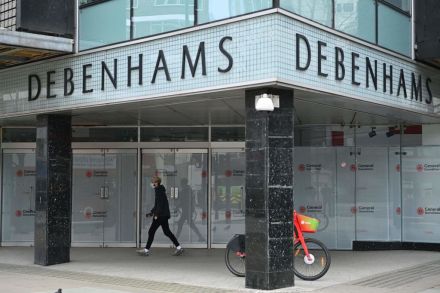
Can the High Street recover from the Covid crisis? Even before lockdown, around 14 shops were shutting every day, and 2019 was the worst year for sales in a quarter of a century. After months of enforced closure, shops have finally reopened. But with mandatory face masks, social distancing and roped-off fitting rooms – and no indoor cafes, or restaurants to punctuate a day of retail therapy – shopping will be vastly inferior to the pre-Covid experience.  Nonetheless, there are good reasons to be bullish on the future of the high street – and too many commentators are being needlessly gloomy on its prospects. For a start, households have accumulated significant savings during lockdown.
The impact of lockdown on education

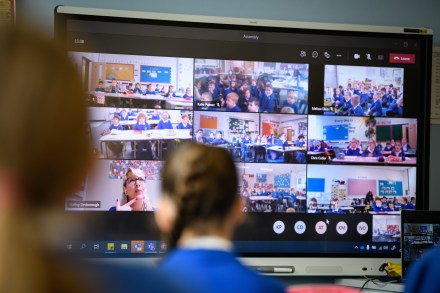
Just how damaging has lockdown been to children’s education? An Oxford University study has tried to quantify it by analysing data from Dutch schoolchildren — who, unlike in Britain where exams were cancelled, took tests shortly before and shortly after the first lockdown last spring. The level of parental education was a big predictor of falling performance If any country’s children had managed to get through lockdown with their education unscathed, suggest the authors, it ought to be those in the Netherlands. There, schools were closed for a relatively short period — eight weeks — and the penetration of broadband in homes is higher than in any other country.

Three cheers for federalism!

From our US edition

For all that has gone wrong in America in the last year, the main thing that has gone right is our system of 50 independent states has endured and prospered. The COVID-19 pandemic was a challenge to our federalist system. The impulse in March 2020 was to have all states respond in the same way to the virus. Of course, in a country with large cities and small cities, sprawling suburbs, small towns, extremely rural areas and everything in between, that made little sense. We quickly corrected it and governors took control of COVID-19 policies for their states. The results of that have been astonishing. States that had tight lockdowns, such as New York, New Jersey and Michigan, did not see better outcomes than states which loosened their lockdowns early on.

federalism

The competitive cult of cosiness

Do you remember the first wave of hygge, in 2015? It seems a long time ago — back in the freewheeling technicolour of a pre-Covid world — but at that time hygge was the hottest thing to come out of Denmark. The country already attracted envy for its vigorous welfare state, covetable knitwear and high rating on the international happiness index, but the new export outshone them all. It roughly translated as ‘cosy’, people said, but the English word was frail and puny next to the soul-feeding, friendship-cementing, quasi-spiritual force that was hygge. The latter signified home-baked bread and cakes, hand-knitted socks and friends laughing around a wooden dinner table as a hotpot bubbled on the stove.

After London lockdown, LA is like Disneyland

When I arrived a month ago, one wouldn’t believe LA was suffering a major pandemic. The roads were still busy with fast cars, the freeways choked when we ventured on to them, all vehicles seeming to be dodgem cars, zooming across the lanes with ferocious abandon. There was a major accident recently in front of my building. I looked out of my window at a speeding sports car, which had been careening down the boulevard at 120 mph and had crashed into another expensive car (as well as a few others on the way). It had been cut in half and exploded into flames. Both drivers died. Sadly, there’s an epidemic of young rich boys playing speed games on the wide boulevards.

‘Protect the NHS’ is all very well, but when will the NHS protect us?

After refusing to issue my HRT without a blood pressure test, the GP surgery rang to offer me an appointment. ‘I can come any time,’ I said, trying to be accommodating. Having complained about this particular practice before, I felt guilty. They have been very good at issuing me with repeat prescriptions through their online service during lockdown. When a polite, cheerful receptionist said I could not have my HRT without an appointment this time, because my annual blood pressure test was due, I saw that as a good thing, a sign they were doing their job properly. I made a mental note to write about how nice and efficient they were being in this case. Then the receptionist said: ‘I can offer you a telephone appointment next Wednesday.

Vaccine passports are a kick in the teeth for young people

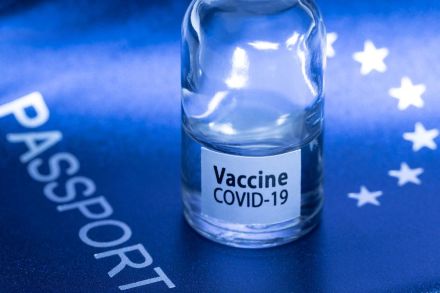
After a year in which young people have lost their jobs, been denied time in the classroom and at university and not been allowed to see their friends, could they now be penalised again? Boris Johnson said we 'have to be very careful how you handle this and don't start a system that is discriminatory' when vaccine passports, or 'Covid status certification', were raised at a briefing this week. Yet it's hard to imagine a more grossly unfair, discriminatory system than introducing vaccine passports before young people have the opportunity to be vaccinated. Young people have sacrificed so much for a disease that they are relatively invulnerable to.

The creeping authoritarianism of the Covid-19 restrictions

How can a country abide a government that consistently says one thing and then does the exact opposite? Whether it’s lockdown two, lockdown three, or masks in schools, the government has consistently stated one thing and then changed its mind months, weeks, or even hours later. This not only exacerbates the problem of trust in politicians, but in ‘the science’, which they have clutched as a shield to cower behind whilst making political decisions. The latest example is the shifting of the goalposts around when lockdown will finally end. Ministers began by saying they would ‘cry freedom’ when the vulnerable were vaccinated, but now it seems entirely possible that we will still face restrictions even after everyone is offered a vaccine.

Johnson is in trouble over vaccine passports – and it’s showing

From our US edition

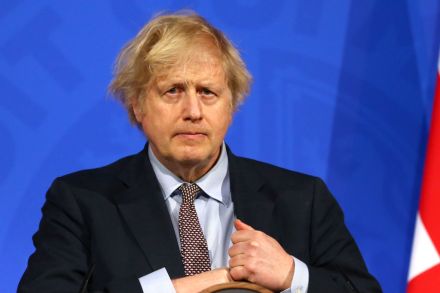
The biggest question facing Boris Johnson is the future of his so-called vaccine passports. A few months ago, the idea was dismissed by No. 10 as 'discriminatory'. Matt Hancock, the Health Secretary, said: 'We are not a papers-carrying country.' But now, without debate or democratic scrutiny, vaccine passports are quickly heading from unthinkable to unstoppable. Today, No. 10 released more details — hence the questions Johnson is facing. But bizarrely, the Prime Minister was unable to admit to any of it, and pretended to be confused by what he was being asked. This matters.

Johnson takes the next step out of lockdown

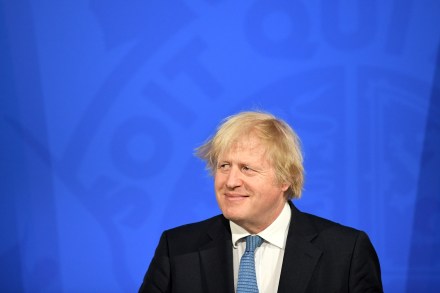
When Boris Johnson first unveiled his roadmap out of lockdown, there was a promise of an end to restrictions by 21 June. That date was quickly dubbed 'freedom day' online and in the press. However, many of the tricky decisions on social distancing, travel abroad and IDs were pushed later down the line into various government reviews. Today, the Prime Minister offered an update. Johnson had some good news — confirming that phase two of the roadmap would go ahead on 12 April. But his address also pointed to how there is unlikely to be a quick bounce back to normal come 21 June.

Lockdown and cancer: are we getting the full story?

The 10 Downing Street press conferences on Covid-19 tend not to show graphs about cancer care. We see various charts by statisticians and epidemiologists, but the impact of lockdown on patients with time critical conditions such as cancer has been largely ignored. The disruption of cancer services is a global phenomenon, but the suspension of screening services and failure to protect cancer services in the UK has resulted in 40,000 less cancers being diagnosed last year, compared to 2019. The true scale of the cancer backlog has yet to be acknowledged by the UK government, far less prioritised with specific additional funding. Denial could cost lives.

Talking down vaccines is a short-sighted tactic

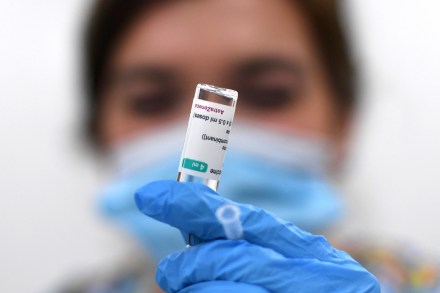
How strange to have spent a year in a world where to hug someone outside of your household is not allowed. For the past five days, six people in England have been able to meet up outdoors again, but only in a socially distanced way. Previously, the argument for crackdown on such instinctive human behaviour centred around hospitals being overrun. Today, the Covid data tells a very positive story, with infections, hospitalisations and deaths all down by 90 per cent or more since the most recent peak. Meanwhile, the right data is going up, with over half of the UK adult population having received at least their first dose of a Covid vaccine, and the top nine priority groups still on track to have been offered a first jab in less than two weeks' time.

Covid has forced ministers to reassess mental health

Has the pandemic really been good for the way the NHS treats mental health? That’s the rather startling claim I report on today in my i paper column. Ministers have started to talk — equally surprisingly, it has to be said — about the possibility that they are close to reaching parity of esteem between the treatment of mental and physical health, and that the chaos of Covid is partly responsible. Covid has certainly made it harder for the government to just offer talk and no cash on mental health Now, it slightly depends on what your definition of ‘parity of esteem’ is.

The joy and suffering of writing a book

Spring is coming. There was snow in the garden till last week, here in Canada, where I have been spending this strange winter. But today the sky is shining blue and the sunshine is soft and warm. I guess this is what Easter is really about. Rebirth. I have spent months without going farther than the corner food shop. Zoom winter. I have never been in the same few rooms for so long. And yet I have never been so much in touch with colleagues and friends from everywhere. I feel I have partially migrated into a semi-virtual reality. It is not too bad. It is relaxing. This week is crazy. My new book, Helgoland — about understanding quantum reality — has just been published and, because I have the best promotion person in the galaxy, I am submerged by journalists.

Britain’s travel ban brings risks of its own

No one knows for sure how many cars are on the road without insurance. The Motor Insurers Bureau puts it as high as one million, and a good number of these won’t have a valid MOT either. Come to think of it, many such uninsured cars without MOTs are likely to be in the hands of drivers who don’t even have licences. And yet it’s never suggested that only those who have a ‘reasonable excuse’ to drive should be allowed to do so, just in case of encounters with revved-up lawbreakers. We know there’s a risk — but we don’t close down all the roads in the country. We get on with our lives. But when it comes to international travel 12 months on from the start of this grisly pandemic, we are not allowed to get on with our lives.

Macron’s latest lockdown fiasco

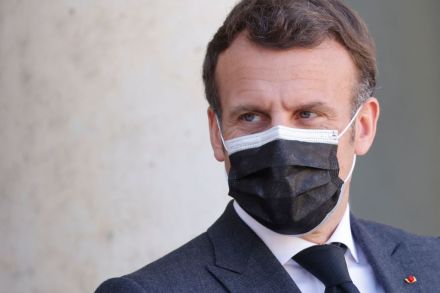
On New Year’s Eve, Emmanuel Macron promised France an economic revival by the Spring. Cancel that. Instead, as the intensive care units are saturated by a third wave of Covid, we have a new lockdown light and a new message from the president: ‘Don’t panic.’ More than a year after Macron the general took personal command of the war on the new coronavirus, the vaccination program has still to get into high gear, the doctors are threatening to triage patients, abandoning those with little hope, yet there was no hint of contrition from the president. Instead, he announced that we are to be subjected to yet another baffling set of rules which together comprise a sort of ‘confinement,’ although Macron never used the word.

The puppy pandemic is getting out of hand

They came in their droves. Labradors, Alsatians, French bulldogs, Spaniels, Cavapoos, Cockapoos, Labradoodles, Corgis, like a roll of dog poo bags, the list goes on. No sooner had Boris locked us up in the March sunshine last year than the nation rushed to acquire a dog. After years of standing firm, parents finally gave in to their children’s pleas and took the plunge. Those living alone, confronted with the prospect of indefinite confinement, threw caution the wind (and their furniture) and gave in to the idea of a dog. Those who had not owned a dog for years, decided they would once more fling themselves unto the canine breach. I know all of this because when I walk my Pointer, Percy, in the fields and parks around my house I am assailed by people with boisterous puppies.

Can we see the vaccine effect?

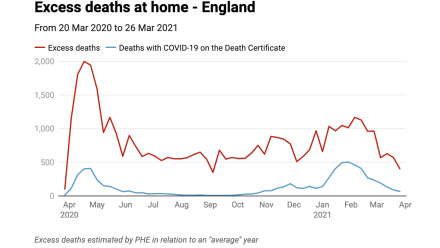
Britain’s Covid data is moving in the right direction. Today’s update from the Office for National Statistics confirms this on one of the most critical measures: excess deaths. For the second consecutive week, deaths in England and Wales are below the five-year average. In the latest week ending 19 March, there were 10,311 registered deaths — 676 fewer deaths than the week before and down 8 per cent on the average. The good news doesn’t stop there. Not only are deaths down (more than 90 per cent below the peak of the latest wave) but the vaccine factor is also showing its effect.

Boris Johnson’s vaccine problem

On the day that people are finally allowed to gather in groups of six outside, tennis games get underway and wild swimmers take to Instagram en masse, Boris Johnson attempted to land a message of caution with the nation. Speaking at today's press conference, the Prime Minister spoke of the need to 'proceed with caution' as the country takes a 'small step to freedom today'.  The nerves in government point to a problem that will only grow as the vaccination programme continues at pace The PM pointed to Covid cases rising across the Channel as a cause for concern that shows the need to 'continue flat out to build the immunity of our population (and) build our defences against that wave when it comes'.