Lockdown

Sunak’s Covid budget offers a glimpse of Britain’s Brexit freedoms

Rishi Sunak’s planned corporation tax hike is a reminder of the importance he sets by trying to put the public finances on a sounder footing. He think that his room for manoeuvre in this crisis has been, in part, because the public finances were in reasonable shape before it.  The vaccination programme remains this government’s most important economic policy As I say in the magazine this week, his concern about debt has long been about the cost of servicing it (which remains low) rather than its precise level. But the debt pile is now so large that small movements in interest rates have big consequences. But straightening out the public

Perhaps it is time to nationalise our failing railways

We mustn’t abandon the railways to market forces, many on the left asserted when British Rail was broken up and privatised in the 1990s. They needn’t have worried. A quarter of a century on and we have yet to see a market force take to the tracks. Wasn’t the whole purpose of privatisation supposed to be to transfer financial risk from the taxpayer to private finance?  Instead, as soon as the Covid crisis struck, while other industries were offered loans, furlough payments and business rate relief but were otherwise left to fend for themselves, the rail industry was propped up as if nothing was wrong. The government simply suspended the

Are people tiring of lockdown?

Is the decline in new Covid infections slowing down? That is the picture painted by the government’s figures for confirmed infections, arrived at via the NHS Test and Trace system. The most recent figures show that the 71,320 cases recorded in the seven days to Wednesday are 15 per cent down on the previous seven days — a substantial fall, yet over the previous few weeks numbers had been declining at around 25 per cent every week. The fall in deaths, on the other hand, appears to be accelerating. The figure for the past seven days — at 2,684 — is 30 per cent down on the previous seven days.

Too much good news could spell trouble for Boris

Tory MP’s reaction to the lockdown easing plan is a mixed bag. In general, they would have preferred a quicker timetable. But, as I say in the magazine this week, there is also relief that Johnson has explicitly ruled out going for a zero-Covid strategy and that there is an end date for all restrictions. A big fear on the Tory benches was that unless a date was set, restrictions could drag on for years in the way that rationing did after the second world war.  If the data on vaccine take-up and efficacy continues to beat the government’s models, there will be some very impatient Tory MPs One senior Conservative

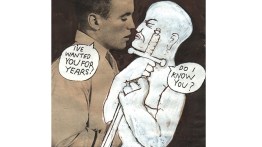
For lovers who live apart, it’s been a long year

Spring is coming, the roadmap out of lockdown is here, and the faint signs of an End To All This can be seen, in smoke rings, on the horizon. I scan the list of freedoms with impatience: schools, if you must, parental visits in parks, fine, fine, but when will I get to see my girlfriend indoors? If you express some level of frustration with lockdown life, the worry is that you will be taken for someone who believes the right to spread plague is enshrined in the Magna Carta or that society took a wrong turn with the suspiciously foreign antics of Louis Pasteur. I am keen neither to

What will life look like after 21 June?

‘Alas’ is a word used many times by Boris Johnson during the pandemic. It is how he prefaces announcements that the data is getting worse and so the government has to impose further restrictions. In recent weeks, though, the numbers have been going in the right direction. The first stage of the vaccination programme was completed two days ahead of schedule. For the first time in this crisis, government targets are being moved forward, not back. Early results seem to show that the jabs are more effective than expected: a Public Health Scotland study suggests that the Oxford-Astra-Zeneca vaccine, the workhorse of the UK immunisation programme, cuts the risk of

Beware the hobby bobby

‘Anything you say may be given in evidence. Do you have anything to say?’ I looked at the baby-faced police officer and tried to think of an appropriate response. I had been driving to Guildford station to meet a friend who every now and then comes from his nearby home on the train. I park in the station car park and together we walk to a kebab shop, order some food, eat it where we can perch, and cheer ourselves up. Running low on diesel, I pulled into a filling station on the way. After pulling back out, I noticed a police car close behind. I turned into the railway

Can Boris Johnson help struggling students?

Helping children catch up on the best part of a year out of the classroom is one of the biggest tasks facing the government. On Wednesday, Gavin Williamson announced an extra £400 million in funding which schools can use to run summer programmes and other catch-up projects. That’s on top of £300 million allocated last month and £1 billion announced last year. Ministers hope that their Recovery Premium will help schools support particularly disadvantaged pupils, who have fallen further behind than their peers as a result of having to do remote learning for so long. But they are also under pressure to show that they are thinking about the long-term,

Tory MPs react to Boris Johnson’s roadmap

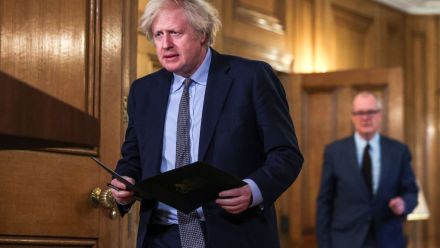
Boris Johnson’s roadmap out of lockdown moves at a much slower pace than many of his backbenchers would like. Despite, this, the Prime Minister has so far managed to avoid a large backlash from Tory MPs with his blueprint for ending lockdown. While leading figures of the Covid Recovery Group were quick to voice their objections in the Commons chamber over the fact restrictions will be in place until late June, the Prime Minister received a relatively warm reception when he addressed his party via Zoom on Monday evening. The Prime Minister was 20 minutes late for the call meaning questions were relatively limited. He began by assuring MPs that the government would

The roadmap paints a grim picture for business

As the Prime Minister announced the details of his government’s ‘roadmap’ out of lockdown in the Commons on Monday, no doubt some will have been cheering on the announcements, which will allow them to keep their pre-planned parties or holidays scheduled in their diaries. But the timeline has painted a grim picture for business in the months to come. According to the timetable, we are nearly two months away from outdoor dining being made legal again, and three months away from a return to indoor dining. While non-essential retail and personal care premises (including hair and nail salons) are billed to open on 12 April, social distancing measures look set to

Boris’s lockdown speech was classic Blairite triangulation

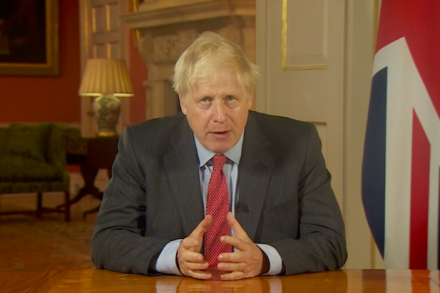
Several of Tony Blair’s ideas have found their way into the government’s Covid policy, most notably the policy of prioritising first doses. The end of Boris Johnson’s statement today owed a lot to Blair. Johnson cast himself as charting a middle course between those who think the government’s plan is too ambitious and those who want restrictions eased faster. It was classic Blairite triangulation. The road map is an interesting document. It is initially cautious and the decision to put five weeks between easing measures means that we won’t be able to sit inside a pub until 17 May, a long way from the idea that things would be heading

The lockdown roadmap explained

Boris Johnson’s roadmap for emerging from the pandemic shows us quite how bad his sense of direction has been at times over the past few months. The Prime Minister and his colleagues in government have repeatedly insisted that they won’t be introducing vaccine passports — but today’s document confirms that ministers are in fact establishing a programme of work on ‘Covid status certification’, which is a rose by another name. Johnson has also had to deal with a conflict between his advisers (and within his own mind) over whether or not it is — as he has repeatedly suggested — possible to vaccinate one’s way out of this lockdown. Either

Will the vaccine reduce public support for lockdown?

The vaccine news today is good, and better than would have been expected even a month ago. The Public Health Scotland data indicating that four weeks after the first dose of the Oxford / AstraZeneca vaccine there is a 94 per cent reduction in the risk of hospitalisation is phenomenal (the figure for Pfizer/BioNTech is 85 per cent). It suggests that the vaccines should deliver on the ‘protect the NHS’ part of the government’s strategy. This will lead to more Tory pressure on Boris Johnson for a faster easing of lockdown. The argument will go that given the data is better than expected, the pace of lockdown easing should be sped

Do we really want lockdown to end?

Despite it being highly unfashionable to change your opinion, my lockdown stance has shown agility. For most of last year I was a ‘lockdown sceptic’. Not quite retweeting Piers Corbyn’s views on 5G, but equally not thrilled about spending every morning doing star jumps with Joe Wicks. I suspected lockdowns may ruin our children’s future forever, but was keen to not to be called a granny murderer. However, there was something about the words ‘deadly new strain’ which had an effect on me. Say what you want about epidemiologists, they know how to scare people. So I settled into being what I’d call a Covid ‘Centrist Dad’. Lockdown wise, I

When will vaccines let us reopen society?

With every passing day, more Covid immunity is being gained as hundreds of thousands receive the vaccine. Of course, vaccines take time to mature in the body and offer protection, but with roughly a quarter of the population having now received their first inoculation, our approach to dealing with the virus will inevitably need to shift. The big question is how vaccination has changed the equation for how quickly society can be reopened. Modelling from the PCCF project at Bristol University, on cautious assumptions, suggests that the pace of the vaccine rollout would allow significant reopening with herd immunity achieved in July. First, let’s say how much vaccine immunity has

Vaccines are working – so why isn’t society reopening?

When the Prime Minister sets out his ‘roadmap’ for easing Covid restrictions on Monday, it will be against a backdrop that is both better and worse than could have been imagined six months ago. Worse because we have gone on to suffer a second wave of the disease that has seen almost as much excess death as the first wave. But better in the sense that we have vaccines that are in use and more effective than many hoped, with first doses given to 15 million people — almost a third of the adult population. On several occasions last year, Boris Johnson referred to vaccines as the cavalry coming over

Do gender studies departments have a gender problem?

Target practice The government hit its target of giving a first Covid vaccine to 15 million of the most vulnerable people by the middle of February. Some other government targets which have been met (sort of): — 100,000 Covid tests a day by the end of April. The government did claim to have achieved this — but did so by counting testing kits which had been posted out and not necessarily returned. — There was a rise of 7,600 people applying for teacher training courses last year, which meant that the government hit its target for secondary school teachers to the tune of 106% and primary school teachers by 130%.