Lockdown

Spare a thought for introverts

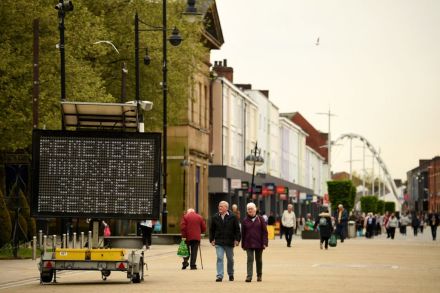
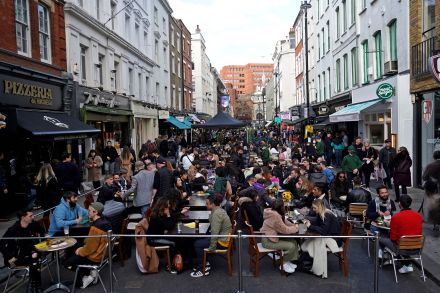
How do you feel about 17 May, when the next major set of lockdown restrictions are due to be lifted in England? Are you looking forward to going out to dinner with friends inside an actual restaurant, or are you breathless with anticipation at the prospect of hosting your first, legal, dinner party for as long as you care to remember? Quite how you feel about any of the above will relate closely to how strongly you perceive yourself to be either an extrovert or an introvert. If you’re the former, then 17 May, followed by 21 June (when apparently lockdown will be ‘over’), will have you salivating with joy

Why do theatres think audiences want Covid-related drama?

Hats off to the Orange Tree Theatre in Richmond. They’ve discovered a new form of racism. Some people say we have enough ethnic division already but in south-west London they’re gagging for more apparently. A new play, Prodigal, examines the prejudice endured by a Ugandan chap whose mother moved to London when he was a child and whose younger siblings are British. Family tensions depressed him. ‘You all made me feel ugly,’ he moans. The shifty whinger has returned home after his mother’s death in order to cheat his family out of an insurance pay-off. It’s remarkable to see a drama that reinforces a damaging stereotype but the author, Kalungi

Boris should heed Blair’s advice on the Covid vaccine data

We’ve known from the data from phase three trials that the Pfizer and AstraZeneca vaccines have good efficacy against symptomatic cases of Covid-19. The data also hinted at near 100 per cent efficacy against serious illness, although the limited numbers of participants made it hard to be sure.  This morning, however, comes real world data showing the vaccines have all but eliminated hospitalisations. According to figures obtained by the Daily Telegraph, 74,405 people were admitted to hospitals across the UK between September 2020 and March 2021. Of these, just 32 were people who had received a vaccine at least three weeks earlier. The figures don’t reveal whether or not there

Need we fear a third wave after lockdown ends?

When Boris Johnson revealed his roadmap out of lockdown at the end of February he promised a ‘one way road to freedom.’ Since then, it has seemed that instead of freedom we may end up with continued social distancing, perhaps Covid passports and mandatory mask-wearing. The justification offered is that the virus might come back. But does the data back up this pessimism? I’m an academic at Bristol University and have developed the Predictor Corrector Coronavirus Filter (known as PCCF) model, updated daily on The Spectator’s data hub. It confirms that we can safely return to the ‘old normal’ on 21 June with no need for extra measures. It predicts that

Britain is in danger of repeating its post-war mistakes

In search of wisdom about how an officious government reluctantly relaxes its grip after an emergency, I stumbled on a 1948 newsreel clip of Harold Wilson when he was president of the Board of Trade. It’s a glimpse of long-forgotten and brain-boggling complexity in the rationing system. ‘We have taken some clothing off the ration altogether,’ he boasts, posing as a munificent liberator. ‘From shoes to bathing costumes, and from oilskins to body belts and children’s raincoats. Then we’ve reduced the points on such things as women’s coats and woollen garments generally and… on men’s suits.’ Does this remind you of anything? One day in November, George Eustice, the environment

Dear Mary: How can we use our neighbour’s tennis court without inviting him to play?

Q. Our neighbours have a tennis court which, under the property’s previous owner, we enjoyed playing men’s fours on. The new owner is very welcoming and friendly. The problem (without sounding conceited, I hope) is that he is not up to the standard of the rest of us in the village who would like to play on his court. How do we politely say that we want to play — but not with him? — Name and address withheld A. What about one of your number inviting him to play golf? He will thereby have the opportunity to introduce the new court owner to lots of locals, or businessmen, or

Merkel’s radical lockdown plan could quickly backfire

In its flailing response to the Covid crisis, the German government appears to have finally given up on federalism. Angela Merkel’s latest idea is to introduce nationwide ‘emergency brake’ measures to combat rising case numbers, replacing a patchwork system across the 16 federal states. But will it help bring Germany’s third wave under control? Legal changes to grant the federal government unprecedented power to enforce coronavirus regulations in all states have been backed by ministers. The final obstacle for the German Infection Protection Act is parliament. If Merkel’s plan is approved, it will mark a big change in the way Germany is governed. It will also make it clear that Merkel is increasingly

Locked-down students are paying a heavy price

Students are the forgotten victims of lockdown. Having worked hard to achieve their grades, undergraduates have been consigned to their bedrooms to learn online. There’s been no socialising, freshers fun or the chance to make new friends. The only thing that has been the same for the Covid class of 2021 are sky high fees. Finally, the government has announced that all university students will be able to return from the 17 May. While some undergraduates may be relieved to get some much-needed clarity, most will be deeply, deeply frustrated. Many students are asking why universities did not open again when schools did. They are also wondering why they can currently go

Covid and the lockdown effect: a look at the evidence

What forces Covid into reverse? To many, the obvious answer is lockdown. Cases were surging right up until the start of the three lockdowns, we’re told. It’s often said that all else failed. The Prime Minister said on Tuesday that lockdown, far more than vaccines, explains the fall in hospitalisations, deaths and infections. But how sure are we that only lockdown caused these falls — in the first, second and third wave? Or were other interventions, plus people’s spontaneous reactions to rising cases, enough to get R below one? In a peer-reviewed paper now published in Biometrics, I find that, in all three cases, Covid-19 levels were probably falling before

Is the UK taking advantage of its vaccine success?

UK GDP ever so slightly edged up in February, growing 0.4 per cent according to today’s update from the Office for National Statistics. No surprises here: there were no changes to lockdown restrictions between January and February, which gave the economy little room for manoeuvre. The ONS has revised January’s GDP fall from 2.9 to 2.2 per cent: still a contraction, but another good indicator that businesses have significantly adapted to lockdown rules, which has meant that this winter’s lockdown didn’t plunge GDP down to record levels as it did last spring. Still, February serves as another reminder that – despite spectacular market innovation – there is a ceiling on

Why is Boris talking down Britain’s vaccine success again?

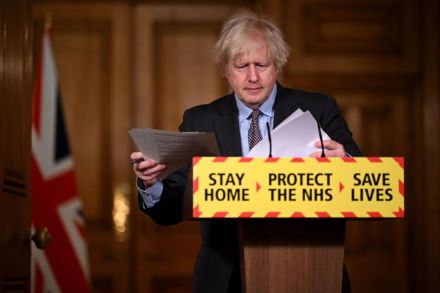
A few months ago, the Prime Minister was describing the jabs as the ‘scientific cavalry’ that was on its way to save us from our Covid – and lockdown – woes. But now the cavalry has arrived in the form of a vaccine rollout of unqualified success, the rhetoric has changed. The vaccine is no longer enough, according to Boris. Today we’ve seen another worrying shift in the PM’s words. In an interview with the BBC, Johnson broke the link between the UK’s ability to reopen and its vaccination programme success: The reductions in these numbers, in hospitalisations and in deaths and in infections, has not been achieved by the

Why the High Street won’t be another Covid casualty

Can the High Street recover from the Covid crisis? Even before lockdown, around 14 shops were shutting every day, and 2019 was the worst year for sales in a quarter of a century. After months of enforced closure, shops have finally reopened. But with mandatory face masks, social distancing and roped-off fitting rooms – and no indoor cafes, or restaurants to punctuate a day of retail therapy – shopping will be vastly inferior to the pre-Covid experience.  Nonetheless, there are good reasons to be bullish on the future of the high street – and too many commentators are being needlessly gloomy on its prospects. For a start, households have accumulated significant savings during lockdown. By December 2020, Britain’s

The impact of lockdown on education

Just how damaging has lockdown been to children’s education? An Oxford University study has tried to quantify it by analysing data from Dutch schoolchildren — who, unlike in Britain where exams were cancelled, took tests shortly before and shortly after the first lockdown last spring. The level of parental education was a big predictor of falling performance If any country’s children had managed to get through lockdown with their education unscathed, suggest the authors, it ought to be those in the Netherlands. There, schools were closed for a relatively short period — eight weeks — and the penetration of broadband in homes is higher than in any other country. Yet

The hidden death toll of lockdown

The last patient I treated was 105 years old. She has lived through two world wars, a depression and at least five pandemics. It’s a real honour to treat centenarians. They teach me much about life: how it is and how it ends. I can also lighten the mood with my 80-year-old patients by telling them that they’re still young. It’s common to hear talk about an ‘ageing society’ being some kind of disaster befalling the country. Yes, people are leading longer, healthier lives now than ever before. Is this really a ‘demographic timebomb’? I’d call it the greatest achievement of our time. When my patient was born in 1915,

The competitive cult of cosiness

Do you remember the first wave of hygge, in 2015? It seems a long time ago — back in the freewheeling technicolour of a pre-Covid world — but at that time hygge was the hottest thing to come out of Denmark. The country already attracted envy for its vigorous welfare state, covetable knitwear and high rating on the international happiness index, but the new export outshone them all. It roughly translated as ‘cosy’, people said, but the English word was frail and puny next to the soul-feeding, friendship-cementing, quasi-spiritual force that was hygge. The latter signified home-baked bread and cakes, hand-knitted socks and friends laughing around a wooden dinner table

After London lockdown, LA is like Disneyland

When I arrived a month ago, one wouldn’t believe LA was suffering a major pandemic. The roads were still busy with fast cars, the freeways choked when we ventured on to them, all vehicles seeming to be dodgem cars, zooming across the lanes with ferocious abandon. There was a major accident recently in front of my building. I looked out of my window at a speeding sports car, which had been careening down the boulevard at 120 mph and had crashed into another expensive car (as well as a few others on the way). It had been cut in half and exploded into flames. Both drivers died. Sadly, there’s an

‘Protect the NHS’ is all very well, but when will the NHS protect us?

After refusing to issue my HRT without a blood pressure test, the GP surgery rang to offer me an appointment. ‘I can come any time,’ I said, trying to be accommodating. Having complained about this particular practice before, I felt guilty. They have been very good at issuing me with repeat prescriptions through their online service during lockdown. When a polite, cheerful receptionist said I could not have my HRT without an appointment this time, because my annual blood pressure test was due, I saw that as a good thing, a sign they were doing their job properly. I made a mental note to write about how nice and efficient

Vaccine passports are a kick in the teeth for young people

After a year in which young people have lost their jobs, been denied time in the classroom and at university and not been allowed to see their friends, could they now be penalised again? Boris Johnson said we ‘have to be very careful how you handle this and don’t start a system that is discriminatory’ when vaccine passports, or ‘Covid status certification’, were raised at a briefing this week. Yet it’s hard to imagine a more grossly unfair, discriminatory system than introducing vaccine passports before young people have the opportunity to be vaccinated. Young people have sacrificed so much for a disease that they are relatively invulnerable to. Nearly half of those people furloughed

The creeping authoritarianism of the Covid-19 restrictions

How can a country abide a government that consistently says one thing and then does the exact opposite? Whether it’s lockdown two, lockdown three, or masks in schools, the government has consistently stated one thing and then changed its mind months, weeks, or even hours later. This not only exacerbates the problem of trust in politicians, but in ‘the science’, which they have clutched as a shield to cower behind whilst making political decisions. The latest example is the shifting of the goalposts around when lockdown will finally end. Ministers began by saying they would ‘cry freedom’ when the vulnerable were vaccinated, but now it seems entirely possible that we

Johnson is in trouble over vaccine passports – and it’s showing

The biggest question facing Boris Johnson is the future of his so-called vaccine passports. A few months ago, the idea was dismissed by No. 10 as ‘discriminatory’. Matt Hancock, the Health Secretary, said: ‘We are not a papers-carrying country.’ But now, without debate or democratic scrutiny, vaccine passports are quickly heading from unthinkable to unstoppable. Today, No. 10 released more details — hence the questions Johnson is facing. But bizarrely, the Prime Minister was unable to admit to any of it, and pretended to be confused by what he was being asked. This matters. If he cannot acknowledge his flagship scheme, leaving such an indefensible gulf between what his government has just published and what he has just said, he may already be