Carlo Rovelli

Carlo Rovelli’s Helgoland is out now.

Carlo Rovelli: Anaximander, from the archives

From our UK edition

49 min listen

The Book Club has taken a short summer break and will return in September with new episodes. Until then, here’s an episode from the archives with the theoretical physicist Carlo Rovelli. Carlo joined Sam in March 2023 to discuss his book Anaximander and the Nature of Science and explain how a radical thinker two and a half millennia ago was the first human to intuit that the earth is floating in space. He tells Sam how Anaximander’s way of thinking still informs the work of scientists everywhere, how politics shapes scientific progress and how we can navigate the twin threats of religious dogma and postmodern relativism in search of truth.

Carlo Rovelli: Anaximander

From our UK edition

48 min listen

On this week’s Book Club, I’m joined by the theoretical physicist Carlo Rovelli to talk about his new book Anaximander and the Nature of Science, in which he explains how a radical thinker two and a half millennia ago was the first human to intuit that the earth is floating in space. He tells me how Anaximander’s way of thinking still informs the work scientists do everywhere, how politics shapes scientific progress and how we can navigate the twin threats of religious dogma and postmodern relativism in search of truth.

Carlo Rovelli, David Abulafia and Laura Freeman

From our UK edition

26 min listen

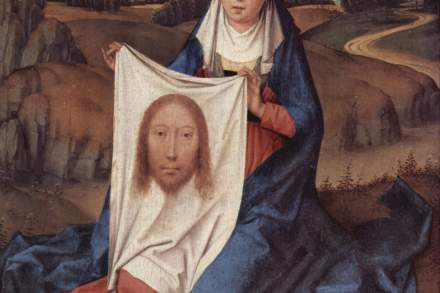
On this episode, writer and physicist Carlo Rovelli, ponder time and space in a world were the meaning of both has shifted. (01:00) Then, David Abulafia talks about the need for conservatives at universities. (07:29) Finally, Laura Freeman gets us ready for easter with the stories and the art depicting St Veronica.

The joy and suffering of writing a book

From our UK edition

Spring is coming. There was snow in the garden till last week, here in Canada, where I have been spending this strange winter. But today the sky is shining blue and the sunshine is soft and warm. I guess this is what Easter is really about. Rebirth. I have spent months without going farther than the corner food shop. Zoom winter. I have never been in the same few rooms for so long. And yet I have never been so much in touch with colleagues and friends from everywhere. I feel I have partially migrated into a semi-virtual reality. It is not too bad. It is relaxing. This week is crazy. My new book, Helgoland — about understanding quantum reality — has just been published and, because I have the best promotion person in the galaxy, I am submerged by journalists.

Winston Churchill’s remarkable love of science

From our UK edition

Churchill was the first British prime minister to appoint a scientific adviser, as early as the 1940s. He had regular meetings with scientists such as Bernard Lovell, the father of radioastronomy, and loved talking with them. He promoted, with public funds research, telescopes and the laboratories where some of the most significant developments of the postwar period first came to light, from molecular genetics to crystallography using X-rays. During the war itself, the decisive British support for research, encouraged by him, led to the development of radar and cryptography, and played a crucial role in the success of military operations. Churchill himself had a scientific grounding that was hardly extensive but was nevertheless sound.