Labour party

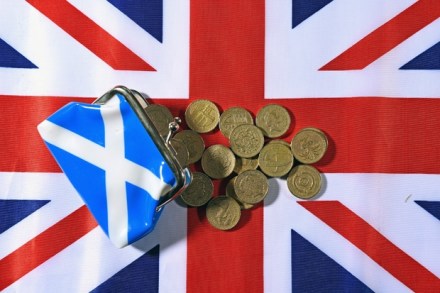
What it means for your savings if Scotland votes yes

[audioplayer src="http://traffic.libsyn.com/spectator/TheViewFrom22_11_Sept_2014_v4.mp3" title="Fraser Nelson, Tom Holland and Leah McLaren discuss how we can still save the Union" startat=50] Listen [/audioplayer]I bet that until a few days ago you thought the referendum in Scotland was a mildly amusing sideshow. Perhaps you still do. Perhaps you are convinced that the ‘silent majority’ that Better Together are so sure will step up to the plate at the last minute really exist. Perhaps you think that the reasons many people are giving for voting ‘yes’ are so vague that voters will change their mind on the day. Or even if they don’t you might think it is all an irrelevance.

How to Ed-proof your portfolio

It was 2 May 1997. Not only was most of the country celebrating the election of a bright young Kennedy-esque Prime Minister called Tony Blair, so too, perhaps more surprisingly, were the champagne-swilling Thatcherites of the City of London. As the government took office, the FTSE 100 index climbed up to 4,455, and it was to carry on rising over the next few months, reaching 5,193 by the year’s end. Indeed, for much of its first term, Britain’s last Labour government was accompanied by a raging bull market, as the dotcom bubble reached its peak. Will history repeat itself? In May, we may well see another newly elected Labour prime minister, Ed Miliband. Unlike his predecessor Blair, Red Ed seems rather more committed to old-fashioned socialism.

The current political climate rewards authoritarians, not civil libertarians

The talks between the Lib Dems and the Conservatives on the anti-terror measures that David Cameron will unveil this afternoon have finally finished. There are a few more details to be thrashed out - crossing of Ts and dotting of Is rather than major policy decisions - but the two parties are basically there. That the talks have only broken up with just over an hour to go until the statement shows how contentious these measures have been in the Coalition. David Cameron's press conference, in which he set out the heightened threat, was partly a softening-up exercise to push the Lib Dems into accepting what the security and intelligence services had told him: that they needed to plug the 'gaps in Britain's armoury'.

Lord Ashcroft’s poll shows a swing to Labour in Tory-held marginal seats

One of the most fascinating things about Lord Ashcroft's latest poll is not its content, but who in the Conservative party will be reading it. Naturally, those trying to hold onto or win in the marginal seats that the peer has polled will be very interested (but not cheered) by the findings. But besides those with a personal stake in individual seats, there will be two groups of MPs: those who comb through the full datasets that Ashcroft produces, and those who do not. These are, respectively, the pragmatists and the optimists in the party, and they naturally have quite different views of what will happen next May.

Jobs for the boys and girls

Mr S can’t help but notice that there is no Ukip peer among the list of the newly ennobled. This is surprising. Nigel Farage has survived attacks, smears and a helicopter crash. Surely ermine is the only way to stop him? Back in the heady days of 2010, the coalition pledged to introduce a principle whereby peers were appointed according to vote share. One can only assume that they reached this agreement in expectation of receiving more votes. Needless to say, there are plenty of jobs for the boys and girls. Party stooges Andrew Cooper, Arminka Helic and Chris Lennie will sit in the Upper House, together with a gaggle of Liberal Democrat councillors. And, of course, there are several donors among the list. The mother of parliaments, eh? It's absurd.

Labour and the ‘Tory lie machine’

Sajid Javid is giving a speech today that doesn't seem to have a great deal to do with his brief as Culture Secretary. He's also a pretty good Tory attack dog, and his address to the Centre for Policy Studies will focus on Labour's 'basic instinct' to spend and a warning that this instinct would leave Britain £500bn worse off. It's not so much the speech itself from the Culture Secretary that's interesting, but the reaction from the Labour Party. Chris Leslie has said: 'These numbers have been totally made up. Labour has not set out any plans for extra capital spending after the election, so this is just another example of the Tory lie machine in action.' Leslie then criticises the Coalition's ability to stick to its own fiscal rules, and repeats Labour's own commitments.

Balls tries to defuse the tax bombshell

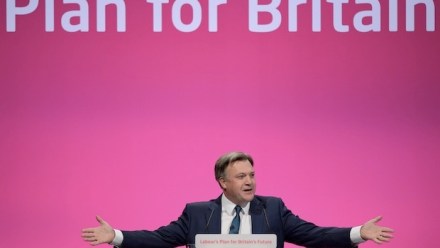
Ed Balls' interview with the Telegraph today is a demonstration of what he learnt working for Gordon Brown in opposition. He is at pains to deny that he is planning any major tax rises; he doesn’t want to give the Tories the chance to claim Labour are planning a ‘tax bombshell’. He stresses that he understands that ‘People feel they are paying too much tax already’ and emphasises that he ‘would rather all tax rates were lower’. He also explicitly rules out a National Insurance increase to pay for extra spending on the NHS and a so-called ‘death tax’. Interestingly, Balls also restates his desire to limit EU immigration. He says he wants ‘fair movement not free movement’ of workers.

Labour should stop whipping up fears about our prisons. They created Britain’s only recent prison crisis

Sadiq Khan, the Shadow Justice Secretary, took to these pages earlier to claim that ‘This Government’s disastrous prisons policy is putting the public at risk.’ He’s been trying to claim for months that we have a prison crisis, and it is quite simply not true. Let’s start with some simple truths. The figures published yesterday showed that prison overcrowding is falling. And it’s much lower than it was under Labour. That the amount of practical work, often with employers who will give a job to those prisoners when they are released, is rising steadily. And it’s far higher than it was under Labour. That the number of people who self-harm in prison is lower than it was two years ago. And it’s lower than under Labour.

Ed Miliband’s union bosses would change Britain for the worse

Trade unions have an important role in any decent society, but their stranglehold on the Labour Party is something we must fight against. I will never forget walking the streets of Poland back in 1981, when martial law was in force, and there were armed soldiers on almost every street corner. There it was a trade union, Solidarity, which brought authoritarian Communism to its knees. In the UK Margaret Thatcher recognised the importance of trade unions in society. Indeed one of her first roles in politics was as chairman of Dartford Conservative Trade Unionists. But the battle in British politics today is nothing to do with the work done by local union officials or workers struggling for political freedom.

Fifty shades of Grayling

With the delicacy of an Israeli F-16, the Tories entered the summer campaign today with an achingly dull speech in Westminster. Something about Labour and the unions. Mud flew everywhere. You know the drill. It was less than a minute — forty seven seconds to be precise — before the charisma-free zone that is Chris Grayling spluttered the Tory catchphrase ‘long term economic plan’. The fun did not end there. Oh no. Grayling is the model of the modern politician; but, even so, it is impressive for a man to speak for twenty minutes almost entirely in banal cliché. Apparently it’s all a ‘big con’.

Labour wants you to pay more tax. But what about its tax bill?

Westminster has got in a tizz overnight because Andy Burnham has been taped saying that he still favours a 'death tax' of 10-15%, on top of 40% inheritance tax, to pay for social care. Burnham concocted a similar plan before the last election, only for Gordon Brown (even dear old Gordon Brown recognised a loser) drop it. Guido has a recording of Burnham’s comments, which were made at the Fabian Society’s Summer Conference in June. Burnham was musing aimlessly, rather than articulating party policy. But, that said, one might easily draw the conclusion from this and other musings, such as Harriet Harman’s views on sports betting and football, that Labour has a rapacious attitude to your money. In view of the above one would expect Labour to be paying lots of tax.

Ed Miliband’s ‘new politics’ update

Derision met Labour when news emerged that more than half of its prospective parliamentary candidates are former special advisers, party workers, researchers, lobbyists or ex-MPs. Ed Miliband (PPE, Corpus Christi College, Oxford) heralded a ‘new politics’ when he took over the party; yet his top team embodies the political class: Ed Balls (PPE, Keble College, Oxford), his wife Yvette Cooper (PPE, Balliol College, Oxford); Angela Eagle (PPE, St John’s College, Oxford) and her sister Maria Eagle (PPE, Pembroke College, Oxford). Some Labour frontbenchers who didn’t go to Oxford worked as Special Advisers for the last Labour government; many others did both. Most of us, of course, have done neither. There is a divide between the rulers and the ruled.

Put people before Burnham’s platitudes: Competition in healthcare benefits patients

We are used to political parties trying to claim credit for any positive development that happened during their time in office. The Labour Party’s current stance on healthcare is the exception to this rule. It represents the rare phenomenon of a party denigrating one of the best bits of its legacy. In the mid-2000s, the Labour government managed to inject a dose of competition into the once sclerotic provider-centric NHS. If shadow health secretary Andy Burnham is now positioning himself against the entry of private providers into the NHS, he is really positioning himself against one of his party’s biggest achievements.

David Cameron aims at Ukip and attacks Labour with immigration clamp-down

The government has unveiled a set of measures to curb immigration. David Cameron has written an article in the Telegraph about what the government has already achieved and what it plans to do now. He has three themes. 1). To tackle illegal immigration. Cameron says that the government has shut more than 750 of ‘bogus’ colleges. He wants to go further: colleges will lose their licenses if 10 per cent of their pupils are refused visas. Cameron also repeats some of the provisions of the Immigration Act 2014. From November, for example, a system will be imposed to ensure that landlords have to account for the immigration status of their tenants.

George Osborne’s taxing dilemma

Some of what David Smith, author of the essential Economic Outlook column in the Sunday Times, says today will be salve to George Osborne: ‘…the government intended to spend £722bn in the 2013-14 fiscal year. In fact, it spent £714bn. Spending has been lower each year than set out in 2010. Current spending was originally intended to be £679bn in 2013-14. In fact, it was £668bn. Unusually for any government, spending has come in comfortably within budget. There has been no slippage.’ Other parts will not: ‘Where there has been slippage is in tax receipts, which have been weaker than expected.

Ed Miliband tries to turn his vices into virtues

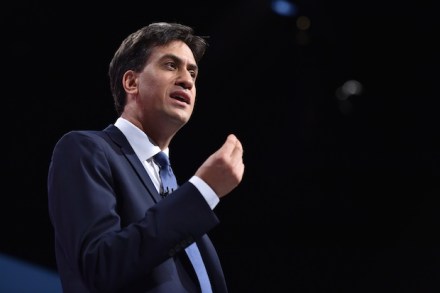
Ed Miliband’s admirers are hailing his speech on Friday as an attempt to change how we think about leadership. It might have been that, but it was also a very political attempt to deal with the ‘Ed problem’, the fact that he trails David Cameron in the leadership stakes by a potentially fatal margin.   There is huge frustration in Miliband’s circle that, as one puts it, voters say that they don’t like spin and then say they won’t vote for Ed as he’s bad at it. But for all Miliband’s decrying of modern politics emphasis on presentation, he has—at times—tried to play the image game just as hard as any other politician.

Call Me Dave still has much to learn from The Master

David Cameron and Tony Blair faced identical tasks earlier this week. Both wished to force a reluctant group of back-sliders to adopt a more robust and pragmatic position. Cameron wanted Europe to toughen up against Putin. Blair wanted Labour to toughen up against Cameron. Blair’s opportunity was the 20th anniversary of his enthronement as Labour’s leader. Oddly enough the chief beneficiary of that leadership – the Labour party itself – mysteriously forgot to give its messianic champion a chance to reflect on his methods. Instead, he offered his blueprint for further Labour victories to the think-tank, Progress. Blair likes to write in the early morning, in long-hand, seated at a window.

Image is the least of Ed’s worries

What were Labour thinking? Against the background of Ukraine and Gaza, the only domestic story likely to cut through is an economic one. The news today is dominated by David Cameron, George Osborne and Nick Clegg wallowing in the success of the British economy. So what did Ed Miliband do? He made a speech about presentation for the Westminster village, of course. The SAS is on standby to land in Ukraine, Gaza crumbles and the IMF gives the UK a gold star for economic performance; but, look over there, Ed's got something to say about the political-media nexus! Miliband's war on photo-ops is utterly laughable given that it came just days after he flew half-way round the world to pose for a picture with President Obama at a pointless meeting.

Ed Miliband stakes all on his ‘big choice’

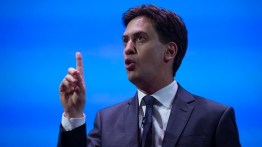
Labour will launch its summer campaign later today. The centre-piece is Ed Miliband’s speech. He will present a ‘big choice’ to the British public, arguing that they cannot afford 5 more years of Conservative rule. Miliband’s argument is simple: the economy is broken, only we can fix it; the NHS is threatened, only we can save it; the Tories represent the few, only we care for the many. You will have heard these mantras many times before; but, this time, the presentation is different. The speech bears the mark of David Axelrod, who is busy ‘reframing’ Ed Miliband as an honest yeoman of the shires rather than a metropolitan oddball. Rafael Behr of the Guardian has an extensive account of this ‘reframing’ effort.

Which party has the most MPs’ children in Parliament?

Commons inheritance Emily Benn, granddaughter of Tony and niece of Hilary, has won the right to stand for Labour in Croydon South. Which party produces the most political dynasties? Current MPs who had a parent in the Commons: CONSERVATIVE James Arbuthnot, Richard Benyon, Dominic Grieve, Ben Gummer, Nick Hurd, Andrew Mitchell, Nicholas Soames, Mark Pawsey, Laura Sandys, Robin Walker, Bill Wiggin LABOUR Hilary Benn, John Cryer, Lindsay Hoyle, Anas Sawar, Andy Sawford, Alison Seabeck d.u.p. Ian Paisley Jnr Air scares The loss of a second Malaysian Airways airliner means that the number of worldwide casualties in civilian air disasters — 827 so far this year — has already exceeded that of last year, when 459 died. But it does little to disturb the steady downwards trend.