Labour party

Once upon a time David Cameron had a story to tell; he needs to remember it and tell it again

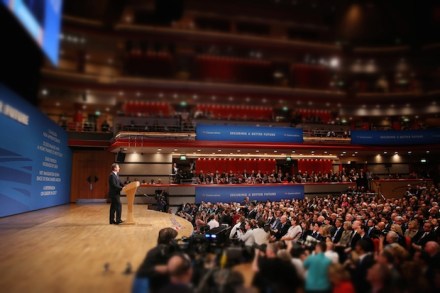
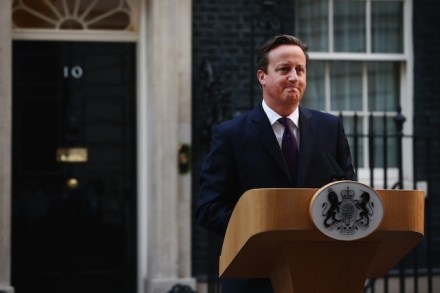
It is easy to inflate the importance of speeches made at party conferences. Particularly when those speeches are the last such set piece events before a general election. But they are still, in the end and at bottom, a distillation of what matters most to a leader. A guide to his priorities; a demonstration of his faith. Somewhere along the line David Cameron has lost that faith. He was elected leader of the Tory party in desperate times and became Prime Minister in dismal times. In both instances he triumphed, at least in part, because he persuaded his audience that though he might look like a traditional Tory he was in fact a rather different type of Tory from those voters had grown fond of despising. Once upon a time, you see, David Cameron had a story to tell.

Tory conference: Bitter jokes at the Tax & Spend Inn

The Conservative conference pub is back again this year, with its usual bitter jokes about Labour. Mr Steerpike had an exclusive peek at the posters they're using to poke fun at Ed Miliband's party. The pub this year is called the 'Tax & Spend'. Funnily enough, they've decided to remind the Labour leader of the deficit, just in case he's forgotten: Perhaps someone could set up a Campaign for Real Deficit Reduction.

Commons vote for strikes against IS in Iraq

By 524 votes to 43, the House of Commons has voted to support air-strikes against Islamic State in Iraq. The margin of victory is not surprising given how limited the motion was, it rules out ground troops and makes clear there’ll be another vote before any action in Syria. But in a sign of the unease of some on the Labour side, Rushanara Ali, who represents George Galloway’s old seat of Bethnal Green and Bow, has resigned from the front bench over Labour’s support for the motion. Indeed, the first estimates are that 24 Labour MPs voted against while just five Tories opposed. The question now is whether, and when, Cameron might return to the Commons to try and gain approval for action in Syria.

Portrait of the week: Cameron visits UN HQ, Scotland checks its bruises, and a Swede sells his submarine

Home David Cameron, the Prime Minister, visited New York for talks at the United Nations; he said Britain supported the American air strikes on the Islamic State. ‘These people want to kill us,’ Mr Cameron said on NBC news. Mr Cameron met President Hassan Rouhani of Iran in New York, the first such meeting since the Iranian revolution in 1979. Mr Cameron was caught by cameras in New York saying to Michael Bloomberg, its former mayor, that when he rang the Queen with the Scottish referendum result, ‘She purred down the line.’ Alex Salmond resigned as First Minister of Scotland and leader of the Scottish National Party, with effect from November. This followed the referendum for Scottish residences, which rejected independence by 2,001,926 votes (55.

Beware: Scottish Labour is a zombie party and the undead still walk

David Mundell, MP for Dumfriesshire, Clydesdale and Tweeddale, is not often granted much respect. He is not a natural television performer, which does not help. He is a Scottish Conservative, which does not help either. But give him this: he predicted that the Scottish National Party would enjoy a surge of new members if Scotland voted No to independence. But what a surge it has been. The SNP has doubled its membership in a week. More than doubled it, in fact. The party now claims more than 60,000 paid-up members. To put this into some perspective, that's akin to a UK-wide party having 600,000 members. The combined membership of the Conservative and Labour parties is less than 400,000. Much less.

Boy, can Alan Johnson write

Alan Johnson’s first volume of memoirs, This Boy, is still in the bestsellers’ list, but the Stakhanovite postman has made a second delivery, timed impeccably for the party conference season. It charts his escape from the urban jungle of Notting Hill to Britwell council estate in Slough, via a succession of GPO sorting offices and eventually to high office in the Union of Communications Workers. Like its predecessor, Please, Mister Postman takes its title from a Beatles classic. The boy left in the care of his 16-year-old sister after their mother’s death dreamed of becoming a rock star.

Four reasons why this year’s Labour party conference felt so weak

There are many reasons why Labour conference felt flat this year, and many of them are out of the party's control. It cannot help that its MPs and a number of its delegates are tired after an energetic Scottish campaign. It cannot help that the Scottish campaign saw a level of engagement in politics that cannot be replicated, save by another vote with a clear question and clear implications, and that would always have contrasted badly with the Labour conference. It cannot help that the referendum took place just days before the conference began, and that therefore it was impossible to get the same sort of coverage you'd expect in the run-up to your conference in the press.

The deficit and immigration: were there two worse topics for Ed Miliband to forget?

No notes speech have been Ed Miliband’s political party trick. His One Nation speech two years ago ended speculation about his leadership and last year’s energy price freeze effort knocked the Tories off their stride for months. But today, the no notes speech hurt Miliband rather than helped him. Without an autocue, Miliband skipped bits of the speech. This has happened to him before, one year he missed out the section on the environment. But this year, Miliband missed out the bits he could least afford to: forgetting the sections on the deficit and immigration.

Miliband’s dividing lines

The more we learn about Ed Miliband’s speech (to be given later this afternoon), the clearer the dividing lines that it is drawing are. The word is that Miliband will announce more money for the NHS paid for by a combination of taxes on mansions, hedge funds and big tobacco. The message: Labour stands up for the NHS while the Tories stand up for people who live in mansions, hedge funds and tobacco companies. This might be crude politics but it will, I suspect, be quite effective. It emphasises Labour’s biggest strength, that they are the party of the NHS and social solidarity, and highlights the Tories’ biggest weakness, the sense that they are the party of the rich who stand up for the wrong people.

Labour says it will consider British air strikes as recall of Parliament looms

What will happen now that the US has launched airstrikes against Isis in Syria? Even though there is no requirement for Parliament to be consulted, it is very difficult for the British government to join without some form of debate and vote in the House of Commons. And this means that a recall of Parliament before it is scheduled to sit on 13 October. The end of this week is most likely, but there remains a debate at the top of the Tory party as to whether David Cameron could win a vote supporting British action. This is surprising, given so many of those who opposed action against Assad last year have publicly said they would support it, and Labour has made many more supportive noises about its own stance.

The simple and shocking secret to the working class vote

How does Labour win back the working class voters who've abandoned it? This question, part of the soul searching the party fell into when it lost the 2010 election, has gained even greater currency since the Scottish referendum. This evening Michael Dugher and John Denham had a stab at answering it at a conference fringe. And the answers were really quite unsettling. Denham told the fringe that 'we're talking to people who've come to the conclusion that governments are a bonus if they don't make their lives worse' and therefore just one policy wasn't going to solve it. He said: 'We have to get back into a relationship with people who have good reason to believe politics isn't working for them.

Len McCluskey: Ed Balls’s long speech was good in parts

One thing that made Ed Balls' speech to conference look a little less impressive was the barnstormer of an address from Len McCluskey to the hall shortly before. Delegates loved it, and not just because the Unite leader was saying the sorts of things that they wanted to hear. He was also passionate and interesting. He deservedly received the first proper standing ovation of the week. So what did McCluskey think of the speech that followed from Ed Balls? I caught up with the union boss afterwards, and he managed some faint praise: 'Well, I think it was a long speech, and it was a very embracing speech, and I thought in parts it was a good speech.

After a flat speech from Ed Balls, what is Labour conference holding its breath for?

One of the curious traditions of Labour conference is that directly after the Shadow Chancellor's speech, hard copies of his wise words are sold outside the conference hall. Any fiscally responsible Labour types trying to make difficult decisions about how to spend their money might be best advised to keep their £1 in their pockets for the time being, though. Today was not Ed Balls' finest hour. It can't just be that many people at Labour are exhausted after the Scottish campaign to react to their Shadow Chancellor's speech. The reaction of the conference hall was far too flat for the last conference economy speech before the general election. And the reason for that was that there were no new announcements.

Miliband aide: Labour has never addressed the way the economy works

What's Ed Miliband's vision for the economy? We'll get the public version of that vision in a short while when Ed Balls gives his speech to the Labour conference, but last night one of Ed Miliband's closest advisers gave us a more interesting glimpse of the underpinning of the Labour leader's economic plan. Stewart Wood, a former aide to Gordon Brown and now a key member of Miliband's team, gave a fringe interview to ResPublica's Philip Blond. The two men nattered with glasses of wine in their hands (which were at one point topped up by a CCHQ suffer embedded behind enemy lines) about Wood's values. One answer in particular, on how Labour should approach the economy from now on, was very interesting: 'Tax and spend will continue to be a core part of what we do, but there are two limits.

Labour conference: The new politics, according to Hilary Benn

Judging by the reaction in the conference hall, Hilary Benn's speech was the best of this afternoon's session. Several people gave him a standing ovation. His task was rather easier than Ed Miliband's on Marr this morning, because the Shadow Communities and Local Government Secretary could talk about hopey-changey Labour ideas, rather than the nopey-changey Labour opposition to English votes for English laws (EVEL). So Benn focused on the devolution to English cities and regions that Labour has been working on and talking about for months, arguing that it was the true way to respond to the referendum result. He said: 'Our deal is for all parts of England. Conference, this will be the biggest economic decentralisation in a century. But it won't be enough.

Coffee Shots: Ed Balls wounds journalist at bloody football match

Ed Balls playing football each year at Labour conference is almost as big as Ed Balls Day. The Shadow Chancellor always participates enthusiastically in the annual hacks vs MPs match. Sometimes, he's a little too enthusiastic. Like today, when he accidentally wounded lobby journalist Rob Merrick. Still, the pair made up by the end of the match. Those who predict the General Election campaign will be a bloody battle were more correct than they could ever have imagined.

Tristram Hunt sweet talks party faithful with newsless Labour conference speech

Tristram Hunt's speech to the Labour conference was short and sweet. It was laden with sweeteners for party delegates, which is as things should be at these events, but perhaps his Blairite predecessors are feeling a little sour after the Shadow Education Secretary spent a fair bit of his time on the stage denouncing the principles they once espoused. Clearly the aim was to keep the party faithful happy - and they'd spent the session beforehand making quite clear that they wanted a screeching reversal over many of the Coalition's education reform - because Hunt also attempted to galvanise them by talking about Michael Gove. And when he got bored of talking about Gove, he talked about Nicky Morgan, who he described as 'a "Continuity Gove", auto-pilot Education Secretary'.

Miliband confronted by the English Question

Ed Miliband wouldn’t have wanted to spend his big, pre-conference interview talking about English votes for English law but that’s what he had to do on Marr this morning. Miliband was prepared to concede more English scrutiny for English legislation. But it is clear he won’t back English votes for English laws. He even argued that it was hard to describe tuition fees, which don’t apply in Scotland, as an issue just for the rest of the UK. listen to ‘Ed Miliband: 'In favour of greater scrutiny' of English issues by English MPs’ on Audioboo Miliband was much happier when the interview turned to the minimum wage and Labour’s plan to increase it to £8 by 2020.