Kristian Niemietz

Dr Kristian Niemietz is the editorial director at the Institute of Economic Affairs

Labour’s Yimby plan could lock the Tories out of power for good

From our UK edition

As opposition leader, Sir Keir Starmer long struggled to define what 'Starmerism' is, other than 'not Corbynism' and 'not Toryism'. Last Autumn, he belatedly stumbled across a policy theme which he has since tried to make his own: 'Yimbyism', a positive 'Yes In My Back Yard' attitude to development: the antidote to Nimbyism.  Labour’s rhetoric on housing has been confrontational In her first major speech on economic policy, Chancellor Rachel Reeves picked up this 'Yimby' theme in order to bolster her pro-growth credentials. Policy announcements include bringing back mandatory housebuilding targets, removing green belt protection from bits that are clearly not green (the ‘grey belt’), and overturning the ban on onshore wind.  We have, of course, been here before.

The trouble with Labour’s new towns plan

From our UK edition

Since last October, when Keir Starmer declared that he was a 'Yimby' – a 'yes in my back yard' – Labour has tried to position itself as the pro-housing party. We are now finally getting a glimpse of what this might look like in practice.   Deputy leader Angela Rayner has promised a revitalisation of the postwar 'New Towns' programme, which, in the quarter-century from 1946 to 1970, delivered hundreds of thousands of new homes.   New Towns are not a panacea This certainly signals the right ambitions, and if done in the right way, New Towns could indeed make a major contribution to solving Britain’s housing crisis.

Where is the solidarity with Guyana?

From our UK edition

On Monday, the Stop the War Coalition (StWC), the environmentalist group Just Stop Oil (JSO), the Socialist Campaign Group (SCG), which is a group of ‘Corbynite’ MPs, and Jeremy Corbyn’s Peace and Justice Project, held a joint press conference. With differences in emphasis, they all strongly condemned the moves of Venezuela’s dictator-president Nicolas Maduro to annex the Essequibo region of neighbouring Guyana.  ‘The last thing the world needs right now is another imperialist war for oil’, a StWC spokesman said. JSO were particularly dismayed by Maduro’s announcement that he would immediately ‘grant operating licenses for the exploration and exploitation of oil, gas and mines in the entire area of our Essequibo’.

A review of Britain’s airport slots is long overdue

From our UK edition

When passing through an airport, the average traveller is unlikely to give much thought to the invisible economic forces that run the place. But the way take-off and landing slots are allocated at an airport affects a range of things, not least ticket prices and the range of destinations you can reach. This week, the government has launched a consultation on overhauling the system under which these slots at Britain’s busiest airports are allocated. It’s about time. In recent years, the airline industry has modernised dramatically. In its infancy, air travel was a heavily state-directed industry.

The Renters’ Reform Bill won’t solve the housing crisis

From our UK edition

The Renters' Reform Bill aims to improve tenant security in the private rental sector by scrapping no-fault evictions, but it's won't solve Britain's housing crisis. The Bill, which returns to Parliament this week for a second reading, was originally dreamt up in the dying days of Theresa May’s government. It could still just about make it in time for the next general election, as the government’s main electoral offer to 'generation rent'. Yet the reality is that it fails to tackle the main cause of our housing woes: a lack of supply. The Bill’s main component is a ban on so-called 'Section 21' or 'No-Fault Evictions'.

Growing the NHS workforce isn’t enough to fix its problems

From our UK edition

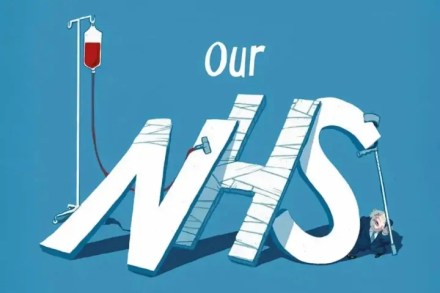
Earlier this summer, NHS England published its long-term workforce plan. It has the backing of all major political parties and outside of health policy circles it did not attract much attention at first. But now, as its full implications (especially in fiscal terms) are becoming obvious, that is changing. A new report from the Institute for Fiscal Studies (IFS) has modelled what this plan, if fully implemented, would entail. The NHS currently employs 1.5 million people, or about 6 per cent of the total workforce and a little under 40 per cent of the public sector. Under the health service's workforce plan, that number will rise to 2.3 million by 2036, accounting for around 9 per cent of the total workforce, and 49 per cent of the public sector workforce.

How much credit does the NHS deserve for the Covid vaccine rollout?

From our UK edition

Who should we thank for our Covid vaccines? For many, the answer is straightforward: the National Health Service.  'Thank you NHS', says a profile sticker shared by thousands of Brits on Facebook. But while Britain's undoubtedly successful vaccine programme owes a great deal to the efforts of NHS staff, is it right to thank the NHS itself? Left to its own devices, would the NHS have delivered in quite the same way? And how much should we credit Boris's vaccine task force – rather than the health service – for the vaccine rollout? I am a critic of the NHS – but not for the sake of it. I criticise it when it delivers worse outcomes than comparable systems, which it often does.

Berlin’s failed rent freeze offers a warning to Sadiq Khan

From our UK edition

Berlin’s rent freeze, hailed by some as a potential model for London, is already coming to an end after less than two years. In its final ruling this week, Germany’s Federal Constitutional Court struck down the rent freeze as unconstitutional. In this sorry saga, there are plenty of lessons for those who supported rent freezes in our capital – not least London's mayor Sadiq Khan. The rent freeze was passed in June 2019, and took effect in February 2020. It froze nearly all rents across the city at their 2019-level, supposedly for a period of five years. It was hugely popular in Berlin, and attracted a lot of attention beyond. Rent controls were official Labour party and Green party policy in the 2019 General Election, and some specifically referenced the Berlin example.

The flawed logic behind Brokenshire’s landlord bashing

From our UK edition

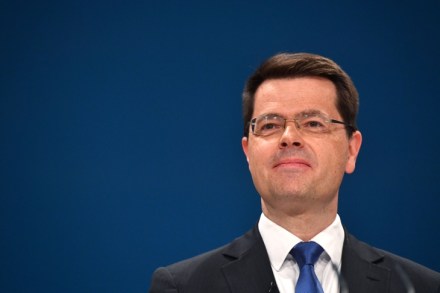
In what Communities Secretary James Brokenshire described as 'the biggest change to the private rental sector in a generation', the government has announced a ban on so-called 'no-fault evictions' of tenants by their landlords. 'By abolishing unfair evictions, every single person living in the private rental sector will be empowered', Brokenshire claimed. The Prime Minister said that 'Millions of responsible tenants could still be uprooted by their landlord with little notice, and often little justification […] This important step will not only protect tenants from unethical behaviour, but also give them the long-term certainty and the peace of mind they deserve.

Have we learned anything from the fall of the Berlin Wall?

From our UK edition

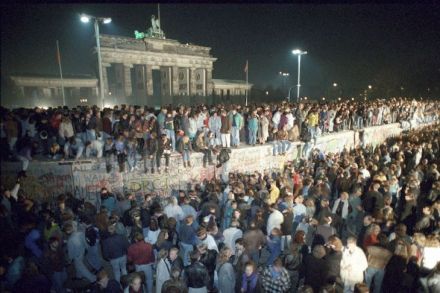
Thirty years on from the fall of the Berlin Wall, socialism is back in fashion. The anniversary is a good occasion to reflect on some of the lessons that we have collectively un-learned, or perhaps never learned properly in the first place from the fall of Communism. The division of Germany into a broadly capitalist West, and a broadly socialist East, represented a natural experiment, and did so in two ways. It was, first of all, a gigantic economic experiment about the viability of socialism, and it produced conclusive results. Around the time of Reunification, West Germany’s GDP per capita was about three times that of East Germany’s. There was also around a three-year-gap in average life expectancy. But it was also a gigantic political experiment.

Why we shouldn’t let the left forget its support for Venezuela

From our UK edition

If there were a modern remake of the TV series Fawlty Towers, it would probably contain an episode called 'The Socialists', in which the one-liner 'Don’t mention Venezuela!' would become a running gag.   Mentioning Venezuela in the presence of a self-described socialist is considered boorish and impolite these days. Yes, a lot of people on the left have said foolish things about Venezuela over the years. But do we have to hold that against them forever? And why does this matter anyway? We live in Britain, not Venezuela. If 'Venezuela-mania' had no domestic policy implications, and if there were no wider lessons to be learned from it, I would sympathise with that sentiment. That is why I am not particularly bothered about, for example, Cuba-romanticism.

Danny Alexander’s house building pledge is just a cunning PR strategy

From our UK edition

Danny Alexander’s latest plot to make the state a major player in housebuilding is just the latest in a line of useless political schemes to appease all the wrong people and let down all the right ones. The Chief Secretary to the Treasury made no effort today to tell us why the state would be particularly good at building houses any more than it would be good at baking bread or brewing beer. It is not clear whether his plan would even boost housing numbers. Take the government’s first foray into building for a while, which involves 10,000 new homes at Northstowe, a derelict RAF base in Cambridgeshire. What would have happened to that site otherwise? Presumably private developers would have bought that land and done similar things to it anyway.

Put people before Burnham’s platitudes: Competition in healthcare benefits patients

From our UK edition

We are used to political parties trying to claim credit for any positive development that happened during their time in office. The Labour Party’s current stance on healthcare is the exception to this rule. It represents the rare phenomenon of a party denigrating one of the best bits of its legacy. In the mid-2000s, the Labour government managed to inject a dose of competition into the once sclerotic provider-centric NHS. If shadow health secretary Andy Burnham is now positioning himself against the entry of private providers into the NHS, he is really positioning himself against one of his party’s biggest achievements.

Ed Balls’ new plans would leave taxpayers with world’s highest childcare bill

From our UK edition

Up until about 2004, the Labour government’s strategy of fighting poverty by concentrating on three priorities – government spending, government spending and government spending – had seemed to work rather well. On a number of measures, living standards of low- to middle-income earners showed notable improvements. But from then on, progress on this front suddenly came to a halt, or even went into reverse again on some measures. This was a bit of an embarrassment for advocates of a Greek-style approach to public spending, because during those years, they had largely gotten their way. Social spending in the UK had reached record levels, and with that potential largely exhausted, what else was there to do?

The pressing need to redefine poverty

From our UK edition

What is ‘poverty’? It might sound a basic question but, when we hear about x percent of people ‘living in poverty’, what does that actually mean? The policy review conducted by Frank Field last year offered a number of insights into the issues of life chances and their determinants. But it failed to address that fundamental question: what is poverty? Until we know what we are measuring, it is impossible to attempt to tackle it. Poverty continues to preoccupy us. According to the British Social Attitude Survey, the majority view is that there is “quite a lot” of poverty in Britain today, and many expect it to increase over the next ten years.