Interviews

From enfant terrible to dame: Tracey Emin in her own words

On the eve of a major retrospective at Tate Modern comes this portrait of Tracey Emin as a painter, told largely in her own words. It traces a remarkable trajectory, from gobby Margate teenager to one of the UK’s most respected and celebrated artists, and a Dame of the British Empire. At its heart is a series of conversations with Martin Gayford, a critic with a deep engagement with the nature of painting and insights gleaned from close friendships with 20th-century giants, Lucian Freud and David Hockney among them. It is a book full of heart – frank and confessional – and presents Emin at the zenith of her powers, having survived near-fatal cancer and found new purpose and conviction.

‘I don’t build new restaurants’: an interview with Tyler Florence

From our US edition

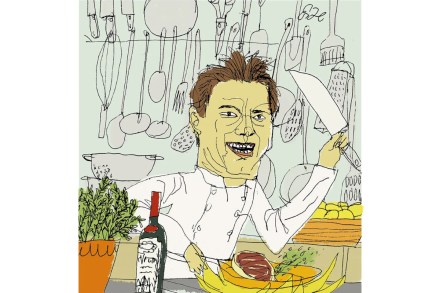
As a child, the chef and television host Tyler Florence had 42 different listed allergies. It wasn’t until he was 13 years old that he tasted melted cheese for the first time. “I had a very weird early diet. I could only eat and drink things like salmon, lentils, goat’s milk.” As a teen, he finally outgrew the allergies and tried foods most kids had been eating their whole lives. “It was like an explosion – all the flavors and the textures. I couldn’t get enough of it.” His first job was as a dishwasher at the Fish Market restaurant in Greenville, South Carolina. “It was the nicest restaurant in town. All the waiters had tuxedos and cummerbunds. It was the 1980s, so there were pink tablecloths and fish tanks in the dining room.

The man at the heart of punk: the late Pete Shelley recalls his Buzzcocks years

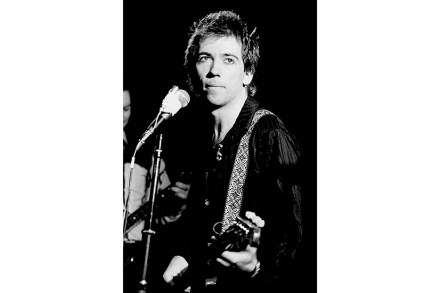
Manchester, in the words of the artist Linder Sterling, is a ‘tiny little world’. Nearly three million people live in its sprawl, but its centre is compact. Like-minded Mancunians have always found one another easily. Cultural life is febrile, which partly explains how, in the pre-digital late-20th century, England’s third city produced such startling bands: Joy Division, the Fall, New Order, the Smiths, the Happy Mondays and Tony Wilson’s era-defining Factory record label — and Buzzcocks, less celebrated, but without whom Manchester’s creative energy would have failed to detonate. Pete Shelley was Buzzcocks’s charismatic co-founder and chief songwriter, whose sharp lyrics and bratty vocals shaped much of British punk.

Church teaching on homosexuality can be revised

Studies of Christianity’s problems and prospects often entail a distinction between the singer and the song. At an institutional level, the world’s largest faith is in deep trouble throughout much of western Europe – and increasingly in North America, too. Widely rehearsed elsewhere, the reasons for this steep decline include the spread of individualism along with an allied flouting of deference, mistrust of agencies said to lie beyond the tangible, and self-inflicted wounds such as the abuse crisis. Yet many who mourn the spread of secularisation remind us that for all its flaws, the Church has a good story to tell overall. How so? Two answers stand out. First, Christian outreach still forms the largest single source of social capital on Earth.

My obsession with ageing rock stars – by Kate Mossman

‘The older male rock star isn’t just my specialist subject, it’s my obsession,’ admits Kate Mossman in the opening pages of Men of a Certain Age. Over the 15 years she’s spent interviewing ageing rockers such as Sting, Tom Jones, Ray Davies, Glen Campbell and Nick Cave for the Word and the New Statesman, she describes feeling ‘something inside of me ignite... so excited, yet so at ease’. ‘How is it,’ she asks, ‘that in the presence of a wrinkly rock star twice my age, I sometimes feel like I’m meeting... me?’ Having encountered my share of these guys myself, I know precisely what she means. Rock journalism is a field in which all the writers are fans, but, as Mossman notes, ‘part of the art is pretending not to be’.

Bella Freud’s fashion inquisition

From our US edition

Sometimes the mind needs to take a break. And I can’t think of a better stopping-off place than the soothing, gloriously bonkers discussions on the Fashion Neurosis podcast, hosted by the British fashion designer Bella Freud. Its premise is that Freud, daughter of Lucian and great-granddaughter of Sigmund, encourages guests to recline on her couch and talk over any and every aspect of their relationship to fashion. Her mellifluous, affirming manner is much more soft soap than steel wool, but this is not territory that requires a serious broadcaster, and the concept proves a surprisingly fruitful route into family history, personal stories and high-grade gossip.

Fashion

Twenty years on from Jonathan Strange & Mr. Norrell

From our US edition

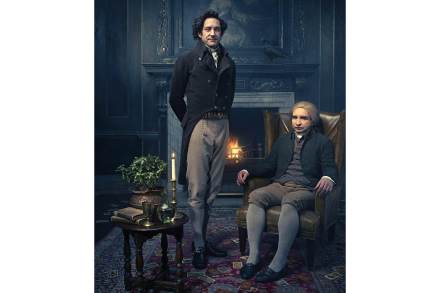
"Some years ago there was in the city of York a society of magicians. They met upon the third Wednesday of every month and read each other long, dull papers upon the history of English magic.” So begins Susanna Clarke’s modern masterpiece Jonathan Strange & Mr. Norrell, first published two decades ago and now regarded, rightly, as the greatest work of British fantasy literature since the Gormenghast novels. Revolving around two indelible characters — the fussy, pedantic “practical magician” Gilbert Norrell and the swashbuckling, Byronic Jonathan Strange — it has an epic sweep and dares to take the existence of magic, and magicians, wholly seriously, giving its oft-maligned genre an intellectual and emotional heft that few other comparable books possess.

Clarke

Contains moments of spellbinding banality: Radio 4’s The Poet Laureate has Gone to his Shed reviewed

The interview podcast is a genre immoderately drawn to gimmicks, as the logical space of possible formats is gradually exhausted. The interviewee, quite often themselves a podcaster, might be, for example, invited to noisily eat lunch while nominating their top-five deceased childhood pets. The theory is that fanciful formats encourage the interviewee to open up. Under such conditions, the interview itself can come to seem incidental to the main event, the atmosphere chummy, comfortable, back-scratching, but fundamentally uninterested: you do my interview, I’ll do yours, no real questions asked.

Donald Trump thinks Taylor Swift is ‘unusually beautiful’ but ‘probably doesn’t like Trump’

From our US edition

Cockburn already pre-ordered Ramin Setoodeh’s book, set to be released on June 18. Titled Apprentice in Wonderland: How Donald Trump and Mark Burnett Took America Through the Looking Glass, the book includes some juicy quotations from Donald Trump — specifically his thoughts on Taylor Swift. “I think she’s beautiful — very beautiful! I find her very beautiful,” Trump said. “I think she’s liberal. She probably doesn’t like Trump. I hear she’s very talented. I think she’s very beautiful, actually — unusually beautiful!” This wasn’t the first time the former president has talked about the superstar singer.

donald trump taylor swift

The joy of hanging out with artists

Lynn Barber is known as a distinguished journalist, but what she always wanted to do was hang out with artists. This book feels like a marvellous cocktail party, packed with the painters and sculptors Barber has interviewed over the years: Howard Hodgkin, Phyllida Barlow, Grayson Perry, Maggi Hambling. Sarah Lucas and Tracey Emin eye one another warily from opposite sides of the room; Salvador Dali’s ocelot weaves between the guests; everyone, naturally, is smoking. Lucian Freud is a no-show – though having refused Barber’s many interview requests, he did send a scrawled note explaining he had no wish to ‘be shat upon by a stranger’. Feuds and gossip are the making of any gathering, and A Little Art Education is not a book of art criticism.

‘There are an awful lot of my paintings I don’t like,’ admitted Francis Bacon

In 1959, Edvard Munch’s ‘The Scream’ was hanging above the bed where Francis Bacon nursed a fractured skull after falling downstairs drunk at his framer Alfred Hecht’s house on the King’s Road. It was there to be re-framed – a circumstantial detail Mark Stevens and Annalyn Swan report neutrally, en passant, in their 2021 biography Francis Bacon: Revelations. An inadvertent cry, nay a scream, for attention? Or a frame-up? It was a decade after Bacon painted his first screaming pope, a palimpsest obviously based on Velázquez but equally in hock to Munch. Francis Bacon: A Self-Portrait in Words is an annotated compilation by Michael Peppiatt of statements, letters, studio notes and selected interviews.

Blake Butler: ‘I don’t want this story to end as “Molly killed herself”’

From our US edition

A recent controversy rocked the literary world when coverage of author Blake Butler’s memoir, Molly, about his late wife, notable poet Molly Brodak, hit tabloids and spun for the worst. The coverage sparked debate over the ethics of writing about relationships, as online attackers made accusations that the widower weaponized Brodak’s private life and exploited her death for fame or revenge.   Claims gained ground that it was a “shameless cash grab,” “literary revenge porn,” or that it shouldn’t have been published due to privacy concerns, since the memoir reveals Butler’s discovery of his late wife’s affairs after her passing.

blake butler

‘People thought I was insane’: Graham Nash on the birth of Crosby, Stills and Nash

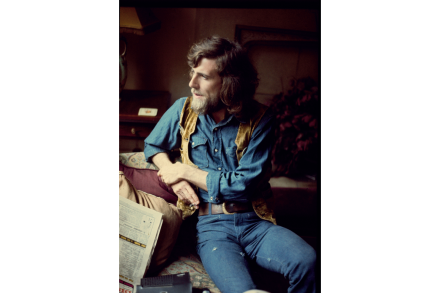
Graham Nash always seemed like the reasonable, peace-making one among his famously fractious compadres, David Crosby, Stephen Stills and Neil Young. But he didn’t get to where he is today by being plagued with doubt or false modesty. Even talking remotely over a Zoom connection, he still radiates a kind of unshakeable certainty. ‘I just trust that the universe loves me enough to support what I’m doing,’ he declares. ‘I don’t seek my life, my life happens to me and I’m perfectly content to let it. Look what I’ve done in my life… Pretty nice!’ ‘Joni was the only witness to that sound and it was created in less than a minute’ At 81, Nash is, incredibly, a pre-baby boomer, but mentally he seems about three decades younger.

Bill Gates’s sinister job interviews

From our US edition

Interviews are often tough — but imagine instead of being asked about your hobbies or what you’ll bring to the team, you’re instead quizzed on whether you’ve ever had extramarital affairs, what kind of porn you watch or if you had naked pictures of yourself on your phone. Cockburn would be out of the running, that’s for sure.  These were the questions asked to women that interviewed to work at billionaire Bill Gates’s private office. The extensive screening process included being questioned by a security firm about their sexual past, previous drug use and other personal things in case they were vulnerable to blackmail. That old chestnut!

bill gates interviews

The return of Bret Easton Ellis

From our US edition

The Shards is about 600 pages long. “Should anyone even publish a 600-page novel?” asks its author Bret Easton Ellis. “I happen to believe, yes, if it’s justified.” Such books are rarely justifiable, and often, novelists become buzzed-about simply for executing them, but not many can boast that every word, scene and sentence is necessary. This is how it feels to read The Shards: not a detail is to be missed. It contains the thematic elements that run through Ellis’ oeuvre: the social lives of the wealthy, or nearly wealthy, drugs, sexuality and desperation painted over with bursts of violence. The through line that connects his work isn’t that sex and violence are taboo.

ellis

Joy, fear and regret in contemporary Britain

For two and a half years, as Britain adjusted from normality to the most disorienting collective trauma of our lifetimes, Will Ashon trawled the country for strangers’ stories. He wrote letters to random addresses, went hitchhiking, talked to the drivers and followed chance connections in pursuit of glimpses into other people’s lives. Once they had consented to speak, he asked some to tell him a secret and others to answer a question from a list. The resulting anonymous confessions, reminiscences, philosophical reflections and anecdotes were obtained via interviews, emails or voice recordings.

We do love to be beside the seaside

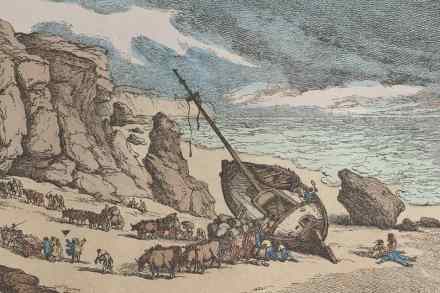
In the garden of my house in Cornwall there is a smooth granite stone about the size and shape of a goodly pumpkin. In the middle, where the stalk would be, there is a hole filled with rusting iron. The day I moved in, a neighbour told me that the hole was drilled and filled with molten iron to attach a hook, long since rusted away, to make a ‘sinking stone’. Smuggled cargo could be submerged just off shore if there were any danger of meeting King George’s men, to be harvested when the coast was clear.

Has Cuba’s revolution finally fizzled out?

In 1968, the US anthropologist Oscar Lewis arrived in Cuba with a tape recorder and a mission to capture the revolutionary zeal of everyday Cubans. Eighteen months later, he was sent packing. ‘We have nothing to hide,’ Fidel Castro, the leader of the country’s 1959 revolution, had supposedly told him. That wasn’t quite true: production targets were being missed, dissidents were being locked up and the US trade embargo was already beginning to bite. The project briefly – and unsuccessfully – passed into the hands of Boom-era author and friend of Fidel, Gabriel García Márquez. After that, the voices of Cubans vanished from the official record. Lots of vituperative denunciations from Cuban exiles, certainly.

Is Donald Trump postmodern?

David Shields is an American author who has decided to collate many of the questions he’s been asked in interviews and reprint them – without any of his answers – under themes of Childhood, Art, Envy, Capitalism etc. The idea is that the questions put to him are just as revealing as his responses. This is a gimmick, but not merely that. To map how others interrogate us is an original idea. It follows that the best way of testing whether this works for the length of a book, even one as short as this, would be for the book to be reviewed by someone who had no prior knowledge of Shields. In this, I’m your man. My ignorance of him was immaculate – and I’ve kept it that way, for the duration.

New Yorkers talk the talk

New York in a nutshell? No way. New York in a New York minute? Forget about it. The city contains multitudes: it contradicts itself, wantonly. Any attempt to summarise will fail. Not even Craig Taylor’s delightful cacophony of voices, dozens and dozens of them spilling their New York stories, can compass its vastness and variety. But what a tasty slice Taylor serves up! Until you can fly into JFK and see, hear and smell for yourself, savour the grit, sweat in the choking humidity and shiver in the canyoned midtown winds — until then, his New Yorkers is just the ticket. This is Taylor’s second anthology of urban voices. It follows more or less exactly in the footsteps of Londoners (2011) which was widely and warmly praised.