India

Forget Eton. This Mumbai team should play Harrow at Lord’s

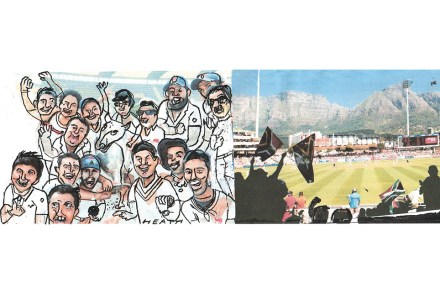
The first thing I do is turn my watch upside down. India is five-and-a-half hours ahead of the UK, so the trick does the conversion for you. Well, sort of – a time like 11.40 works perfectly (becoming 5.10), but anything on the half hour leaves you guessing which number the short hand should be pointing to. Still, it feels appropriate, because I learned it from Christopher Martin-Jenkins on Test Match Special, and cricket is the reason my son and I are here. Our first match is in Jaipur, where the Rajasthan Royals host the Delhi Capitals. Ever since I was Barney’s age (14) I’ve wanted to visit this country and experience its national religion, and these days that means the Indian Premier League. The match is an evening one, so the temperature has dipped to a comfortable level.

Monkey Man proves fighting the gods is a bloody affair

From our US edition

Only a few short years ago, I was a professional bartender working for Michelin-star chefs in fine-dining restaurants and, eventually, serving the social elite in five-star hotels. Most of the known names were genial. Killer Mike and El-P of Run the Jewels were gentlemen. So too were Thundercat and Anderson .Paak — who were particularly keen on my margaritas. Some night porter friends anticipated trouble when they heard Nicki Minaj was staying, but found her to be extremely down to earth, pleasant and normal. Others, however, were not.

monkey man

Nixing BRICS: how to counter the China-led alliance

From our US edition

Americans are used to exercising influence through international entities such as NATO, the World Trade Organization or the World Bank. Each of these groups was set up with American leadership or at its instigation; all have been used to advance Washington’s vision of global liberal-democratic capitalism. No comparable international organization or collection of nations has been influential since the Soviet Union’s collapse. That may be changing. The so-called BRICS alliance (its founding countries were Brazil, Russia, India, China and South Africa) recently added new members Iran, Ethiopia, Egypt and the United Arab Emirates.

BRICS

The complexities of our colonial legacy

It happened by accident. In 1829 the naturalist Nathaniel Bagshaw Ward was trying to hatch a moth pupa. He placed it in a sealed glass container, along with some soil and dried leaves, and set it aside. Sometime later he was surprised to find that a fern and some grass had taken root in the soil, despite having no water. As Sathnam Sanghera writes in Empireworld, the discovery ‘revolutionised the logistics of international plant transportation’. Suddenly there was a means of securely transporting seeds and seedlings across vast distances. Empireworld is a sequel to Sanghera’s wildly successful Empireland. Where the latter examined the legacies of empire in Britain, this book seeks to apply that template to the world.

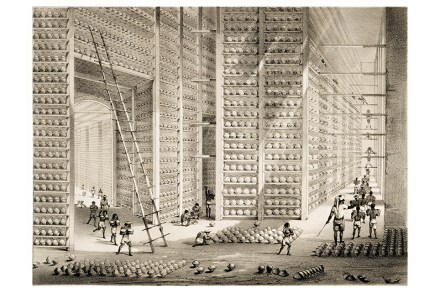
The greed and hypocrisy of the opium trade continue to shock

‘A fact that confounds me now when I think back on it,’ writes the acclaimed Indian author Amitav Ghosh at the start of this expansive and thoughtful book, ‘is that for most of my life China was for me a vast, uniform blankness.’ There were many reasons for this, he says. The war between India and China in 1962 might have played a part, along with the complex relationship between the two countries since then; but also the way that ‘an inner barrier’ has been ‘implanted in the minds’ of many around the world – one that blocks out China but allows in the ‘language, clothing, sport, material objects and art of the West’. Smoke and Ashes is a lovely blend of historical writing, travelogue and personal reflection stemming from what the author calls his ‘epiphany’.

Indian Exodus: the Jewish population exits after 2,000 years

From our US edition

In December the Gate of Heaven synagogue in Thane, a city that links the peninsula of Mumbai with the Indian mainland, will light the Chanukah menorahs as it has annually since its opening in 1879. Among the initial members were Jews whose ancestors may have arrived in India during the time of King Solomon, when Middle East trade routes were established to exchange iron, peacocks, gems, ginger and other spices. Over the many intervening centuries, waves of Jewish immigration have washed up on the Indian shores from different ends of the earth. The varying groups came with separate traditions and practices and ways of living, but they shared prayers and faith, a distinct identity in a country where identity carries great importance.

jewish

Internet poet Rupi Kaur boycotts White House Diwali celebration for Palestine

From our US edition

Cockburn was surprised to learn the war in Israel has a more global impact than he had previously imagined. The carnage in Gaza is affecting the way that Indian women living in the United States celebrate Diwali, at least according to the Canadian-Indian poet Rupi Kaur. South Asian women are now the latest group with a moral imperative to weigh in on the war.  Kaur’s crusade to involve an Indian holiday in a regional conflict all started when the internet poet, famous only to her 4 million Instagram followers and readers of New York women’s websites, rejected an invitation to a Diwali celebration that will be hosted by Kamala Harris on Wednesday. https://twitter.

rupi kaur

Has Bazball rescued — or ruined — cricket?

The date 6 June 2021 was a grim day for cricket. As the world was adjusting to life after the pandemic, a Lord’s Test with a full house felt like ‘the promised kiss of springtime’. And so it was, until the final afternoon, when New Zealand challenged England to make 273 in 75 overs. The gesture was recognised as generous by all except the faint souls in the England dressing room, rendered frit by the possibility of defeat. Thousands of spectators, bewildered by five hours of fearful prodding, withdrew their consent. Cricket has witnessed more profound changes in the past decade than in the previous 100 years With ‘the Hundred’ looming like a pirate’s galleon, caution was inexplicable.

Why Sunak’s prayers in Delhi matter

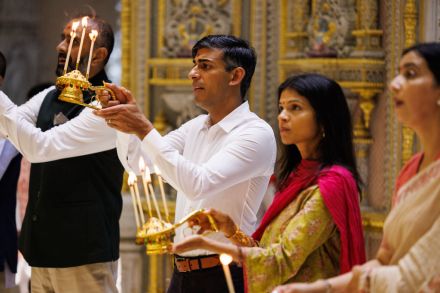
Ever since Alastair Campbell’s declaration that ‘we don’t do God’, no prime minister – and almost no politician – has discussed their faith. David Cameron said his Christianity came in and out ‘like MagicFM in the Chilterns’, a line he borrowed from Boris Johnson who self-defined as ‘a kind of very, very bad Christian’. But Rishi Sunak is different. He’s a practising Hindu who has a shrine in No. 10 for family worship and works with a Ganesh idol on his desk. This being Britain, no one cares: a distinguishing point about our country. Sunak gets flak for being a Winchester old boy, a Brexiteer and an ex-banker, but no one is suggesting any tension between his faith and his office.

Britain should not be nervous of India

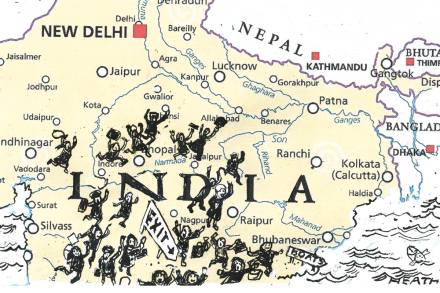
For a disconcertingly large constituency in Britain, Indian history ends in 1947.The two centuries leading up to that bloody year – when British rule formally ended, India gained independence and Pakistan was conjured into existence – were replete with books, articles, pamphlets, lectures and debates on India. What unites this body of work, apart from colonial condescension, is an effort to comprehend India. That impulse faded once India attained freedom. After independence, India surged forward; Britain’s idea of India, however, remained captive to the past Britain’s sins in India – racism, carnage, plunder – are a matter for British consciences.

India’s century: Sunak’s plan for a new Indo-Pacific alliance

When Rishi Sunak became Prime Minister, India’s press was thrilled. ‘From Age of Empire to Rishi Raj’ declared the Times of India: another headline hailed the ‘Browning Street’ phenomenon. ‘Indian son rises over Empire’, proclaimed the New Delhi TV channel, a play on the colonial-era adage that the sun never sets on Britain’s empire. When Sunak visits New Delhi for the G20 next week, it will be quite a moment. Two Hindu heads of government will meet – the old power and the new. Sunak’s agenda is to bind Britain closer to a growing Asian economic powerhouse – which last week completed its first successful moon landing – while containing China by bolstering its rivals.

The phoney mystics who fooled the West

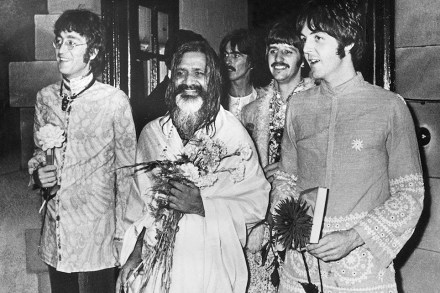
In recent years when we’ve talked about the relations between India and the West, we’ve gone back to stressing the impossibility of interchange. A hundred years ago, E.M. Forster ended A Passage to India with the certainty that Aziz and Fielding could not be friends. Forster thought things would be different after Indian independence, but the spectres of cultural appropriation and the assertion of ongoing imperialist guilt have discouraged equal exchange.  Meher’s spiritual energy was soon devoted to persuading Hollywood to make a massive movie about his life That may explain why the excellent story Mick Brown tells in The Nirvana Express has hardly been covered in the past.

Would we welcome bears in Britain again?

In April this year, a jogger in the Italian Alps was mauled to death by a brown bear. This was reported as the first bear killing in Italy in modern times. But it probably won’t be the last. Bears have been reappearing in northern Italy as part of a rewilding project in the last two decades, returning to regions they had been driven from hundreds of years ago. More encounters between bears and humans are inevitable. The poor Sun and Moon bears are preyed on in Asia for their bile, valued in Chinese traditional medicine In Eight Bears, Gloria Dickie explores how we can coexist with the remaining bear species on Earth, protecting those in danger as well as negotiating how to share space with those that are not.

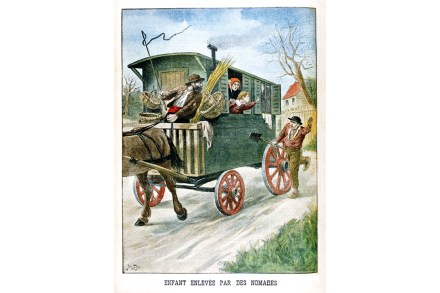
The Roma have been feared and shunned for centuries – but who exactly are they?

Published in German in 2011, this book was the high point of a 20-year-old tradition of ‘Anti-Gypsyism Studies’, which suggested that all previous histories of Roma by non-Roma represented a self-serving, defensive ideology of oppressors demonising the oppressed. Anti-racist scholars should therefore stand aside from such colonialist impertinence and leave the actual history of Roma to be written one day by Roma themselves. They should concentrate on chronicling the racism of their own people – Europeans, and especially the Germans. The book is not, therefore, a history of Roma, and was not intended as such. The original title was Europa erfindet die Zigeuner, which means ‘Europe invents the Roma’. It is a little disingenuous of the publisher to market it as general history.

How many black or Asian Britons feel a strong sense of European identity?

Though wokeness is a vile thing, it has contributed to our culture in one fortunate way – by inspiring brilliant books which refute it. The woeful lack of anything passing for analysis (probably a colonial tool of oppression, like brunch) on the SJW side has thrown into gloriously sharp relief the difference in the intellectual firepower between those who believe in free speech and those who resemble Veruca Salt after joining the Stasi.

How the British saved India’s classical history

In India, a generation has been brought up on the academic Edward Said’s unhistorical prejudices towards the British and what he called the ‘colonial gaze’. In his eyes, British Orientalists were guilty of what is now termed ‘cultural appropriation’.  To his followers it therefore may come as a surprise to learn that it was British Orientalists who in fact rediscovered India’s classical history and heritage and made it available to the rest of the world.  Sir William Jones, a brilliant polymath, contributed more than any other individual to India’s national renaissance. Alongside his day job as a judge in Calcutta, Jones mastered Sanskrit, translated Indian classics and used it to unlock the glories of India’s long forgotten Hindu and Buddhist past.

Adrift in Berlin: Sojourn, by Amit Chaudhuri, reviewed

Feelings of dislocation are at the heart of Amit Chaudhuri’s award-winning novels. Friend of My Youth (2017) followed a writer’s unsettling trip back to his childhood home in Bombay. Before that, Odysseus Abroad (2014) charted the day of a lonely English literature student from India as he meandered around London. Now, in Sojourn – Chaudhuri’s eighth novel – we meet a nameless first-person narrator adrift in Berlin. It is the early 2000s, and the 43-year-old, Indian protagonist has just arrived as a visiting professor at a university for four months. He doesn’t know anyone, and navigating the streets is confusing.

Seize the moment: Undercurrent, by Barney Norris, reviewed

Barney Norris’s third novel opens with a wedding in April. The couple tying the knot don’t matter; it’s the occasion that does, paving the way for a story about love, family and stories themselves, which is apt from a writer who is known for his dramas on the stage as much as on the page. Ed, who narrates half the novel, is there with his girlfriend Juliet, wondering why they’re yet to get married. It’s the expense, he supposes, and the not knowing what sort of ring to buy. And so he allows time to drift by, ‘just letting it happen to me, rather than me doing very much with it’. But then the wedding photographer, Amy, recognises Ed from a chance encounter as children and his story starts to change.

Shinzo Abe was Japan’s indispensable conservative

From our US edition

Shinzo Abe, who was assassinated today while electioneering, was his country's indispensable man. Prime minister of Japan for much of this century, from 2006 to 2007 and 2012 to 2020, Abe's stature on the world stage eclipsed that of other post-war Japanese leaders, just as his time in office surpassed them all. For a taste of the shock of his murder, look back to the surprise and incredulity which met his resignation from office in the pandemic's worst days. Plagued by a debilitating health condition which had earlier caused him to leave office in 2007, Abe concluded he did not have the stamina left to rule.

The man who changed Indian cinema

At 6ft 4½in tall, Satyajit Ray was head and shoulders above his countrymen. His height was unheard of among Bengalis, ‘a low-lying people in a low-lying land’, as the colonial saying went. With his stature, jawline and baritone voice, he might have been a Bollywood hero. Instead, he chose to tower over the world of art-house cinema, a directorial giant among the likes of Bergman, Kurosawa and Fellini, alongside whom he is credited with inducting cinema into the temple of high culture. His standing was secured with his first film, Pather Panchali, which premièred at New York’s Museum of Modern Art in 1955. India then only churned out musicals which, as Ray later put it, ‘present a synthetic, non-existent society’.