Zareer Masani

Dr Zareer Masani is a historian and the author of Macaulay: Britain's Liberal Imperialist. He is on the advisory panel of Policy Exchange’s History Matters Project

There was no golden age for Muslims in Nehru’s India

From our UK edition

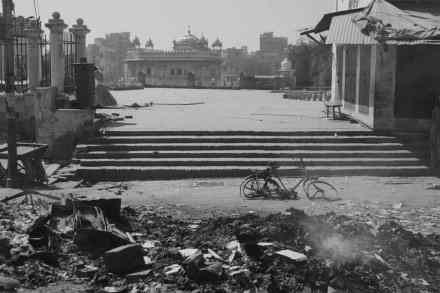
It’s a little-remembered fact that the Indian subcontinent once had the world’s largest Muslim population. Numbering 95 million, they were almost a quarter of India’s total population. Partition in 1947 still left them as the world’s largest Muslim minority, at 15 per cent of Hindu-majority India. More than 70 years later, no single study has successfully explained the consequences of that transition. This latest attempt, though often original and incisive, fails to bridge that gap, partly because it ends in 1977, thereby largely ignoring the major turning point that brought to power India’s current Hindu-chauvinist rulers.
What the conviction of Rahul Gandhi means for India

From our UK edition

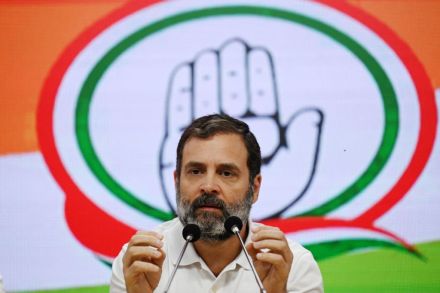
The conviction of Rahul Gandhi – an opposition politician and dynastic heir to three of India’s past prime ministers – has raised questions in India about both a colonial-era defamation law and Gandhi’s own political judgement. Rahul is currently an MP in the Indian parliament, but has taken on the role of crown-prince-in-waiting for the Congress party as a potential rival to Prime Minister Narendra Modi.  His conviction, by a court in Modi’s BJP-ruled Gujarat state, is for a public comment Rahul made some years ago, asking rhetorically why so many thieves had Modi as their surname. This was a jibe at the PM, Rahul’s bête noire. What might have been a harmless joke at a private dinner party has been treated as defamatory.

How the British saved India’s classical history

From our UK edition

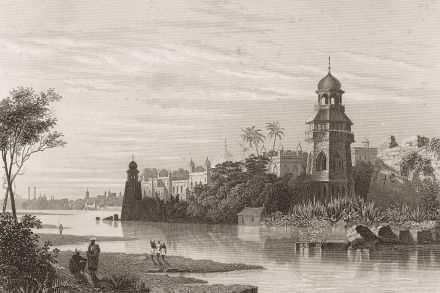
In India, a generation has been brought up on the academic Edward Said’s unhistorical prejudices towards the British and what he called the ‘colonial gaze’. In his eyes, British Orientalists were guilty of what is now termed ‘cultural appropriation’.  To his followers it therefore may come as a surprise to learn that it was British Orientalists who in fact rediscovered India’s classical history and heritage and made it available to the rest of the world.  Sir William Jones, a brilliant polymath, contributed more than any other individual to India’s national renaissance. Alongside his day job as a judge in Calcutta, Jones mastered Sanskrit, translated Indian classics and used it to unlock the glories of India’s long forgotten Hindu and Buddhist past.

The Elgin marbles and the rot of ‘decolonisation’

From our UK edition

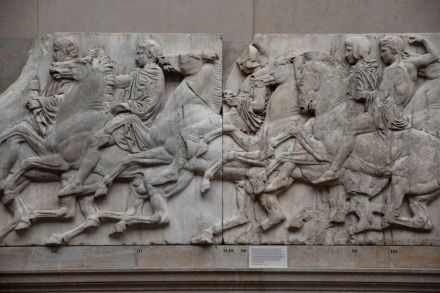
The proposed return to Greece, in the guise of loans, of some of the British Museum’s most iconic objects, the Elgin marbles, is a measure of how far the ‘decolonisation’ campaign has gone in brainwashing the guardians of our cultural heritage. There’s little doubt that the Greek government, which still claims rightful ownership, will never willingly return such a loan, and we all know that possession is nine-tenths of the law. The current deal, designed to circumvent rules preventing British museums from giving away our national treasures, has been brokered by former culture minister Lord Vaizey and ex-chancellor George Osborne, now Chair of the British Museum, but its details have yet to be revealed.

Partition wasn’t inevitable

From our UK edition

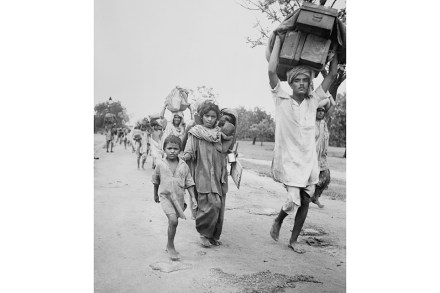
‘Long years ago, we made a tryst with destiny, and now the time comes when we shall redeem our pledge, not wholly or in full measure, but very substantially.’ Imagine if those famous words had not been spoken by Jawaharlal Nehru 75 years ago today, as Pakistan and India announced their independence, but instead by a confederation of the whole Indian subcontinent. In this counterfactual, imagine this new united state as an independent dominion, like Canada and Aus­tralia, with the British monarch as king-emperor. It has a weak central government and strong, autonomous provinces like undivided Punjab and Bengal.

Statue wars: what should we do with controversial monuments?

From our UK edition

Robert Jenrick’s pledge to protect monuments and statues from mob iconoclasm with new laws and powers is very welcome. It’s an issue on which the Government has been quiet in terms of legislation, even if the Prime Minister made clear last summer that 'we cannot try to edit or censor our past'. Now that the initial wave of Black Lives Matter activism has subsided, it’s essential to stop left-wing councils from renaming our streets, removing public monuments or, worse still, hanging a badge of opprobrium on them.