India

Pick your poison in the Himalayan desert

Delhi was hot, noisy and chaotic. As always. I’ve never liked the place. I pour with sweat, get grumpy and scratchy, and just want to go home. What I do like, though, is Delhi’s Imperial Hotel. It’s everything that the surrounding city isn’t, being cool, quiet and calm. I can cope with Delhi if I can stay here, thank you very much, largely because of its wonderful Hardinge Bar, surely the finest in town. I mean, have you ever tried its Imperial Saffron Negroni? It’s an absolute belter. And the eponymous Hardinge, made from whisky and marmalade, is a corker too. Sadly, I wasn’t in the Imperial long enough to do too much damage to the cocktail list. I was here simply to regroup before heading north.

The wonder of nature’s ability to heal itself

A decade ago, I planted 12 acres of trees in a field that had proved unsuitable for productive grazing. The trees themselves are doing well but the most remarkable change has been the increase in birds, invertebrates and flora. Each year brings new species, new levels of abundance. It has been very satisfying and strangely quick. We’re encouraged to think that the planet’s natural processes work if not always at a geological pace, at least not in the instant reward timeframe that characterises our own brief lives. In Nature’s Echo, the leading ecologist Thomas Crowther takes this capacity for nature’s rapid recovery as one reason why we should temper pessimism about environmental catastrophe.

What is ‘Q Manivannan’ doing in British politics?

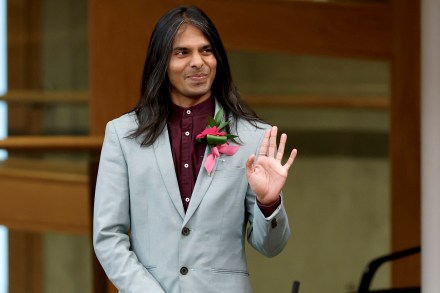
In an age full of nepobaby second-generation politicians posing as "outsiders," new Green Party MSP "Q Manivannan" is the real thing. Indeed, the St. Andrew’s postgraduate is so much of an outsider that he doesn’t even hold British citizenship or permanent residency, and is unable to take up paid employment as a condition of his student visa. "Q" was allowed to stand for office last month because the Scottish government – the Wuhan Lab of terrible ideas in UK politics – recently changed the rules allowing foreigners with only limited leave to remain to compete in elections. Although Manivannan faced a probe into his visa, the powers-that-be ruled that being a politician wasn’t a real job.

Why does Zohran Mamdani want Charles III to return the Koh-i-Noor?

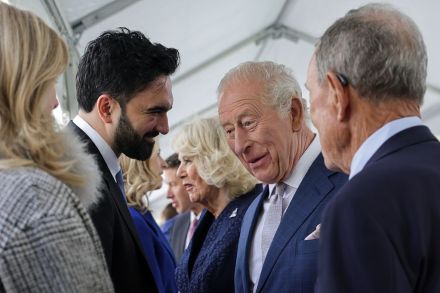
Even those who don’t think much of New York City Mayor Zohran Mamdani’s politics might grudgingly concede he has a knack for jumping on causes that resonate with his achingly progressive voter base. The idea of righting the wrongs of imperial history – anywhere, even thousands of miles away – is high on the tick list. Hence Mamdani’s call for King Charles to return the Koh-i-Noor diamond, one of the world’s largest and most controversial jewels, to India. The 105-carat diamond, part of the Crown Jewels, is the subject of a fierce historical dispute, with India claiming that it was stolen during British colonial rule. Leaving aside Mamdani’s political opportunism, what is it about the fate of the Koh-i-Noor diamond that seems to agitate so many Indians?

koh-i-noor

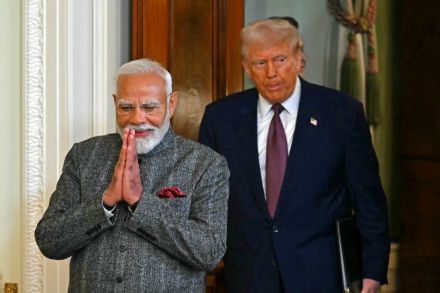
Why has Trump turned on India?

From our US edition

President Donald Trump, not someone to let a good insult go to waste, has caused outrage in India after sharing a social media post describing the country as a “hellhole.” Trump did not make the disparaging remarks himself, merely reposting the statement (without comment) on his Truth Social account. The words actually came from the conservative podcast host Michael Savage, as part of an attack on birthright citizenship. “A baby born here becomes an instant citizen, and then they bring the entire family in from China or India or some other hellhole on the planet,” the Savage said. He accused Indian immigrants in the tech industry of not hiring white native-born Americans, and also said that they lack proficiency in English.

India

The battle for Britain’s oldest Indian restaurant

There are relatively few restaurants in London – or anywhere else, for that matter – that have made it to their centenary. There are even fewer that have been threatened with the closure of their premises in the precise year they are going to turn 100. And there are practically none so popular that news of their possible eviction has resulted in a petition with tens of thousands of signatures – which will be sent to the King in the hope he can reverse what would be a heritage-threatening disaster for one of the capital’s most historic establishments.  Such is the recent story of Veeraswamy, the country’s oldest Indian restaurant which was founded in March 1926 and has been a haunt of the beau-monde and demi-monde ever since.

Dining out in Mysore

From our US edition

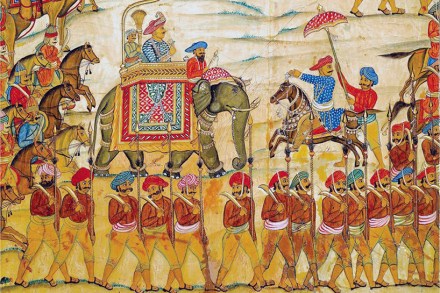
Long before “decolonization” was a glint in the eyes of left-leaning political scientists, Hyder Ali, an upstart mercenary soldier turned sultan of Mysore, and his nepo baby son, Tipu Sultan, fought four bloody wars to keep the British from controlling the south of India. If wars were like soccer league tables, the Hyder/Tipu team would have come out on top with an enviable record of three wins to one loss. That loss was the final match otherwise known as the Fourth Anglo Mysore War, in which Tipu was defeated by the inspired generalship of the future Duke of Wellington. Tipu died in battle and the general was soon comfortably billeted in his late adversary’s summer palace.

Why EU farmers would object to a South American trade deal

It was a weekend of mixed emotions for the European Union. There was the news from Donald Trump that he will impose a 10 percent tariff on eight European countries in retaliation for their opposition to his plans to take control of Greenland. But on a brighter note, the EU finally signed the Mercosur trade agreement with several South American countries. The European Commission hailed it as the creation of ‘a free-trade zone of roughly 700 million people’, one which they promise will save EU companies more than €4 billion a year in customs duties. Ursula von der Leyen, the Commission president, said: ‘We choose fair trade over tariffs, we chose a productive long-term partnership over isolation.

Behind Wes Anderson’s infamous sensibility

From our US edition

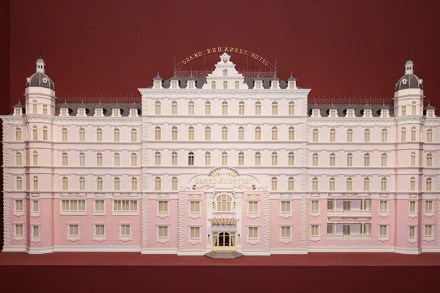
Woody Allen once sardonically described the fans of his films as being divided between those who liked the “early, funny ones” and the later, darker pictures. Much the same might be said of another famous WA: Wes Anderson, who has established himself as one of American cinema’s most significant auteurs despite no longer living in the country – he hops between England and France. Like most auteurs, his films are more succèss d’estime than they are succèss de box office, but he has the cream of Hollywood lining up to work with him and commands respect among actors young and old. Anderson is rightly celebrated – or castigated – as a visual stylist, but he has enormous flair as a screenwriter Anderson’s visual sensibility is infamous.

Indian classical music’s rebellion against modernity

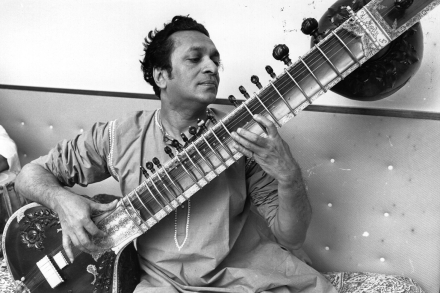
When Gurdain Ryatt, Ojas Adhiya, Milind Kulkarni and Murad Ali Khan take to the stage at Milton Court this Sunday they will be united by a common language: the tradition of Hindustani Indian classical music, rooted in the north of India. Ryatt and Adhiya’s job will be to keep beats circulating on their pitched, drum-like tablas, while Kulkarni’s harmonium will sustain drones, apparently towards infinity. Khan plays the sarangi, a string instrument famed for its uncanny invocation of the wavering of the human voice. Shankar’s tireless advocacy spawned a crossover culture that he felt too often sullied the very music he loved British audiences have a head start when it comes to appreciating this tradition.

An escape from investment banking to the open road

A beguiling cinema advert back in the 1970s showed a young man with a series of doors closing around him with resounding clunks. First, he was hemmed in by the boredom of school, then work, and finally a mortgage – but as soon as he got the keys to his first motorbike, he could hit the open road and escape to freedom. Vroom, vroom. I seem to remember the initial scenes were in grim black and white, but when he got the bike everything switched to vibrant colour – although that may be false memory syndrome.

A portrait of alienation: The Loneliness of Sonia and Sunny, by Kiran Desai, reviewed

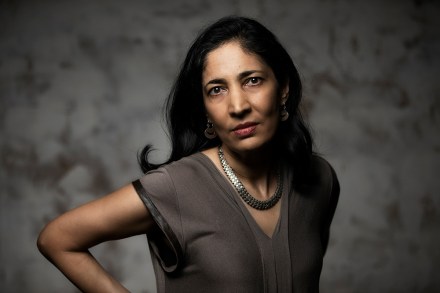
Twenty years on from winning the Booker Prize with The Inheritance of Loss, Kiran Desai returns with a vast masterpiece of a love story which has been longlisted for this year’s prize. Our two protagonists, Sonia and Sunny, come from wealthy neighbouring families in Allahabad, but both are in America when the novel begins. Sonia is in Vermont, working for the college library while finishing her studies, and Sunny is in New York, as a reporter for the Associated Press. When Sonia flees a coercive relationship after suffering depression and Sunny agrees to help a childhood friend choose a bride, they both return to India, where they encounter one another on a train from Delhi to Allahabad.

How the railways shaped modern culture

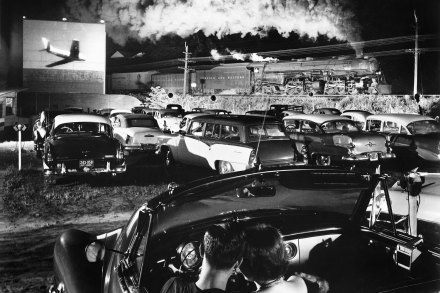
Cue track seven of Frank Sinatra’s 1957 album Only the Lonely and you can hear Ol’ Blue Eyes pretending to be a train. It’s not that he’s a railway enthusiast (though Sinatra, like many musicians, was an enthusiastic collector of model trains). No, it’s written into the words and music of Harold Arlen and Johnny Mercer’s song ‘Blues in the Night’: ‘Now the rain’s a-fallin’, hear the train a-callin’ “whoo-ee”.’ And so Sinatra sings it, just as Ella Fitzgerald, Peggy Lee and Louis Armstrong sang it. It’s an American classic, defined by the sounds that permeate the soul of American popular music: the sounds of the railway.

I love how awful My Oxford Year is

The punters are saying My Oxford Year is a disaster. ‘Predictable, uninspiring and laughable,’ complains some meanie on Rotten Tomatoes. But they’re missing the point. My Oxford Year may be a work of accidental genius, but it’s a work of genius nonetheless. You will squirm, you will laugh derisively, you will cringe. By the end, though, you will be forced to admit that you secretly enjoyed every moment, for this is the very examplar of a so-bad-it’s-good masterpiece. You know it’s going to be awful from the very first frame: a still representing the bookshelf of our handsome, clever and poor heroine Anna De La Vega (Sofia Carson) who has come up to Oxford to spend a year doing an MA in Victorian poetry prior to taking up a job at Goldman Sachs.

Tariffs and the psychodrama of Trump diplomacy

From our US edition

A bleached white conference room, somewhere near Jeddah in Saudi Arabia. On one side sits Volodymyr Zelensky, the Ukrainian leader, in his soldier-boy outfit. On the other, Russian President Vladimir Putin in dark suit and tie. And in the middle, a beaming President Donald J. Trump. "People said this could never happen," he says, as Zelensky and Putin stare awkwardly at the floor. "But it’s a beautiful thing." A White House memo lands in inboxes across the world: "THE PEACEMAKER-IN-CHIEF..." Pure fantasy, perhaps, but Trump does have an almost cosmic ability to get what he wants – and he really wants to end the war in Ukraine. Last night, having spent weeks telling the world how "disappointed" he was with Putin, Trump abruptly announced "great progress" in US-Russia dialogue.

trump Steve Witkoff and Vladimir Putin shake hands (Getty)

The Art of the Dealmaker-in-Chief

From our US edition

Who really thought Donald Trump’s America was about to join the stampede of first-world powers promising to recognize Palestine at the United Nations?  "Wow!" He exclaimed this morning on Truth Social. "Canada has just announced that it is backing statehood for Palestine. That will make it very hard for us to make a Trade Deal with them."  All over the world, commentators convinced themselves that Trump’s expression of concern on Monday about "real starvation" in Gaza meant he was pivoting with global opinion and against Israel.  It turns out, however, that Team Trump is not for turning when it comes to the Middle East. Marco Rubio, the US Secretary of State, has accused the countries now embracing Palestinian statehood of falling for "Hamas propaganda".

Trump deals

Plastic-free paradise

From our US edition

“Welcome to Wayanad. From here, all plastic is banned.” Prasanth was on a mission, belly pressed to the carpet of his car, legs sticking out on the roadside. He emerged triumphant, brandishing a forgotten Coca-Cola bottle and carrier bag before starting the ignition. Crossing into the high-altitude, hilly state of Kerala, he pulled up at a designated recycling spot.  Ephemera rained out of my upturned tote bag upon strict instruction to hand over any plastics. At Wayanad’s border, two impassive security guards eyed my friend and me as we instinctively sank back in our seats. A regular driver for tourists, Prasanth shrugged off the routine check, pointing to a sign as we were waved on.  “1,000 rupees fine! See?

india

Portrait of the week: War in the Middle East, drought in Yorkshire and a knighthood for Beckham

Home Sir Keir Starmer, the Prime Minister, announced a full national statutory inquiry into grooming gangs (which he had previously opposed) on the recommendation of Baroness Casey of Blackstock, who had been asked to audit the matter. His announcement came after four men born in Pakistan and three Rochdale-born taxi drivers of Asian descent were convicted of offences against two teenage girls who were repeatedly raped and assaulted in Rochdale from 2001 to 2006. The Casey report said that Greater Manchester, South Yorkshire and West Yorkshire had ‘disproportionate numbers of men from Asian ethnic backgrounds amongst suspects for group-based child sexual exploitation’.

William Dalrymple: The Golden Road

50 min listen

My guest on this week’s Book Club podcast is the historian William Dalrymple, whose bestselling account of ancient India’s cultural and economic influence, The Golden Road, is newly out in paperback. He tells me why the ‘Silk Road’ is a myth, how Arabic numerals are really Indian – and how he responds to being Narendra Modi’s new favourite author.

The bloodstained origins of the Italian Renaissance

War – huh – what is it good for? According to Duncan Weldon, throughout most of history it’s been fantastic for economic growth and development and has perhaps fuelled technological innovation and more. Blood and Treasure is a delightfully quirky approach to military history. Colonial Spain was thought to be cursed by the gold brought home from its colonies in the New World, since the crown somehow bankrupted itself multiple times during this period, despite the riches. Weldon contends that since the gold meant that Spain’s monarchs did not need to approach parliament for money, it left them untethered from their economies and constraints.