India

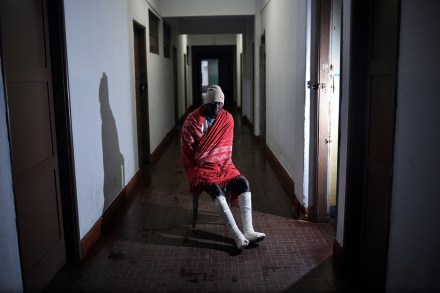
The stigma still surrounding leprosy

One of the earliest leper hospitals in Britain was built in London near the beginning of the 12th century by Queen Matilda, the wife of Henry I. It was a benign combination of housing, hospital and chapel, with patients free to come and go as they wished. Matilda started a fashion among the wealthy, so that by 1350 there were more than 300 such hospitals across the kingdom. Far from lepers being shunned and feared as outcasts, therefore, their treatment for much of the medieval period was enlightened. ‘The mythology of the “medieval leper” seems no more real than that of the vampire or ghoul,’ writes Oliver Basciano. The author is a journalist who has worked for the Financial Times and the BBC.

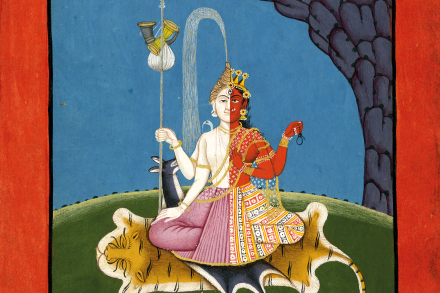
How do you exhibit living deities?

The most-watched TV programme in human history isn’t the Moon landings, and it isn’t M*A*S*H; chances are it’s Ramayan, a magnificently cheesy 1980s adaptation of India’s national epic. The show has a status in India that’s hard to overstate. Something like 80 per cent of the entire population watched its original run; in rural areas entire villages would crowd around a single television hooked up to a car battery. When the show ended, omitting the ‘Uttara Kanda’, the fairly controversial last book of the original poem, street sweepers across the country went on strike, demanding the government fund more episodes. The government caved. But while every country has its pieces of cult media, in India the cult is literal. Some viewers would take a ritual bath before tuning in.

A fireside chat with Usha Vance

From our US edition

Washington, DC Usha Vance is on a mission. This year's low reading scores have shocked the White House into action – so they have placed the Yale-educated Second Lady at the helm of the reading recovery ship. But as well as addressing faltering childhood literacy, Vance has a host of other tasks to complete for the Trump administration. Vance described her role in Trump 2.0 at the annual US-India Strategic Partnership Forum hosted at the Waldorf Astoria in DC Tuesday. It includes reading challenges, the Special Olympics and US-India relations – fueled by her children's interactions with the country's Prime Minister Narendra Modi. The conference followed the launch of the "Second Lady Summer Reading Challenge.

usha vance

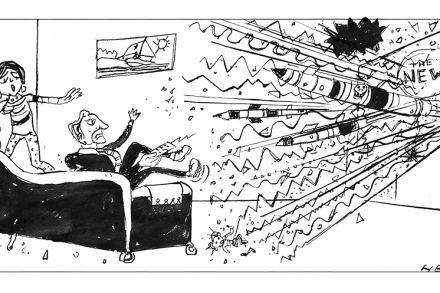
How Pakistan’s most powerful man provoked India’s missile attack

From a western perspective, memorising all 114 chapters of the Quran might seem an unusual qualification for a national leader. Yet this is a defining feature of the résumé of General Syed Asim Munir, Pakistan’s chief of army staff since November 2022. To become a Hafiz – one who knows by heart the entire Quran – requires committing 77,430 words to memory, each recited with precise pronunciation in classical (not modern) Arabic. This accomplishment earns the revered title of Hafiz Sahb or Sheikh and reflects deep religious devotion. To put it into perspective, it would be akin to Sir Keir Starmer memorising the biblical books of Genesis, Numbers and Judges – together totalling more than 72,000 words. Why compare a British prime minister with a Pakistani general?

Was ‘Liberation Day’ just shock therapy?

From our US edition

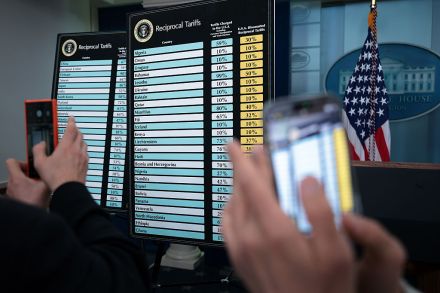
With Treasury Secretary Scott Bessent announcing that a trade deal between the US and India could be imminent, it once again raises the possibility that Trump’s intended outcome is not the imposition of high, permanent tariffs – but that the measures announced on “Liberation Day” were really just shock therapy aimed at the ultimate liberalization of trade. It is significant that India was one of the countries which were originally put down for some of the higher tariffs: 26 percent was going to be the blanket rate on imports from India. South Korea, another country with which trade deal negotiations seem to be in an advanced state, was going to be subject to 25 percent tariffs.

trade

Sleepless in Shangri-La

From our US edition

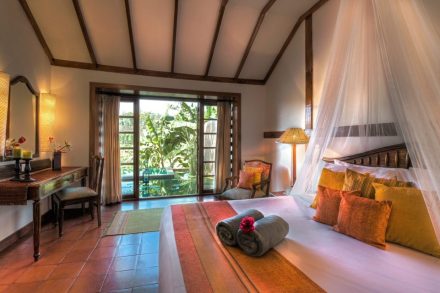
“You are suffering from what we call an ‘Alice in Wonderland’ effect,” Dr. Sankar informed me as I climbed out of a rabbit hole. I was late for a very important date to discuss my sleep (or lack thereof). “When you fall asleep,” he continued, “your thoughts race, and you think: What should I be doing? What do I need to do? Where am I? Where am I going?” I had fallen head-first into another wonderland: Ananda in the Himalayas. Located in the foothills of the Himalayas in northern India, Ananda – which translates to “happiness” in Sanskrit – is a world-renowned holistic retreat that towers above the bustling city of Rishikesh and the sacred Ganges River.

What China’s planned mega-dam means for Asia

29 min listen

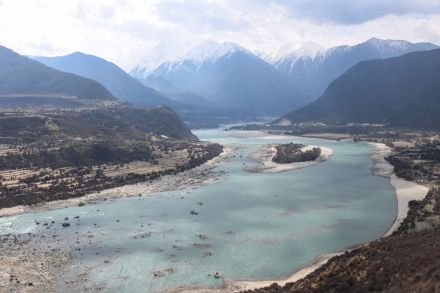
Just before the end of 2024, Chinese state media Xinhua slipped out an announcement – the long discussed mega-dam in Medog County, Tibet, has been greenlit. When built, it will generate three times more energy than China’s Three Gorges dam, currently the largest in the world. The Xinhua write-up gave few other details, but the news has caused reverberations across Asia as the river on which the dam would be built, the Yarlung Tsangpo, flows into both India and Bangladesh. The existence of the dam could, as we will hear in this episode, have extensive impact on these downriver countries.

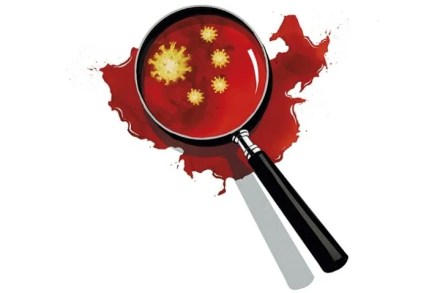
Will ‘The Seeker’ find the truth about the Covid lab leaks?

At the Royal Calcutta Turf Club, where ghosts of British nabobs look out over the racecourse, my neuroscientist wife spoke to an audience of businessmen in support of Robin Sengupta, a pioneering Newcastle neurosurgeon. He has founded a world-leading Institute of Neurosciences in Kolkata where richer patients subsidise poorer ones. After a morning meeting doctors and patients, he showed us the land where an ambitious new medical school will soon emerge from the rice paddies and crayfish farms.

The Coromandel coast under threat

This is a remarkable book by a remarkable man. Based on the Coromandel coast at Chennai in south-eastern India, Yuvan Aves is an active naturalist and an ardent activist. Still in his twenties, he teaches outdoor classes, he campaigns and he notes down the movements and habits of invertebrates, birds and fauna in his local wetlands and littoral. All his observations and the wider thoughts on ecology that make up Intertidal are given added heft and poignancy by the searing account of his childhood which begins the book. His father was a philandering no-hoper whom his mother left for another man. That man was even worse. He took against the young Aves and subjected him to regular beatings, forcing him to scrape the blood from the walls when visitors were coming.

An excellent sixth-form drama project: Santi & Naz, at Soho Theatre, reviewed 

Santi & Naz is a drama set in the Punjab in 1947 that uses an ancient and thrilling storyline about domestic violence. The main characters are a pair of young lesbians who plot to kill Naz’s bridegroom, Nadim, on the eve of the wedding. They discuss stabbing or poisoning him and eventually they decide to drown him in the village lake. This is a strange play. It wants to teach us about Indian society in the 1940s while assuming we’re experts There are many motives for this murder. Santi and Naz hate men. They detest the custom of marriage which forces women to endure painful sexual couplings. And Santi fears that Naz will be unsafe in her marital home because ‘Muslim husbands beat their wives’.

Why are masked men shouting ‘down with India’ in cinemas?

On Sunday night a screening of the controversial Bollywood film Emergency was disrupted in Vue cinema in Harrow, West London, when a group of 30 masked men barged in and started shouting ‘down with India’. Most viewers left the screening, with one eyewitness describing the behaviour as a ‘frightening and intimidating experience’. Censorship of Emergency has extended to other parts of the country too, with screenings cancelled in places like Wolverhampton and Birmingham. A video of the unruly behaviour Harrow shows the group shouting ‘Khalistan zindabad’, or ‘long live Khalistan’ (Khalistan is the would-be name for a conceptual Sikh homeland). A woman confronting the group responds with ‘Bharat Mata Ki Jai’ – which translates to ‘victory to Mother India’.

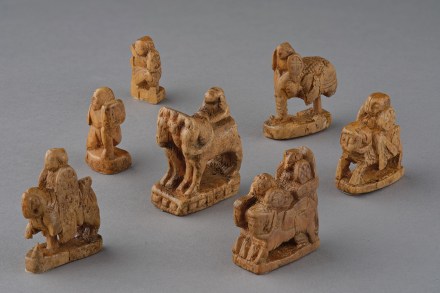
A dreamy, if overly ambitious show: Silk Roads, at the British Museum, reviewed

Towards the end of the British Museum’s Silk Roads show, there is a selection of treasures found in England. Among them is a copper flagon made in Syria and buried in Essex in the late 500s. It is believed that the flagon belonged to an English mercenary who went to fight for the Byzantines against the Sassanians in the 570s. The flagon’s looping handle would have held it tight to a saddle, so perhaps it came to England attached to the warrior’s horse as he rode home from his adventures in the East. There are many spectacular objects in this exhibition. Very many If objects are to inspire more than awe in us, we also need a handle.

In Mumbai, everyone asks about Rishi and Boris

Mumbai is my kind of town, a party town. In my first weeks living here, I was out most nights with new friends half my age, inevitably resulting in many unproductive mornings. This culminated with me waking from my slumber as the sun rose, contorted uncomfortably on the back seat of an auto-rickshaw parked on the edge of a slum under the hostile gaze of an unimpressed cheroot-smoking driver. I was so inexplicably far north of my south Bombay apartment that it took me two hours to get home, which in itself was no mean achievement given my wallet was empty of cash and my phone battery dead. Still, in many Asian cities both items would have been gone rather than just depleted, and their owner likely to be the one who was dead.

South Asia in a time of the breaking of nations

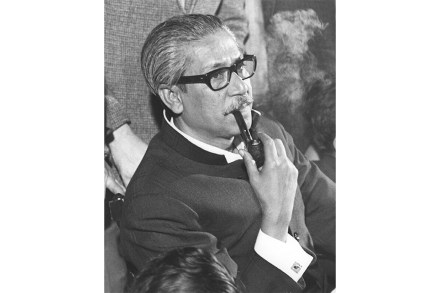
Early on Christmas morning in 1962, the Indian diplomat S.S. Banerjee heard a mysterious knock on his door in Dacca, East Pakistan. Standing outside in the darkness was a 14-year-old boy, who beckoned to him to follow, and minutes later Banerjee found himself opposite the firebrand politician Mujibur Rahman, a pipe-smoking Bengali activist who had recently transformed from a Pakistani nationalist into one of the country’s fiercest critics. For the next hour, the two men engaged in small talk, with Banerjee growing increasingly mystified as to why he had been summoned. Then, just as he was about to go home, he was handed a small envelope intended for the Indian prime minister Jawaharlal Nehru.

India will never join China’s anti-western alliance

On the 15 November Xi Jinping will mark the 12th anniversary of his becoming general secretary of the Chinese Communist Party – the sixth paramount leader in China since Mao Zedong established communist rule in 1949. One of the consistent features of Xi’s rule has been China’s hostility to India. People’s Liberation Army incursions across Indian borders became a given. So, the announcement yesterday that India and China have reached a Himalayan border agreement comes as something of a surprise. Foreign Minister Subrahmanyam Jaishankar announced:  We reached an agreement on patrolling [the border], and with that, we have gone back to where the situation was in 2020, and we can say... the disengagement process with China has been completed.

Opening a bottle with… Soho House’s Kate Bryan

From our US edition

Asked how best to get to know new cultures, travel luminary Anthony Bourdain once said: “Drink heavily with locals whenever possible.” This series is about getting pickled with people far cooler than I am, wherever I’ve washed up. Fast-paced, cacophonous, always surprising; if Mumbai is the hub of India’s creative scene, Soho House Mumbai is the home of its creative set. The eleven-story townhouse stands out in studiously hip Juhu, flanked by contemporary galleries, boutiques, fine-dining spots and a stretch of beach (though the water’s not for swimming).  Inside I was fascinated by 200 pieces of art, 85 percent of which is by artists based in India, or of Indian descent.

What prompted Vivien Leigh’s dark journey into madness?

‘Vivien was barking mad from the word go,’ Laurence Olivier reflected in later life, and Lyndsy Spence’s biography would fully concur with the summing-up. At best, the actress was ‘suspended in a dream world’, unable to separate herself from the classic characters she played – Scarlett O’Hara, with her dark hair and flashing eyes, or Blanche DuBois (‘she is a tragic figure and I understand her’). At her worst, Leigh was, in her own words, ‘a thing, an amoeba, at the bottom of the sea’. Where Madness Lies is a sympathetic description of Leigh’s ‘perturbing nature’; an analysis of her numerous breakdowns, when she was in the grip of manic-depressive cycles – the high spirits and crushing melancholia, when ‘everything inside her brain was white noise’.

North Goa? Why you should go Elsewhere

From our US edition

There’s more to Morjim than offshore gambling and trance parties “North Goa or South Goa?” Ahead of a last-minute January trip, I found myself pestering every friend and acquaintance I could recall having traveled near or by West India, in between consulting YouTube, Instagram, articles and forums.  Advice was echoed across the board. “Head south to relax, and north if you want to go home miserable, with impaired hearing.”  As much as trance music is distinctly Not My Thing, I still wanted to see its birthplace. North Goa is one of those storied, almost ethereal places intrinsically linked to a time before traveling was inextricable from viral Instagram videos and well-worn guidebook recommendations.

goa

With Romy Gill

32 min listen

Romy Gill is a British-Indian chef, food-writer and broadcaster who was awarded an MBE in 2016 for her services to hospitality. She is the author of three cookbooks including Romy Gill's India, which will be published on 12th September.  On the podcast, she tells Liv and Lara about the joys of long train journeys across India, the state of Indian cuisine in the UK and how you can make magic with just cumin and turmeric.

Unplugging in the Western Ghats

From our US edition

"Is that the one where they put a tube... up?” I asked, gesturing to the ceiling. “Yes, ma’am,” Dr. Arun nodded. It wasn’t the unplug I’d had in mind. Sitting in a doctor’s office in the middle of a forest near the western coast of India, clad from head to toe in white cotton, I was feeling vulnerable. Dharana Wellness Retreat had appeared the perfect place for me to attempt a true digital detox. If I couldn’t close my laptop in the famously spiritual mountains of the Western Ghats, there was surely no hope for me. A friend and I had flown in fresh from a boozy work event in North Goa, where unbeknown to me, my body had apparently celebrated a milestone birthday.

Dharana