History

Working out isn’t so new after all

From our US edition

One of the things I did during my nine-month hiatus from Prufrock, the email newsletter I send three times a week (if you aren’t a subscriber, why not give it a try?) was to cycle the Blue Ridge Parkway twice. I started in Cherokee, North Carolina, rode to the start of Skyline Drive, Virginia, and back. It took two weeks — one at the beginning of the summer and one at the end — and I clocked over 900 miles and 100,000 feet of climbing. It was something I had wanted to do for a long time. I loved it and will never do it again. Cycling is an ideal way to experience a landscape. You feel the ups and the downs. Walking has a pleasure of its own, but with cycling you can experience an entire region — in all its subtle variety — in a single day.

Claudius, Messalina and how not to choose political advisers

The Prime Minister has been having some trouble with his inner circle of advisers. Tacitus supplies fine examples of how they worked in Rome. Emperors chose whomever they liked to advise them. Augustus, for example, chose men like Agrippa and Maecenas, who had provided excellent service for him while Rome was still (just) a republic. The fourth emperor C-C-Claudius, by contrast, despised by the imperial family but thrust into power by the military, put his trust in politically experienced and highly efficient Greek freedmen (ex-slaves). Pallas was put in charge of the treasury, Narcissus in charge of correspondence (nothing got past him), and Callistus in charge of justice and law. One incident illustrates the way Narcissus worked.

The irresistible lure of classified ads

The great thing about classified ads is that they have not usually been created by an agency — so what you get is the advertiser’s own best efforts to announce themselves, and what they have to offer, in just 20 words or so. You can glean a lot from what they say, and not always in the way intended. Take this particularly telling example from the Spectator personal ads a couple of years ago: ‘Looking to meet woman on HRT (Hormone Replacement Therapy).’ That he added (and paid for) the last three words tells you more than he could ever understand.

The ancients knew they couldn’t turn back time

The singer Cher, now 75, has announced that, because she refuses to appear old, she is not going to allow her hair to go grey. But the ancient view was that there was nothing inherently wrong with old age, as long as one prepared for it, accepted it and respected it for what it was, limitations and all. As Cicero pointed out, ‘each stage of life has its place in the nature of things, for harvesting in its time’. So, he went on, the child is weak, the young man self-assertive, becoming authoritative in his middle years and mature in old age. Each stage made different demands. Not to acknowledge that was to ask for trouble. One of Aesop’s fables put an amusing spin on the point. A man whose hair was black but flecked with grey had two lovers, one old, the other young.

Boris wouldn’t be the first to be brought down by a party

Whatever the result of Sue Gray’s report on ‘gatherings’ in Downing Street, there is a political lesson to be learned: any excuse will do, even a party, when people are out to get you, as the Roman historian Tacitus (ad 56–c.ad 120) well knew. ad 69: the emperor Vitellius was lying seriously ill when he noticed a mansion with lights ablaze throughout the night. He was told that a ‘lavish, licentious’ party was being held in honour of Junius Blaesus. Critics denounced it and Vitellius angrily agreed (Tacitus commented: ‘There are people on the lookout for signs of the emperor’s displeasure’). Lucius Vitellius, the emperor’s brother, who loathed Blaesus, now saw his chance to destroy him.

Writing and the conservative impulse

From our US edition

Radicals often think of writing primarily as an act of provocation — a bullet in the chest of the bourgeoisie. No doubt, writing can provoke, and one doesn’t need to be a radical to know this, as any reader of Tom Wolfe will tell you. But to provoke in writing, particularly literary writing, is at once to provoke and to conserve a provocation. To write is a tacit acknowledgment that something is worth keeping. Otherwise, one could simply shout. What else does writing conserve? All sorts of things, of course, but in literature, it conserves feelings, perceptions, the lives and actions of people or a way of life. It conserves ideas that one hopes won’t be burned to a crisp on the streets of Avignon.

What is it like to be worshipped as a god in one’s lifetime?

In January 1780 the news reached London that Captain Cook had been killed and eaten in Hawaii. The story of his death was met with morbid fascination by the general public, inspiring paintings, poems and even a ballet. This ballet was so violent that one of the dancers accidentally stabbed another during the scene of the attack, yet it was also a fantastic success, touring the theatres of Europe and America. Soon aristocratic women were wearing dresses modelled on the natives who killed Cook, and interest in the explorer’s death continued into the 19th century, until one wit noted that every museum in the world contained a copy of the club that killed him. So, who was it that really deified Cook: the Hawaiians who murdered him or the Europeans who made a martyr of his memory?

In ancient Rome, the truth could be stranger than fiction

Saturnalia was a period of Roman fun and games held just before our Christmas. Macrobius (c. ad 430) composed a series of conversations enjoyed by cultured Romans over this festive period, covering a vast range of topics, one of which featured amusing true stories. What better way to start the year? The emperor Augustus, tired of being offered epigrams almost daily by a poor Greek, dashed off one in Greek himself and gave it to him. Expressing his admiration, the Greek gave Augustus a few coins, swearing he would have given more if he had them. Everyone burst out laughing, and Augustus gave him 100,000 sesterces. A man appeared in Rome, looking remarkably like Augustus. Augustus summoned him and asked: ‘Was your, er, mother ever in Rome?

The Tudor roots of wokecraft

From our US edition

In January 2019, I received an email from an administrator at Georgetown University, where I was a graduate student. She and my department chair wanted to meet with me to “discuss concerns that have been raised by some of your peers about classroom comments and behavior.” This meeting, they told me, would “function as the start of a conversation.” They didn’t say where the conversation might lead. I concluded that the next step would be a formal disciplinary hearing. I was terrified. Three-quarters through a two-year program, I was in danger of being forced to leave without a degree. And for what? I scanned my memory for deviant statements. There were a few: I’d alluded in print to certain essential biological differences between men and women.

reformation

Most-read 2021: The Netflix generation has lost its grip on history

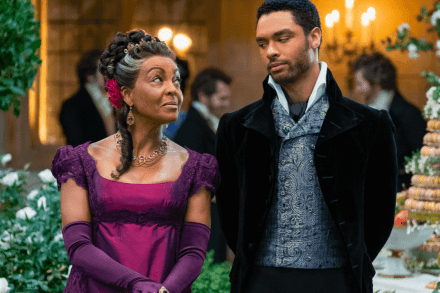
We're closing the year by republishing our ten most popular articles in 2021. Here's number four: Zoe Strimpel writing in February about how popular portrayals of the past are being changed to fit the present.  The first thing you notice about Bridgerton, Netflix’s big winter blockbuster set in Regency England, is how bad it is: an expensive assemblage of clichés that smacks of the American’s-eye view of Britain’s aristocratic past. The dialogue is execrable, the ladies’ pouts infuriating. But bad things can be good, especially when it comes to sexy period romps. Bridgerton is no different. The story follows the elder children of the Bridgerton family as they look for love in a utopian sprawl of courtly landscape and sociality.

Adieu, Teddy Roosevelt

From our US edition

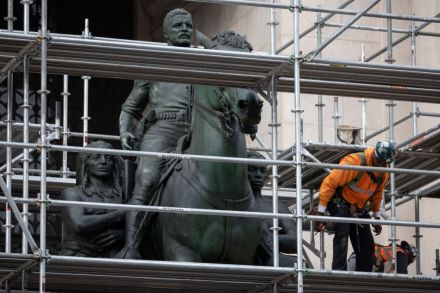
It is a custom to offer a blindfold to prisoners facing a firing squad. Just so, the authorities covered the statue of Teddy Roosevelt that has stood in front of the American Museum of Natural History before it is carted off to its new home in North Dakota. Everywhere one turns, America’s past is being dismantled. Just last month, a statue of Thomas Jefferson that had graced New York’s City Hall for 187 year was removed.  At schools and colleges across the country, images are being covered or removed, buildings renamed, history rewritten. It’s open season on the past. Back in June 2020, I wrote about the decision to remove the statue of Roosevelt from in front of the institution he help to found.

roosevelt

Our growing unwillingness to understand the past

I was recently reading the works of the 17th-century antiquary John Aubrey, who at one point mentions a ghost craze that had broken out in Cirencester. The ‘apparition’ was reported to have disappeared with ‘a curious perfume and most melodious twang’. Reading this I unconsciously got ready for a man as wise as Aubrey to pooh-pooh the whole thing, pouring scorn on such superstition. But no; while Aubrey does indeed have a correction, it comes via his friend — one Mr W. Lilly — who ventures that the common view is wrong, for he ‘believes it was a fairy’. One of the most familiar joys of reading is the moment of recognition, when a hand seems to reach out across the centuries and a voice seems to say: ‘I was there too.

Make History Great Again!

Why don’t today’s children know more about history? In an age when information has never been easier to access, it’s alarming how many youngsters are ignorant about the past. In July, a survey of 1,000 schoolchildren found that four out of ten had no idea what the Battle of Britain was, while another four out of ten had never heard of Cleopatra. More than half didn’t know the Romans spoke Latin. Of course every generation complains that children are ignorant of facts that we used to take for granted. Often it’s simply a question of changing priorities: where children once learned about Walpole and Gladstone, they now learn about the suffragettes and American civil rights.

Why has medicine been so slow to improve over the centuries?

Medicine was founded by Hippocrates in the 5th century BC. Doctors continued to study the Hippocratic texts into the 19th century, and many of the therapies, such as bleeding, purgatives and enemas, continued to be practised into the 20th. The standard Hippocratic account of disease was that it resulted from an imbalance of humours within the body. But this failed to explain how some diseases spread through populations at particular times. Among the earliest Hippocratic texts, Epidemics and On Airs, Waters, Places sought to explain this phenomenon. In 1850 the London Epidemiological Society was formed.

Have Americans got George III all wrong?

From our US edition

Americans are rarely accused of underestimating themselves, but might they in fact be a greater people than they think? That thought has regularly occurred to me over the past three years while I was researching and writing my new biography of their last king, George III, and especially when I read Richard Brookhiser’s insightful comment in his recent book Give Me Liberty, where he points out that Britain’s thirteen American colonies in the 1760s and early 1770s were among “the freest societies in the world.

George iii

Can the fiasco of the Dieppe Raid really be excused?

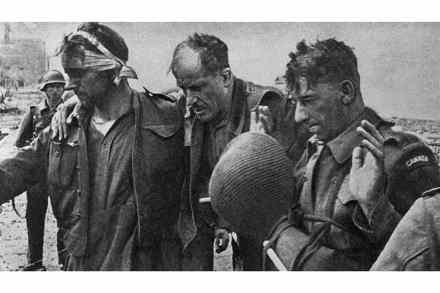
In my mother’s final days we had a long conversation about the second world war. I asked if she’d ever thought we might lose. ‘No,’ she snapped. ‘I knew we were too clever for them.’ The chief of the imperial general staff, Sir Alan Brooke, had been less sanguine. On 31 March 1942 he confided to his diary: ‘During the last fortnight I have had, for the first time since the war started, a growing conviction that we are going to lose.’ His concern, besides the army not fighting very well — witness Hong Kong and Singapore — was that Britain’s new allies, the Soviet Union and the United States, were for different reasons clamouring for a second front.

The Globe, Plato and the corrupting force of art

The Globe theatre’s project to ‘decolonise’ Shakespeare, as if that would make plays like The Tempest ‘acceptable’ to them and their audience, would have met with no approval at all from Plato (c. 425-348 BC). For him, all poetry and the arts were corrupt, and in his Republic, a discussion of how an ideal state should be constituted, he called for them all to be banned. Plato’s argument begins from exactly the same position as the Globe’s: that all art, but especially that which deals in words, has an educational effect. In other words, it instructs, whether it likes it or not (and Greeks did indeed argue that this was its effect, and even purpose).

Use it or lose it: has the public library had its day?

I write this in a garret a few doors down from the public library in Muswell Hill, north London. It is a nice irony that a century and a half ago, on the site where the free-to-join municipal library now stands, was a villa owned by one Charles Edward Mudie. In the mid-19th century, Mudie had amassed a fortune by establishing a hugely successful lending library where subscribers could either pay a guinea a year to borrow as many books as they could read, or take the pay-as-you-go option of a shilling a book. For purely commercial reasons, Mudie was a staunch supporter of novels that were long enough (c.200,000 words) that they needed to be broken up into three separate volumes, and his influence was such that publishers would insist that writers bulk out their narratives accordingly.

Twitter has taken the place of the ancient curse-tablet

Twitter and other easily accessible means of online communication have encouraged the public to believe that Their Voice Will Be Heard. When it isn’t, they express their frustration through abuse and threats or by blocking roads. In this way, the mentality of the ancient curse-tablet lives on. In the ancient world, the purpose of the curse was to ‘bind’ the person you disliked — i.e. frustrate them from achieving the end they wanted and you did not. It was written on a thin lead plate, rolled up tight, sometimes twisted (to ‘hobble’ the victim) and pinned (to constrain him), then placed into the tomb of someone who had died before their time.

All Greek to us

From our US edition

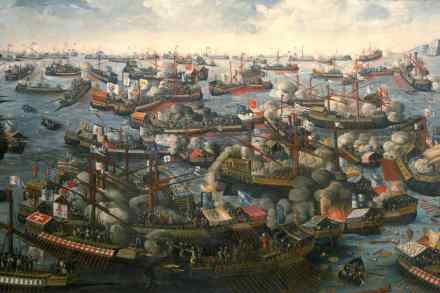
We are traveling through a shower of Greek anniversaries, triumphant and calamitous. Last year marked the 25th centenary of the Battle of Salamis in 480 BC, when 300 Greek warships defeated a Persian armada four times larger and ended the Persian empire’s expansion into Europe. This year marks the bicentenary of the beginning of the Greek War of Independence from the Ottoman empire in 1821, which resulted in the first European nation-state to be founded on the Enlightenment values of the American Constitution. Next year will mark the centenary of Greece’s defeat in Asia Minor in 1922, which ended the modern Greek state’s aspirations to absorb all the lands where Greeks lived and had lived since antiquity, an event still referred to as ‘the catastrophe’.

greek