History

The culture war over the Middle Ages

From our US edition

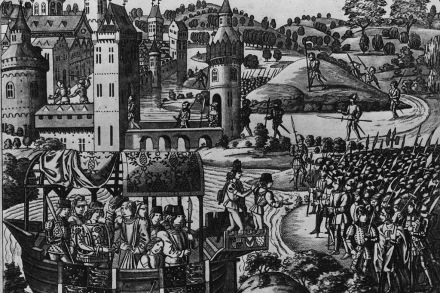
There is a war afoot, here in late civilization, over the meaning and legacy of the Middle Ages. Two distinct fronts have emerged from either side of our political spectrum. On the left, in the academy, medievalism is being diversified out of existence, its defining Western characteristics relegating it to a smaller place in a global mosaic. On the right, a certain breed of new conservative is reclaiming the Middle Ages as a keystone period in which order and reason ruled, instead of the swivel-headed “scientism” of pure observation brought on by the Enlightenment. The ground upon which this battle is joined is the traditional Anglosphere understanding of the medieval period, roughly the fifth to fifteenth centuries ad, a period most commonly thought of as the “Dark Ages.

Middle Ages

The forgotten history of Poland and Ukraine

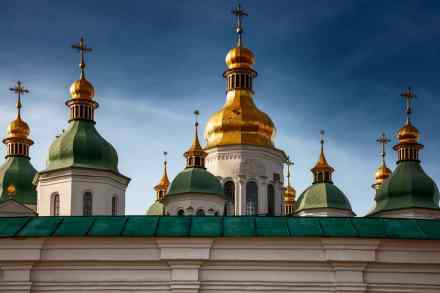
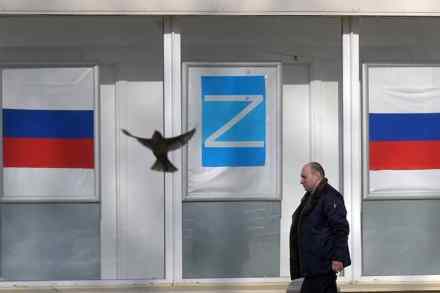
Since the outbreak of war in February there has been an overwhelming focus on the historical links between Russia and Ukraine, partly to counter Putin’s grand assertions that Kyiv belongs to Moscow. But this spotlight on Russia has meant the important history of Poland and Ukraine has been fatally overlooked. Ukraine was part of the Polish state for longer than it was inside Russia – and this is key to understanding why Ukrainians are different from Russians. In other words, it is impossible to comprehend Ukraine’s history without examining the impact of both Poland and Russia. A thousand years ago the people who now call themselves ‘Ukrainian’ had not yet adopted this term.

The ancient Greek art of theatre criticism

Last week Lloyd Evans was wondering whether it was about time audiences started booing dramatic productions of which they disapproved. He was right to trace this happy practice back to the ancient Greeks. In Athens, trilogies of tragedies were put on in competition, and Plato tells us that the audience did not disguise its feelings about its choice of winner, though the judges had the final say (Plato disapproved of those who yielded to the ‘howling of the mob’). In general, disapproval of any aspect of a play was expressed by hissing and booing, and heels being kicked against the seats. Uncouth behaviour was also not uncommon.

The ancient art of love spells

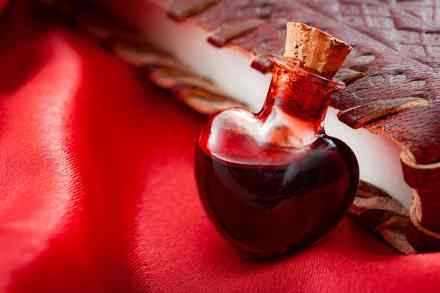
An Oxford don has raised the prospect of producing a cocktail of hormone pills that would help you to fall in love. What an appalling prospect! You might suddenly find yourself consumed with an irresistible desire for Ian Blackford. The ancients knew what was really required: a means of ensuring that the object of your passion fell in love with you. The ancients regarded an attack of lust as the same sort of experience as falling ill or being afflicted by madness. So a man in love with a woman would write a love spell asking a god or some unpleasant earth spirit to, for example, ‘burn, torch, the soul of X, her female body, her limbs, lay her low with fever, until she leaves her husband’s home and comes to me, now, quickly’.

What is the most significant year of the Queen’s reign?

Andrew Roberts The most important moment came on 11 November 1975 when her governor-general in Australia, Sir John Kerr, dismissed the Labour government under Gough Whitlam, doing so in her name. Although the Queen knew nothing about it before it happened (indeed, she was asleep at the time), it reiterated the vital constitutional principle that there is a power above politicians, even elected ones as in Whitlam’s case. Whitlam had driven Australia to the brink of economic and social collapse, but Kerr saved the country using the Queen’s royal prerogative. His decision was enthusiastically endorsed by the Australian people at the subsequent general election, with a landslide victory for Malcolm Fraser.

30,000 gallons of wine, 2,000 golden bulls and a three-month party: how the ancients celebrated

The ancients certainly knew how to put on a celebration. Let us hope the Queen’s Platinum Jubilee comes up to scratch. In 274 bc the Greek pharaoh of Egypt, Ptolemy II, staged a procession in honour of his father. It featured 400 cartloads of silver plate, 20 of gold and 800 of spices, 57,600 infantry, 23,200 horse, 2,000 bulls covered in gold, 2,400 dogs, 150 men carrying exotic trees with birds in them and 120 boys carrying saffron on gold platters. They were accompanied by elephants, goats, hartebeest, camels, ostriches, peacocks, a large white bear, three bear cubs, 14 leopards, 16 cheetahs, a giraffe and an Ethiopian rhinoceros.

Which monarchs have had the longest reigns?

Long to reign over us The Queen is the world’s current longest-serving monarch, but two in history have had longer reigns. – Louis XIV of France ascended the throne aged four in 1643 and served until his death in 1715 aged 76 – 72 years, 110 days on the throne. He was succeeded by his five-year-old great-grandson. – Rama IX was king of Thailand from 9 June 1946 until his death on 13 October 2016 – a period of 70 years, 126 days. – The Queen will overtake Rama IX on 12 June this year, but will have to reign until 21 May 2024 before she eclipses Louis XIV to become the longest-ever reigning monarch. Set in stone What should the next jubilees be called (to go by a selection of jewellers’ websites)?

Putin is repeating Emperor Vitellius’s mistakes

Given Putin’s less than triumphant operation in Chechnya, where the Russian army suffered catastrophic losses, it is hardly surprising that his control of the ‘special operation’ in Ukraine does not seem to be a howling success. His inability to deal with the situation there bears a striking resemblance to that of the short-lived Roman emperor Vitellius. After the chaos that followed Nero’s suicide in ad 68, the year 69 is known as ‘the year of the four emperors’. Vitellius was the third to try for the throne, before falling to the ultimately successful pro-Vespasian forces. The Roman historian Tacitus was scathing about his military abilities.

The ancient Greek ship that was too big for any harbour

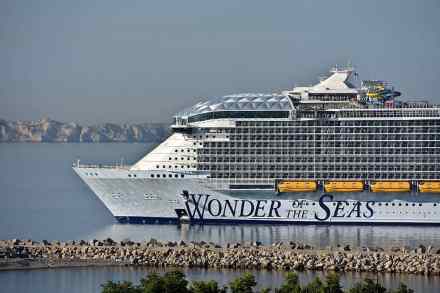
The biggest cruise ship yet built has just been launched, but in like-for-like terms, it comes nowhere near the Syracusia, built c. 240 bc on the orders of the Sicilian tyrant Hiero II. A small ancient Greek freighter might be about 45ft long, a trireme 120ft, a large merchantman 130ft. The Syracusia was nearly three times longer, constructed out of enough material to build 60 triremes. It had three floors. The lowest contained the cargo. On the second were the 30 cabins, covered in multicoloured mosaics telling the story of Homer’s Iliad. The cooks’ galley came complete with a seawater fish-tank, with a 20,000-gallon freshwater cistern in the bow.

Picking daffodils with my ancestors

From our US edition

Pennsylvania winters can be unyielding. Though the extreme, single-digit temperatures and mounds of sometimes-onerous (but always beautiful) snow come and go, the bleak, overcast skies tend to overstay their welcome, hanging around like a monochromatic weight on one’s psyche. “Western Pennsylvania is known for two things,” UPMC psychiatrist Dr. Lawson Bernstein told CBS News, “producing linebackers and one of the highest prevalence of Seasonal Affective Disorder (SAD) in the entire country.” Sigh. While I grumbled this morning about having to continue bundling up well into spring (it was 36 degrees), a bunch of cheery golden blossoms near the edge of the woods reminded me this was no time to feel sorry my myself.

The rise and fall of the Tsarist legal system

St. Petersburg University in Russia is (desperately?) inviting scholars worldwide to a conference in September celebrating Mikhail Speransky. It was he who, on the orders of the Russian emperor Nicholas I, published in 1830 a 45-volume compilation of all the laws of the Russian Empire, which he reduced to a 15-volume digest by 1839. It was to form the basis of the Tsarist legal system. The precedent for this was, of course, the legal Digest of Rome’s eastern emperor Justinian (AD 533). This was a compendium of 2,000 volumes of Roman law published between the 1st and 3rd centuries ad. Its purpose was to produce a contemporary, definitive account of all Roman private law. For student use, a handy four-book summary (the Institutes), also with legal force, appeared alongside it.

The Russians aren’t the first to rewrite history

Historians in Russia have a long and craven record, now going back centuries, of being economical with the truth about their current regime. The Roman historian Tacitus had a fascinating explanation for why such economy was also the case under the early Roman emperors. First, some background. Livy’s 142-book moral and romantic history of Rome stretched from earliest times to 9 bc, including the end of the republic in 27 bc when Augustus became emperor.

Patriarch Kirill, Archbishop Ambrose and a lesson for Putin

Patriarch Kirill is Patriarch of Moscow and all Rus’ and Primate of the Russian Orthodox Church; and one of his flock is that committed Orthodox Christian Vladimir Putin. Kirill applauds Putin’s genocidal assault on Ukraine. Has he never heard of Archbishop Ambrose of Milan and his dealings with the Christian Roman emperor Theodosius? It all began in ad 390, in the important Greek city of Thessalonica, when Butheric, the commanding general of the Roman field army and a friend of Theodosius, imprisoned a popular chariot-racer. The mob, determined to see him racing at the next games, demanded his release. Butheric refused. A major riot ensued, and since much of the army was on duty elsewhere, Butheric and other officers were murdered.

A lesson for those calling Nazanin Zaghari-Ratcliffe ‘ungrateful’

In the latest installment from the idiot age of Twitter, #ungratefulcow has been trending. The reason? Nazanin Zaghari-Ratcliffe had expressed, mildly and politely, some unhappiness that it had taken Her Britannic Majesty’s Government six years to free her from Iranian captivity. Cue a handful of shallow trolls slagging her off, and a lot of other people slagging them off. I say ‘mildy and politely’ because to my mind, the salient characteristic of Zaghari-Ratcliffe’s comments was its restraint. Most people, I submit, would be furious beyond words to miss most of their only child’s first years of life.

Graham Robb deserves to be a French national treasure

This is a ceaselessly interesting, knowledgeable and evocative book about France over thousands of years. Is it at all likely to have been produced by a French writer? Though it’s about some deeply serious subjects, it’s very amusing; it makes no attempt to constrain itself within an overarching theoretical framework; it would be impossible to extract from it a grand statement beginning ‘The French are all…’; it is pragmatic, full of enterprising scholarly initiative and a gift for observation without intruding. Most strikingly, it’s a book about France in which the author has profitably spent a good deal of time outside Paris.

What Tacitus knew about tyrants

Last week Aristotle offered a lesson in tyrant theory. This week Tacitus (ad 56-c.120) offers one in tyrant practice. Tacitus was a Roman historian who enjoyed a successful political career, rising to consul and provincial governor. He admitted that he laid its foundations under the tyrannical emperor Domitian (d. ad 96) – he memorably contrasted Domitian’s red face with the pallor his gaze induced in his victims – and thought his duty as a historian was to ensure that those responsible for murderous deeds or heroic actions should never be forgotten. His judgment of Domitian’s reign was worthy of Orwell: ‘Rome of old [i.e.

Does Putin pass Aristotle’s tyrant test?

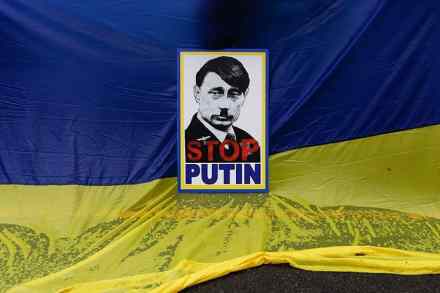
Is Putin a tyrant? Aristotle (384-322 bc) might well have thought so. Seeing the turannos as a deviant type of king, Aristotle tested the distinction under four headings. Was he subject to the law? Did he rule for a set term, or for ever? Was he elected? And did he rule over willing subjects? We may judge Aristotle’s answer from the image he drew of the tyrant as a master of slaves who, knowing that his subjects hated him, did everything in his power to ensure they were incapable of moving against him. First, therefore, the tyrant stamped on anyone exhibiting the slightest independence of mind, since ‘the man who rivals the tyrant’s pride and spirit of freedom robs the tyrant of his position of mastery, undermining his authority’.

The moral courage of P.J. O’Rourke

Was it Socrates who said that chaos was the natural state of mankind, and tyranny the usual remedy? Actually it was Santayana, and boy, did he ever get it right. My friend Christopher Mills has given me a terrific book, The Wages of Destruction by Adam Tooze, about the making and breaking of the Nazi economy. I thought I knew everything there is to know about that period, but I hadn’t thought of global economic realities, the ones that actually won the war. Germany’s limited territory and lack of natural resources led to war. Germans had been starving since the end of the Great War, and needed the corn of Ukraine and the oil deposits of Romania in order to feed themselves and keep warm. Once in power, all Hitler needed to do was deal; instead, well, you know the rest.

A toast to Victorian Britain

Across oceans and continents, less favoured nations produce more history than they can consume. In these islands, the English — as opposed to the Scots and the Irish — merely consume a lot of well-written military history. The other evening, stimulated by a few decent bottles, someone raised a hoary question. If we could have been born in an earlier century — pre-20th — which would we have chosen? What epoch was worthy to compare with the Antonines and those Good Emperors, as praised by Gibbon? The consensus was that, assuming a strong constitution and plenty of money, the long 19th century in Britain, from the end of the Napoleonic Wars to 1914, would have been as good as any. Of course, we must restrain the roseate glow of retrospect.

The ancient problem of unscrupulous ‘doctors’

Yet again ‘doctors’ with no qualifications have been found advertising dodgy but expensive products and treatments, in this case, injections of unregulated Botox variants to remove wrinkles. Pliny the Elder (d. ad 79) inveighed against such practices 2,000 years ago. Romans had a love-hate relationship with the Greeks, and medicine was no exception. In his massive Naturalis Historia — a 36-book encyclopaedia of the animal, vegetable and mineral world — Pliny acknowledged the enormous influence of Greek medical theory, i.e. that health required a balance between the four bodily liquids (blood, phlegm, yellow bile and black bile) and their many associated ‘powers’ in matching groups of four (e.g.