History

Not so dryasdust: how 18th-century antiquarians proved the first ‘modern’ historians

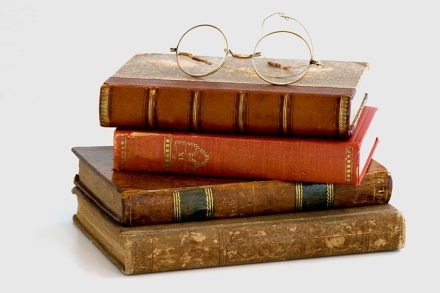
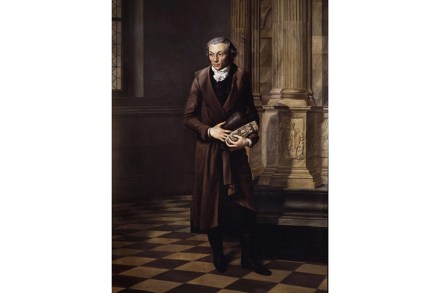
Antiquaries have had a bad press. If mentioned at all today, they are often derided as reclusive pedants poring over details of manuscripts and shards with little relevance to the wider world. As recently as 1990, the respected ancient historian Arnaldo Momigliano skewered their pretensions when he described them as ‘interested in historical facts without being interested in history’. Rosemary Hill, the biographer of Augustus Pugin, the architect of Gothic revivalism, which owed much to antiquarianism, has other ideas.
What the EU could learn from the Athenian Empire

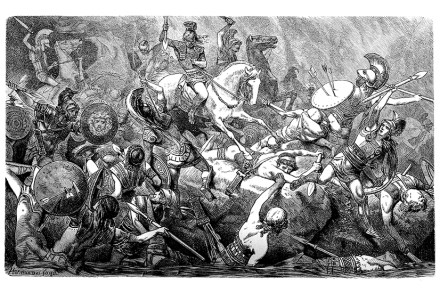
The EU has regularly been likened to the Roman Empire. But its current direction suggests that the Athenian Empire (478-404 bc) is a better parallel. The EU began as an attempt to unify countries economically after the second world war. By slow accretion of powers via the single market, Maastricht, the euro and finally Lisbon, the EU became, drip by drip, a full political union run by an unelected central authority, which now threatens to end vetoes and intervene domestically, suing member states with whose policies on immigration, civil rights, freedom of speech etc it disagrees. After the Persian wars, Athens in 478 bc assembled on Delos an alliance of Greek city-states (poleis) to keep Persia at bay.

What Dominic Cummings could learn from Xenophon

On the subject of leadership, the Athenian soldier, historian, biographer and essayist Xenophon (c. 430-354 BC) had much to say, having led the retreat of 10,000 Greek soldiers from Cunaxa (Iraq) through hostile territory back to Greece. Had Dominic Cummings paid more attention to him when he studied ancient and modern history at Oxford, his time in government might have been more successful. The key to Xenophon’s thinking was that the good leader had a positive relationship with his men, calculated to be of mutual benefit to everyone: the image of friendship between leader and men was never far away.

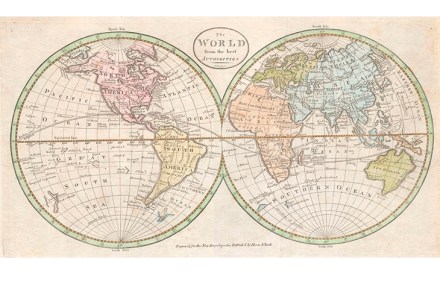
An orange or an egg? Determining the shape of the world

Thirty-two years ago the young Nicholas Crane, who would go on to become one of England’s most esteemed television geographers, set out to woo a young woman by spiriting her off to the unfailingly romantic landscape of Chimborazo and Cotopaxi. The couple spent their high-altitude idyll walking the hills in hobnail boots, making river passage in dugout canoes and boarding a Quito-bound steam train through the Andes, run by the estimable Empresa de Ferrocarriles Ecuatorianos. Their journey had its moments: at one stage both parties were to be found at 13,000 feet, crusted with ice and huddled overnight from the gales inside a pair of plastic rubbish bags; they then got themselves lost for a while among a wilderness of huge and very active volcanoes.

Animal sentience law has finally caught up with Plutarch’s thinking

Almost no ancients cared whether animals felt pain or not. The classical Stoic belief that man’s reasoning capacity elevated him above all other creatures was the intellectual justification. Cruelty to animals could be frowned upon, but only because it might encourage man’s cruelty to man. Descartes (d. 1650) raised the question of whether animals really were conscious and, deciding they were not, concluded they did not feel pain: their reaction to it was purely mechanistic. Behaviourists of the 20th century took the same line. But there is one ancient dissenting voice to that view: the Greek essayist Plutarch (c. ad 100). Now that UK law has legislated that animals are sentient, it has finally caught up with him.

Virgil understood the great power of nature

‘Georgics’ are an ancient form of poetry about agriculture and the land. The term derives from Greek gê ‘land’ + ergon ‘work’ (cf. farmer George) and emphasises the necessity of working hard to counteract deprivation, build a nation and forge a civilised world. Virgil’s Georgics (29 bc) in four books are a supreme example of the genre and not without relevance to the modern ‘green’ agenda. Its opening outlines the subject matter: field crops and tilling the soil, viticulture, and the care and skill required to tend cows, sheep and bees.

Studying history isn’t what it used to be

Is history in danger of becoming a thing of the past on campus? In recent weeks, Aston in Birmingham announced a consultation on plans to close its entire history department. Meanwhile, London South Bank has announced that its history course will not be recruiting students from this Autumn.  The condemnation was swift. Former regius professor of history at Cambridge Richard J Evans and author of numerous books on the Third Reich, said that history was 'more important than ever', since it provides the skills to look critically at the evidence and to distinguish fact from fiction' in age of fake news and populism.  But as a history student myself, I'm not convinced a decline in the number of courses is such bad news.

What should we put in our time capsule of the plague year?

The ladies of my church knitting circle (note, we are open to those who identify ‘-otherly’, and to practitioners of diverse crafts) are an enterprising bunch, and no techno slouches either. Unbowed by Covid, we have continued to meet via Zoom, bringing along our own tea, cake and creative endeavours. We love a project, and we now have one: a time capsule of the plague year. This idea is so far proving to be more a feasibility study than a done deal. There are so many decisions to make. What size should the capsule be? Where will it be stored? When will it be reopened, and by whom? And what will they find when they do?

Do spelling and grammar still matter?

Some universities have announced that spelling and grammar (i.e. morphology and syntax) are not all that important, but quality of thought is. Up to a point, Lord Copper. Ancient Greeks were fascinated by language and invented much of the terminology in which we still talk about it. Protagoras (5th century bc) first classified nouns as masculine, feminine and ‘things’ (neuter). Aristotle (4th c. bc) defined articles, nouns, conjunctions and verbs, and talked of vowels, consonants, syllables and inflections as well as groups of words producing a collective meaning (‘utterance’), noting that ‘there can be utterance without verbs’. Dionysius from Thrace (2nd c. bc) divided nouns into cases (nominative, vocative, etc.), and singular and plural.

Models of obedience: how to make people obey the law

Protests are being staged against the proposed bill to change the laws on protest. But there is a bigger issue here. Obedience to the law is at the root of civil society, but what systems best achieve that end? The ancients provided three models that underpin western thinking on the subject. The Athenian model was that of radical democracy, the law to be made by the majority of citizens (males aged over 18) meeting weekly in assembly and then publicly posted. Further, all male citizens over 30 were available to sit as jurors in the courts. No judges or official legal authorities controlled their decisions.

Spells and bindings

From our US edition

In 1791, Isaac D’Israeli, father of future prime minister Benjamin, published his most famous work, the Curiosities of Literature, a collection of freewheeling mini-essays on whatever literary topics happened to tickle their author’s fancy: ‘Titles of Books’, ‘Noblemen Turned Critics’, ‘On the Custom of Saluting after Sneezing’, ‘Cicero’s Puns’. One of its joys is its capaciousness — completely unsystematic, yet seeming somehow to touch a little on everything. The book is long, but the essays are rarely more than a couple of pages, sometimes less.

library

University challenge: conservatives are now the radicals on campus

On the letters page of the Sunday Times last month, the presidents of the Royal Historical Society and the Historical Association were among the signatories to a letter boldly headlined ‘History must not be politicised’. They were incensed by a rumour that government funding might be cut for the Colonial Countryside project, which looks at possible connections between the British Empire, the slave trade and National Trust properties. Unable to recognise their own political bias, the letter-writers accused the government of ‘politicising’ history by trying to depoliticise it. This extraordinary self-belief, this insistence that academics occupy the high moral ground, reflects what is happening in British universities, not least among my fellow historians.

The ancient Greek approach to mediation

Divorcing couples are being given vouchers worth £500 to settle their problems by mediation rather than going to court. It was the ancient Greeks who produced the first examples of mediation in the West. Since the ancients had no police force or Crown Prosecution Service, all prosecutions were brought privately. There were no barristers or judges or witnesses — just the two litigants, giving a single speech of fixed length (with witness evidence read out), after which the jurors voted, with no further discussion. But since jurors (201, 401 or 501 depending on the case) were paid by the state, it was an expensive business. So every effort was made to settle matters out of court. Here serious public arbitration came into play, if it became necessary.

The Stoics would have had little sympathy for Meghan

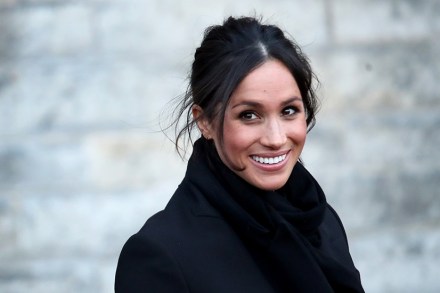
Meghan Markle seems to see herself as a ‘victim’. Had she called herself a victima in Rome, it would have been a matter of some surprise, since the ancients used that image solely with reference to animals for sacrifice. But our ‘victim’ is used as if one genuinely were as helpless as a victima. Ancients would have none of that. In place of our ‘victimhood’, they used words like ‘wronged, betrayed, worsted, dishonoured, neglected, injured’. Even the classical terms for ‘suffer’ meant at root ‘undergoing/enduring an experience’ of some sort. Ancients, then, were not for relapsing into supine self-pity, but for taking action against the humans who had wronged them. The soap-Oprah interview certainly did that.

Is it farewell to the handshake?

Ella Al-Shamahi is a Brummie, born to a Yemeni Arab family. From a strict Muslim upbringing she transitioned (evidently con brio, as ‘dick’ appears in her new book) to the secular life. She is now an author, explorer, academic paleoanthropologist, stand-up comedian and television presenter. This is an impressive c.v., deserving many congratulatory handshakes. But wait. Alas, the handshake has become taboo. Your hand, says the Mayo Clinic, is a lethal bio-weapon crawling with pathogens as yearning to contaminate as those scary airborne droplets. Your hand is a horror story. According to one calculation, a square centimetre of manual skin contains ten to the power of seven bacteria. Even the common cold virus survives on unwashed hands for up to three hours.

Malice and back-stabbing behind Vogue’s glossy exterior

‘What job do you want here?’ asked the editor of Vogue, interviewing a young hopeful. From behind her black sunglasses the 24-year-old replied coolly:‘Yours.’ It took time, but she got it. The girl was, of course, Anna Wintour. Now she is the global Vogue supremo and queen of fashion, before whose lightest frown the whole industry quakes, and the magazine is acknowledged to be the top glossy. Its beginnings were small. It was launched on 17 December 1892, at a cost of ten cents an issue, and its dedicated founder struggled to keep it going. Its first editor was passionate about animals and its second was a female golfer with no previous publishing experience.

Six rules for picking the wokest school

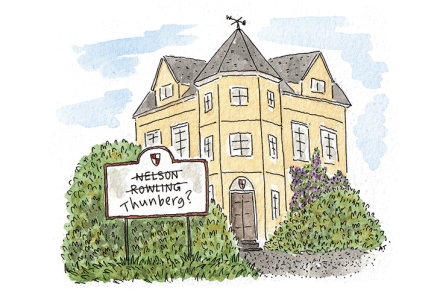
One of the great advantages private schools offer is an ability to change with the times. While some hold on to traditional notions, many are adapting nimbly to the new woke world — expunging their problematic historical figures and educating pupils in the new equivalent of U and Non-U. But how do parents ensure their little treasures aren’t triggered and are always confined to the safest of spaces? Here, then, is our guide to the wokest schools. Rule one: lots of schools were woke decades ago At my alma mater, Westminster, the history curriculum was pretty much decolonialised in the 1970s by left-wing teachers.

Devil of a job: the curious occupations recorded in the census

Even before the first census was made in 1801, the plan was regarded with fear, hatred and ridicule. And this year, on 21 March, households have another chance to mock, embrace or ignore the census. When parliament debated a bill in 1753 for an annual census, Matthew Ridley, MP for Newcastle, warned that his constituents ‘looked on the proposal as ominous, and feared lest some public misfortune or an epidemical distemper should follow’. They were aware that, by the Bible’s account, ‘Satan rose up against Israel and caused David to take a census of the people of Israel’. God was so angry that he gave the King three choices: seven years of famine, three months of fleeing his enemies or three days of pestilence. He chose the last and 70,000 died.

Cicero knew that we should study the past, not cancel it

Modern historians, excoriating the past evils of e.g. slavery and imperialism are taking the understanding of history back to its roots in the western world, when the past was used as a vehicle for moral lessons. Cicero said that study of the past ‘casts light on reality and is a guide to life (magistra vitae)’. Ancient historians lived up to this noble agenda. Livy (d. ad 17) said that history provided ‘examples of behaviour from which to choose what to imitate and avoid what is shameful’. The historian Tacitus (d. c. ad 120) said: ‘This I hold to be history’s highest function, to ensure that no worthy actions are passed over in silence, and that crooked words and deeds be feared for the castigation that posterity will visit upon them.

The distortion of British history

The British Museum has announced the appointment of a curator to study the history of its own collections. On the face of it, nothing could be more anodyne. The history of collecting has been a fashionable topic in academic circles for decades. What sort of people collected, why, and how, tells us much about their cultural assumptions and their ways of seeing the world. It would be mildly surprising that the BM has been so slow to catch on – except that there seems more to it than scholarly pursuit of knowledge. While the research will indeed cover ‘wider patterns’ of collecting, the Museum announced that it is ‘likely that issues such as the role of the slave trade and empire... will be relevant to some of the research undertaken’.