Micah Mattix

Micah Mattix is a senior editor of The Spectator’s World edition and the author of the Prufrock newsletter. He has written for the Wall Street Journal, the New Criterion, the Atlantic and many other publications.

Evil stories

In the Point, Agnes Callard explains that she frequently assigns novels and poems in her philosophy classes. Why? Not because they provide her students with “personal ethical guidance,” and not because they help her students become more empathetic. She assigns them because they do what no other kind of text can do. They teach her students about evil: There are many complex theories about the nature and function of art; I am going to propose a very simple one. My simple theory is also broad: it applies to narrative fiction broadly conceived, from epic poems to Greek tragedies to Shakespearean comedies to short stories to movies. It also applies to most pop songs, many lyric poems and some—though far from most—paintings, photographs and sculptures.

The exhaustion of American culture

American culture has exhausted itself. It is running on fumes. It’s a dead man walking. The popular songs everyone talks about sound the same as the slightly less popular ones. The big movies are all remakes of previous big movies or next installments in never-ending series. When these movies aren’t atrocious, they get good reviews, but we all know the bar is very low. We just don’t want to be completely bored. Novelists recycle gimmicks learned in their MFA programs; poets have replaced arresting phrases with “transgressive” political ones, which, it turns out, are not so transgressive after all. Painters now only look backwards in their frantic search for something new.

substack

Books you should plan to read this fall

Summer has arrived in full force — at least here in southeastern Virginia, where the temperature has been creeping up towards 100 degrees — and so, too, have those lists of the best beach books, hottest summer reads, high temp tomes, etc. But fall is just around the corner, so why not take a peek at what’s in store? Here are a few forthcoming books that piqued my interest for one reason or another. This isn’t a list of the fall’s “biggest” books. Some of these might not be covered at all in the national press. But if you want a list like that, just wait. You’ll have 20 to choose from before long. Here is mine. Robert Crawford’s Eliot after The Waste Land (August 23, FSG), the second volume of his biography of T.S.

The lost art of dying

“Why,” Thomas Pfau asks in the Hedgehog Review, “have death and dying been experienced as essentially incomprehensible” in the past 200 years? He continues: Death is experienced as the total absence of meaning and, consequently, as something not to be understood but merely to be managed by drawing on medical ingenuity, pharmaceutical resources, and the (increasingly limited) forbearance of insurance companies. The recent loosening of centuries-old restrictions on physician-assisted suicide is but one feature of a multipronged approach that seeks to manage and expedite dying. Writing in 1910, the German sociologist Georg Simmel may well have understood that he was fighting a rear-guard action when he warned against precisely this reductive conception of death as negation.

The man who invented waterskiing

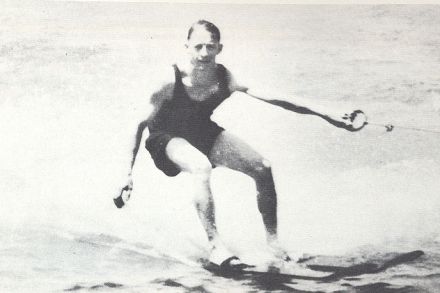
In the Smithsonian, Sarah Kuta writes about the man who invented waterskiing 100 years ago. His name was Ralph Samuelson. He lived in Minnesota and wondered one winter if you could ski on water the way you could on snow. At eighteen, he made his own skis and had his brother pull him on his boat: He unsuccessfully tried snow skis and barrel staves before realizing that he needed something that covered more surface area on the water. The ever-resourceful Samuelson went to the local lumberyard and found two eight-foot-long, nine-inch-wide pine boards, wrote Sports Illustrated’s Jim Harmon in 1987. Using his mother’s wash boiler, he softened one end of each board, then clamped the tips with vises so they would curve upwards.

Ancient souvenirs

On Thursday, I referred readers to an essay comparing the economies of ancient Rome and Greece. I am not the only one on an ancient Rome kick. In Aeon, Maggie Popkin writes about Roman tourists and the popularity of mementos and trinkets in the ancient world: In the Roman Empire, which lacked a print culture, let alone digital media, souvenirs were crucial in disseminating knowledge of places, be they cities, monuments, buildings or statues. For people who could not travel to such sites in person — which included the majority of the empire’s inhabitants — reproductions were a key means for visualizing their physical appearance and cultural significance.

The supposed prosperity of ancient Rome

“Recent research regarding ancient economic history,” the economist Rafael R. Guthmann writes in his Substack, “has suggested that Western Eurasia, during the time it was politically unified under the Roman Empire, achieved an extraordinarily high level of economic prosperity for a pre-modern society.” A comparison to decentralized ancient Greece, however, tells a different story. Greek cities, Guthmann writes, grew faster than Roman ones, Greek soldiers were paid more than Roman soldiers, Greek workers were paid more than Roman workers, and citizens generally had more free time: As a result of intensive political competition and experimentation among over a thousand sovereign city-states, political institutions developed to an impressive degree.

Molière at 400

This year marks the 400th anniversary of the birth of Jean-Baptiste Poquelin, better known as Molière. While it was decided that Molière would not be inducted to France’s Panthéon — he is not a republican and so is not eligible — the playwright has been celebrated in other ways in his home country. In the New York Times, Laura Cappelle reviews a handful of “wildly different” productions of his work in Paris and across the country: “While the Comédie-Française, whose 2022 program is entirely devoted to Molière, has invested in dark, offbeat productions, ‘Molière Month,’ a yearly theater event run by the city of Versailles, has delivered traditional gowns and breeches, to slightly dull effect.

The Marxist writer who railed against Lenin

The writer Maxim Gorky edited the Menshevik newspaper New Life during its short run from May 1, 1917 to July 16, 1918, before Vladimir Lenin gave the personal order to shut it down. Gorky was a one-time friend of Lenin’s and a committed socialist (when Lenin gave the order to shut down New Life, he is reported to have said, “Gorky is one of us”), but he was also a frequent critic of the Bolshevists. In his column for the paper, which ran under the heading “Untimely” — because it focused on culture and morality rather than on practical matters of the revolution — he complained frequently about the politicking of party leaders and the stupidity of the masses.

Lincoln in context

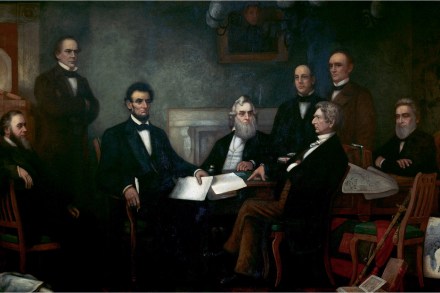
Abraham Lincoln’s condemnation of slavery may seem insufficiently forceful to some today — as it did to some in his own time. But without him, the practice might have continued for decades or longer. In National Affairs, Ralph Lerner puts Lincoln’s abolitionism into context: In Lincoln’s time, as in ours, those who look for and demand a politics of purity have found much to disparage in his Fabianism. Lincoln’s constitutional scruples had kept him from dealing the institution of slavery the much-anticipated death blow. His readiness to compromise, and to seek expedient alliances, dismayed the anti-slavery radicals. His explicit distinction between the urgent and the important, as well as his strict adherence to that principle of action, was nothing they could admire.

In praise of (very) small independent publishers

Recently, several prominent writers have left jobs at national newspapers and magazines to go it alone on Substack or other email subscription services. In 2020, Matt Yglesias left Vox and Glenn Greenwald left the Intercept — both for Substack. That same year, Andrew Sullivan brought the Dish out of retirement and to Substack. Bari Weiss and Charlie Warzel left the New York Times and started a Substack in 2021. Ruth Reichl, the former editor of Gourmet, started a newsletter in 2021. Others who have written for a variety of publications — Matt Taibbi, Glenn Lourey, Jesse Singal, Erick Erickson, Freddie DeBoer, Roxanne Gay — have all made Substack their home. And the list goes on.

What your bookshelves say about you

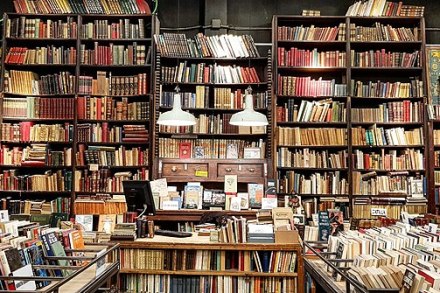
In the Atlantic, Leslie Kendall Dye tells us what the placement of books on her shelves tells us about her interests, her associations and her opinions: Sometimes I stop in the center of my own home like a bird arrested in flight, entranced by the books that line my walls. I live in a small Manhattan apartment, and I, too, have books in the living room, the bedroom, the hallway, the closets. Often, I stare at them because I’m puzzling over their geography. I wonder if I’ve placed any book in the wrong spot, according to an emotional map I’ve made of my bookshelves. As I gaze at the titles, the associations come tumbling out. Tennessee Williams’s Memoirs is next to a biography of Patrick Dennis called Uncle Mame, because Williams and Dennis had many things in common: Pathos.

Dog dreams

I have never taken our two German short-haired pointers hunting. If I did, it wouldn’t go well. The male (Hank) is afraid of loud noises. When it thunders, he follows me around the house, glued to my leg, shaking. We think leaving him alone at the house as a puppy one Fourth of July did him in. The female (May) loves chasing smoke and water. When I cook burgers, she yelps and flies through the air to “bite” the smoke from the grill. She does the same thing when we water the lawn. If I were to go duck hunting with them, I’d have to fetch the ducks myself. They are too old to go hunting now anyway and sleep all day. I have wondered, though, if they dream of hunting. Not the human sport we call hunting, since they don’t know what it is, but chasing prey.

Those tiresome gendered novels

Best-selling novelist James Patterson — yes, the one who has published ten books in 2022 alone — has apologized for saying that white male writers are being discriminated against. Sarah Polus reports in the Hill: In an interview with the United Kingdom’s Sunday Times published this week, Patterson said the phenomenon of white men not being able to get writing gigs represented "just another form of racism." "What’s that all about?" Patterson added, according to The New York Times. "Can you get a job? Yes. Is it harder? Yes. It’s even harder for older writers. You don’t meet many 52-year-old white males." The 75-year-old later backtracked his comments in a Facebook post, saying he supports diversity in the writing industry.

The problem with climate change alarmism

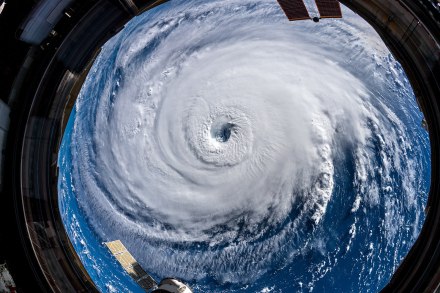
Every day, there are probably a good 50 articles published in major news outlets in the West on climate change. I just searched for “climate change” in the news over the past 24 hours and got over 200 results. Nearly all of them are about how bad the climate “crisis” is. Reuters reports, for example, that Asia’s Biggest Security Threat Is Climate Change, Not Conflict. In the New York Times we read: The Planet Is Burning. Are Billionaires the Answer? The Weather Channel tells us that Asian Water Tower Imbalanced Due to Climate Change. Climate change is ruining tourism, worsening and extending the allergy season, making ocean predators hungrier, keeping us up at night, threatening mental health, and doxing humpback mojo.

The welcome return of The Kids in the Hall

The Kids in the Hall was the best sketch comedy group of the early 1990s. Sure, Saturday Night Live had Phil Hartman, Chris Farley, Norm Macdonald, and Janeane Garofalo — and sketches like Celebrity Jeopardy!, Phil Hartman’s Unfrozen Caveman Lawyer and Motivational Speaker Matt Foley. But there were plenty of duds, too, like The Rickmeister and the ESPYs. The Kids in the Hall was less loud and more intelligent than SNL. They took more risks with sketches like the prescient Politically Correct Art Class, and no one skewered corporate culture better than the Kids (see Not Working Out and Can I Keep Him?). There were absurd characters like the Chicken Lady and the Sizzler Sisters, but their best sketches were the ones they played straight, like Parenting and Salty Ham.

Writing race

In The Atlantic, Jordan Kisner reviews Geraldine Brooks’s new novel, Horse, which follows two young Black men — one a 19th-century groom and the other a 21st-century Londoner who has moved to America to work on his dissertation on “stereotypes of Africans in British painting.” In the novel, Theo, the Londoner, is skeptical of the ability of white artists to represent Black figures as fully human. “This,” Kisner notes, “is a self-conscious—and bold—inclusion for a novel with not one but two young Black male protagonists written by a 66-year-old white Australian woman . . . Neither is this her first time writing across cultural divides. Her first nonfiction book, Nine Parts of Desire (1994), was about the 'hidden world of Islamic women.

Should writers talk?

Writers shouldn’t talk, Becca Rothfeld writes in Gawker — not to large groups of people, not on the television, not on podcasts. Why? They are bad at it and say stupid stuff: I have always thought that there is something peculiarly invidious, even offensive, about the expectation that writers talk, at least in their capacity as writers. No doubt I am biased by my own distaste for the exercise. I can imagine few horrors greater than an editor proposing the torment of a phone call, or a podcaster innocently inviting me to record a segment.

The Optimist’s Daughter at fifty

By her own account, Eudora Welty had an idyllic childhood. Born in 1909 on Congress Street, two blocks from the state capitol in Jackson, Mississippi, Welty spent her early years playing with friends from school, reading voraciously and riding her bicycle to the local store to pick up some flour or eggs for her mother and, of course, a treat for herself. Her father, who was devoted to his wife and children, advanced from a cashier to vice president at Lamar Life Insurance before his daughter had finished high school. He had, as Welty put it, a love for “all instruments that would instruct and fascinate,” including a toy train set, a telescope and a folding Kodak, with which he would teach the young Eudora the pleasures of photography.

eudora welty

Is Wallace Stegner’s Angle of Repose a failure?

In the New Yorker, Roxana Robinson revisits the old story of Wallace Stegner’s use of Mary Hallock Foote’s unpublished memoir and letters for his novel The Angle of Repose. Stegner quoted thirty-eight passages from Foote’s letters (not her memoir, according to Jackson Benson’s introduction to the novel), which came to roughly sixty-three pages of text in a novel of over 600 pages. Stegner received permission from one of Foote’s granddaughters to use the letters and memoir as he saw fit. That granddaughter apparently hoped that Stegner’s use of the material in the novel might reignite interest in her grandmother’s largely forgotten life and writing, which it did. But the family wasn’t happy after the novel was published.