Farming

A passion for music: Partita, by Barbara Kingsolver, reviewed

Barbara Kingsolver’s bestselling novels tackle political and social issues and win prizes, among them the Pulitzer and Women’s Prize for Fiction (twice). Subjects she has covered include colonialism; environmental issues (preserving ecosystems and flora and fauna, and punishing polluting companies); the validity of extended family approaches to child-rearing in Cherokee Nation communities; the art of Frida Kahlo and Diego Rivera and their friendship with Trotsky; and the McCarthy era and the House UnAmerican Activities Committee.
Letters: ignore the farming doomsters

Despoiling Suffolk Sir: There can be few better summaries of government attitude to Britain’s countryside than James Vitali’s: ‘Something to vandalise or extract from, but not to value’ (Diary, 5 September). Here on East Suffolk’s Heritage Coast, the arrival of Sizewell C – along with the imminence of net zero’s offshore land connections – are transforming an area of outstanding natural beauty into a degraded landscape of stripped-out woodland, destroying thousands of trees and literally miles of hedgerows. The effect on wildlife is incalculable. Despite the area also being designated of Strategic Scientific Interest, there is no defence.

Trump has serious beef with American farmers

From our US edition

In August, Donald Trump sided with consumers by increasing the tariff-free quota on imported beef for 90 days beginning September 1. The concession will last three months. It would be a minor story with any other president in the White House. But under Trump, even dull-sounding trade news can take on a sudden importance, especially when mixed up with foreign affairs. Trump’s justification for favoring Argentina, whose 2026 quota he increased by 80,000 metric tons, is partly geopolitical: he wants to give support to Javier Milei’s free-market regime, seeing it as a foil to left-leaning governments elsewhere in Latin America.

serious beef

How much more can British farmers endure?

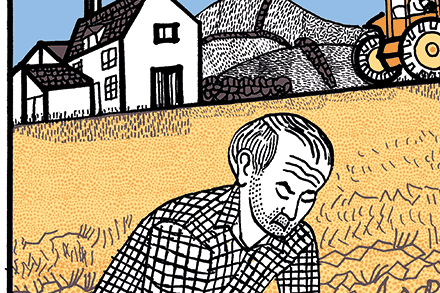
Lately, for reasons that are far too baroque to go into, my wife and I have been looking at farm tenancy agreements from 1983. In a way they are deeply dull (all those drains and clauses about fence maintenance) but they are also fascinating in that they reveal how farming has changed. If you were after a few fields for your sheep or cattle, back when Culture Club’s ‘Karma Chameleon’ was riding high at no. 1, you had to really fork out. Ten pounds an acre, for pretty marginal land, was the going rate, and rent rises year on year were the order of the day. Fast forward 40 years and a lot of grazing is worth almost nothing.

Why Trump can’t control the price of a burger

From our US edition

Good news, burger lovers. Help is on the way. Last month, Donald Trump announced on Truth Social that he has “concluded a deal to substantially lower the price of ground beef.” Well, it’s about time. As someone who covers the barbecue beat, I’ve been keeping a close eye on beef prices the past few years, especially brisket. They’ve kept going up. According to the US Bureau of Labor Statistics, the average price of ground beef nationwide has risen 24 percent, from $5.55 per pound in January 2025 to $6.89 this summer.  Fortunately, that’s about to change – and just in time for football tailgating season.

Don’t blame supermarkets for your expensive shop

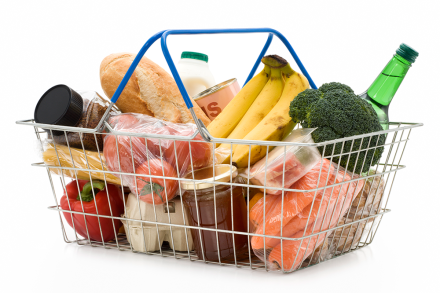
I’m sufficiently nostalgic for the British supermarkets I left behind in 2023 that on visits to the UK I run a small-scale import business between London and Lisbon. I restock: Tesco Dijon mustard (top-drawer and a bargain), rice bran oil (unavailable in Portugal) and (do not tell Portuguese customs) blocks of extra-sharp British cheddar along with bags of slender fine green beans, tails all lined up marvellously on the same side. Thus I was put out by the new Chancellor’s warning earlier this month that the government will be ‘watching closely for any suggestions that customers are being taken for a ride’ in supermarkets. John Healey’s keeping an eye out for ‘price-gouging’, assuring the public that ‘our regulators have the powers to clamp down on it’.

Farming today: field fires and food price hikes ahead

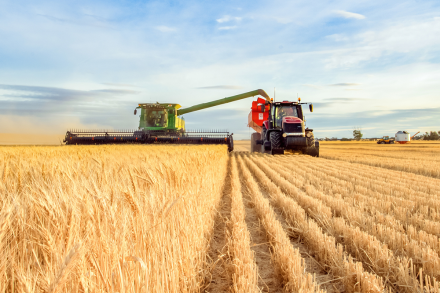
I report from FTSE boardrooms and City bars, but I also spend time – mostly in Yorkshire, currently in France – among farmers who often feel ignored by the rest of the business media. This week, with three-quarters of England officially in drought and produce imports afflicted by fierce heat across Europe, agriculture is for once top of the agenda. So what has this freakish summer really done to our fields? My northern arable correspondent has never seen an earlier harvest, with ‘barley less than average, oilseed rape excellent, wheat OK on heavy clay but very poor on lighter soils. Slight rises in crop prices won’t compensate for yield reductions, we’ve lost the safety net of direct acreage subsidies – and a single spark from a combine or baler can set whole fields alight.

The tiny island in the wild North Atlantic that ‘feels like the safest place in the world’

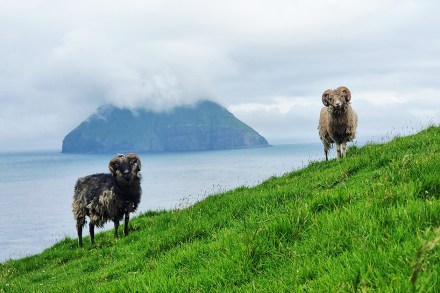
Tim Ecott has always been drawn to islands, and the seas that surround them: ‘I once ran away from England to live in the Seychelles so that I could scuba dive obsessively in the Indian Ocean,’ he writes at the beginning of Eva and the Island. ‘The tropical humidity and seductive blue water drew me into its spell.’ Gradually his love for what he calls ‘the torrid zone’ faded, and he found himself attracted to ‘the higher latitudes’. He decided to spend time on all the inhabited islands in the Faroes, including the smallest, Stora Dimun, ‘a frayed and crumbling chunk of basalt’ covering ‘just over one square mile’, which has ‘the qualities of a secret kingdom’. What better way to spend an evening in good company than eating sheep’s heads and singing?

When Mum went marching with the EDL

Nicola Wilding is a documentary film producer, whose family was originally rural working class. Aged 60, her mother, Sandra, prompted by the hacking to death of the soldier Lee Rigby, unexpectedly joined the English Defence League (EDL) and went on marches headed by Tommy Robinson. During a series of disappointing liaisons with men, including two marriages, she had brought up four children, lived in two different countries, moved often within the UK, got into debt, worked in several low-paid jobs, including one at an Omagh army camp pub, and, despite early heart trouble, ended up as a dedicated employee in care homes throughout Covid. She told her daughter she’d got tired of ‘the bloody lefty media’ which only told one side of a story.

The madcap effort to ban farming, fishing and hunting in Oregon

From our US edition

What happens when something you do every day becomes illegal? If animal rights activists in Oregon have their way, the state’s hunters, fishers and farmers may be about to find out. A sweeping new initiative potentially headed for the November ballot targets the legality of farming, hunting, fishing, ranching, animal sciences, or even killing a mouse that has scurried in your house. Initiative Petition 28 (IP28) would make Oregon the first state in the US to ban such practices. Initiative Petition 28 proposes the enforcement of the PEACE Act, or the People for the Elimination of Animal Cruelty Exemptions. The act states animals should be cared for “in ways that minimize their pain, stress, fear, and suffering.

oregon

The great British flower revival

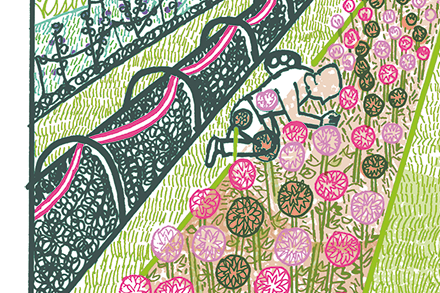
When Juliet said of Romeo that ‘a rose by any other name would smell as sweet’, she spoke a common truth. We identify and love flowers by and for their scent. But you will struggle to find many scented flowers for sale in Britain. This is largely because in the 1950s, the UK’s home-grown flower business was flattened by the Dutch government. Huge investment in its domestic flower industry saw the first air-freighted blooms arrive in this country, followed by the ‘Flying Dutchman’ lorries in the 1980s. Today the average Briton spends £28 a year on flowers, up from £8 in 1984, yet 86 per cent of these are imported, most via the Netherlands from Ecuador, Kenya and Ethiopia.

What no one tells you about dairy farming

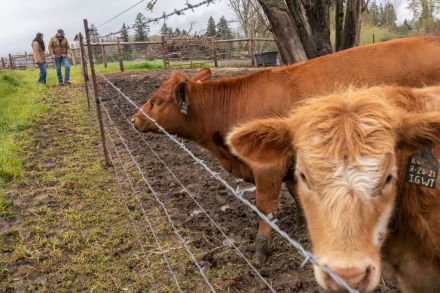
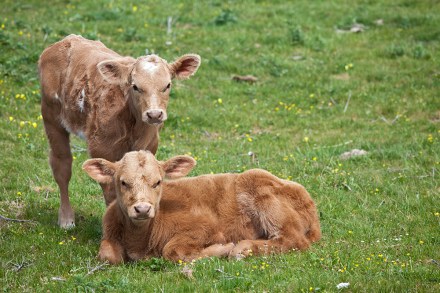
It has been calving time in Devon and I arrive from London ready to work hard. The day starts at 6.30 a.m., when we check the field to see if any cows have calved. We check the ‘springer’ herd every two hours until 10 p.m. and intervene if a cow is in difficulty. Newborn calves are fed colostrum and taken down to the shed with their mothers. The farm I am working on keeps its cows outside all year round – not for this herd that little patch of blue some call the sky. But what the cattle gain in freedom, the farm labourers lose in comfort. The last time I was here for calving, in the spring of 2018, the weather was biblical: it was still snowing in April. Thankfully, the weather has held, but I’m not sure the same can be said of my body.

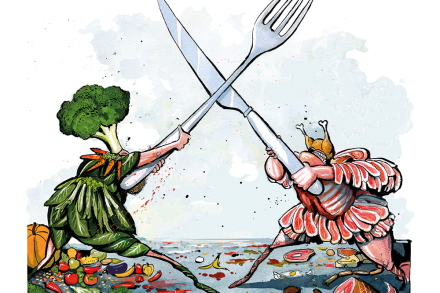
Tomorrow belongs to the vegetarians

Can there be any thinking person who has passed a lorry filled with live animals peering out through the slats on their way to slaughter, without a momentary shudder? How many of us would take an opportunity to inspect what happens there? Be honest: you recoil from the thought. ‘Slaughterhouse’. So unpleasant we frenchify it as ‘abattoir’. Hunting leaves me cold yet has an honesty about it: you see and choose your prey, and kill it yourself: morally a million miles from the systematic industrial slaughter of creatures we never look in the eye, couldn’t bear to see killed, and so turn away, pay others to do the killing, and deny our own agency. There are things we’d rather not think about. Take note of them. They’re the first signs of rejection.

The cattle rustlers have returned

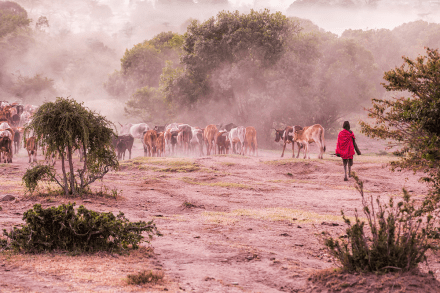
Kenya When a mob of Somali cattle I bought in Kenya’s far north arrived on the farm in February, we quarantined them in a remote corner. To protect them against lions they slept in a boma with high drystone walls topped with treacherous thorns, guarded by a fierce police-licenced guard named Joseph. The Somalis are great stockmen, though these beautiful beasts, known as Awai, are more long-legged and rangy than our traditional ranch Borans. My lorryload of cattle had survived a two-year drought on rocks and dust and they could walk hundreds of miles to water, yet they were randy and highly fertile. These are ancient cattle, of the sort that you see in petroglyphs and ochre painted on rock faces across Africa. I have fallen in love with them.

Why is crude oil measured in barrels?

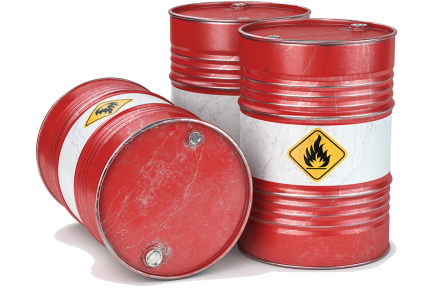
Crude estimates Why is crude oil measured in barrels?  — From medieval times onwards, all sorts of commodities were measured in barrels for convenience, from wine to eels to whale oil. However, standardisation only arrived in fits and starts. Since Richard III’s time, a barrel of wine was defined as 42 ‘wine gallons’, but this wasn’t the same as 42 gallons of water. When the US oil industry started in the mid 19th century, traders adopted the same measure as was used for selling wine. However, in 1824, Britain had standardised a gallon as 20 per cent larger than a wine gallon, the latter of which was renamed a ‘US gallon’. Hence a barrel of oil is only 35 imperial gallons.

My barn dog is a Chow Chow

From our US edition

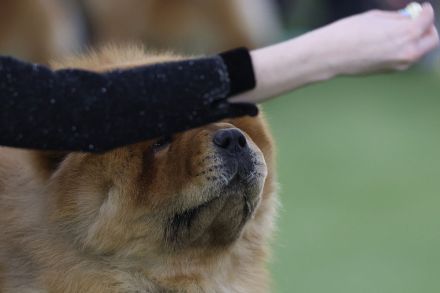
Even if you’re not a dog expert, you probably know enough to laugh at the breed of my resident barn dog. Chow Chows are not exactly cooperative, and while they are bred as territorial guard dogs, their cat-like laziness makes them, at best, capriciously protective of their owner. These little balls of fur are, however, pretty damn cute. My three-year-old, Winnie, embodies all of these traits – or at least she did as a puppy, with the occasional tendency to regress. But growing up around horses on an unfenced property shaped her more than any innate breed characteristics. Having owned pretty much all the conventional breeds, I can safely say she’s now more or less exactly what you look for in a farm dog.

Ladies love an eye patch

Kenya While we were loading two stud bulls and eight hoggets onto a lorry in my ranch’s yard in the African dawn this morning, the farmer buying them saw my bandaged right hand and asked with great concern: ‘Ooh my brother! Did you injure yourself handling your cattle?’ Kenyans are by nature warm and kind. ‘Don’t worry,’ I said standing in an honest expanse of cow shit. ‘It was no accident. Just an operation to straighten out my fingers.’ ‘Do you find it tiresome to drive?’ asked a ranching neighbour at an ebullient lunch overlooking the wilderness towards Mount Kenya this afternoon. ‘No, but it’s tricky if I try to shoot in the general direction of a monkey raiding the garden.

Missing Cowboy, our great farm manager

From our US edition

Life in the country is unforgiving. Animals die, labor is unceasing and nature fights back at every turn. We say losing a beloved horse or a loyal farm dog is like losing a member of the family. But while the pain is real, it’s certainly not the same as losing a dear friend. Our long-time farm hand died late last year. He was not an old man by any means and he had the vigor of a younger man still. By the grace of God, he passed away peacefully at home in the small cottage just down the road from the farm. I’ll call him Cowboy, because in truth, that’s what we called him most of the time. He didn’t like his real name. And he certainly lived up to the moniker. Cowboy could solve any issue, big or small.

‘Corporate agriculture’ is wrong about cows and methane

From our US edition

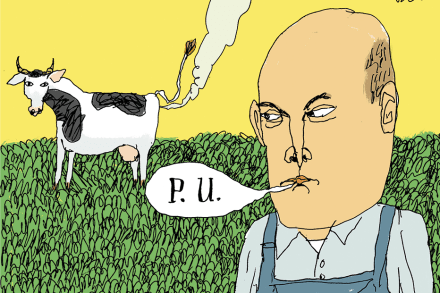
In the 1960s, scientists discovered that halogenated compounds such as chloroform and bromochloromethane could inhibit methane-generating microorganisms, also known as methanogens. This was important because agricultural scientists were trying to make livestock farming more efficient. Ruminants (cows, sheep, goats, deer, giraffes) produce the gas methane when they digest plant matter. Scientists reckoned between 2 and 12 percent of all the energy from feed was being lost as gas. If they could reduce methane production, they could increase yields of meat, milk and other products. In one experiment, feeding chloroform to sheep reduced their methane emissions by between 30 and 50 percent. The results were even more dramatic with bromochloromethane: a reduction of 70 percent.

Save England’s apples!

On a grey autumn morning, the apples in the National Fruit Collection look vivid. They pile up in pyramids of carmine, salmon and golden-orange around dwarf trees, which have been bred to human proportions. Their branches are well within reach but picking fruit is forbidden. These trees are part of the world’s largest fruit gene bank. Neil Franklin, an agronomist and a trustee of the National Fruit Collection in Kent, describes it as ‘the Victoria and Albert Museum of the fruit industry’. The collection holds several types of fruit, but the apple is queen of them all: of the 4,000 or so fruit varieties here, more than 2,200 are apples. They’re used mainly for research into breeding and resistance to pests and diseases.