Farming

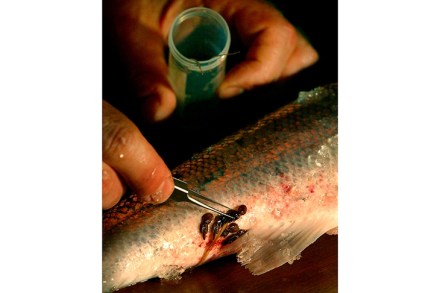
Good luck enjoying eating salmon ever again

‘I saw the best minds of my generation destroyed by cat videos,’ begins Henry Mance’s How to Love Animals, winningly. That is the paradox he sets out to unpick in this densely factual and intermittently horrifying book: how a world in thrall to cuteness, endlessly compelled to click on videos of kittens and owls having a special friendship, can remain indifferent to the suffering of almost all other animals, whether farmed, in captivity or in the wild. That’s a tough brief. I’m not sure it’s a book I would choose off the shelf, because the subject matter is deeply unpalatable.

Why I’m investing in sheep

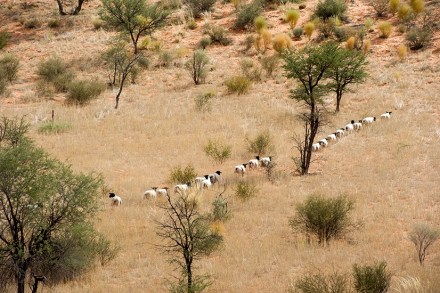
Laikipia In the past I had a low opinion of sheep. During my first forays into farming I saw them as creatures hell-bent on dying, with lung diseases, rotten feet or nasal maggots. Their legs snapped in ant-bear holes and hyenas tore them to pieces. To stem tides of oviform death we dipped, injected, dewormed and castrated. Many hours evaporated searching for stray animals. I found them dreary, sold off my flock and concentrated on cattle. Up here, north of Mount Kenya, people name their sons after special bulls and men hold important conversations in among the cattle at evening, so that the talk can be inspired in bold and manly ways. Everybody loves cattle.

The missing ingredient: Brexit Britain’s food problems

The announcement of the Brexit deal at the end of 2020 alleviated concerns over food supplies to the relief of many, not least the government. But while it is clear that food will continue to appear on shop shelves, what has been less clear, however, is how we want to feed ourselves now that we are no longer confined by European Union membership. It has been three years since Michael Gove brought Henry Dimbleby into the Department of Environment, Food and Rural Affairs (Defra) to work on food policy. His report in July 2020 urged action on food poverty. But it was sidelined until footballer Marcus Rashford said the same thing. The second report is due this Spring.

A farmer’s notebook: why I’m not dreaming of a white Christmas

It snowed the other day. I could tell from the light through the gap in the curtains and the muffled silence. The kids came into our room at 6.45am in high excitement and loaded with a comprehensive legal argument about how they had to stay off school because of the ‘dangerous’ roads and the ‘risks of travel’. I caved. I always cave. I hated school, and screw it, they’ve barely been this year anyway and haven’t turned in to deadbeats or junkies yet. Mark Twain said you shouldn’t confuse your schooling with your education, and he was right.

Farmers aren’t to blame for climate change

Welsh hill farmers are a hardy lot. Despite the almost mystical and romantic images that come to mind when you think of a Welsh hill farm, the truth is a far soggier affair. People have struggled to eke a living out of what is an extremely difficult terrain for generations, which has, in turn, created the communities and the culture we enjoy in rural Wales today. Such is the case where I live: a small parcel of land stretching from the river Dee and up the slopes of the Berwyn mountains in the north of Wales. My father-in-law is the third generation to farm this land. He and those that went before him nurtured this small corner of the earth in order to feed their families and the nation.

Why is the UK copying the EU’s failed agricultural policy?

With the UK looking likely to exit transition in December without a trade deal, there has been plenty of coverage of what life outside the bloc will mean for Britain. There has been rather less coverage of what we have avoided by virtue of having left the EU. Yesterday came one of the first big EU agreements to which the UK has not been party: the latest reform of the EU Common Agricultural Policy (CAP). In typical fashion, it resulted in a fudge engineered by powerful lobbyists and which will guarantee vast sums of public money going to waste. The whole point of the latest round of CAP reform was that it was supposed to shift the emphasis of agricultural subsidies towards looking after the environment.

Andrew Marr: Scotland is slipping away from the Union

Staying in Britain for the summer has been, in many ways, entirely glorious. We have zigzagged from Shropshire through Derbyshire to the Northumberland coast, from Fife and Perthshire to Herefordshire and Devon. On the way, beautiful little towns and sweeping coastlines, not empty but not crammed either; excellent local food and plenty to keep us interested, from echoing cathedrals to buzzing bookshops. But it has also allowed me to see first hand just how desolate so many high streets are: not only the shops closed because of plague, but those shuttered, clearly from a long time back. Boarded up doors, bleached posters… If it wasn’t so wet, the tumbleweed would be blowing.

Letters: Why is the problem of working-class white boys not considered worth solving?

Left-behind boys Sir: Christopher Snowdon’s perceptive and informative article (‘The lost boys’, 18 July) reflects perfectly my own experiences in trying to highlight the under-attainment of white working-class boys in higher education, particularly in chemistry, a frontline Stem subject. I was elected to the Inclusion and Diversity Committee of the Royal Society of Chemistry to investigate this matter. Despite strong acknowledgment of the under-representation of ‘white working-class males’, any positive action remains painfully slow. It is abundantly clear that while white working-class males are the largest group of disadvantaged young people in this country, their cause is the least fashionable and the problem not considered worth solving.

Will coronavirus mean we finally begin to appreciate farmers?

Here in the Scottish countryside the labour force is creaking. A big dairy farmer nearby was relying on nine Irish students for calving – all nine went back to Ireland a few days ago to avoid the lockdown. The heroes of the countryside are the septuagenarians on family farms who have voluntarily broken self-isolation to maintain the flow of milk to the nation’s breakfast tables. Social distancing is something that comes naturally to us bumpkins, but it has to be ignored when push comes to shove. Have you ever tried cramming a prolapsed uterus back into a heifer with three people standing two metres apart? Meanwhile the key worker policy is a shambles in Scotland. Holyrood ducked the issue and delegated it to local councils, which has only created confusion.

Our tree-planting obsession may do more harm than good

‘Four beef burgers is the same as flying to New York and back! FOUR BURGERS!’ When I arrived at the Extinction Rebellion demo, the first person I met was a woman activist, clad from head to foot in ocean-polluting, synthetic fibres, talking absolute nonsense. And because I’m a beef farmer, I felt I should set her straight. I explained that no, my grass-fed beef does not harm the planet, and asked her what on earth she expected the farmers of Britain to do if they couldn’t keep cows. ‘Ah,’ she says, folding her arms, ‘they should just grow trees.’ Trees are fast becoming the answer to everything. Worried about floods? Don’t bother dredging rivers, just plant forests. Anxious about the effect on the environment of flying?

Hare coursing gangs are terrorising the countryside

If you’re driving at dawn or at dusk in the countryside at this time of year, you might well see shady-looking men standing around in a stubble field, their 4x4s parked close by and ‘long’ dogs — greyhound types — straining on the lead beside them. Watch and you’ll see them walk up the field, or along the edges, until a hare makes a bolt for it. The men are ready. This is what they’re there for. A dog is let off the lead, and someone with a phone videos the scene. The footage is being live-streamed to others who have placed bets on the outcome —guessing which dog will kill the most hares per ‘slip’, or chase. When the hare has been caught (or when it’s scarpered), another dog has a go.

Carry on up the Zambezi

I loved this book so much I was appalled. Why, when bookshops are stacked full of memoirs by authors who can’t write, isn’t Alexandra Fuller heaped up in perilous piles so near the till it’s impossible to evade her? This is like one of the most alluring Svetlana Alexievich testimonies, as if it had wandered out of the USSR and got lost in central Africa by way of a hospital in Budapest. It’s packed with exquisite jokes, quotes and details — such as when a doctor appears and ‘his gauzy green scrubs puffed out in great billows, the surgical-garb equivalent of Princess Di’s wedding dress’. Fuller started out trying to write novels before putting her own parents down on paper.

Back to basics | 1 August 2019

Anyone picking up a book by Wendell Berry, whether it be fiction, essays or a collection of his lucid and engaged poetry, will quickly find themselves in the company of one who is unafraid to tackle the larger subjects (time, place, environment, community) in terms familiar to Virginia Woolf’s ‘common reader’, a creature who seems scarcer by the year, but is not yet wholly extinct. Stand by Me is no exception and, by the time we reach the second of these 18 linked stories, we know just where we are, if not where we are going, as Berry sets out a history of everyday life in a small Kentucky town over 100 years of growth, loss and relentless change.

Enough grousing about grouse moors

I was surprised to read the article by Ben Macdonald in last week’s Spectator urging Britain’s grouse moor owners to ‘rewild’ their estates. It argued that these Tory toffs had spent the past 100 years ‘destroying our natural heritage’, that the UK land under shoot management is an ‘economic desert’ that is ‘destroying both jobs and wildlife’ and that the ‘acts of desecration’ involved in the creation of grouse moors is a ‘debt’ that has ‘never been repaid’. There was a big clue that Macdonald might not know what he’s talking about early on in the article.

Inaction is often the best course of action

I recently came across the Small Robot Company, a British agricultural robotics start-up. Their vision is that with smart, autonomous mini-tractors, the monoculture which has Mondrianised our landscape could be replaced by something more diverse. Farmers could plant multiple crops in the same fields, and practise new forms of rotation. Such an approach would also be sparing in its use of chemicals: rather than spraying fields indiscriminately, the robots would scuttle about like mechanical serfs, treating only areas that need it. Though a great-uncle was a world authority on Welsh Black Mountain sheep (he once gave a long and involved answer to a child’s joke question ‘Why do white sheep eat more than black sheep?

Fretting over ‘land inequality’ is a waste of time

As if the nation is not already mired in enough scandal, now comes the revelation that half the land in England is owned by just 25,000 individuals and organisations (1% of the population!). How wrong and elitist that sounds when placed beneath a Guardian headline which implies it is a yet another measure of horrible inequality and deprivation. According to Labour MP John Trickett “The dramatic concentration of land ownership is an inescapable reminder that ours is a country for the few and not the many”. But it means nothing at all. We are not an agrarian society. Fewer than one per cent of the population are employed in agriculture. In addition to farmworkers there are a few allotment-holders, like Jeremy Corbyn, who satisfy some of their own food needs.

A tragic fall from grace

Nurture hatred in your heart and you will keep ‘an unfed tiger in a house full of children’. A man who passes on a plausible lie ‘may be offering a rattlesnake in a calabash of food’. Someone who lugs grievances around carries ‘a full pitcher of resentment from which, every step or so on its rough journey through the worn path of life, a drop or two spilled’. This second book from the young Nigerian author whose debut, The Fishermen, reached the Man Booker shortlist does not quite escape that difficult second novel syndrome. It’s overlong, raggedly structured and freighted with rambling digressions.

Man’s true best friend

This unusual book begins with an account of the author’s ten-year love affair with dairy farming and an attempt ‘to give a flavour of what our cattle do for us’. It then turns into a survey of the various British breeds of cattle. After poor A-levels, Philip Walling took odd jobs in his native Cumbria, such as building dry-stone walls, until he managed to acquire a small farm of his own. With great determination, he ran this single-handed, keeping both beef and dairy animals and raising poultry and a couple of pigs. They were, in retrospect at least, ‘ten years of almost undimmed joy’. But aged 30, discouraged by the daily grind, which included a milk round, and feeling he had missed out on a proper education, he gave it all up.

Wild life | 28 June 2018

Laikipia, Kenya A minotaur head glowers at me through the bathroom window while I am brushing my teeth in the morning. It’s George the bull, who wants his ears scratched. After I get dressed, it’s time to select a cattle stick, known here as a finbo, from an umbrella stand stuffed with crooks, wands, withies, shillelagh-like cudgels and rods that a biblical prophet might have forgotten had he come to supper. I choose my favourite, a finbo that balances perfectly in the hand like a drum major’s malacca cane. Outside, a Jersey bullock is sprawled on the garden path, chewing the cud.

Wild life | 5 April 2018

Laikipia, Kenya Erupe is a Kenyan farmer. He owns a smallholding of a few acres not far from my own place. When we meet our talk is usually about the vagaries that preoccupy farmers: crops, rain, livestock diseases and market prices. On his little patch he built a dwelling from mud and wattle with a corrugated iron roof. Inside, a picture of Jesus on the wall stared down on the poor but growing family, their only possessions a couple of beds, a chair, a radio and some faded photographs of relatives. Outside the hut my friend grew an avocado tree, bananas, a guava and a small patch of blue gums for shade and firewood. Beyond that he and his wife had tilled the soil with jembe mattocks. They planted maize and beans.