Education

Long live eccentric school traditions

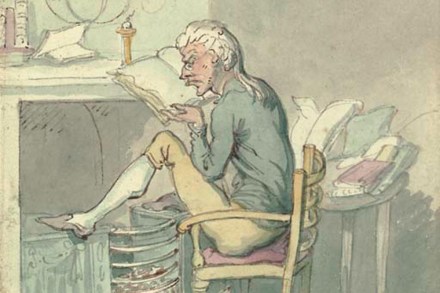
On every Shrove Tuesday since at least 1753, boys at Westminster School have gathered in the hall for a mad scramble over a pancake. The Pancake Greaze (pictured) is a cherished tradition that sees one pupil crowned the winner for grabbing the biggest portion, which the cook tosses into the centre of the hall from a height of 15ft, as the rest of the school cheers on. The champion is awarded a golden coin by the Dean of Westminster, accompanied by the headmaster and sometimes royal visitors. The more unsavoury part of the tradition – nominally beating the cook with Latin primers if he fails to get the pancake over

School portraits: snapshots of four notable schools

Lancing College, West Sussex Lancing is a public boarding school for children aged 13 to 18 in West Sussex. Set within the South Downs National Park, it offers an open-air theatre, a state-of-the-art music school, an equestrian centre and even the tallest school chapel in the world. As impressive as its facilities, though, are its alumni: Evelyn Waugh, Sir David Hare and Lord (Stephen) Green to name but a few. Nowadays, many students at the college – where fees start from £12,602 – come from its sister preparatory schools in Hove and Worthing. Also arriving this month is a new headteacher, Dr Scott Crawford, who will replace Dominic Oliver after

Why do people feel sorry for me for going to boarding school aged nine?

Sometimes, when I’m chatting about childhood, at some point it will become clear I went to a boarding school from the age of nine. Reactions can be comical. ‘You poor thing!’ an interlocutor might gasp, gripping my forearm, no doubt picturing cold showers and cruelty. I’ve always responded with bemusement, since my experience largely featured comfort and crumpets. I loved my prep school – Dorset House in West Sussex. It was a world in itself, enclosed and beguiling. In some ways it was unchanging, such as the graffitied Latin primers which were the same our grandparents had used. Yet it could be surprisingly forward-looking, as when it made a satellite

English schools are failing disadvantaged children

Education should be the great equaliser – the ladder with which all children, regardless of circumstances of birth, can improve themselves and, by doing so, climb towards a more prosperous future. It was certainly that way for me. I loved learning, and my state education took me from humble beginnings in Clacton-on-Sea to working in Westminster. Fixing this system will not be politically easy … but political difficulty is no excuse for inaction But not all children are so lucky. Despite England’s significant success at raising overall attainment over the past decade, the gap between advantaged and disadvantaged pupils has stubbornly remained – despite the significant sums of money spent

Amanda Spielman on the SEND row and Labour’s Ofsted blind spot

22 min listen

As Labour looks to get a grip on public spending, one rebellion gives way to another with the changes to the Special Educational Needs and Disabilities (SEND) system threatening to become welfare round two.  On this week’s Saturday edition of Coffee House Shots, Lucy Dunn is joined by The Spectator’s Michael Simmons and former Ofsted chief Amanda Spielman to explore what the government is planning – and why so many Labour MPs are worried. Is the system failing the children it’s meant to support, or simply costing too much? And can Labour afford to fix it without tearing itself apart? Listen for: Amanda on the unintended consequences of the 2014

Keir can't catch a break

13 min listen

Keir Starmer will have been hoping for a more relaxed week – but he certainly won’t be getting one. He is facing a fresh rebellion over support for children with special educational needs (SEND), which threatens to become welfare 2.0. The plan involves overhauling the SEND system and it’s another case of Labour MPs exclaiming that they didn’t stand on a Labour ticket just to target the most vulnerable in society. The main concern among backbenchers is whether it should be legally enforceable for parents to ensure their children receive bespoke support. Elsewhere, all roads lead to the Treasury, as Neil Kinnock has a solution for increasing Rachel Reeves’s headroom:

We’re losing the ability to read

A recent American study, called ‘They Don’t Read Very Well’, analyses the reading comprehension abilities of English literature students at two Midwestern universities. You may be surprised to discover that the title is not ironic. That they don’t read very well is an understatement along the lines of Spike Milligan’s ‘I told you I was ill’. The study’s subjects were given the first paragraph of Charles Dickens’s Bleak House, and asked to read it out loud, parsing the sentences for meaning. A doddle, you’d think, for anyone reading Eng lit at a university. Well, you’d be wrong. Most participants were unable to elicit a scintilla of sense from Dickens’s prose.

Lily Parr and the creepiness of AI resurrection

I’m not sure it’s possible to make a horror movie more sinister than the chirpy four-minute film on YouTube purporting to be an ‘interview’ with the late Lily Parr. Parr was a professional footballer who played as winger before the war, a chain-smoking 6ft Lancashire lesbian with that gung-ho spirit I remember from my girls’ boarding school, before the governors purged the spinster games mistresses. Three UK in collaboration with Chelsea FC have cooked up an AI version of Lily, which they insist can answer questions just as she would have done. They’ve persuaded Karen Carney (real, not AI), who played for England, to talk to AI Lily and then

Can the Tories save their education legacy?

13 min listen

Bridget Phillipson’s schools bill is back in the Commons today. The scope of the legislation is twofold: firstly, looking at the welfare of children in schools and secondly at fundamentally changing the landscape of secondary education by doing away with academies (and with it the legacy of the previous Conservative government on education). The plan has been read by many – including former head of Ofsted Amanda Spielman, who joins today’s podcast – as Labour pandering to the unions and perhaps even prioritising the adults (union members) over the children. Amendments to the bill will be debated this afternoon, including a Tory amendment that would ban phones in schools, although it

Colin Freeman, Harry Ritchie, Max Jeffery, Michael Gove and Catriona Olding

35 min listen

On this week’s Spectator Out Loud: Colin Freeman explains how Islamic State tightened its grip on the Congo (1:23); Harry Ritchie draws attention to the thousands of languages facing extinction this century, as he reviews Rare Tongues: The Secret Stories of Hidden Languages by Lorna Gibb (8:00); Max Jeffery highlights the boxing academy changing young lives (13:20); Michael Gove reflects on lessons learned during his time as education secretary (20:30); and, Catriona Olding introduces the characters from her new Provence-based memoir club (29:27).  Produced and presented by Patrick Gibbons.

School portraits: snapshots of four notable schools

Ludgrove, Berkshire Ludgrove, which was founded in 1892 by the footballer Arthur Dunn, is a boarding prep school in Berkshire and has 130 acres for its pupils to learn, run around and play in. The school is one of the last preps to provide full boarding (which is fortnightly). At weekends, boys can use 11 football pitches, four tennis courts, two squash courts and a nine-hole golf course. It’s not just Prince William’s alma mater: other old boys include Alec Douglas–Home, Simon Sebag Montefiore and Bear Grylls (who opened the new Exploration Centre in June 2021). Most of the boys go on to Eton, Harrow, Radley or Winchester. The headmaster,

Why I’ve never forgotten Sister Cecilia

It is never people, always buildings. Faces change, time blurs them, but – unless they undergo a complete makeover – buildings remain pretty much the same, bar a few coats of paint. Along the second-floor corridor lined with arched windows that overlook the street. Buses grind by below. Up the last short steep staircase and along the very top corridor, which is narrower and lined with books. They call it the library and I am often here, tucked into the window seat reading, but otherwise heading for the arched door – everything is arched here – at the far end. It opens on to a low-ceilinged room with roof lights

Aristotle and the leisurely pursuit of education

Nearly six million people are on out-of-work benefits. It is claimed that, for most of those, going back to work would not be financially worth it. Aristotle would have agreed with them because for him, leisure was the most important possession a man could have. The ancients generally had no concept of the dignity of labour, apart from idealistic views about the farmer working in harmony with gods and man for the moral betterment of mankind. For most people, work was a painful necessity whose only purpose was to keep you from penury. The farmer-poet Hesiod (c. 680 bc) saw farming mainly as a matter of survival, when men ‘will never

What I learned from my meeting with the Education Secretary

Dear Secretary of State, thank you for meeting me and one of my deputies on Monday. You will have noticed in our meeting how disappointed we were with your responses to the questions teachers have about the government’s proposals. I assure you, we are not alone in that feeling. As teachers, we often hear politicians say how much they care about education. One of two things follows: either they turn out to be that rare politician who is truly interested in schools; or they are that all too common politician who simply wants to appear that way. Our meeting confirmed that you are firmly in the latter category. Politicians who

What Bridget Phillipson has in common with Plato

One does not like to disagree with one’s editor, but while the image of Rome salting the earth of its bitter rival Carthage is a striking way of describing Labour’s plan to wreck our current system of education, Rome was not in the habit of destroying the advantages that its conquests produced. The salting story is a 19th-century invention, endorsed by no less an authority than the Cambridge Ancient History (1930), but now rescinded. As Mr Gove made clear in last week’s magazine, the universal imposition of a national curriculum, among other measures, will remove the freedom and choice – the two words you will find nowhere in discussion of

The ‘shocking tactics’ of Kemi Badenoch

Whitehall is being swept by moral outrage. Ministers, in full This Is Spinal Tap mode, have turned their pious horror up to 11 and Keir Starmer has accused the opposition of a ‘shocking tactic’, preferring ‘the elevation of the desire for retweets over any real interest in the safeguarding of children’. What dark perfidy has been done? What cynical political stunt have the Conservatives pulled, staining their hands with such baseness? Kemi Badenoch has tabled a reasoned amendment to the Children’s Wellbeing and Schools Bill, which is being debated at second reading today. Let me explain briefly. Second reading is – slightly counterintuitively – the first opportunity for the House of Commons to discuss

Michael Gove: why does Labour want to ruin state schools?

13 min listen

At PMQs today, the battle lines were drawn ahead of today’s vote on Labour’s Children’s Wellbeing and Schools Bill, which aims to protect children within the education system. Its contents have galvanised opposition parties, who are using the legislation to force a fresh inquiry into grooming gangs. Shadow Education Secretary Laura Trott has also been on the airwaves today, attacking some of the reforms detailed in the plan, specifically on academies and free schools. The government is set to take away many of their freedoms to set curriculum and pay, freedoms given to them by our now editor – then education secretary – Michael Gove. So, do academies have a

Why homeschooling rates have doubled

Schools are a relatively new phenomena in human history. In Britain, they expanded in the 19th century and early 20th century in step with industrialisation and urbanisation, but in many places in the world, what little education the young receive occurs at home. The assumption most share, not unreasonably, is that where there are schools to attend, parents should send their children to them so they can avail themselves of the opportunities for academic learning, for socialisation and working through what they might do after they leave with the rest of their lives.  Covid gave an enormous boost to homeschooling The number of children being home-schooled in the last hundred

The sad demise of the scathing school report

As the first term of the school year draws to a close, pupils’ reports will soon be landing, encrypted and password-protected, on parents’ smartphones. But once they’ve finally managed to open them to find how little Amelia or Noah has been performing, there will be another code for them to crack: what on earth the teachers are actually trying to say about their child. These days, reports tend to be written with the help of AI software or templates, which makes it impossible to work out how your child is really doing. In our super-sensitive age, many schools now play it safe by couching all comments as positives, and only

Must try harder, Education Secretary

The headmaster of one of the best comprehensives in the country was once asked the following question by Tony Blair: ‘If you could do one thing to improve state education in this country, what would it be?’ ‘Oh, that’s easy,’ he said. ‘I’d line up every civil servant in the education department and machine gun the lot of ’em.’ No prime minister has ever asked me that question, but my answer would be more diplomatic. It would be to insist that every incoming education secretary memorise the serenity prayer. This is the prayer that members of Alcoholics Anonymous recite at the end of their meetings: ‘God, grant me the serenity