Death

Looking for Katrin: Rory MacLean goes in search of his dead wife

One September, Rory MacLean’s wife, Katrin, was diagnosed with terminal cancer. Seven months later she was dead. The couple had been married for 32 years. In the wake of his wife’s death, MacLean decided to write a book about the afterlife. He had already written books about Russia and Myanmar, Berlin and Crete, but it was not clear where this journey should begin. ‘Unfortunately, few who entered heaven alive returned with a guidebook.’ Over the next five years, he travelled the globe, learning how different faiths understood the afterlife and exploring various sacred sites and religious rites. At the same time he read a wide range of mystical writers and collected insights into death from science, philosophy and the history of religion.

The grim rise of the ‘death positivity’ movement

It was the day after The Spectator’s summer party and I was on my way to something called a death café. After an unknown quantity of Pol Roger the night before, I was already contemplating my own mortality. This death café was being held in a Gail’s in Horsham (after closing time, mercifully for its customers). The coffee tables were shoved awkwardly together in the middle of the shop floor. Eight of us, all women, sat: a healthcare worker, a retiree, a lawyer, two death doulas (we’ll get to them later) and me, at 26, three decades younger than anyone else present. We were there because ‘death positivity’ is having a moment. There are death cafés, death doulas and funeral celebrants who’ll narrate your cremation like a wedding DJ.

Non-hunting people will never understand the loss of a horse

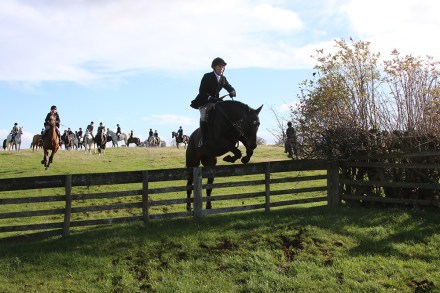
My favourite hunter has died and I am bereft. No disrespect to the myriad other horses I have known and loved over the years – Ianto, Alfie, Mr Darcy, Thurlow, Boris, Shannon, Etonia, Langford, Motown, Eddie Stobart, Foxy, Totto the polo pony, Sunshine, B.G., Barnaby and the legendary Spartacus. But Carpenter was in a league of his own. ‘You sound more upset about Carpenter than you are about Grandpa,’ said Boy, referring of course to my beloved late father Malcolm, whom I have just buried. ‘Yes, but Grandpa never carried me over hedges in life or death situations,’ I replied. This is the thing that non-hunting people will never understand. Your mount isn’t so much a horse as he is your closest wartime comrade.

Highs and lows: The Boys, by Leo Robson, reviewed

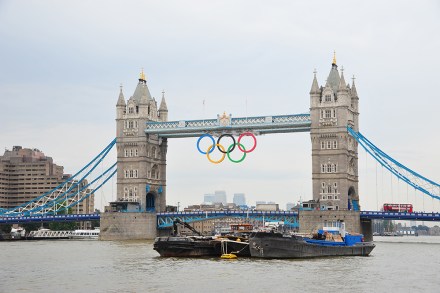
The Boys, the entertaining debut novel by the literary critic Leo Robson, is set in Swiss Cottage during the 2012 London Olympics. Johnny Voghel is ‘methodically lying about’, home on leave from an admin job in the West Midlands and grieving both for his mother, who died the previous year, and – by extension – his father, who died when he was a child. A typical day is spent ‘smoking badly rolled cigarettes, watching the ring-fenced patches of grass suffer in the heat, nodding at passers-by, tweezing grey hairs from my nostrils and popping the spots on my chin’, before walking into the centre to gaze at the BT Tower with its Olympics countdown.

Remembering my gloriously unfiltered father

Nothing can prepare you for the death of your father because, by definition, it’s a once-in-a-lifetime event. You have these ideas in your head about how it’s going to be: the children gathered at the bedside saying all the moving, important things that hitherto they’d held back; the fond paternal benison. But the reality, in my experience, is unlike the scenes in literature. My dad couldn’t wait to get rid of us. He was far too preoccupied with the intimate, difficult and very personal business of dying to indulge our let’s-pretend-everything’s-normal chit-chat. His last words to me – perhaps to anyone – were: ‘I’m feeling really buggered. Call me a nurse.

A deadly imitation game: the fate of the British teenager who posed as a Russian oligarch’s son

This story is little more than a brutal anecdote, which Patrick Radden Keefe has chosen to tell at excessive length. It has the kind of fact-checked gravity that indicates a star American journalist bent on perpetrating an entire book. (‘Built in 1923 and originally known as the Empire Stadium, Wembley was the most iconic sporting ground in Britain.’) But it occurred to me more than once as I read it that it has the hallmarks of a particularly black London comedy by Dickens or Ben Jonson or Joe Orton. A violent knave, his activities previously limited to cheating the police, murdering his equally appalling criminal rivals, doing underhand deals and ripping off the rich, acquires an associate.

What the death of my beloved son taught me about Easter

The hawthorn hedges are white with blossom; the countryside looks set for a wedding. Even in the small garden of my hospital, spring is inescapable. Cherry and magnolia bloom. Viburnum scents the air, young leaves come to the trees. Hospitals are where most lives begin, and where many end. Hospices shepherd only a small minority of deaths, about one in 20, often those of the middle aged whose diseases are more predictable. Frailty is less orderly, and the fitful hazards of age bring many to the general wards where I work. More of us die in hospital than anywhere else. What sort of spring wakes the hedgerows and the weeds, but not my boy? In the Emergency Department I met the woman who became my wife.

easter

The art of aging

More than 30 contemporary artists have contributed to the Wellcome Collection’s latest exhibition, which asks what it’s like to age at a time of unparalleled longevity. But as so often happens at the Wellcome’s exhibitions, it’s the ephemera that draw the eye first. “These 2 men are the same age,” says a leaflet advertising Kellogg’s All-Bran breakfast cereal. “One has driving power – energy – the will to succeed. The other is listless – tired all the time – it is an effort for him to plod through each day’s work.” The point being that aging is, to a not inconsiderable degree, something we do to ourselves, and something we do to each other. It is a process, not an event.

aging

Ghastly middle-class materialism: The Quantity Theory of Morality, by Will Self, reviewed

In ‘Ward 9’, the central story of Will Self’s lauded debut collection, The Quantity Theory of Insanity (1991), it is posited that a society can only contain a finite supply of sanity, and that when it comes to marbles we’re all playing a zero-sum game. His latest novel suggests a limited amount of morality must exist in a world where the avaricious prosper and the meek inherit the debts of those who live unscrupulous lives. In the milieu of the book, these debts are mainly school fees, coke bills and the cost of renting an Italian villa for two weeks every summer.

The life of Karl Zinsmeister

From our US edition

It’s strange interviewing a friend who is dying, but Karl Zinsmeister is at peace. I met Karl in Washington, DC, in the spring of 1981, when we two Upstate New York hicks were new to the staff of Senator Pat Moynihan. The first thing I learned about him was that he and his girlfriend (and later wife) Ann, while on some do-gooder mission in Africa, had wandered into Tanzania and been held on suspicion of being spies. (They weren’t.) Karl threw himself into both intellectual and manual labor with fierce enthusiasm, doggedness, even hard-headedness. Over the past 45 years he has edited magazines, renovated ruined tenements, been embedded in Iraq, raised three kids, lived with Ann on a houseboat, served as White House chief of domestic policy and produced more than 20 books.

karl zinsmeister

Missing Cowboy, our great farm manager

From our US edition

Life in the country is unforgiving. Animals die, labor is unceasing and nature fights back at every turn. We say losing a beloved horse or a loyal farm dog is like losing a member of the family. But while the pain is real, it’s certainly not the same as losing a dear friend. Our long-time farm hand died late last year. He was not an old man by any means and he had the vigor of a younger man still. By the grace of God, he passed away peacefully at home in the small cottage just down the road from the farm. I’ll call him Cowboy, because in truth, that’s what we called him most of the time. He didn’t like his real name. And he certainly lived up to the moniker. Cowboy could solve any issue, big or small.

Fascinating: The Fabulous Funeral Parlour reviewed

The Fabulous Funeral Parlour ended with possibly the least necessary caption in TV history: ‘Filmed in Liverpool’. Whenever I go back there (quite often these days for family reasons), I’m struck all over again by how the whole city seems engaged in the production, distribution and promotion of Scouseness. Yet, even by normal Liverpudlian standards, the people in this old-school, narrator-less documentary put in an impressive shift. Leading the way was Hayley, the owner of both the parlour in question and, despite fierce competition, the most extravagant trout pout we saw. Hayley’s mother died five years ago aged 59, and it was then that she decided to set up Butterflies Rising Funeral Care.

My father gave me the internet

From our US edition

My father went into the kitchen for a cookie, then disappeared into his home office for a phone call. He was arranging a surprise for my mother – hired waitstaff for Christmas Eve dinner, one of the biggest our family would have hosted. Then he died. It took 15 seconds. We found him within minutes. The waitstaff called back 11 times over the next two days. I thought they were debt collectors. Finally, I went into his office, where we had found him, picked up his phone, and yelled, “He’s gone! Stop calling!” That’s how I learned what he’d been doing. They were trying to confirm. And in the corner of my eye, on his bookshelf: Irish Folk and Fairy Tales by W.B. Yeats.

father internet

A poignant and perfect send-off 

We knew the church would be packed as Shelley had died so young. We knew the church would be freezing, as her funeral fell during the Arctic spell that whitened the bracken and iced over puddles the colour of Dairy Milk. When we drove into Simonsbath just after lunchtime, the sun was only grazing the hilltops, leaving valleys in deep shadows. We’d allowed plenty of time, but the lanes were already crammed with vehicles. My husband and I had intended to stand at the back of St Luke’s so as not to take up precious places, but thanks to Ivo’s near-village-elder status we were ordered into the emergency seating in the chancel.

The unsettling rise of DeathTok

For teenage girls on TikTok, the makeup routine is an almost sacred ritual. Manicured fingertips dart around at virtuosic speed, applying dabs of foundation, blush and highlighter with precise artistry. Normally the commentary is about the nuances of brushing and blending – but Sophie, a bewitchingly pretty 18-year-old from New Zealand, has something more pressing to discuss. ‘I’d been having headaches for about two months,’ she says, placing dots of concealer under her blue eyes. ‘And then one night – it was my [high school] graduation – I was having a few drinks, which you’re not meant to do when you have glandular fever, which is what we all thought I had. So I kind of expected to wake up hungover.

Maoist China in microcosm: Old Kiln, by Jia Pingwa, reviewed

Old Kiln is a novel spoken by the muse of memory but carved into shape by the fear of forgetting. Jia Pingwa (b.1952) wrote the first draft in 2009 after visiting his home village. Remembering a prolonged bloody conflict that tore the village apart during the Cultural Revolution, he was disturbed to find all traces of it gone – and the younger generation knowing nothing about either the violence or the Cultural Revolution itself. Old Kiln also confronts a similar amnesia afflicting the entire country. The fictionalised village is China writ small – its kiln that fires porcelain providing the book’s title.  Jia is superb at marshalling large-scale scenes of chaos and balancing them with quieter interiors.

The architects redesigning death

Unesco doesn’t hand out world-heritage status to absences, but if it did, there would be memorials all over the western world to our genius in erasing death from our consciousness. We have airbrushed the deceased from our lives with a ruthless efficiency, banishing them to suburban cemeteries where they can spend eternity unvisited. Burials and cremations are today spiritless, functional affairs, death rituals perfunctory, public grieving rare, graves unworthily negligible or unspeakably vulgar, our wakes pretexts to get drunk and obliterate the memory of what just happened. I exaggerate, but not much. The Maltese architect Anthony Bonnici wants to change all that.

The depressing rise of ‘direct cremations’

Twenty per cent of last year’s funerals in Britain were direct cremations – up from 14 per cent in 2020. Numbers are continuing to rise, fast, for this most affordable, clinical form of body disposal: cremations with no ceremony and no attendees. Daytime advertising campaigns put out by corporate firms such as Pure Cremation promote the peace of mind of sprightly 75-year-olds at their laptops, or in their conservatories with mugs of tea, who have just pre-paid for the direct cremation package. In the adverts they gush about the future family knees-up, with cupcakes and balloons, that their relatives will splash out on with the money saved by not paying for an attended funeral.

Death comes to the Chelsea Flower Show

It’s a matter of life and death at the Chelsea Flower Show this year. No murders are planned as far as we know, but there will be gravestones and even a coffin. This is to be a celebration of death. The Royal Horticultural Society’s annual Flower Show will include funeral flowers in the Grand Pavilion for the first time since it moved to Chelsea in 1913. The display is being put together by the Farewell FlowersDirectory and, I’m told, there will be no tightly wired whorls of white carnations spelling out ‘LOVE YOU MUM’. Instead, passers-by will be left thinking of country churchyards, wild grasses and meadow flowers; species like campions, cornflowers and cow parsley.

The secret to great friendships

A few years back, a friend from Newcastle was down in London and I was giving him a tour of the town. At various points I stopped and pointed out where various friends had lived. ‘That’s where my late friend X used to live.’ ‘That’s where my much-missed friend Y had his shop.’ Eventually my delightfully straight-talking friend stopped me and said: ‘Are any of your friends fucking alive?’ I’m happy to report that the answer was ‘yes’, but it did make me think about something I’ve unwittingly done all my life – which is to have a disproportionate number of friends who are much older than me. One of my closest friends died last week at the age of 93.