Climate

Confronting the climate Jeremiahs

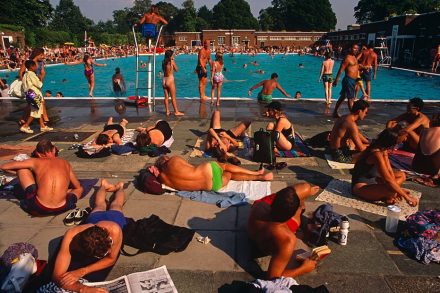
The problem with being a well-known climate sceptic is that whenever there’s a heatwave, you get buttonholed by eco-zealots who think it ‘proves’ they’re right and you’re wrong. The first person to confront me during the current sunny spell was a Guardian journalist at a right-wing conference, which the newspaper had clearly identified as a hotbed of ‘denialism’. It didn’t help that the air conditioning wasn’t working and it was approaching 40°C in the main auditorium. ‘I see you’re sweating profusely,’ he began, shoving a microphone in my face. ‘Still think climate change is a hoax?’ I had to patiently explain that few people on my side of this debate deny that climate change is real.

The humiliating truth about the way we think

Over the long span of human existence, different cultures have held varying notions as to how responsible we are for our own thoughts and beliefs. Before the dawn of the Abrahamic religions, and in places untouched by these faiths, it tended to be the rule that individual members of the group could only be understood as parts of the whole, or in the grander cosmic scheme of things. The ascendence of Christianity in Europe, with its idea of the indivisible soul, tilted matters more towards a belief in individual agency and accountability. This concept, secularised by Descartes, who gave us the commanding rational ego, has proved resilient ever since, despite the best efforts of Freud, neuroscience and gene selection theory to dethrone it.

The battle of the oligarchs

From our US edition

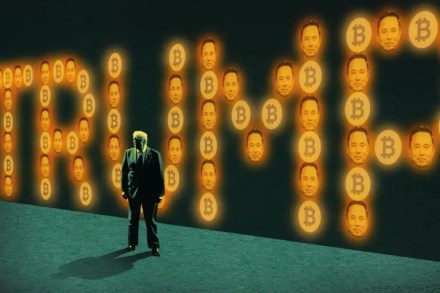
Money and power have rarely been strangers; often nations are made to shudder when the ruling elites battle each other. Britain’s late empire was divided between liberal manufacturers and aristocratic interests, whose conflicts hastened the rise of the Labour Party and the end of empire. In the United States, opposition to powerful trusts defined progressive politics for decades, ultimately laying the basis for the New Deal and a greater scope for government. In the West today we are witnessing a similar divide among the uber-rich class — epitomized by Elon Musk’s embrace of Donald Trump — that is already reshaping politics. Until 2016 the US establishment, both Republican and Democratic, embraced similar views on national security, global trade and multilateral institutions.

oligarchs

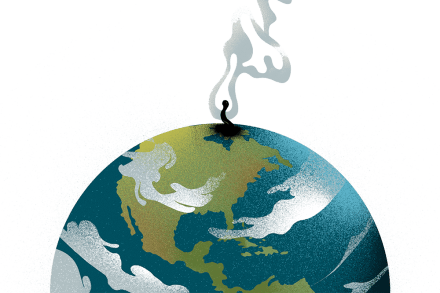
The climate ‘calamity’

From our US edition

"Those who cannot remember the past are condemned to repeat it,” George Santayana wrote in The Life of Reason, published in 1905. The philosopher’s aphorism, somewhat hackneyed after nearly a century and a quarter, and always true only in a limited way, assumes that men are capable of directing history to a certain end, while diverting it from other ones. Santayana was a very wise man and certainly no ideologue. Nevertheless, his maxim shares something with ideological thinking. Both assume that men are collectively aware of the realities of the present time and their possibilities, capable of determining where they wish their societies to go in future and in what shape or form, and then — with varying degrees of success — guiding them there.

climate

Cop is dying

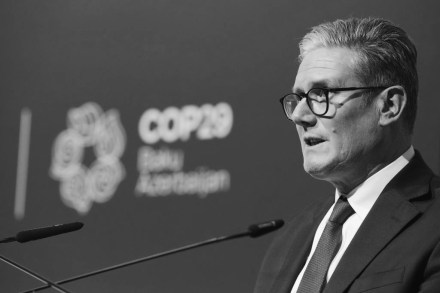
In the near three-decade history of the annual round of UN climate conferences, the Baku Cop29 stands out. There have been disastrous Cops before. For those with long memories, there was Cop6 in the Hague after George W. Bush narrowly won the 2000 presidential election, which was disrupted by protestors and the outgoing American climate negotiator had a cake thrown at him. Then there is the Copenhagen Cop15, when the Global South, led by China, India, Brazil and South Africa, sunk a binding climate treaty that would have required them to cap their emissions. But never before has there been the indifference and mass absenteeism that marks the Baku Cop. The choice of Azerbaijan to host the talks was always going to be challenging.

Europe is not a museum

From our US edition

The temperature, at last, is starting to drop — and for Europeans that only means one thing: peak season is over. The crowds in the piazzas and on the beaches are starting to thin. And in the tavernas that were TikTokked you can finally think about getting a table. It’s time. Like the clockwork of migrating swallows — the Americans are going home. And knowing you can finally count on a breeze and far fewer strong-dollar spenders than a few weeks earlier, a stingier tipping class of European grande bourgeoisie in West London or the 8ème arrondissement — that has long since given up on July and August for the Mediterranean — is now contemplating a holiday. It’s still, however, at least conversationally, Europe season in the United States for a few more weeks.

europe museum america

China, not America, has the real emissions problem

From our US edition

Hailed as America’s first comprehensive climate law, the Inflation Reduction Act was signed by President Biden earlier this summer. It had been thirty years and sixty-five days since President George H.W. Bush signed the United Nations Framework Convention on Climate Change in Rio de Janeiro. The UNFCCC’s objective was to stabilize concentrations of greenhouse gases in the atmosphere “at a level that would prevent dangerous anthropogenic interference with the climate system,” a threshold that the convention left undefined. In 1992, the average concentration of carbon dioxide in the atmosphere was 356.54 parts per million by volume (ppmv).

Sunak and Truss are wrong about solar

Rishi Sunak has joined Liz Truss in grumbling about solar panels in fields. This is all rather dismaying, and revealing. It suggests that Conservative leadership contenders – and the party faithful they’re appealing to – lack faith in the transformative power of markets and free enterprise. Those solar panels that Sunak and Truss deplore are nothing less than an economic miracle, delivered by private companies seeking profit. Anyone who proclaims themselves supporters of markets should be shouting from the rooftops about this miracle, since it shows how people and organisations freely allocating capital makes our world better, fast.

Fact check: Is Sadiq Khan right about fires?

Will global warming condemn Britain to more fires? Sadiq Khan, Mayor of London, has been widely quoted this morning comparing recent fires around the capital to the Blitz. ‘Yesterday was the busiest day for the fire service in London since the second world war,’ he said – climate change caused the heatwave which ‘led to the fires’. He added that he was dismayed that the Tory leadership contenders were not discussing this ‘elephant in the room.’ So is this right – or misleading? As so often, it’s a mixture. Khan is correct to say that the number of calls to London fire brigade was a record high: it received more than 2,600 calls. But 999 call handlers can receive hundreds of calls about the same incident.

What’s going on with the Met and partygate?

I don't understand the logic behind how the Met Police is conducting its probe into unlawful parties at Downing Street and the Cabinet Office. My confusion reached brain-aching proportions after my ITV colleague Anushka Asthana disclosed on Friday that officials had received fixed penalty notices – fines – for attending perhaps the most famous of all the Downing Street events, the Bring Your Own Booze garden party on 20 May 2020, revealed by an email leaked to ITV News. The point is that I know of at least two relatively junior officials who have been informed by the police that they've been fined. So there is no longer any doubt this was a law-breaking party.

Britain is paying the price for its fracking panic

Between 1980 and 2005, the UK produced more energy than it needed. Today, we import more than a third of our energy and over half of our natural gas. Households are facing an increase in their annual tax bills from £1,500 to an eye-watering £3,000. While the Business Secretary may have tweeted this week that the current situation is a matter of high prices rather than security of supply, families already struggling to heat their homes are unlikely to tell the difference as they decide whether to heat their homes or pay for food. This was never a foregone conclusion. A decade ago, the US shale gas revolution was well underway, with fracking creating hundreds of thousands of jobs and driving down gas prices.

Has Macron shot France’s energy industry in the foot?

Gas prices are soaring. Europe could be about to witness electricity shortages. Power companies are collapsing by the day, and, on top of all that, the government is set to phase out traditional energy to meet its net zero target.  So might think that a cable to ship in cheap, greener electricity from the other side of the Channel is something of a knight in shining armour. Yet the government blocked the proposal today, and it was absolutely right to do so. Britain may need all the electricity it can get its hands on right now — but the last thing it should do is increase its dependence on Macron and Putin.

Insulate Britain are not martyrs

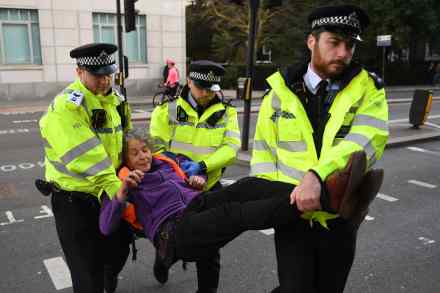
Throughout the Insulate Britain protests there was a suspicion that the group was deliberately trying to get its members behind bars during the COP26 conference — a suspicion that was enhanced when a spokesperson for the group told the Guardian on 24 October:  It’s fair to say that there is absolute disbelief and surprise that the campaign has lasted this long. We assumed that we would not be allowed to carry on disrupting the motorway network to the extent we have been. We thought that people would basically be in prison… if our actions are as dangerous and as disruptive as is being claimed, then I think the question has to be: why are we being allowed to continue day after day?

The cynical brilliance of Boris Johnson’s green conversion

Does Boris Johnson really believe, as he told COP26 a few days ago, we’re at 'one minute to midnight' on the man-made climate change doomsday clock, and that 'if we don’t get serious about climate change today, it will be too late for our children to do so tomorrow'? I ask only because in 2013 he used his Daily Telegraph column to write:  As a species, we human beings have become so blind with conceit and self-love that we genuinely believe that the fate of the planet is in our hands – when the reality is that everything, or almost everything, depends on the behaviour and caprice of the gigantic thermonuclear fireball around which we revolve.

Is climate change scepticism growing in Japan?

Fumio Kishida, the newly-installed Japanese prime minister, could have been forgiven for giving COP26 a miss. The opening ceremony in Glasgow coincided with the general election he was fighting back home. But Kishida, having won the election, did make the trip, where he gave a speech broadly but not unreservedly supportive of international efforts to cut Co2 emissions. The reward for his restrained tone and tepid assurances? Japan was named ‘fossil of the day’ by the Climate Action Network group, an ‘honour’ bestowed on countries deemed insufficiently devoted to the cause.

The strange greenwashing of Nicola Sturgeon

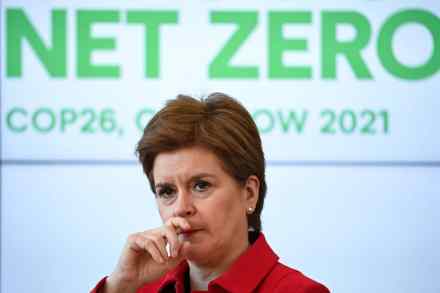
It was only a matter of time. When the Scottish Green party entered government alongside the SNP in August, it was clear Nicola Sturgeon would use the party as a shield against her questionable record and stance on the environment. The surprise is that it happened so quickly and so blatantly. This week we had the extraordinary situation of the Scottish Greens attacking Greenpeace for daring to push the First Minister to explicitly come out against exploitation of the Cambo oil field off Shetland. Scottish Green co-leader Patrick Harvie said Greenpeace was unfairly criticising Sturgeon and is ‘not particularly politically active in Scotland’.

Where is the climate plan B?

The COP26 summit is unlikely to be an outright flop. There has been no shortage of drama, with speakers seeming to compete with each other to see who could use the most histrionic language. Justin Welby, the Archbishop of Canterbury, went so far as to compare the attending leaders to Nazi appeasers. He later apologised.  Some progress, albeit small, is being made. A hundred countries have been persuaded, some on the promise of sweeteners worth £14 billion, to sign a pledge to end deforestation by 2030. Brazil, the most important of all, is among them. India has agreed, for the first time, to set itself a date for achieving net-zero greenhouse gas emissions — although its target, 2070, is two decades beyond what the United Nations would have liked.

The wishful thinking of COP26

History records that George II was the last British king to lead his troops on the battlefield, at the Battle of Dettingen in 1743. But maybe it is only a matter of time… Addressing the COP26 summit in Glasgow Prince Charles called for a 'vast military-style campaign' against climate change. We must put ourselves on a 'war-like footing', marshalling the resources of the private sector as we did during wartime. I look forward to the sight of Charles, on horseback, leading a battalion against Xi Jinping’s People’s Army to try to take the site of China’s latest coal-fired power station. There is a very big problem with this kind of rhetoric.

Join: The Spectator’s online COP26 summit

The two-week COP26 climate change summit starts this weekend, with 100,000 expected on a protest march in Glasgow. And tomorrow, we at The Spectator will hold our own (virtual) summit looking at what lies ahead — and asking if history is about to be made, and how much of this is likely to be political theatre. The morning will open at 9.30am with a keynote speech from Dieter Helm, professor of energy policy at New College, Oxford: I'll be in discussion with him afterwards. His book, Net Zero, is perhaps the best primer you'll read on the topic: he supports the objective but is sceptical about the "jaw-jaw" of climate summits as a means of pushing through meaningful change. Then Kate Andrews will discuss the elephant in the room: nuclear power.

It’s no wonder young people have ‘eco-anxiety’

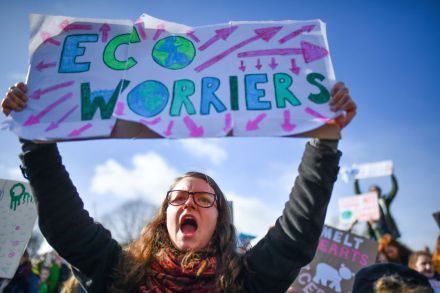
Is it any wonder that children and young adults are going down with ‘eco-anxiety’ , as claimed in an opinion piece in the BMJ this week? One of the pieces of evidence it cites is a survey published in 2020, which claimed that 57 per cent of child psychiatrists had dealt with patients who were feeling anxious about climate change. It would be easy to dismiss this as another case of the ‘snowflake generation’ lacking the toughness of their forebears. But even if it is true that earlier generations of children, such as those brought up during the second world war, seemed to cope much better with the genuine threat of being wiped out by the nightly bombing of British cities, I think we ought to take it seriously as a mental health issue.