Censorship

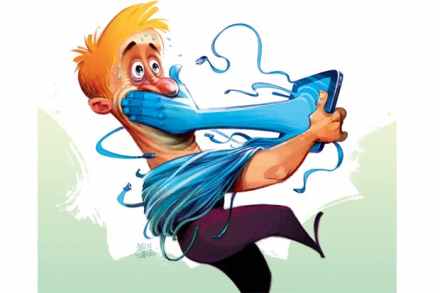
President Trump should bend — but not break — Big Tech

From our US edition

Americans’ increasing focus on this fall’s elections has awakened in me a tinge of nostalgia for the good old days of campaigning — before the internet changed everything. As a conservative running for the US Senate in 1994, I remember being able to connect with thousands of voters to respond to my opponents’ dishonest attacks, the press’s deceitful characterizations of my positions, local television refusing to cover my campaign events, and the character assassinations by the newspaper editorial boards. Actually, I don’t remember that, because I had no way to reach thousands of voters except by paying those same media outlets millions of dollars to buy ads.

trump

Facebook is right. Twitter is wrong

From our US edition

Twitter CEO Jack Dorsey opened up a Pandora’s box two days ago by dropping a fact-check on a tweet by Donald Trump regarding mail-in ballots. That raised all sorts of hell from a bombastic President, as well as more questions than answers. There are several problems with Twitter deciding to put its thumb on the scale of ‘truth’ on its social platform. The site has previously come under enormous scrutiny over widely perceived political and ideological bias. The charges against the company include its unfair and unbalanced actions in banning conservative or politically right-leaning accounts, as well as shadow-banning and limiting views and engagements on trending topics which it deems problematic.

facebook

How to fight back against ‘cancel culture’

‘Cancel culture’ is a horrible term because outside of a dictatorship nobody can actually be ‘canceled’ or otherwise ‘disappeared’. All that can happen is that people can be found to have trodden across one of the orthodoxies of the age. A small number of bullies then come for them. And a larger number of otherwise decent people then fail to stand up for them. It is this last part of the matter that is worth focusing on. It is the only part that is fixable. All ages have their orthodoxies. And if writers, artists, thinkers and comedians do not occasionally tread on them, then they are not doing their jobs. Meanwhile human nature remains what it is.

Facebook now jails me for sharing my own Spectator columns

From our US edition

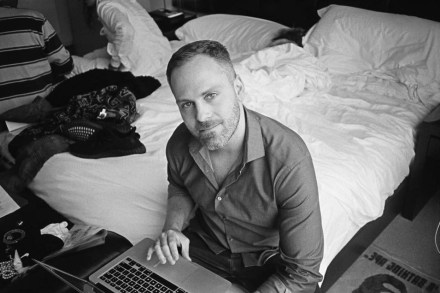
Welp, another 30 days in the gulag. How will I ever survive this time? About a year ago, I stopped using Facebook almost entirely, deleted the app from my phone, and ceased to accept new ‘friends,’ as a few thousand requests continue to pile up in my inbox. It got to a point that, even while self-censoring, nearly every time I opened my mouth on the platform I got slapped with a ban. There was nothing I could do: someone at Facebook clearly has me on a list and, really, Facebook is lame. I’m not sticking around some tyrant’s house if he doesn’t want me there. But friends encouraged me to say. I’m ‘letting them win’, my friends said, if I deleted my account, as though they haven’t already won.

chadwick moore spectator

Dave Rubin is here to solve ‘95 percent’ of the internet’s problems

From our US edition

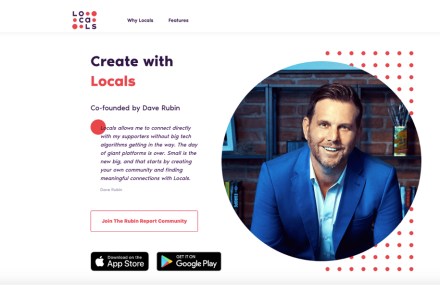
The dream of a free internet — if it was ever more substantial than a fantasy — is crumbling. This decade began with the Arab Spring and the belief that technology powered movements for liberty across the globe could triumph over despotism. Instead the decade closes with the growing realization that technology is driving events in unpredictable ways. Confused, people are left feeling less not more in control of their lives. And a sketch is being made — however faintly — for a new form of despotism: Big Tech. Big Tech is unaccountable, opaque and deeply embedded within the lives of billions. Since 2016 it has been dumped on from both the left and the right, and former Big Tech workers.

locals dave rubin

The NBA tosses an alley-oop for China’s censors

From our US edition

The co-creators of South Park have once again demonstrated why the cartoon remains, after 23 seasons, remarkably astute at delivering shrewd political commentary. Its 299th episode, ‘Band in China’, parodies China’s extreme censorship, restricted internet, and the capitulation of the American entertainment industry to cater to the political interests of the Chinese Communist party (CCP), which in an ironic case of life imitating art, got the show banned in China and virtually scrubbed from its firewalled internet.

south park nba

Is war with Silicon Valley a Trump 2020 strategy?

From our US edition

The world, or at least Twitter, awoke Saturday morning to an extraordinary series of retweets from the site’s most infamous user, @realdonaldtrump. Among those he retweeted: Paul Joseph Watson, the controversial Alex Jones adjacent; Lauren Southern, the right-wing internet celebrity and filmmaker, and for good measure, an account called ‘Deep State Exposed’ which seems most intent on exposing Islam’s quest for global dominion. https://twitter.com/PrisonPlanet/status/1124097191952441349 ‘Lmao [laugh my ass off],’ said Southern, in a missive, again, retweeted by the president of the United States.

donald trump silicon valley

Liam Fox falls foul of the climate change cult

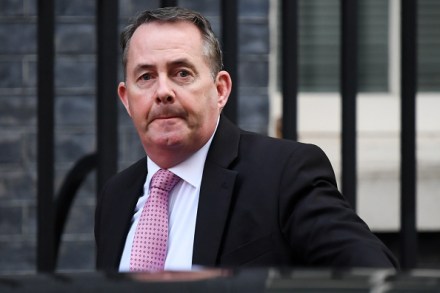
A question has come to me from a test paper in the A-level for 21st century ethics. Read the following statement and explain what is wrong with it: 'It's important that we take climate issues seriously. Whether or not individuals accept the current scientific consensus on the causes of climate change, it is sensible for everyone to use finite resources in a responsible way.' The correct answer, it turns out, is that the statement allows for the possibility that failing to accept the scientific consensus on climate change is somehow a legitimate position for an individual to hold, when of course it is not.

The Tories push on with their porn crackdown

This afternoon the government announced the official launch date for its age-verification scheme for online pornography. As of 15th July, X-rated websites (or at least some of them) will have a three-month grace period to ensure that all UK visitors are over 18. If they fail to do so, the government will block them from UK servers entirely.   This so called ‘porn block’ has been in the works for some time. It's been dogged by criticism, with everyone from online privacy campaigners (who fear the potential repercussions of creating a giant database of porn-viewers) to LGBT campaigners (who say it disproportionately affects minority groups) calling for it to be scrapped.

What’s wrong with hearing #MeToo men’s side of the story?

‘There are two sides to every story’ is an aphorism you don’t hear often lately. Ask anyone amidst a family row: most stories have more than two sides. But in the take-no-prisoners world of #MeToo, there’s only one side. All women are victims and all women are truthful. Any man who’s had a shadow of doubt cast on his sexual behaviour since his first wet dream at 12 is deserving of permanent social and professional banishment and is forever forbidden from saying a word in his own defence. As the editor-in-chief of the respected New York Review of Books found out. Ostensibly Ian Buruma resigned, but resignation over your own dead body sounds awfully like ‘sacked’ to me. His fatal error, according to the usual Twits?

The pointlessness of banning Bannon | 4 September 2018

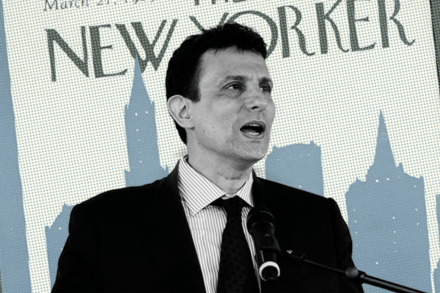
Under David Remnick’s editorship, the New Yorker has become stronger than ever during a period where many titles have collapsed. So you'd think he might be able to fend off the kind of nonsense he's just experienced. The New Yorker has branched out to publish unmissable podcasts, regular emails, blogs and events which combine to push the magazine sales up 10pc. Remnick hasn't torn it up and started again. He managed to keep everything the same, by changing everything: projecting and protecting the magazine’s identity, on and off the page. So when he decided to conduct an interview with Steve Bannon live on stage, as part of the New Yorker Festival, it was a typically gutsy decision.

It’s time to stop the digital mudracking

What do Jeremy Corbyn, Stormzy, film director James Gunn and former Gay Times editor Josh Rivers all have in common? Answer: in the last year or so, they've all been publicly shamed for things they’ve posted online in the past. They’ve all been victims of the lazy new political attack technique: the digital mudrack. One of the more interesting changes in politics is the fact most of us now have a public record of every idiotic thing we’ve ever tweeted, posted, uploaded or said. This, of course, is a giant honey pot for political research teams, time-squeezed journalists and the endless horde of social media users who shark around the net looking for reasons to be outraged.

Joking about vowels is a hate crime now

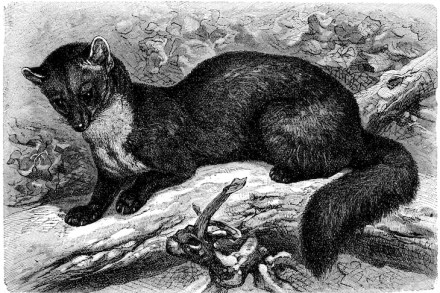
It took four days to actually see the pine marten in the flesh. We caught it on a trail cam on night two of our holiday as it scampered in an agreeably gamine manner for the food we’d left out. It ate better than us that week. By night three it had a choice of eggs (its favourite), peanut butter sandwiches and chopped-up frankfurters. All it needed was a nicely chilled Chablis. We sat in the dark for hours, waiting, until my wife said: ‘Fuck the malodorous little bastard, let’s watch TV.’ She is not much of one for wildlife really. And then it appeared, up on its hind legs crunching its way through the shell of an egg, tipping the yolk down its throat. Pale golden chest, long bushy tail, perky, impish face — we’d got our man.

A grand inquisitor

Hidden behind Kensington Palace, in one of London’s smartest streets, there is a grand old house which played a leading role in Britain’s victory over Nazi Germany. Today it’s owned by Roman Abramovich, apparently — it seems he paid £90 million for it. But during the second world war, and for a few years thereafter, 8 Kensington Palace Gardens was a secret interrogation centre known as the London Cage. This is where suspected spies (and, later, suspected war criminals) were broken down. Between 1940 and 1948, thousands of German servicemen passed through here, on their way to POW camps (if they were deemed innocent) or prison (if they were guilty).

The Spectator Podcast: Campus tyranny

On this week's episode of The Spectator Podcast we look at the issue of 'safe spaces' on campuses and beyond. We also discuss Donald Trump's military strategy, and look at Indian independence, 70 years on. First up: In this week's Spectator cover piece, Brendan O'Neill slams British universities for what he sees as a burgeoning liberal conformism within their walls. Is he right to despair? Or is this just a grumpy older generation railing against change? He joins the podcast along with Justine Canady, Women's Officer for UCLSU, and Madeleine Kearns, who writes about her experiences at NYU in the magazine. As Brendan says: "In the three years since The Spectator named these Stepford Students, the situation has become far worse.

Both sides are missing the point in the row over Dana Schutz’s painting

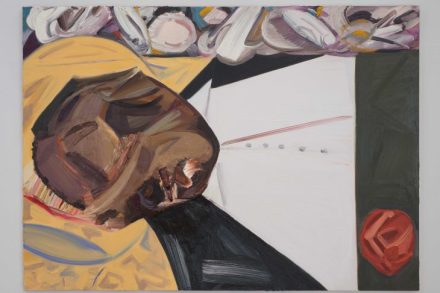
'Let the people see what I have seen', said the mother of Emmett Till. In 1955 her son, a 14-year-old black boy from Illinois, was falsely accused of flirting with a white woman, tortured, murdered and dumped in a river by the woman’s husband and his half-brother, both of whom were summarily acquitted by a white jury. The photographs taken of Till's corpse – battered and bloated beyond recognition – succeeded in shaming and inflaming a nation: he became an icon of the civil rights movement. The recent police shootings caught on camera, and the response from Black Lives Matter, gave Dana Schutz – a New York-based painter of considerable talent – the idea of bringing up Till again.

Why I’ve cancelled my signing at an anti-Trump bookshop

To my mind, a bookshop is like a library — the only difference is that you buy the books, you don’t borrow them. But both have a duty to provide books (space and budgets allowing) reflecting a wide range — as wide as possible — of interests, reading tastes, subjects and points of view. Walk into one of either and there are the thoughts and feelings, beliefs and dreams and creations and discoveries of many men and women, and that is part of their never-ending excitement.

A bookseller’s duty

To my mind, a bookshop is like a library — the only difference is that you buy the books, you don’t borrow them. But both have a duty to provide books (space and budgets allowing) reflecting a wide range — as wide as possible — of interests, reading tastes, subjects and points of view. Walk into one of either and there are the thoughts and feelings, beliefs and dreams and creations and discoveries of many men and women, and that is part of their never-ending excitement.

Five Go Back to Blyton

Six years ago, the publishers Hachette took the well-meaning yet preposterous step of making ‘sensitive text revisions’ to Enid Blyton’s classic Famous Five books. So ‘tinker’ was changed to ‘traveller’, ‘mother and father’ to ‘mum and dad’ and ‘awful swotter’ to ‘bookworm’. The suggestion that tomboy George needed ‘a good spanking’ became ‘a good talking to’, while girly Anne’s assertion, ‘You see, I do like pretty frocks — and I love my dolls — and you can’t do that if you’re a boy’ had its final clause removed, rendering the sentence throwaway rather than poignant.

Where should the line be drawn over the famous Kim Phuc photograph?

Can you imagine, in the wake of a terror attack in London, a tabloid, or any other kind of media outlet, publishing a photograph of a naked and distressed child caught up in the melee? It isn’t hard to answer the question. Of course they wouldn’t publish it. It would break every rule in the book. It is bizarre, then, to see Facebook accused of censorship for coming to exactly the same conclusion: that it wasn’t right to carry an image of naked and distressed child. It is even weirder to see Facebook attacked from a corner – the Guardian – which would normally be among the first to damn tabloid intrusion. The difference is that the photograph in question was not taken in London and was not taken in the recent past.