Censorship

Elon Musk should kill Twitter for good

From our US edition

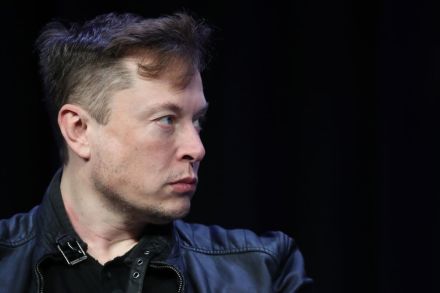
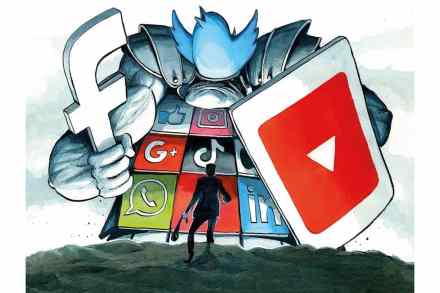
Nothing would be better than for Elon Musk to buy Twitter and then kill it. Take it offline. Delete it. Make it go away. What's the point anymore? Like some aged European monarchy, the service has become too inbred to say anything useful. It exists now as a giant push survey, claiming the appearance of action equals action. Even the cancellation of people, for which Twitter has become uniquely known, is like a magic spell that you have to believe in for it to work. Live outside the Twitter demographic and it does not matter. Listening to people talk, you'd think Twitter had the power to raise the dead, or, more often, the opposite. Twitter is the physical embodiment of what Glenn Greenwald describes as Democrats criminalizing opposition to their party and ideology.

Is Russell Brand really so dangerous?

Once the dust has settled over the government’s mini-Budget, another big political battle looms: the Online Safety Bill. This is the legislation that will make Ofcom responsible for regulating the internet so Britain becomes ‘the safest place in the world to go online’ – at least, that’s how the last government tried to sell it. It was due to go the House of Lords for a second reading in July, but was put on hold because of the Tory leadership contest and I was hoping it would never be resuscitated. Liz Truss and her lieutenants are currently going through the last administration’s legislative programme, seeing what they can ditch to free up some parliamentary time for new bills.

Guston is treated with contempt: Philip Guston Now reviewed

Philip Guston is hard to dislike. The most damning critique levied against the canonical mid-century American painter is that he is too uncontroversial, his appeal too broad, his approach altogether too winsome. None of that stopped the team behind Philip Guston Now – a travelling mega-survey of his work, which will reach Tate Modern in 2023 – from announcing otherwise. In 2020, the year the show was due to open, the curators announced that in light of the ‘racial justice movement’, the artist’s works might now legitimately be read as racist, and the show could not go forward as planned. This was and is quite obviously nonsense. The works in question are marshmallow-like renderings of Klansmen in absurd, mundane scenes.

Twitter gives Jordan Peterson the boot, Dave Rubin follows

From our US edition

Jordan Peterson went from being a psychologist advising troubled kids to an unlikely political figure as he fought against the Canadian government’s compelled speech law for pronouns. Cockburn watched with fascination as Peterson clashed repeatedly with the left-wing narrative, even going as far as to resign from his tenured position at the University of Toronto due to their rampant leftist ideology. On June 28, Twitter suspended him for this tweet (as recalled by his daughter): https://twitter.com/MikhailaFuller/status/1541946666567323649 Clearly referring to someone by their birth name is a sin for Twitter. Little did Cockburn know that Dave Rubin, the host of The Rubin Report, was to be next on the chopping block. Rubin sent this tweet before being suspended: https://twitter.

Matt Drudge was ahead of his time

From our US edition

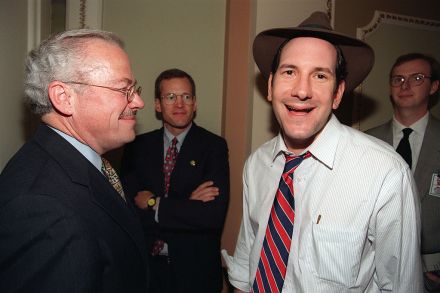
There are two new movies in the works about internet provocateur Matt Drudge, and with the mic dropping on Roe v. Wade, today, they couldn’t come at a more appropriate time. Drudge has been dictating the national news conversation for decades, but he wasn’t always doing it out of the limelight. The tale of how a CBS Studios gift shop clerk came to inform the most powerful leader of the free world (Trump used to be a big fan) and the likes of the late Rush Limbaugh has been documented in articles, books, and a television series. Drudge went dumpster diving, found a discarded contract, and was the first to report that Jerry Seinfeld was negotiating for $1 million an episode for his show. Drudgereport.

Will the Supreme Court end social media censorship?

From our US edition

Conservative media seems to have missed this story, and the limited liberal press it got took it as a simple win. But the real showdown is coming this fall. Later this year, it is possible — not likely, but possible — that the Supreme Court will take away the right of social media platforms like Twitter and Facebook to censor content. This would have the effect of granting some level of First Amendment protection, now unavailable, to conservative users of those platforms. The potential for change hinges on a law struck down by the lower courts, Netchoice v. Paxton, which challenges Texas law HB 20. That law addresses social media companies with more than 50 million active users in the US, like Twitter, YouTube, and Facebook.

The closing of the Chinese mind

I was born in Nanjing five years after the Tiananmen Square protests. By then, records of the demonstrations and the Communist party’s brutal suppression had been scrubbed clean. So Tiananmen was not part of the national conversation when I was growing up. I only fully grasped what had happened when I visited Hong Kong in my early twenties (that would be harder now under the city’s new national security law). Tiananmen isn’t just absent from history books; the Chinese authorities keep an eye on literature and film, so anything that’s politically subversive is censored or driven underground and abroad. One film that fell victim to this regime is Lan Yu, which I recently saw for the first time at a screening in Soho.

Pussy Riot’s daring escape from Russia

From our US edition

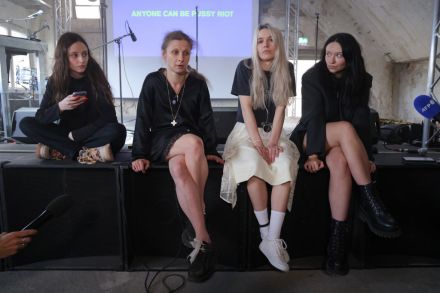
It is a story of ingenuity, cunning and farce that would have done credit to Mr. Toad, escaping his prison bondage by dressing as a washerwoman. Lucy Shtein, one of the members of the Russian protest art collective Pussy Riot, recently revealed how she managed to flee the country while dressed in the bright green attire of a food delivery company. Along with her constant familiar Mr. Rat — a pet rodent who, as is often the way of these things, has become a social media breakout star — Shtein managed to leave her flat in central Moscow, where she had been under house arrest for more than a year.

Fascinating exhibitions – clunky editorialising: Breaking the News at the British Library reviewed

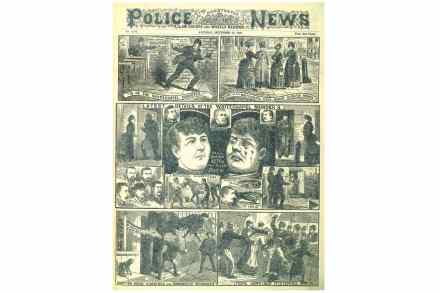
In The Spectator office’s toilets there are framed front covers of the events that didn’t happen: Corbyn beats Boris; ‘Here’s Hillary’; Jeremy Hunt wins the Tory leadership contest. The British Library has something similar at its Breaking the News exhibition. The difference is that these ones actually made it to the newsstand. It’s enough to make any passing journalist break into a sweat. ‘Titanic sinks, no lives lost’, reported the Westminster Gazette in April 1912; ‘King Louis XVI dodges the guillotine’, we are told in the 1793 issue of the London Packet. The Sunday Times’s 1983 Hitler diaries hoax appears in this hall of infamy.

Sleepwalking into censorship: a reply to Nadine Dorries

In this week’s magazine I look at the threats posed by the so-called Online Safety Bill now making its way through the House of Commons. It gives sweeping censorship powers by creating a new category of speech that must be censored: 'legal but harmful'. The government will ask social media companies to do the censoring – and threaten them if they do not. The idea is for the UK to fine them up to 10 per cent of global revenue (ie: billions) if they publish 'harmful' content – but harmful is not really defined. So censorship potential is wide open. Nadine Dorries, the Culture Secretary, has suggested that the jokes of the comedian Jimmy Carr would be "harmful".

Hollywood won’t say gay in China

From our US edition

Exactly when and where are our stunning and brave Hollywood stars prepared to take a stand for gay rights? Liberal actors and celebrities have a made a show of standing against Florida’s Parental Rights in Education Bill, signed earlier this month by Governor Ron DeSantis, a man progressives seems intent on making the next president. When activists and journalists realized they couldn’t stop the bill from becoming law, they deployed their new favorite tactic: demanding that corporations speak out against the bill (see also: how in response to Georgia’s new voting legislation, they insisted that Major League Baseball relocate the All-Star game).

Are cancel-culture activists aware of their sinister bedfellows?

Is there a woke case to be made for freedom of expression? Jacob Mchangama certainly seems to think so. This 500-page door-stopper, which combines a history of free speech with a persuasive case for its defence, is aimed squarely at snowflakes and social justice warriors. Mchangama deals patiently and methodically with all the objections they might make to ‘the first freedom’ and then tries to convince them it’s in their interests to defend it. Take the assumption that untrammelled free speech perpetuates current inequalities, favouring the privileged and penalising the disadvantaged.

Boris is about to give Silicon Valley censors more power than ever

Four years in the making, the Online Safety Bill has now been sent to senior ministers for review — a process that allows them to protest, to shout if anything obvious that has been missed. In this case, the process is invaluable because something huge has been missed. The Bill, if passed, would empower the Silicon Valley firms it’s designed to suborn. It would formalise and usher in a new era of censorship of UK news — run from San Francisco. This Bill would backfire in a way that its Tory advocates have so far proven unable to understand let alone address. That’s why it needs to be halted, and a rethink ordered. The original aim is to make Facebook, YouTube, Twitter and others liable for any genuine filth promoted online.

Eric Adams and the new Democratic censors

From our US edition

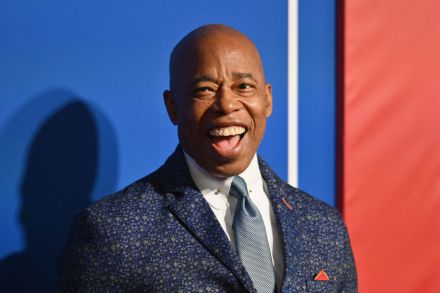
Eric Adams had no idea what drill rap was until just last week when his son introduced him to it. Now he’s convinced it’s the reason for rising rates of lethal firearm crimes in New York City. As crime spirals to new highs in urban areas nationwide, Democratic mayors, who have controlled these cities for decades, are looking for any excuse that doesn’t implicate their policies or those of their predecessors. That’s why Mayor Adams has turned his attention to the presence of an aggressive form of hip-hop on YouTube. Adams threatened to pull social media companies into the principal’s office and “sit down with them and state that, ‘you have a civic and corporate responsibility.

eric adams censors

Big Tech covers up Biden’s crack pipe giveaway

From our US edition

A throwaway line item in an otherwise innocuous spending package unveiled one way the Biden administration and the Democratic party sees "racial equity." The Washington Free Beacon revealed a week ago that the Department of Health and Human Services would be distributing free crack pipes to drug users to promote hygiene and advance racial equity. The cost was around $30 million and the program is similar to what left-wing fiefdoms like Seattle and San Francisco already do. The story had all the elements of tabloid gold — even better in clickability than the last Biden crack pipe story: Hunter’s laptop.

crack pipe

The hippies have become the cops

From our US edition

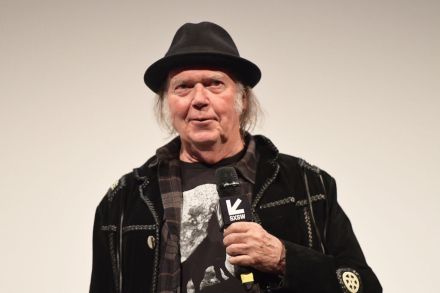
You either die a rebel or live long enough to see yourself turn into a snowflake. The generation of free love and free expression have gradually transformed into the baton-wielders. I’m referring to Neil Young’s demand that Spotify either pull his entire catalog or do away with Joe Rogan’s podcast. Spotify reportedly paid $100 million to acquire Rogan’s podcast in 2020. You'd imagine their contract includes legal bulwarks against such demands. Young is reportedly upset with Covid “misinformation” (the media’s new favorite vague term) and is no longer willing to abide by a streaming service that plays host to Rogan. It took Spotify about three seconds to make their decision: Neil Young is no longer on their platform.

neil young

One hundred years of Ulysses

From our US edition

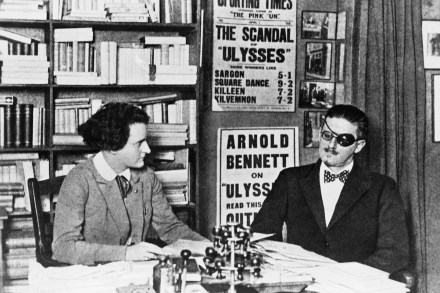
A few years ago, the private school where I teach asked me to offer an evening class on James Joyce’s Ulysses to adults. The idea was to remind alumni, parents and other community members what it feels like to be in one of our enriching classrooms. For over a decade, my Ulysses senior elective had been a major feature of our course catalogue; now, a few adults were about to pop the hood on this infamous tank of a book. As course registrations began to trickle in, I recognized the surnames of current and former students. Then an administrator joined the course, and I had a flutter of nerves at the realization that one of my bosses was actually going to read Ulysses and encounter the disreputable content that lurks within. My cover was blown.

Ulysses

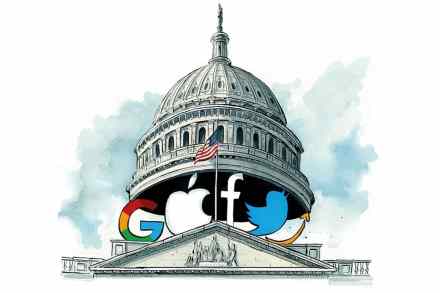
Both parties want to control what you say on the internet

From our US edition

The long slog towards government regulation of social media is snaking its way towards reality. The House and Senate hold hearings this week on bills enacting rules on Facebook, Twitter, TikTok and YouTube. Many of these proposals revolve around Section 230 of the Communications Decency Act, a rather innocuous 1996 law protecting online platforms from civil liability for hosting and moderating third-party content. Section 230 includes language praising “the vibrant and competitive free market” existing for the internet and tech companies, without state or federal government rules. It’s all about to change twenty-five years later, with both major parties seeking to get their pound of ideological flesh from Big Tech.

control

‘Let’s go Brandon’ is a rallying cry for freedom

From our US edition

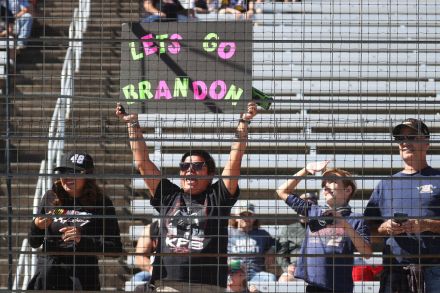
“Let’s go Brandon” started in the most apropos way imaginable: NASCAR driver Brandon Brown was euphorically thanking Larry’s Lemonade and other sponsors for his win at the Talladega Superspeedway when the crowd erupted into a sing-songy “F*ck Joe Biden!” chant (because, why not?). The reporter — either purposefully or by mistake, we don’t know — did what the media does best and warped reality. “You can hear the chants from the crowd — ‘Let’s go Brandon,’” the reporter said. And so launched the meme that sank a thousand bipartisanships. “Let’s go Brandon” is now commonplace code for conservatives everywhere. It’s emblazoned on T-shirts, hats, banners, and billboards, and is plastered all over the internet.

brandon

The trouble with Trump’s new social network

From our US edition

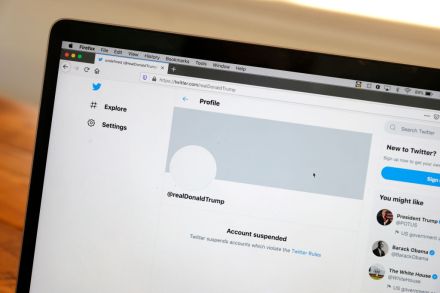
“Start your own social media site,” goes the common refrain when conservatives complain about getting kicked off Facebook and Twitter. Well, now Donald Trump has. On Wednesday night, the former president announced the launch of the Orwellian-sounding “TRUTH Social” and “Trump Media & Technology Group.” “I created TRUTH Social and TMTG to stand up to the tyranny of Big Tech,” Trump said in the press release. “We live in a world where the Taliban has a huge presence on Twitter, yet your favorite American President has been silenced. This is unacceptable. I am excited to send out my first TRUTH on TRUTH Social very soon.

truth social