Censorship

Sadiq Khan’s advert ban shows he is an illiberal censor at heart

Six weeks ago I was one of the 1.3 million Londoners who voted for Sadiq Khan as mayor. Boy do I regret it now. Because he’s just shown what he really thinks of us inhabitants of the capital: that we’re so mentally fragile, so pathetic, so vulnerable to the wicked charms of advertisers, that he must censor allegedly sexist ads on our behalf and protect us from offence. In proposing a blanket ban on bus and Tube ads that make people feel bad about their bodies, Sadiq has revealed his authoritarian, paternalistic contempt for the people who swept him to power. I’m amazed there isn’t more fury about his extraordinary proposal. He has instructed Transport for London to stop running ads that indulge in body-shaming.

No, thank you, Officer, I will not think before I speak

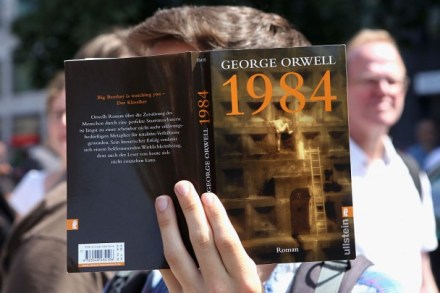
As my daughter was preparing for her AS level exam on 1984 this week, George Orwell’s dystopian classic loomed back into a news headline: 'We are not the Thought Police, Chief Constable Tells Government'. Leicestershire chief constable Simon Cole, who’s in charge of the anti-radicalisation Prevent programme, told the press that the Government’s new counter-extremist and safeguarding bill risked asking the police to dictate “what people can and cannot say”. The top cop was adamant that “We absolutely don’t want to be the thought police.” Well, (to borrow from another literary classic, Evelyn Waugh’s Scoop): Up to a point, Lord Copper. The police may feel uncomfortable about being tasked with explicit political censorship.

Death metal

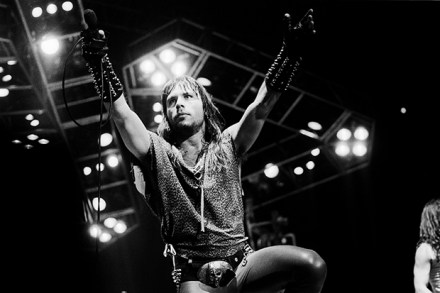
With its loud guitar riffs and even louder fashion, heavy metal has always been ripe for ridicule. In its mid-1980s heyday, it was epitomised by the fictional rock group Spinal Tap prancing on stage next to an 18-inch polystyrene model of Stonehenge while clad in ball-crushingly tight trousers and floor-length capes. In some parts of the world, however, metal is no laughing matter. In the Middle East, for instance, the potential punishment for wearing all black while wielding an electric guitar is death. These days, against a backdrop of authoritarian suppression in countries such as Iran and China, heavy metal’s trademark theatrics and widdly guitar solos have become less an opportunity for gentle mockery than a rallying cry for artistic freedom.

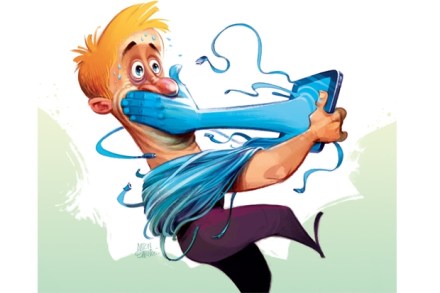
The internet’s war on free speech

The dream of internet freedom has died. What a dream it was. Twenty years ago, nerdy libertarians hailed the web as the freest public sphere that mankind had ever created. The Declaration of the Independence of Cyberspace, written in 1996 by John Perry Barlow, warned the ‘governments of the industrial world’, those ‘weary giants of flesh and steel’, that they had ‘no sovereignty where we gather’. The ‘virus of liberty’ was spreading, it said. Now it seems that the virus has been wiped out. We live our online lives in a dystopian nightmare of Twittermobs, ‘safety councils’, official procedures for ‘forgetting’ inconvenient facts, and the arrest of people for being offensive.

The internet’s war on free speech | 10 May 2016

The dream of internet freedom has died. What a dream it was. Twenty years ago, nerdy libertarians hailed the web as the freest public sphere that mankind had ever created. The Declaration of the Independence of Cyberspace, written in 1996 by John Perry Barlow, warned the ‘governments of the industrial world’, those ‘weary giants of flesh and steel’, that they had ‘no sovereignty where we gather’. The ‘virus of liberty’ was spreading, it said. Now it seems that the virus has been wiped out. We live our online lives in a dystopian nightmare of Twittermobs, ‘safety councils’, official procedures for ‘forgetting’ inconvenient facts, and the arrest of people for being offensive.

Revealed: UK government blocks foreign journalists from press freedom conference

On its website the Foreign and Commonwealth Office claims that 'we’re strengthening the Commonwealth as a focus for democratic practice and development. We’re working with the Commonwealth Secretariat to strengthen its institutions so it promotes human rights, democratic values and the rule of law.' It continues: 'we’re engaging with civil society across the Commonwealth.' In the light of this declaration  one would expect the FCO to welcome this week’s conference in London by the Commonwealth Journalists Association. The would-be participants spend their lives, often at high personal risk, to bring the truth to their followers in their own countries. They include many of the best and bravest editors and reporters.

Don’t blame the students. They’re a product of a Britain that’s losing its love of free speech

In the past 12 months a curious thing has happened: student politics, for decades the most irrelevant, cut-off sphere of public life, has become headline news. The explosion of campus censorship – the primary means through which twentysomething politicos vent their political passions today – is followed, reported on and critiqued by greying commentators on a daily basis. The shock-horror headlines about the rise of 'no platforming' and the sclerotic growth of speech-policing 'safe spaces' seem a little strange. Not least because the No Platform policy – introduced by the National Union of Students in 1974 – is about as old as some of the commentators currently filling column inches with their castigations of the illiberal yoof.

The Chinese are willing participants in state censorship

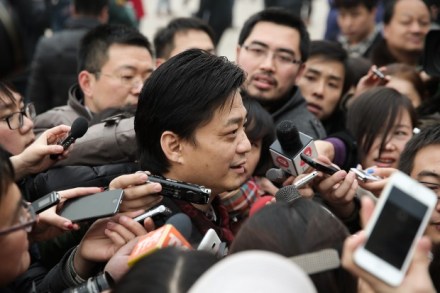
For three decades, Cui Yongyuan has been one of China’s national treasures. As a veteran television presenter for CCTV (China’s BBC), Cui’s career was made by this state-controlled broadcaster. So his recent talk in London - entitled ‘An Idealist’s commitment and compromise’ - caught my attention for its political undertone. Could he have been talking about the compromises he had to make as a Chinese journalist? To my delight, Cui spoke about this - and more. 'When the Chinese emigrate to democracies, to civilised nations, they enjoy the freedom of the system,' Cui told the Chinese audience. 'But they become patriotic to the point of dogma, such that no one can voice a single ill of China.

Caught on the net

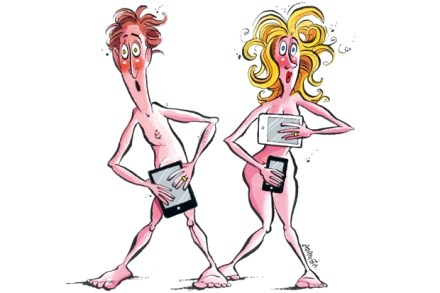
What, if anything, should a moral, liberal-minded person think about the hacking of the infidelity website Ashley Madison? And by ‘liberal-minded’, please note, I do not mean ‘Liberal Democrat-minded’, for such a person would perhaps merely think ‘Can I still join?’ and ‘I wonder if my wife is already a member, though?’ and ‘But will I find anybody prepared to do that thing I like with the pillow and the chicken?’ Rather, I mean somebody who believes in the sometimes jarring moral precepts that ‘People should be free’ and ‘People should not be a bit of a scumbag’. Ashley Madison, you see, is a website claiming 37 million users worldwide that exists to facilitate marital infidelity.

Censoring Jews

You might think that Jews, faced with a relentless campaign to ban their culture, would think once, twice, a hundred times, about instituting bans themselves. After they had thought about it, they would decide that, no, absolutely not, prudence as much as principle directs that they of all people must insist that art should be open to all. A good liberal idea, you might think. So good and so obvious there’s no need to say more. If you still require an explanation, allow me to help. You don’t try to silence others if you believe in artistic and intellectual freedom. You keep your mind open and the conversation going. Every little Hitler and great dictator in history has tried to tell the public what it can and cannot see, and no one should want to join their company.

Feminism becomes more like Islamism every day

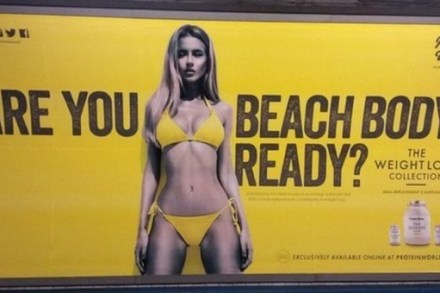
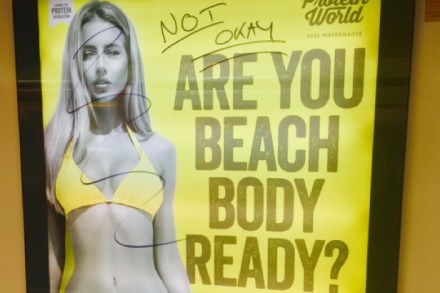
Here's a tip for political activists: if your rabble-rousing echoes the behaviour and ideas of Islamists, then you're doing something wrong. Consider the Protein World advert which — clutch my pearls! — features a photo of a beautiful, svelte woman in a bikini next to the question: ‘Are you beach body ready?’ Angry women, and probably some men, have been writing outraged slogans on these posters, scribbling on the poor model's face and body, seemingly blissfully unaware that they're following in the footsteps of intolerant Islamic agitators. In 2011, Muslims in Birmingham used black spraypaint to deface an ad for H&M featuring a woman in a yellow bikini. They were reportedly 'offended by her flesh'.

She’s wrong, but Katie Hopkins has a right to call migrants ‘cockroaches’

I know we’re all supposed to be spitting blood over Katie Hopkins’ Sun column about African migrants. In fact, anyone who isn’t currently testing the durability of their computer keyboard by bashing out Hopkins-mauling tweets risks having their moral decency called into question. Hating Katie has become the speediest shortcut to the moral highground in this slacktivist age, when people prefer to make a virtual advert of their moral correctness than to do anything so tough as try to change the world outside their bedroom door. And if you aren’t hating Katie, if you aren’t partaking in this orgy of competitive benevolence, what is wrong with you?

The Spectator at war: Censorship and mystification

From The Policy of Mystification, The Spectator, 5 December 1914: Let us say that we have not ourselves suffered from the Censorship at all. We have never submitted, and have never been asked to submit, any article to the Press Bureau. Such censorship as has been exercised in our columns has been the purely voluntary censorship which is exercised at all times, whether in war or in peace, by every editor who has any sense of public duty, and that remark, we believe, applies to the whole British Press, daily and weekly.

Podcast: Terror’s comeback kids and Steve Coogan, foe of press censorship?

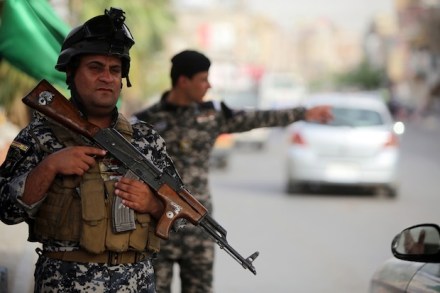
Why do Iraq’s jihadists keep on coming back? On this week’s View from 22 podcast, Daveed Gartenstein-Ross and Freddy Gray (1 min, 29 sec) examine why groups such as ISIS have a habit of disappearing, losing their territorial gains and reappearing more deadly than ever. What can the West do, if anything, to combat the ISIS threat in Iraq? Are we going to see instability in the region for years? James Forsyth and Isabel Hardman (10 min, 29 sec) also look at the disappearance of hawks in Westminster and why Parliament is so reluctant to intervene in foreign lands. Does the ghost of Tony Blair and Iraq scare off MPs from voicing interventionist feelings? It’s also been a terrible week for Ed Miliband — will Labour consider junking their leader?

Since when has Steve Coogan stood against censorship?

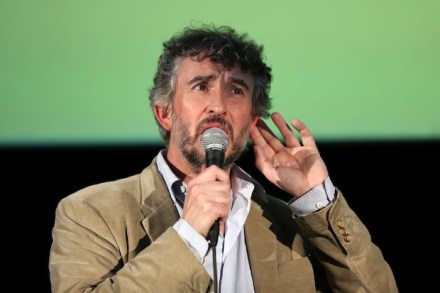
[audioplayer src="http://traffic.libsyn.com/spectator/TheViewFrom22_19_June_2014.mp3" title="Paul Staines from Guido Fawkes and Evan Harris of Hacked Off debating Steve Coogan's involvement with Index" startat=1508] Listen [/audioplayer]I have looked everywhere. I have Googled, and asked around. But I can find no evidence that Steve Coogan has ever taken the trouble to defend freedom of speech at home or abroad. I promised myself I would never again mock ‘luvvies’ in politics after I saw Tim Minchin, Dave Gorman, Robin Ince and Dara Ó Briain give up their time to help Index on Censorship’s campaign against Britain’s repressive libel laws. Steve Coogan did not stand alongside them.

Index on Censorship is thriving and defending free speech around the world

Index on Censorship defends free speech and debate for all – so we defend Nick Cohen's right to write a blog highly critical of Index. The problem is, however, that what he wrote was wrong, both in broad outline and finer detail. As a consequence Nick threatens to undermine the very cause that he claims to hold most dear. Index is not ‘falling apart’ nor is it even ‘in crisis’. In common with many other organisations in the charity sector it found itself, last year, facing a shortfall in funding. There are complex reasons for this but one of them, ironically, may be due to the very opposite problem to the one Nick suggests.

The Crisis at Index on Censorship

Index on Censorship, once home to the most important defenders of free speech in Britain, is falling apart. Seventeen full-time staff members in place when Kirsty Hughes, a former European Commission bureaucrat, took over as chief executive in 2012 have been fired or resigned. Among the recipients of redundancy notices are Padraig Reidy who was Index’s public face and its most thoughtful writer, and Michael Harris, who organised the lobbying to reform England’s repressive libel laws, the most successful free speech campaign since the fight to overturn the ban on Lady Chatterley’s Lover in the 1960s.

Queen Victoria with the naughty bits put back

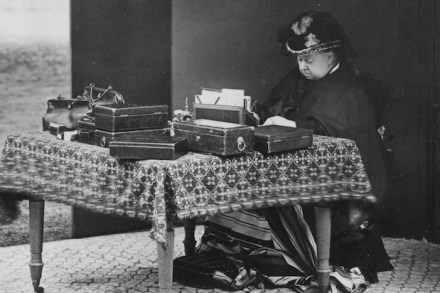
Queen Victoria was the inventor of official royal biography. It was she who commissioned the monumental five-volume life of Prince Albert, a controversial and revealing work. She wrote most of the personal sections herself. She also published bestselling volumes, such as Leaves from a Journal of Our Life in the Highlands. She was a gifted and prolific writer, penning an estimated 2,500 words a day. When she died in 1901, however, there was no authorised biography. Instead, the decision was made to publish her letters. People tend to assume that letters are the truth but, as Yvonne Ward shows in this original and engaging book, selection is everything. The idea of editing Victoria’s letters originated with Lord Esher.

Let’s call a ban on Katy Perry. Why I’m siding with the mad mullahs.

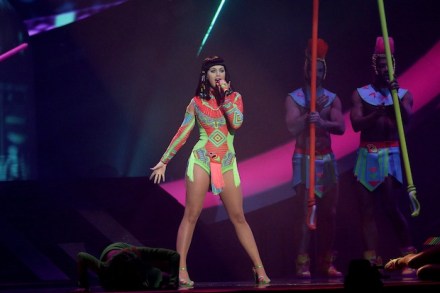
Call me a fruitcake, but I am all for Islamic censorship when it comes to Katy Perry. In the last few days, there's been a terrible fuss about Perry's latest song, 'Dark Horse', because the video for it features an Arabic man wearing an 'Allah' pendant, who is burned alive. A bunch of angry Muslims, led by someone called Shazad Iqbal from Bradford, have campaigned against the video on the grounds that it was blasphemous. They launched a petition calling for the video to be removed from  YouTube, and got more than 60,000 signatures. The video has now been edited to remove the offensive pendant, and Shazad has declared a victory on behalf of the prophet.

How the media has it both ways over the ‘Jesus and Mo’ cartoons

A reader sends me a card for sale in Scribblers in the King’s Road, Chelsea. It depicts two slices of cheese standing vertically on their thinner ends. On both, black beards and eyes are crudely superimposed, and above them two gold rings form haloes. The caption says ‘Cheeses of Nazareth’. The joke is pathetically bad, not least because, in order to achieve the cheese/Jesus pun, you have to have two cheeses, whereas there was only one Jesus. But my correspondent’s point is that the equivalent gag about Mohammed would provoke a storm, not only from some Muslims, but from much of the media. I recently watched an interesting example of this on Channel 4 News.