Censorship

Look! Shakespeare! Wow! George Eliot! Criminy! Jane Austen!

Among the precursors to this breezy little book are, in form, the likes of The Story of Art, Our Island Story and A Brief History of Time and, in content, Drabble’s Oxford Companion to English Literature and Johnson’s Lives of the Poets. Other notable precursors are How to Read a Novel by John Sutherland, How to be Well Read by John Sutherland, 50 Literature Ideas You Need To Know by John Sutherland, Lives of the Novelists by John Sutherland and more in that vein. The tireless and compendious Dr Johnson — ‘the first great critic of English literature’ — deserves and receives a chapter to himself here, and it’s no great surprise that the tireless and compendious Professor Sutherland entirely sees the point of him.

Can we trust the state to censor porn?

The most sweeping censorship is always the most objectionable. In principle, however, there is nothing wrong with David Cameron’s sweeping proposal that the customers of internet service providers must prove that they are 18 or over before they can watch online pornography. The rule for liberal democracies is (or ought to be) that consenting adults are free to watch, read and listen to what they want. It stops child pornography – because by definition children are not consenting adults – and it could stop children accessing pornographic sites. Children are no more able to give informed consent to watching pornography than they are to appearing in it – if 'appear' is not too weak a verb to describe the rape and abuse of children on camera.

How social media helps authoritarians

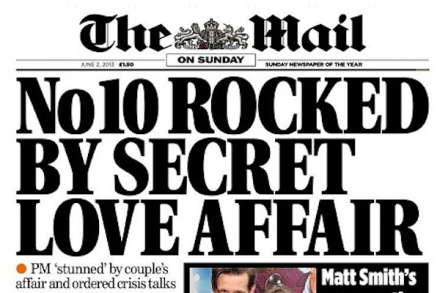
Have you heard? Do you know? Are you, as they say, ‘in the loop’? When the Mail on Sunday said a ‘sensational affair’ between ‘high profile figures’ close to Cameron had ‘rocked’ No. 10, did you have the faintest idea what it was talking about? I did, but then I’m a journalist. Friends in the lobby filled me in on a story which had been doing the rounds for months. I even know which law stopped the Mail on Sunday  following the basics of journalism and giving its readers the ‘whos’, ‘whats’, ‘whens’, ‘whys’ and ‘hows’. (Although with most affairs the ‘whys’ are self-evident.

Chan Koon Chung – banned in China

Chan Koon Chung’s previous novel, The Fat Years, was set in a gently dystopian Beijing of 2013, when a whole month is missing from the Chinese public’s awareness, and everyone is inexplicably happy. Since it first appeared in 2009, the novel has enjoyed cult success in both Chinese and English translation, even becoming, as Julia Lovell notes in her preface, a chic take-home gift from society hostesses in mainland China. It has shades of George Orwell’s Nineteen Eighty-Four and Aldous Huxley’s Brave New World, although the setting of The Fat Years may not be as brutal as either of those. Certainly, to read it now is eerie, so much has reality caught up with Chan’s fiction.

Why is there such guff in the online comments below my articles?

What’s to be done about the online comments sections in daily newspapers? These (for those estimable Spectator readers who have yet to succumb to tablets, iPhones and computer screens) are the spaces that the online versions of newspapers and magazines provide beneath the articles they publish, for readers to offer (or ‘post’) thoughts of their own. Typically there is no limit to the number of responses that can be made, and a generous limit to the length of each response. Contributors may make multiple incursions onto the site, and answer or comment on each other’s posts. Quite often a kind of conversation gets going. Contributors’ email addresses are available to the newspaper but not on the site. Some use real names, others post under pseudonyms.

The Spectator’s Notes | 21 March 2013

There is supposed to be a Leveson Part II, although everyone has forgotten about it. As well as telling him to look into everything bad about newspapers (‘Please could you clean the Augean stables by Friday, Hercules’), David Cameron also asked Lord Justice Leveson to investigate who did what when over phone-hacking. This was postponed because of the forthcoming criminal trials, but I mention it because it is a reminder that things are back to front. Normally when you have an inquiry, you first work out what happened and then you work out what to do about it. Leveson is the opposite, hence the resulting chaos. The problem is particularly acute if you put a judge in charge. Judges like laws, so they propose new ones.

‘Lord Horror: Reverbstorm’, by David Britton and John Coulthart – review

As the son of the last British artist to be successfully prosecuted for displaying obscene paintings, I have some empathy with David Britton, the last person successfully prosecuted in Britain for publishing obscene literature. Unlike my father, who accidentally strayed into the purview of the police, Britton’s prosecution in 1992 was almost inevitable. His publisher, Manchester-based Savoy Books, was raided by the police with vindictive regularity between 1976 and 1997. Ironically, Savoy has often been reviled as much by the left for its lack of political correctness as by the right for attacking the shibboleths of authority. It embodies a longstanding tradition of non-conformist and essentially anarchist thinking in Britain that also underpins Reverbstorm.

The View from 22 — the fight for press freedom and an EU problem for Cameron

What effect would any form of statutory regulation have on the press in this country? In this week's cover feature, Nick Cohen writes that if the Leveson Inquiry recommends strong measures to curtail the press, they will not be practical thanks to the constant evolution of the media industry. On this week's View from 22 podcast, Nick explains the problems of defining who exactly is the press and who are journalists: 'You can't say what a newspaper is and you can't say who a journalist is. When I started in journalism, people used to say it was a trade, not a profession...that was true in theory but false in practice — you couldn't be a journalist unless you worked for a state or private media conglomerate.

China bans Haruki Murakami’s ‘1Q84’: George Orwell would have seen the irony

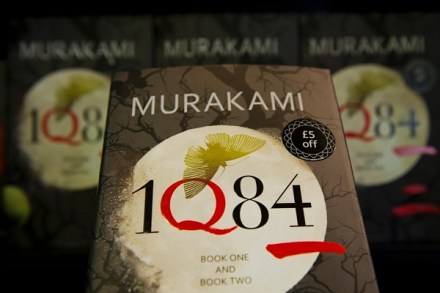
Books – or lack thereof – are the latest manifestation of anti-Japanese sentiment in China. The escalating dispute over the Senkaku/Diaoyu Islands has provoked some Beijing bookshops to remove Japanese books from their shelves. The most prominent book to be made to disappear is Haruki Murakami’s recent novel 1Q84, a critically acclaimed worldwide bestseller. Rather ironically, given the circumstances, the title echoes Orwell’s 1984 – in Japanese, ‘Q’ and ‘9’ are homonyms. Orwell has an uncanny knack of turning up at the choicest moments. Remember the glitch in July 2009 when Amazon deleted 1984 from everyone’s Kindles?

The worst form of censorship

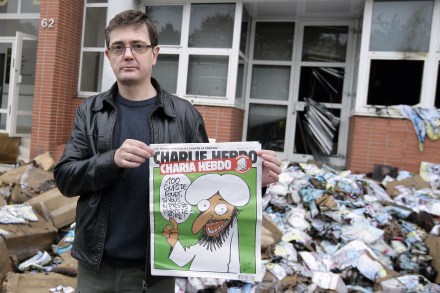
A week ago, the offices of the French satirical paper Charlie Hebdo were burned down. This attack came after it advertised the founder of Islam, Muhammad, as 'editor-in-chief' of the new issue. The move was a light-hearted response to the very serious matter of the election of an Islamist party (the Ennahda party) as the leading party in Tunisia (a result which, incidentally, appears not to have greatly bothered most European media). As the staff of Charlie Hebdo contemplated the ruins of their magazine, a much grander and richer magazine, Time, ran one of those pieces which have become familiar whenever there is an Islamist assault against free speech.

Free speech dies another death in Burma

The joy of Aung San Suu Kyi being given Internet access for the first time on Friday has proved transient. Time magazine reports that Irrawaddy, Burma’s premier English language magazine, has been forced to close its print operation for financial reasons.   Irrawaddy is a clandestine publication, revered as an ‘open window into an opaque country’ by observers of South-East Asian politics. Burma’s stringent censorship is enforced with determination, but the demise of Irrawaddy’s deadwood edition is a telling reminder that penury is the best form of censorship. Irrawaddy’s circulation was tiny, and the magazine relied on donations from pro-democracy groups in the West, whose coffers are empty and resolve shaken by the rise of authoritarian Asia.

Humbling Free Expression Awards

I am always blown away by the Index on Censorship Freedom of Expression Awards. But for some reason, last night's event seemd to throw up an even more astonishing roster of award winners than usual. It was also good that so many were there in person. (In a surreal touch, Paul Staines, aka Guido Fawkes, was also there in person at a table he had bought for the occasion). The Sri Lankan paper, The Sunday Leader, won the journalism award, which was collected by Lal Wickrematunge. Lal explained he and his brother Lasantha had started the magazine 15 years ago on a shoestring budget and distributed it from the back of a car. Unfortunately, Lasantha couldn't be there because he was assassinated in January.