Cambridge

The Spectator’s Notes | 23 November 2017

Windsor Castle on Monday night sounds like a children’s party magnified. The rooms were filled with golden-leaved trees. A giant block of ice carved with the initials of the Queen on one side and the Duke of Edinburgh on the other dominated the reception room. Her sons wore their Windsor coats. A magician made a table levitate and move unsupported round the room. As with a children’s party, there were no speeches, and everyone was pleased and excited. After 70 years married, the two nonagenarians involved presumably felt, among family and friends, that they had earned the right to be unserious. The occasion must have been sweet for Prince Philip. All those years ago, he was patronised.


There’s a progressive argument to be made for tuition fees – why won’t the government make it?

Ever since Labour won over young voters at the last election, the Conservatives have been trying to work out how to do the same. Tory MPs have scrambled around for ideas. Various suggestions have been mooted, ranging from a Tory Glastonbury and a Tory Momentum to lowering taxes for young voters, scrapping historic student debt and drastically reforming tuition fees. With Jeremy Corbyn promising to abolish university fees, the debate surrounding higher education funding has become particularly toxic. Many younger voters feel that tuition fees are very unjust. What started as £1k a year has grown to £9,250 and the above-inflation interest rate only adds to the sense of unfairness. It doesn't help that few now bother to make the argument for tuition fees in response.

Women-only colleges were the original ‘safe space’

My old college, formerly known as New Hall, is women-only for its undergraduates. But now the term is expanding, as so often these days, to include anyone who, at the time of application, 'identifies as female', as well as the non-binary, those who really can’t make up their minds. During my time in college, I shared a room with another girl; quite what it would have been like to share with someone aspiring to being a woman I don’t know…presumably entirely non-threatening but a bit odd. The point about this women-only college is that it was meant to provide a bit of gender balance to the male majority in the overall university population – which must by now be getting near parity.

Greater Oxbridge

Oxbridge is an ivory-tower state of mind, perhaps, or at least two ancient rival universities, but how about this: in the future the word could describe a fully connected English economic region, a rival both to London and to the great midlands and northern cities. This is the aim of the National Infrastructure Commission, headed by Lord Adonis. This advisory body, a legacy of the Osborne chancellorship, wants to create a 130-mile economic corridor linking the two varsity towns and their hinterlands just beyond the Chilterns. It is running a competition to glean ideas as how to best make the new places in it. A fast cross-country road is planned, while the long-abandoned ‘varsity line’ railway from Oxford to Cambridge is being re-established bit-by-bit.

The curious incident of Cambridge’s Latin graffiti

A weird one, this. Yesterday, a short walk away from me in Chesterton, Cambridge, an enigmatic threat appeared in three-foot-high letters on a new row of upmarket houses flanking the banks of the Cam. But these weren’t the usual slapdash daubings. No, the letters were lavishly painted across four houses by a ladder-wielding vigilante ten feet above the ground. The stunt has made national headlines, not so much for the content of the protest as for its medium – Latin. Well, it is and it isn’t Latin. It proclaims, Locus in domos loci populum! Purists will object that the Romans had to muddle through without the indulgent hyperbole of exclamation marks.

Keynes’s grandchild

‘Did you really deserve the Nobel prize?’ I ask Amartya Sen. ‘Why do you think you won?’ When you’re sitting opposite the world’s most respected living economist, at a time when the dismal science is under intense scrutiny, an opening question should be punchy. Thankfully, Sen, an 83-year-old Harvard professor, has a sense of humour. ‘You can’t ask me that,’ he says with a grin. ‘I have absolutely no idea why I won.’ He then composes himself. ‘Like any researcher, I’m happy if my work interests others,’ he says carefully. ‘But it would be a pretty bad way to conduct one’s life, thinking about how to win prizes, rather than being listened to.’ Sen has achieved both.

There’s life after Brexit for Cambridge University

As a former student of English at Cambridge, I am sent the faculty magazine, 9 West Road. Its latest issue leads with a long article by Peter de Bolla, chair of the faculty, headlined — with intentionally bitter irony — ‘Now we are in control’. On and on he goes — the shocked perplexity of ‘French locals’ in ‘our holiday village’ that we could be Brexiting, the putative loss of the EU exchange students who ‘amaze and challenge’ him, how you cannot study for the tripos’ famous Tragedy paper ‘from the perspective of a monocultural and inwardly facing society or polis’. Prof. de Bolla himself is so monocultural and inward-facing that he cannot imagine any way of running international exchanges without the EU.

Lessons from the front

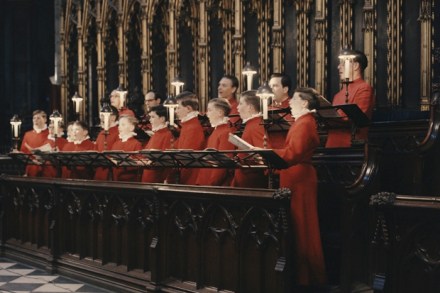
Christmas, for many people, begins at exactly 3 p.m. on Christmas Eve. It’s the moment when everything stops, frantic present-wrapping, mince-pie making and tree-decorating ceases and calm briefly takes hold. The reason? A single boy treble whose voice, clear and fragile as glass, pierces through the chaos with those familiar words: ‘Once in Royal David’s city/ Stood a lowly cattle shed...’. The service of Nine Lessons and Carols from King’s College, Cambridge, and its annual broadcast on BBC Radio 4 is as essential a part of contemporary Christmas folklore as stockings and Santa Claus, plum pudding and presents.

The most persecuted minority at universities

A few columns ago, I told the mortifying story of how I totally died at the Oxford Union. Today I’m going to tell you how I managed to avoid the same fate on a more recent trip to the Cambridge Union, where I spoke in a debate and opposed the motion: ‘This house would open its doors to refugees.’ Partly, I was just better prepared. One of the benefits of a public-speaking disaster is that it makes you particularly loath ever to repeat the horror. I can’t say I spent any longer on my speech. What I did do, though, was co-ordinate much more with the rest of my team beforehand (ex-MEP Godfrey Bloom, current MEP Roger Helmer, economist Alasdair Macleod) so that we knew what we were all going to say and didn’t repeat one another’s arguments.

In the company of queens

Steven Runciman, the historian of Byzantium, is a puzzling figure. He was an outrageous snob, once remarking that he would have enjoyed being the widower of a Spanish duchess, which would have made him a dowager duke in Castile. He particularly relished the company of queens (of the female variety), and he took the Queen Mother out to lunch once a year at the Athenaeum. But as Minoo Dinshaw shows in this richly original life, the snobbery was a subtle pose. Runciman was a tease who liked to play games with people, and he made a career out of being enigmatic. His family were wealthy shipbuilders in Northumberland. His parents were both dedicated public servants — his father was a minister in the last Liberal governments.

Is it art or science?

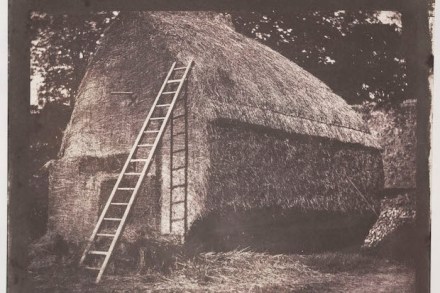
William Henry Fox Talbot had many accomplishments. He was Liberal MP for Chippenham; at Cambridge he won a prize for translating a passage from Macbeth into Greek verse. Over the years he published numerous articles in scholarly journals on subjects ranging from astronomy to botany. One thing he could not do, however, was draw well — and it was this inadequacy that changed the world. While on holiday in Italy in 1832, he became so frustrated by his failure to draw Lake Como satisfactorily using a pencil and a drawing aid known as the camera lucida — his efforts were well below GCSE art standard — that he resolved to find another way to preserve such views. The results are on show in an exhibition at the Science Museum, Fox Talbot: Dawn of the Photograph.

‘Mother says I look like a sick ostrich’

Most modern biographers feed off celebrity like vampires let loose in a blood bank. That is why their books sell: they give readers the illusion of intimacy with people they will never know. Alexander Masters is different. He specialises in what one might call ‘marginal biography’, devoting hundreds of pages to individuals who live on the frayed edges of society, and often seem to be on the edge in other ways besides. In Stuart: A Life Backwards, he wrote about a sharp-witted down-and-out whose life had been damaged beyond repair; with Simon: The Genius in My Basement, his focus switched to a dropout mathematician who spent his days eating tinned kippers in a basement stuffed with old maps and plastic bags.

Emma Thompson’s wrong, and not just about the EU

At first glance, Emma Thompson’s intervention in the Brexit debate earlier this week didn’t make much sense. Asked at the Berlin Film Festival whether the UK should vote to remain in the EU, she said we’d be ‘mad not to’. She went on to describe Britain as ‘a tiny little cloud-bolted, rainy corner of sort-of Europe, a cake-filled misery-laden grey old island’. She added that she ‘just felt European’ and would ‘of course’ vote to remain in the EU. ‘We should be taking down borders, not putting them up,’ she said. I think I get the bit about Britain being ‘rainy’. That’s true, obviously, and some people dislike our islands for that reason.

Cold comfort for Gibbons fans

One of the great fascinations of a ‘lost’ work by a famous name dredged up out of the vault after a lapse of several decades lies in establishing precisely when it was written. The jacket of Pure Juliet offers no clue, but parenthetic mention of Star Wars being on at the Odeon and an old lady who fears the depredations of the IRA suggests a composition mark sometime in the late 1970s — at any rate somewhere near the point when Stella Gibbons (1902–1989) was approaching her 80th year. Take away these half-dozen references to such sure-fire signifiers of the Callaghan era as comprehensive schools and this awful ‘punk’ music and what remains could very easily have been filed in the 1930s.

A Horrible History of English Hymns

Given that for much of English history the country’s main musical tradition was that connected with the church, it is surprising that so little effort has been made to describe the evolution of, as the subtitle to Andrew Gant’s book puts it, the ‘History of English Church Music’. If we read biographical accounts of the lives of composers from Tallis to Vaughan Williams we pick up some of the story, but far from all of it. Gant is supremely well qualified to write about it. He has been organist and choirmaster of the Chapels Royal and worked at Westminster Abbey, Oxbridge colleges and the Guards’ Chapel; and he also composes.

The Spectator’s notes | 26 November 2015

Because, it says, of its ‘liberal values and respect for human dignity’, the Economist has put out a film about Emily, a 24-year-old Belgian woman, who wants assisted dying. She is physically healthy, and comes, the film assures us, from a happy family. She has suffered from severe depression since childhood, however. By her own account, her self-made video (two years ago), in which she says ‘I don’t want to live a lie’ and ‘It keeps feeling empty whatever I do’, made her feel empowered. It inspired her to seek death at the hands of doctors. Belgium is one of two countries in the world which permits assisted dying for psychiatric reasons.

Spectator books of the year: Mary Beard on how Clive James went viral

I am unashamedly sticking to my own home territory. Cambridge has become something of a literary hotspot. Last year it was Ali Smith (How to be Both) and Helen Macdonald (H is for Hawk). This year we have Clive James’s wonderful (and let’s hope not last) collection of poetry, Sentenced to Life (Picador, £14.99), including the marvellous ‘Japanese Maple’, which unusually for a poem went viral after it first appeared in the New Yorker. And then there is Ruth Scurr’s extraordinary literary reconstruction of the diary of John Aubrey: My Own Life (Chatto, £25), which has already been marked down as a ‘Desert Island book’.

Watery depths

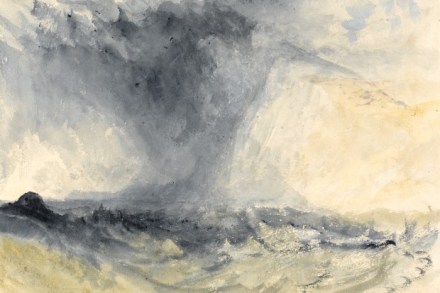
I learnt to splash about in watercolour at my grandmother’s knee. Or rather, sitting beside her crouched over a pad of thickly ‘toothed’ paper and a Winsor & Newton paintbox on a wind-swept East Anglian seashore. Now, looking back, I see that what she was doing belonged to a tradition. Her predecessors, idols and reference points are to be seen in an admirable small exhibition at the Fitzwilliam Museum, Cambridge, Watercolour — Elements of nature. This consists of works from the museum’s collection, but is much more full of delightful surprises — even for those who know the Fitzwilliam well — than that description suggests.

Degrees in disaster

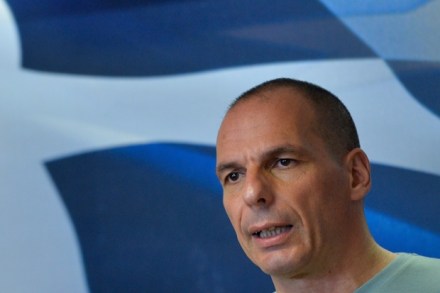
So farewell, Yanis Varoufakis. You used to be Greece’s finance minister. Then you resigned, or were you sacked? You took control of the Greek economy six months ago when it was growing. Yes, honestly! Growth last year ran at 0.8 per cent, with forecasts of 3 per cent this year. The government had a primary budget surplus. Unemployment was falling. Until you came along. Varoufakis was a product of British universities. He read economics at Essex and mathematical statistics at Birmingham, returning to Essex to do a PhD in economics. With the benefit of his British university education he returned to Greece and, during his short time in office, obliterated the nascent recovery. The economy is now expected to contract by 4 per cent this year — an amazing transformation.

Young people should be wary of the Guardian’s university league table

This week, the Guardian published its annual university league table. The rankings are as bewildering to anyone acquainted with the reality of university reputations as they are misleading to anyone who is not. Should you wish to study Economics, for instance, you are told that you would do better taking an offer from Surrey (4) than LSE (13). If you’re really short of options, then you could settle for a place at Manchester (54) or Newcastle (60). Equally, for an aspiring physicist Leicester (5) or Hertfordshire (6) are deemed superior to Imperial (8) or indeed UCL (12). This list does not reflect what graduate employers actually think. From an employer’s perspective, the picture is clear and consistent: the Russell Group universities come top, led by Oxbridge and LSE.