Cambridge

It’s not up to Theresa May to define ‘British values’

A month after the Magna-Carta-mangling Counter-Terrorism and Security Bill crept onto the statue book, leaked documents seen by the Daily Telegraph over the weekend reveal Home Office proposals which are likely to have significant, if apparently unintended, consequences for free speech in this country. I haven’t seen the full strategy papers myself, and nor will you. They have been deemed too ‘sensitive’ ever to face public scrutiny, and only a two-page executive summary is due to be published. At this stage, it is worth considering the few choice quotes the Telegraph have dutifully passed on.

You realise how little you know of anybody when they die

Whether or not you believe in the afterlife, death remains an impenetrable mystery. One moment a person is making jokes and comments and observations about life; the next he is gone. What has happened to that store of wit and wisdom acquired over a lifetime, to that particular way of understanding and looking at things, to that unique muddle of thoughts and feelings that every individual has? Even if someone has gone to heaven, it is difficult to imagine that he has taken these things with him. If he did, they would hardly be compatible with eternal rest.

Ladbrokes’ election guru should stick to politics (and avoid football)

Politics nerds are obsessing over every single nugget of information about the election. Ladbrokes seems to be offering a rich bounty, set by Matthew Shaddick, the company's in-house 'Head of Political Betting'. But can his advice really be trusted? In a recent message accompanying their latest batch of odds, Shaddick was quoted as saying: 'If Cambridge can come from 2-0 down to beat Chelsea, I suppose anything is possible, although The Pub Landlord becoming an MP at 100/1 is surely going a bit too far.' Only problem is Cambridge didn't beat Chelsea this weekend, Bradford City did (the final score was an astonishing 4-2 to Bradford). Cambridge drew 0-0 with Man U. Place ya bets - with peril!

The Unbearable Self-Pity of Britain’s Rich and Privileged – Spectator Blogs

Is there anything more pathetic, more risible than rich and privileged Britons whining that their cadre fails to receive a fair shake in the matter of admissions to this country's most prestigious universities? Oh, sure, I suppose there must be but the smugness and evident sense of entitlement on display in these matters remains enraging. Today, for example, Anthony Seldon, headmaster of Wellington College, complains that his pupils are suffering unreasonable discrimination. Worse still, apparently, a presumed "bias" against public school pupils is a "hatred that dare not speak its name". As the Americans say, cry me a river. The evidence for this notional bias is, needless to say, emaciated.

Maybe it’s a problem when all artists are like James Blunt. But it’s worse when Labour MPs are like Chris Bryant

What should we do with James Blunt? This is what I have been asking myself. And I am not looking for comedy answers here, such as ‘Lock him in a shipping container and force him to listen to songs by James Blunt’ or ‘Allow him to become a properly recognised bit of Cockney rhyming slang’. No. It’s a genuine question. I refer, of course, to the enjoyable spat conducted this week via open letters to the Guardian, between the singer (private school and Bristol University), and the shadow culture secretary, Chris Bryant (private school and Oxford), over whether people in the arts are too posh. I don’t know why, even now, it is only people who went to private school and fancy universities who get to write open letters to the Guardian.

Cambridge, showcase for modernism (and how costly it is to fix)

The Pevsner architectural guides are around halfway through their revisions — though it is like the Forth Bridge, and soon it will be time for the revisions to be revised: it is 30 years since the new London: 2, for example. Aficionados have keenly awaited the Cambridgeshire volume, the latest in the series, because of the substantial new building undertaken by Cambridge University since Pevsner himself last catalogued it in the early 1970s (his first edition appeared in 1954). For most people the county is summarised by two buildings: Ely cathedral, ‘the ship of the fens’, and King’s College chapel.

Was John Cleese ever funny?

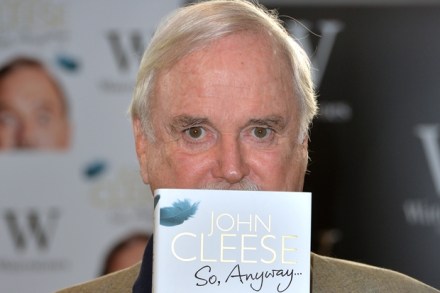
Like many of my generation I was enchanted by the surrealistic irreverence of Monty Python’s Flying Circus, until I overheard other boys — it was never girls — excitedly murdering the Parrot Sketch: ‘Ah yes, the Norwegian Blue — lovely plumage…’ This was not out of a snobbish disdain for popularity; I still loved the Beatles, after all. What made me wince was that the boys in question obviously lacked any sense of humour, and had adopted the show as a kind of prosthesis — which would explain its huge success in Germany.

Students – bunk off your sex classes and learn on the job

[audioplayer src="http://traffic.libsyn.com/spectator/TheViewFrom22_25_Sept_2014_v4.mp3" title="Brendan O'Neill and Amelia Horgan discuss student sex" startat=1174] Listen [/audioplayer]The freshers heading off to university this month won’t only be bombarded with invites to join clubs and enough free Pot Noodles to sustain them till Christmas. They’ll also be swamped by advice on how to have sex. These young men and women, who probably thought that squirm-inducing sex-ed classes were a thing of their childish pasts, are in for a rude awakening. For now, sex education extends into adulthood: students must now have ‘consent classes’. At some universities, including Oxford and Cambridge, they’ll be compulsory.

A fresh perspective on reassuringly familiar artists

This exhibition examines a loosely knit community of artists and their interaction over a decade at the beginning of the last century. It is centred around the marriage of Ben and Winifred Nicholson (which began to split up in 1931), involves their crucial joint-friendship with Christopher Wood and a fruitful exhibiting relationship with William Staite Murray, topped off by the all-pervading influence of a true original, Alfred Wallis, Cornish fisherman, marine-stores dealer and compulsive painter. The intellectual and artistic meeting of these individuals was a formative impulse in the development of Modernism in England; and it could be said — with some justification — that they brought out the best in each other.

Why don’t we have statues of Michael Oakeshott?

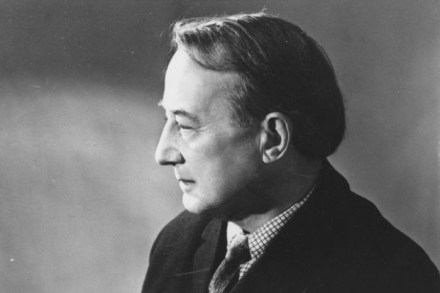
Who or what was Michael Oakeshott? How many of our fellow citizens — how many even of the readers of this journal — could confidently answer the question? I guess, not many. One of the paradoxes of Britain’s intellectual history is that a country which, alongside the Greeks and the Germans, has contributed more than any other to philosophical inquiry is extraordinarily uninterested in its own philosophers. A million people are said to have crowded the streets of Paris to see the funeral procession of Jean-Paul Sartre. In Scandanavia, Kierkegaard is a household name. In Germany, Heidegger is as well known as Thomas Mann. But in Britain no one has heard of Oakeshott — a philosopher who ranks with Sartre, Kierkegaard and Heidegger.

There’s nothing wrong with Prince ‘one-A’ William studying at Cambridge

Prince William has arrived in Cambridge today to study agricultural management at Cambridge. According to the Guardian  his admission is ‘an insult to every student, whatever their background, who got into Cambridge by getting the required A-level or degree results’. The average Cambridge undergraduate had to get A*AA at A-Level to secure their place, but Prince William got one 'A', a 'B' and a 'C'. What no one mentions is that Prince William’s course isn’t an undergraduate one, and neither are his A-Levels his most relevant qualifications. He’ll be studying a ‘bespoke’ concoction run by the Cambridge Programme for Sustainability Leadership.

The splendour of the English carol

The most celebrated Christmas carol, ‘Silent Night’, belongs to Austria. Father Joseph Mohr, the priest at Oberndorf, a small village near Salzburg, wrote it in 1818. Set to music by Franz Xaver Gruber, it was sung on Christmas Eve at the church of St Nicholas: Stille Nacht, heilige Nacht. It is the most celebrated carol for it captures the stillness of a winter night, the wonder of Christ’s birth, and the hope of all mankind for peace. But when it comes to the celebration of that birth nothing surpasses the English tradition. On Christmas Eve millions of people all over the world will tune in not to Oberndorf but to King’s College, Cambridge, where the choristers take us, as they have since 1918, through the Festival of Nine Lessons and Carols.

Charles Moore’s notes: While Justin Welby was finding God, I was eating baked beans

Attending the funeral of Margaret Thatcher in April, the Health Secretary, Jeremy Hunt, was much impressed by the bit in the sermon by the Bishop of London about how Mrs Thatcher had replied personally to so many letters. He went back to his department, and asked it to give him each day one letter from a member of the public which recounted particularly shocking problems in the Health Service. He now uses these letters to dive into the problems that patients experience. It is a good idea, but how alarming that it is a novel one. The Department of Health receives more letters than any other part of government except 10 Downing Street. Is it really the case that up till now, officials have never troubled the Secretary of State with the woes of the public?

Memoirs of a Leavisite, by David Elllis – review

As the author of this wise, patient and delightful book wryly reminds us, Stephen Fry — who, of course, knows everything — has recently written F.R. Leavis off as a ‘sanctimonious prick’. The phrase is probably typical of the way that today’s literary intelligentsia caricatures this tragically lonely, embattled and complex figure. ‘Hairshirt paranoiac’ I’ve also encountered somewhere: it does the trick equally well. Does any academic under the age of 50 now treat Leavis’s map of English literature, let alone his values and judgments, as pedagogically viable forces?

Why has Abdul Hakim Murad not been sacked by Cambridge University?

Abdul Hakim Murad is the Islamic name of a convert to Islam called Tim Winters.  He is a lecturer and tutor and director of studies at Wolfson College, Cambridge University.  Over recent years he was the sort of fellow who was forever being produced as a ‘moderate’, enlightened Muslim scholar. I always had doubts about this claim. For instance, a couple of years back, on a BBC radio programme, I pressed him on the fact that all the main schools of Islamic law still mandate the death sentence as penalty for leaving Islam. Abdul tried to pick me up on this. ‘Are you sure of that’ he pressed. I said I was.

Trenton Oldfield makes about as much sense as the entrails of a chicken

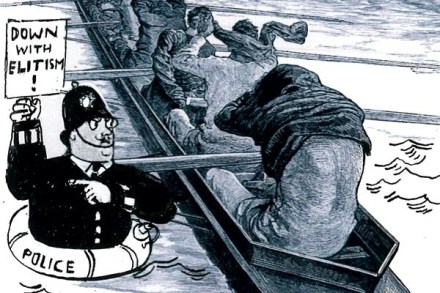
I trust everybody enjoyed the boat race this weekend  Last week the editors of this magazine made me go through the purgatory of speaking with the person who disrupted last year's race. Listeners may come away with the idea that, contrary to reports, Trenton Oldfield was coshed most terribly upon the head by last years' varsity oars. This would be a mistake. As a graduate of the London School of Economics, he has simply imbibed each and every one of the stupidities which the modern university has it in its power to bestow.

Correction of the Year – Spectator Blogs

Courtesy of Time magazine: This article has been changed. An earlier version stated that Oxford University accepted “only one black Caribbean student” in 2009, when in fact the university accepted one British black Caribbean undergraduate who declared his or her ethnicity when applying to Oxford. The article has also been amended to reflect the context for comments made by British Prime Minister David Cameron on the number of black students at Oxford. It has also been changed to reflect the fact that in 2009 Oxford “held” rather than “targeted” 21% of its outreach events at private schools, and that it draws the majority of its non-private students from public schools with above average levels of attainment, rather than “elite public schools.

The ‘disappointment’ of Andrew Mitchell

Former Chief Whip Andrew ‘Thrasher’ Mitchell has been reflecting on his salad days. In an interview with Cambridge University’s alumni magazine, which one presumes was given some time before the row with a Downing Street police officer which ended his career, Mitchell recalls his arrival at Jesus College in 1975: ‘I came here straight out of the army – literally direct from Brize Norton. I drove up with my four boxes of worldly possessions, unpacked and then lay on the bed.’ That army career (an eight-month short service commission after leaving Rugby School), gets multiple mentions: ‘having arrived straight from the army’ he ‘had very short hair [and] stood up straight.’ Military men always stick together.

An endangered species

Last night the BBC aired a brilliant horror-movie (viewable on iPlayer) called ‘Young, Bright and on the Right.’ It followed two young men, one at Oxford the other at Cambridge, trying to make their way in student Conservative party politics. One of the stories – of a young man from a one-parent family in Yorkshire whose father had been in prison – was genuinely interesting. Rather than being happy about himself and his background, he had become someone else. Though he presented this as being essential in order to get on in Conservative party politics, I am not certain he was right. Having never been involved I can’t say for certain, but it does occur to me that William Hague, for instance, never lost his accent.

Journal of a disappointed man

Simon Goldhill introduces his new book by recalling a lunch with his editor, who suggested he make a pilgrimage and write about it. Pilgrimages, he reflected, tend to be made alone, but he is gregarious, so decided that he needed to make up, with his wife and another couple, ‘a party of four Jews’, to keep him company and supply comic material. He is a classics don at Cambridge, where he also directs something called the Victorian Studies Group, so his editor suggested he do ‘something Victorian’, and the result is Freud’s Couch, Scott’s Buttocks, Brontë’s Grave. The title does no one any favours, but the book offers a brief and generally amiable exploration of the British literary pilgrimage.