Books

Christopher Priest was a grievously underrated novelist

From our US edition

There really ought to be a word to describe the dispiriting realization that a great writer has slipped through our fingers without the culture at large ever quite appreciating what’s been lost. The novelist Christopher Priest, who died earlier this year of cancer at the age of eighty, was one such figure. It would be glib to describe him as the nearly-man of English fiction, for this wasn’t quite the case — instead his career represented a sequence of missed opportunities for the world beyond his chosen genre to recognize his skill and quiet profundity. In some ways, the early part of his publication history closely resembles that of J.G. Ballard without the mid-career renaissance Ballard enjoyed.

Priest

The talented Evan S. Connell

From our US edition

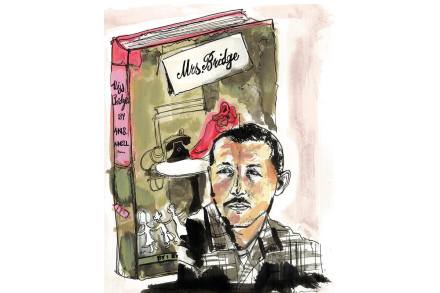
When the journalist Steve Paul began his biography of the writer Evan S. Connell, a young librarian was helping him access research material. She happened across a photograph, and remarked, “What a suave-looking dude.” Connell had movie-star good looks. Of his eight novels, two are now packaged as classics of American literature. This on top of a biography of Goya; a 2009 Man Booker International nomination for lifetime achievement; and a bestselling history of a battle in the Great Sioux War of 1876. Acolytes recommend his greatest book, Mrs. Bridge, with the confident smile that looks forward to welcoming another member to the exclusive band of Connellites.

Connell

The frustrating rise of celebrities ‘writing’ children’s books

From our US edition

When you are next visiting a bookstore, and find your way to the children’s section, you might be forgiven for thinking that there is no longer such a thing as a children’s author. Instead, you will be ambushed by piles of books blazoned with the names of actors, singers, comedians, DJs and people who generously exhibit themselves on social media. “Writing” a children’s book has become another string to the celebrity bow. Imagine the scene. You’ve married a prince, and opened a shop that sells vaginal eggs. What more is there to do? A-ha, thinks the celebrity, perhaps while she is sitting on a bench. All those untutored minds, eager for moi! My personal brand will bring them such joy, such self-worth! They will all feel seen!

chidren's

Pat Yale follows her hero across Turkey

From our US edition

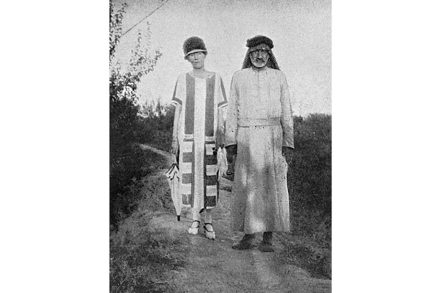
Green-eyed Gertrude Bell belongs in Charles Doughty’s Travels in Arabia Deserta, that slab of velvety antique that enthralled the English (they were not yet British) in the love-affair phase of their relationship with the Arabs. County Durham-born to a wealthy industrialist father, Bell (1868-1926) was a key player when the Powers tried ineptly to mould the Middle East, as the Ottoman Empire crumbled. She is well covered in the literature and appears in a large hat alongside Churchill in conference photographs. But as Pat Yale announces in this new book: “Her time in Turkey has been largely overlooked.” Bell traveled extensively in that country before the first world war (starting in 1899) and in its aftermath.

Yale

In praise of George Gissing, the born exile

From our US edition

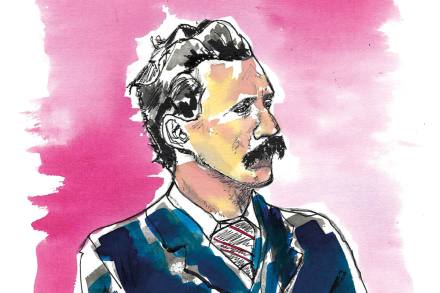
George Gissing died just over 120 years ago, marooned in the French Atlantic resort of Saint-Jean-Pied-de-Port and in circumstances that might have been plundered wholesale from one of his notoriously ground-down novels. H.G. Wells, present at the scene, was so affected by his friend’s deathbed ravings that he transferred them word for word into the mouth of Uncle Ponderevo as he lies dying in Tono-Bungay (1909). There are Orwellian shadings: like Gissing, Orwell died at forty-six of lung disease, and was profoundly influenced by his Victorian forebear. It was Anthony Powell who remarked of Orwell’s third novel, Keep the Aspidistra Flying (1936) that “the Gissing had to stop.

gissing
death

The peculiar American attitude toward death

From our US edition

Dying sensibly has always eluded Americans — from Elvis to Houdini — and that’s before you even get to the funeral part. In fact, in America, something peculiar has occurred over the last century. Traditional obsequies have fallen out of favor as Americans increasingly opt for “anything but” the conventional when it comes to final resting places: that is, no more six feet under. According to the National Funeral Directors Association (NFDA), the majority of Americans now choose cremation, with the rate expected to surpass 80 percent by 2045. Ecofriendly departures — think hemp coffins or ashes strewn over a living coral reef — are also becoming more popular; 60 percent of respondents to one recent survey expressed an interest in “green funeral options.

Why I self-publish my books

Trying to publish a book used to be straightforward. You came up with an idea, spent months, if not years, writing it, then sent it off to an agent or publisher who rejected it by return. Life was simpler back then. We all knew where we were. Rejection wasn’t necessarily based on the quality of the work. Literature is a subjective business. Lord of the Flies earned William Golding 20 rejections. James Joyce, Jack Kerouac and Joseph Heller suffered similar fates. Marcel Proust was rejected so many times that he decided to pay for publication himself. The much-repeated industry statistic is between 1 and 2 per cent of manuscripts are published. Those aren’t great odds. What do you do? I’ll tell you exactly what: publish it yourself.

The marvelous Montalbano

From our US edition

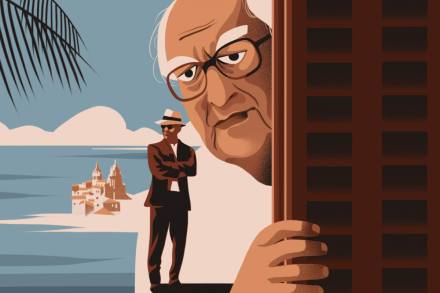
I visited Sicily in May 2005, when the airlines were still requiring all checked luggage to be left unlocked. After the flight from Paris touched down at Palermo, my wife and I went to collect our luggage at an apparently quiet and unrushed airport to discover my suitcase opened partway and an expensive dressing gown missing. Eighteen years ago, il Commissario Salvatore Montalbano was quite unknown to me. Otherwise, I should have immediately thought of the Sinagra family at the eastern end of the island, though the word “mafia” did come to mind as I rezipped the bag.

Montalbano
lewis

A definitive biography of Liz and Dick, Hollywood’s most controversial and glamorous couple

From our US edition

What is it about Richard Burton and Elizabeth Taylor that still hooks us in, thirty-nine years after his death and twelve years after hers? In his magnificent, definitive double biography, Roger Lewis nails down the answer. Liz Taylor was the last great Hollywood movie star, starting in the golden age in National Velvet (1944), aged twelve. As Lewis puts it, her origins were in the magazines and movies of the Forties: “the era of Bing and Bob, Big Bands, such as Glenn Miller, Bogie...Tom and Jerry, Disney.

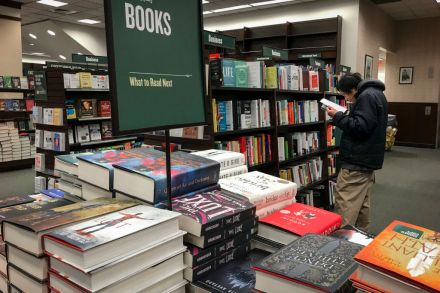
Barnes & Noble and me

From our US edition

Call it a gift from the book gods: my literary coming of age coincided with the last decade when the existence of good bookstores could be taken for granted. In the mid-1990s, when I was an adolescent who read every new novel by Updike, Roth and Vonnegut, Amazon was still a novelty. Chain bookstores, such as B. Dalton and Waldenbooks, were as ubiquitous in shopping malls as food courts, cheap jewelers and eyewear vendors. And growing up in a suburb of New Orleans, I also had access to an astonishing number of antiquarian bookstores, including what is still officially my favorite bookstore: Faulkner House Books, the teeny-tiny bottom level of a townhouse in the French Quarter in which William Faulkner set down on paper what became his first novel, Soldier’s Pay.

barnes & noble

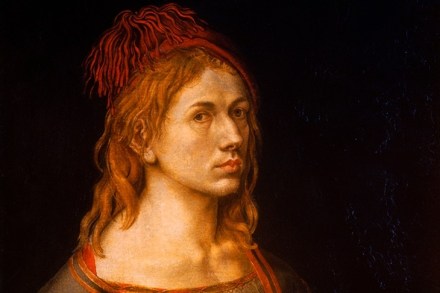
The life of the revolutionary Albrecht Dürer

From our US edition

Great books make genres jump. It happened with W.G. Sebald’s The Rings of Saturn, which looked like a travelogue, claimed to be a novel and felt like neither. Albert and the Whale by Philip Hoare, which recalls and converses with Sebald, is such a work. An antic and original creation, it is not exactly a biography of the revolutionary Renaissance printmaker, painter and theorist of geometry and perspective. For the fuller story of Albrecht Dürer, turn to Erwin Panofsky’s mighty monograph, as Hoare does frequently. Instead, Hoare has made a book as much for Dürer as it is about him. Dürer’s life and art are thrillingly encountered.

Dürer

The Spectator’s 2023 Books of the Year

From our US edition

Andrew Roberts America’s Collection: The Art and Architecture of the Diplomatic Reception Rooms at the US Department of State (Rizzoli, $100) is beautifully written by the director and curator of the State Department’s truly extraordinary collection, Virginia B. Hart. It is a sumptuous volume chronicling the US government’s huge collection of American art, furniture, porcelain, maps, prints and drawings, compiled over a quarter of a millennium. Thirteen other writers and experts, including David M. Rubenstein, have also contributed to what is a genuinely remarkable as well as gorgeous-looking book. James B.

books

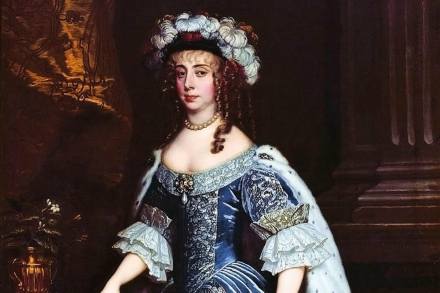
Meeting Margaret Cavendish

From our US edition

In the spring and summer of 1667, London began to see some odd goings-on. Seven years after the restoration of King Charles II to the throne — after England’s republican experiment under Oliver Cromwell ended in 1660 — and one year after the Great Fire had laid waste to the city, things were rather tense: the second Anglo-Dutch war was under way and, by the end of June, there would even be the fear of a Dutch invasion making its way up the Thames. But oddly, it wasn’t wars, invasion threats or geopolitical goings-on that caused the great and the good of London society to exchange frantic missives. At the beginning of April, a young man-about town wrote a rollickingly bizarre letter to his father.

‘You cannot begin by calling me France’s most famous living artist!’: Sophie Calle interviewed

‘You cannot begin by calling me France’s most famous living artist!’ Thus Sophie Calle objected to the first line of the obituary I wrote for her, commissioned for the enormous exhibition, À toi de faire, ma mignonne (‘Over to you, sweetie’), that currently occupies the whole Musée National Picasso-Paris. But modesty aside, it is a fact that no other French artist alive today is so celebrated, loved, debated, denounced and, indeed, imitated, around the world as Calle. Having long mined her own life for her work, Calle now happily mines her death This year is the 50th anniversary of Picasso’s death and that his most important museum should officially mark this by inviting Calle to take over its institution, replacing all his work with her own, is a brilliant provocation.

Comedy of the blackest kind: Boy Parts, at Soho Theatre, reviewed

There’s something mesmerising about watching a good mimic. And Aimée Kelly, who plays fetish photographer Irina Sturges in Soho Theatre’s Boy Parts, is a very good mimic. Across the 80 minutes of this one-woman performance, she inhabits the bodies of dozens of characters, each a carbon copy of the worst kind of person: oleaginous city bankers; shrill, hysterical twenty-something women; ‘Andrew Tate-core’ men. An unnamed boy ends up as nothing more than a severed head Her sneering representations of these characters instruct us to see them (whether we want to or not) as Irina does: pathetic and deeply undesirable. It’s uncomfortable.

With John Nichol

35 min listen

John Nichol is a former RAF Tornado navigator who, during the first Gulf War in 1991, was famously shot down, paraded on television and held prisoner by Saddam Hussein. John wrote movingly about his experience in his first book, 'Tornado Down', and has gone on to write fifteen more best-selling books. His latest, 'Eject, Eject', is out now. He also loves food, is very fond of cooking and often posts pictures on social media of his many and varied culinary creations. Presented by Olivia Potts.Produced by Linden Kemkaran.

America’s professor: the afterlife of C.S. Lewis

From our US edition

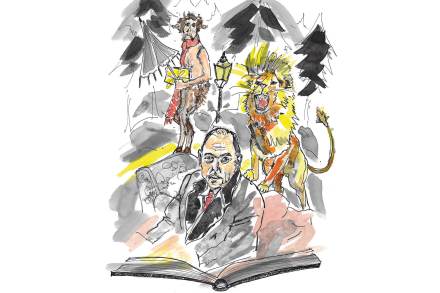
In the summer of 1955, an unusual meeting took place. Billy Graham visited the writer and academic C.S. Lewis in Lewis’s rooms at Magdalene College, Cambridge. It was unusual because leading British academics typically avoided Southern Baptist revivalists. But rather than encountering a fussy, prim don, Graham found a kind, intelligent scholar who was very happy to spend the afternoon with him. Later, Graham admitted he was intimidated by Lewis, but the English professor quickly dispelled any anxiety, probably by offering Graham a cup of tea. Graham’s impact on American religious culture, for good or ill, is unquestioned, but it is difficult to imagine what that same culture would look like without the works of C.S. Lewis.

lewis

The roots of J.K. Rowling’s contrarianism

From our US edition

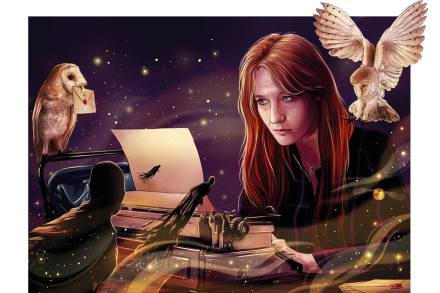
Like his creator J.K. Rowling, Harry Potter says unspeakable things. He teases his cousin Dudley, the prince of his aunt’s suburban kingdom. He calls the Dark Lord Voldemort by his name. He even speaks to snakes. In other words, if Potter were a real person, he’d likely write a Substack, present a podcast and empathize with his creator’s recent public controversies. You are probably familiar with Rowling’s protests against trans activists’ demands to use women’s restrooms.

Rowling

On the trail of Roman Turkey with Don McCullin

The genesis for our book Journeys across Roman Asia Minor was hatched in the autumn of 1973, when Sir Donald McCullin was a young man. He had been assigned by the Sunday Times to work with the writer Bruce Chatwin on a story that would take them from a murder in Marseille to the Aurès highlands of north-east Algeria. It was an emotionally gruelling journey and they rewarded themselves on the way back by stopping off to look at a solitary Roman ruin. No photographs were taken, but the memory of this place from all those years ago remained embedded in Don’s imagination. Three decades later, that seed bore fruit, as he undertook a series of visits to North Africa. I was lucky enough to accompany him on two of these trips, into western Libya and southern Algeria.

Taking a trip to Russoville

From our US edition

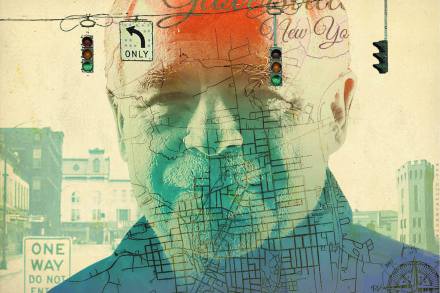
In Elsewhere, a coruscating memoir published in 2012, Richard Russo described his formative years as “an American childhood, as lived in the late Fifties, by a lower-middle class that barely seems to exist any more.” The setting for this slice of lost Eisenhower-era Americana was Gloversville in upstate New York, an East Coast leather town where the money had long since moved out and taken the locale’s animating spirit with it, to the point where the eighteen-year-old high-school graduate reckoned that “you could have strafed Main Street with an automatic weapon without endangering a soul.” The “Main Street” reference carries its own freight of associative cargo.

russo