Books

Is Paris the world’s most bookish city?

From our US edition

After I ventured to New York in May 2024, bound for a discerning literary journey round the city’s bookshops, libraries and hotels, I received some lively and constructive feedback from Spectator readers. Many, thankfully, agreed with my arguments about its bookish charms, but a consistent theme in the comments I received was, “How can you claim that New York is the quintessential literary city? Have you forgotten Paris?” To which my reply was reasonably simple: “What about Oxford, London, Rome, Edinburgh, Dublin, Santiago or San Francisco?” All of them hugely distinguished citadels of the written word, both present and historic alike. Yet I felt uneasy at my response.

Paris

How my father’s bedtime stories shaped my life

It’s half an hour before lights out when my dad arrives at my bedroom door holding Roald Dahl’s Danny the Champion of the World. He kicks off his shoes, loosens his tie and wedges himself next to me in my small single bed, his toes waggling in their socks as they regain freedom after a long day in the office. In the evening he smells of the menthol toothpicks he always carries in his top pocket (in the morning, when he drops me off at school, he smells of the spicy pink toothpaste which I once tried and which burned the roof of my mouth).

Advent is the season for revelling in fine wine

Crime. Fear not: none of us was planning to break the law, with the possible exception of hate speech. Where that is concerned, how would one start? But we were more concerned with crime and literature, and a fascinating perennial question. What is the distinction between crime fiction and novels? In the 1990s, I introduced one of the loveliest girls of the age to the delights of proper wine Crime and Punishment: no problem. So what about The Moonstone? There are very many supposed novels which I would rather read. Moving nearer our own day, we have Dorothy Sayers or P.D. James. More recently, Reginald Hill, Susan Hill and Ian Rankin. Victorian ladies were not supposed to read novels before lunchtime.

Pat Barker dives into the first part of Aeschylus’ Oresteia

From our US edition

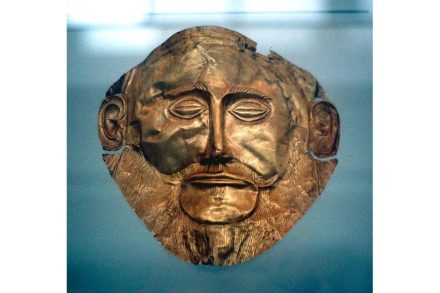
Emily Wilson, the distinguished translator of Homer, has remarked that Pat Barker’s The Silence of the Girls about the Trojan War is a distinctly feminist book. Renowned for her first world war Regeneration trilogy, Barker has now written The Voyage Home, a powerful novel about the first part of Aeschylus’ Oresteia. She takes the infrastructure of legend and invests it with brutal realism. Agamemnon’s return home to Mycenae after ten years of war is told entirely from the points of view of women. The narrator is Ritsa, Cassandra’s maid, her intimate “catch-fart.” (There is no reticence throughout about the use of crude colloquialisms.) Agamemnon the victor becomes the victim.

Barker
wood

Imperfections in wood lead to perfection in carvings

From our US edition

I am married to a wood snob. When we bought our house in 1999, my husband insisted that all the shelves (he is an antiquarian book dealer, so there are miles of them) should be made of “real” wood, with not an inch of Medium Density Fibreboard. The price made me squeal. But a quarter of a century on, while friends’ MDF shelving droops like cables between telegraph poles, ours remains beautifully strong and straight. Callum Robinson would understand why this matters, and he demonstrates it in his new book, Ingrained.

My picks for Cheltenham and the Twelve

With farmers outraged, the nation’s biggest employers warning the Budget will bring increased prices and lost jobs and growth out of sight, Rachel Reeves has certainly confirmed that economics is the dismal science. It hasn’t got any easier either finding winners. For the previous two Flat seasons this column’s Twelve To Follow showed profits of £59 and £157 to a £10 level stake. The jumpers last winter rewarded us with a handsome £246. But currently I’m like a US senator unseated at an election. He called in his staff and declared: ‘That was an unmitigated disaster: so get out there and mitigate.’ Soaking wet gallops and soggy tracks didn’t help. King of Steel and Classical Song were injured and didn’t see a racecourse.

The Spectator’s 2024 Books of the Year

From our US edition

William Boyd It makes grim, compelling and minatory reading, but Hitler’s People (Penguin, $35) by Richard J. Evans is not only the only book you ever need to read about Nazi Germany but a salutary example of what happens when crazed populist leaders win power. Twenty-two short portraits of the key players and lesser apparatchiks of the Nazi years manage to encompass the whole history of the Third Reich and its baleful legacy. Evans’s hundred-page chapter on Hitler — the “Boss” — is masterly. Evie Wyld’s fourth novel, The Echoes (Knopf Doubleday, $28) with its edgy and moody supernaturalism (the narrator is a ghost) establishes her growing reputation as one of our finest young writers.

books

Reassessing Jerzy Kosinski

From our US edition

At the conclusion of Hal Ashby’s remarkable Being There, which celebrates its forty-fifth anniversary this month, comes a scene that has only acquired greater resonance and relevance since it first appeared. At the funeral of the plutocrat Ben Rand (Melvyn Douglas), the US president (Jack Warden) is delivering a heartfelt but somehow trite eulogy. As the pallbearers march away with Rand’s casket, which will be buried in the family mausoleum, talk turns to who should replace the president; the film has already suggested that he is suffering from erectile dysfunction and, wickedly, equates this with his falling popularity ratings.

kosinski

The life and legacy of Mavis Gallant, an American in Paris

From our US edition

"God help the English if she ever starts on us,” remarked Jonathan Keates in a blurb for Mavis Gallant’s Paris Notebooks. Far from being the ubiquitous “love letter” to a city, the essays and reviews within revealed people and their lives as they were, not as ideals. What Keates didn’t realize was that in Gallant’s short stories, everyone, regardless of nationality or gender, was fair game for her sometimes vicious, often dryly funny, always unblinking gaze. When she died in 2014, aged ninety-one, an obituary noted her profound irritation at her critics’ focus on The Collected Stories of Mavis Gallant: “Everyone who has reviewed it so far mentions exile.

Gallant

The Spectator’s 2024 Holiday Gift Guide

From our US edition

Matt McDonald, managing editor As we grow older, the idea is that we become wiser. I’ve decided to buck that trend by making progressively dumber decisions that put me further from my goals of attaining professional success, home ownership, emotional stability and nirvana. The most recent of these is increasing the distances I’ve been running; I will be attempting a half-marathon back home on the south coast of England the week before Christmas, with a view to running my first marathon in Berlin next fall. It’s unclear why we as a species decided to adopt the practice of doing marathons a couple of millennia ago — the first man to do it did die at the end, after all.

gift

Will Self’s impressive paean to his mother’s frustrating life in the US

From our US edition

Will Self’s recent, exceptional fictional trilogy, comprising Umbrella, Shark and Phone, displays a deep preoccupation with the ways that time, memory, family, psychosis and history interact. The novels are complex, multigenerational narratives, composed in a late modernist style as engaging as it is experimental. Formal playfulness, with the prose switching between its characters’ consciousnesses, sometimes even midsentence, is married to solidly satisfying plots. Having already excavated his own life in a memoir, Will, Self has now turned to his mother in a novel, Elaine. Self has written about Elaine Rosenbloom before (in the short story “North London Book of the Dead”); she also appears as the narrator, Lily Bloom, in How the Dead Live.

Self

The chameleonic life of Claire Clairmont

From our US edition

Commentary on the young Romantics can be curiously puritanical. Not on saintly John Keats, who died too young to cause any trouble. But Byron and Shelley? Beastly to women, negligent as parents, destructive as friends, oblivious to their own privilege. Feminist observers tend to resemble the English visitors to Geneva in 1816 who borrowed telescopes to spy on the renegade inhabitants of the Villa Diodati across the lake, hoping to be scandalized. A central character in the summer that saw the birth of Frankenstein was the only non-writer of the villa’s gathering, Byron’s young lover and Mary Shelley’s stepsister, Claire Clairmont.

Clairmont

What will become of George Orwell’s archives?

The news that a vast cache of material by and concerning George Orwell is about to be cast to the four winds in the wake of a corporate sell-off has stirred predictable fury among Orwell buffs. As in all the best literary rows, the contending roles seemed to be clearly defined from the outset. There were the heroes (Orwell and his many acolytes); there was a principal villain – the publisher Hachette, which had decided to unload its archive, only to find that no single bidder could meet the asking price; there was the agent of their devilry (more about him in a moment); and even some subsidiary baddies, in the shape of a clutch of rare book dealers who are now hard at work flogging off the individual lots.

Nick Lloyd takes you through the horrors of the Eastern Front

From our US edition

Ten years ago David Cameron, as the British prime minister, pledged $65 million for the centenary of World War One. The focus was on “capturing our national spirit in every corner of the country, something that says something about who we are as a people.” Beyond a celebration of the Tommy on the Western Front and a belated acknowledgement of colonial Britain’s sacrifice, it was a missed opportunity. There was little attempt to better understand the region where the war began — and where, according to Nick Lloyd’s exhaustive The Eastern Front, it never really ended.

Lloyd

Twenty years on from Jonathan Strange & Mr. Norrell

From our US edition

"Some years ago there was in the city of York a society of magicians. They met upon the third Wednesday of every month and read each other long, dull papers upon the history of English magic.” So begins Susanna Clarke’s modern masterpiece Jonathan Strange & Mr. Norrell, first published two decades ago and now regarded, rightly, as the greatest work of British fantasy literature since the Gormenghast novels. Revolving around two indelible characters — the fussy, pedantic “practical magician” Gilbert Norrell and the swashbuckling, Byronic Jonathan Strange — it has an epic sweep and dares to take the existence of magic, and magicians, wholly seriously, giving its oft-maligned genre an intellectual and emotional heft that few other comparable books possess.

Clarke

The peculiar appeal of ‘sad-girl literature’

From our US edition

A stack of books balances on a fluffy white Michael Aram bedspread: Ottessa Moshfegh’s My Year of Rest and Relaxation, Lisa Taddeo’s Animal, Candice Carty-Williams’s Queenie and Lily King’s Writers & Lovers all touted as “sad-girl lit-fic book recs.” Lana Del Rey’s lugubrious melodies play on repeat; “I’m pretty when I cry” and “baby blues / baby blues,” in particular, are favored lyrics. This is a specific quarter of TikTok (or BookTok), the lachrymose world of “sad-girl lit.

sad-girl

Examining children’s literature and its enduring worth

From our US edition

My first reaction, on tipping this vast compendium — soaring toward 600 pages — out of its padded bag onto the kitchen table, was straightforward envy at the thought of anyone being paid what, you infer, was quite a reasonable sum of money to spend several years on the intoxicating trail of the children’s book. My second was intense curiosity over the procedural approach employed, which is to say that there are a variety of well-worn pathways into the heart of the genre; it would be fascinating to see which ones Leith, the literary editor of The Spectator in the UK, had chosen to follow. The first path, exemplified by Francis Spufford’s 2002 The Child that Books Built, involves writing a memoir that broadens out into a consideration of the form as a whole.

Leith

Creation Lake is one of the best books of the year

From our US edition

Rachel Kushner’s ambitious, intelligent and gripping latest novel, Creation Lake, concerns the eternal human capacity for delusion, while wondering whether utopian ideals can ever be realized without serious compromise. And it manages all this within the form of an expertly slick thriller, set against the backdrop of contemporary rural France, its history, politics and class system, all carefully woven in alongside an account of the rise and fall of the Neanderthals. Sadie, the first-person narrator, used to work as an undercover intelligence agent in the United States; she was discharged after entrapping a young man who was engaged in animal activism.

Kushner

Why children have stopped reading

It’s only when you read the old stories again, to a child maybe, that you become aware of the extent to which the characters still live inside your mind, bobbing about just below the level of consciousness. I still find myself puzzling over the stories collected by the Brothers Grimm, decades after I first read them. How could Little Red Riding Hood have avoided being eaten? (We read the original, merciless version.) What should Hansel and Gretel have done? Any good book leaves its mark, but the characters from the books you loved as a child embed themselves. They inform the way you think as an adult, which is why it’s so sad and so significant that children all over the West have stopped reading.

Who is your favourite character in children’s literature?

Rod Liddle Rabbits, always rabbits. I remember at age 13 forcing my poor parents to trudge despondently across hilly downland on the borders between Berkshire and Hampshire, with me jubilantly pointing out stuff like: ‘Look, it’s the combe where Bigwig met the fox!’ and ‘I think this could be the Efrafa warren!’ For a while, Watership Down jostled uneasily with the grown-up stuff I was just beginning to enjoy – Jack Kerouac, James Thurber, Ray Bradbury – but it still held a big claim on me and does today. Better than On the Road, isn’t it? Watership Down also took me back from the awkwardness of puberty to the safety zone of post-toddlerdom and, of course, Brer Rabbit.