Biography

Why Hitler’s suave architect escaped the noose at Nuremberg

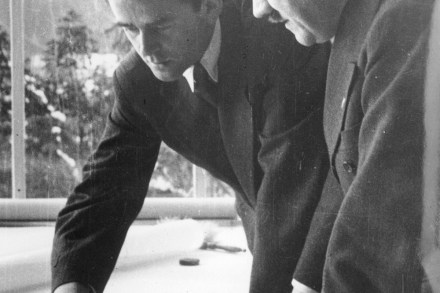
At the Nuremberg trial of the main Nazi war criminals, one man stood out: Hitler’s favourite architect and later armaments minister, Albert Speer. He cut a gentlemanly figure in a gallery of rogues. The strutting, smirking Hermann Goering reminded Rebecca West, who attended the trial, of ‘a tout in a Paris café offering some tourists a chance to see a black mass’. Julius Streicher, the Jew-baiting brute, was like ‘a dirty old man of the sort who gives trouble in parks’. On the same bench, all declaring their innocence in the face of overwhelming evidence of monstrous crimes, were the lantern-jawed SS leader Ernst Kaltenbrünner, the sour-faced ex-champagne salesman Joachim von Ribbentrop, Fritz Sauckel, the thuggish slave labour chief, and the rest of the sorry gang.

W.H. Auden’s virtuosity masked careful craftsmanship

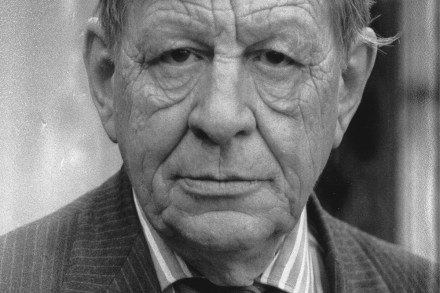
‘Begin with the name,’ begins Peter Ackroyd. ‘Wystan is singular and arresting. Auden himself... confessed that he would be furious if he found that anyone else possessed it.’ It is certainly a name on which much ink has been spilt. Ackroyd’s biography comes barely 18 months after Nicholas Jenkins’s The Island, an exhaustive study of the poet and his work up to 1939 and his flight to America. Unlike Jenkins’s book, Ackroyd’s has the advantage of being a life rather than a half-life, though it accelerates through the later years as Auden tipped into ‘premature old age’. The frequent quotations also help the pacing, though we might have wanted chunkier extracts from, say, ‘September 1st 1939’.

How Ulysses horrified the stuffed shirts of New York’s literary establishment

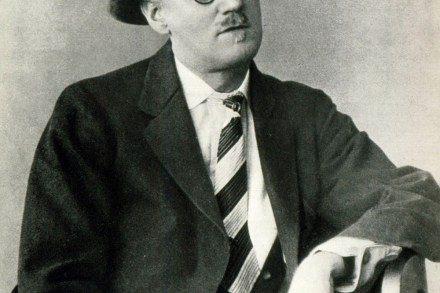
The word ‘obscene’, according to the dictionary, refers to anything ‘offensively or grossly indecent, lewd’. By the standards of the day, the Little Review was a borderline obscene, certainly at times salacious, literary journal. For the crime of serialising Ulysses – James Joyce’s then unpublished steamy masterwork – it was made to face obscenity charges. Operating out of Chicago and New York from 1914 to 1929, the journal introduced American readers to such modernist heavyweights as Ezra Pound, Wyndham Lewis and Gertrude Stein. It was not just a platform for bookish shock effects; it altered the course of American literary culture. James Joyce, who relished litigation, dreamed of a trial of Ulysses as clamorous as that of Madame Bovary Margaret C.

Rupert Murdoch’s warped vision of family

When Rupert Murdoch divorced his fourth wife, Jerry Hall, in August 2022 he made her sign an agreement that she would not give any story ideas to the writers of Succession. Frankly he need not have bothered, because it’s all here in this utterly gripping book. The award-winning journalist Gabriel Sherman has been reporting on the Murdochs since 2008 and has interviewed them all at one time or another, so he really knows his stuff. He briskly covers Rupert’s entire career but concentrates on the man’s relationships with his children and the war of succession. Rupert was always an absentee father who put business before family. He divorced his first wife, Patricia Booker, when their daughter Prudence was only nine, and she rarely saw him.

Leonardo Sciascia and the reshaping of the detective novel

Northern Italians sometimes speak of Sicily as the place where Europe finally ends. The island was conquered in the 9th century by Arab forces from north Africa, who left behind mosques and orchards of pistachio and almond. The Arab influence remains strongest in the Mafia-dominated west of Sicily where the sirocco blows in hot from Tunisia. Leonardo Sciascia, the Italian detective novelist and essayist, was born in Racalmuto in western Sicily in 1921. The town takes its name from the Arabic rahal maut, ‘dead village’, after Arab settlers found the area devastated by plague. It appears thinly disguised as Regalpetra in Sciascia’s work. For years the Mafia infiltrated the town’s sulphur industry, but the mines are derelict now and the landscape looks denuded.

The turbulent life of the Marquis de Morès – the 19th-century aristocrat turned populist thug

The Marquis de Morès (1858-96) was a man of many abilities, but balancing a chequebook was not one of them. Bested (savaged, frankly) by the Chicago meat-packing lobby and frustrated in his attempt to build a railroad across Indochina, the soldier, duelist and self-styled ‘economist’ returned to his native France in 1886, caused havoc and invented fascism (if we allow the Italian historian Sergio Luzzatto to have his way) – only to meet his nemesis much closer to home.

How ‘bad’ does a mother have to be to lose custody of her children?

I’m lucky. I’ve only visited a family court once, and that was as a journalist rather than a party to a case. One detail stuck with me. On the wall in the waiting area was a poster preparing attendees for the layout of the courtroom: the judge goes here, the barristers go here, and you go here and wait for your fate – for your children’s fate – to be decided. It was a reminder that, however much family courts have become friendlier in recent years (notably, family court judges stopped wearing wigs in 2008), these are still places that confound and alienate those hoping for justice. That is, whatever ‘justice’ means when the issue at stake is the division of a child between warring parents.

The madness of Prince Rogers Nelson

In June 1993, the Artist Who’d Just Decided He Didn’t Want to be Called Prince Any More handed his passport to his long-suffering tour manager Skip Johnson and told him to get the name on it changed to the squiggly symbol with which he’d decided to rebrand himself. It is ironic that he felt ‘oppressed’ by a name bestowed on him by others while insisting on renaming most of his colleagues and lovers. The passport incident is one of the more comical demands listed in the exhausting catalogue of employee grievances that make up John McKie’s sprawling biography of Minnesota’s own Prince Rogers Nelson, the virtuosic visionary who died, aged 57, of an accidental Fentanyl overdose in 2016.

What is it about Bob Dylan that sends writers mad?

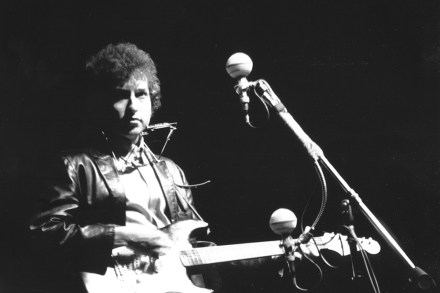
Ron Rosenbaum is a man of galactic learning. Theology, neuroscience, American history, psychology, Shakespeare, cosmology, ‘all of Dickens’, nuclear weapons, quantum theory, iron ore – nothing escapes his hungry eye. Except, perhaps, Bob Dylan. Which is unfortunate, given that he’s written a book about him. What is it about Dylan that sends writers mad? Christopher Ricks’s usual mellifluousness succumbs to a pun-overdose; Clinton Heylin’s blindingly completist biographies are as impenetrable as their subject; Sean Wilentz lurches from the unlikely to the banal. With Things Have Changed, Ron Rosenbaum, the de facto ‘Dylan correspondent’ for the Village Voice in the early 1970s, proves that even ‘being there’ confers no immunity.

The diminutive dictator who ruled Spain with an iron fist

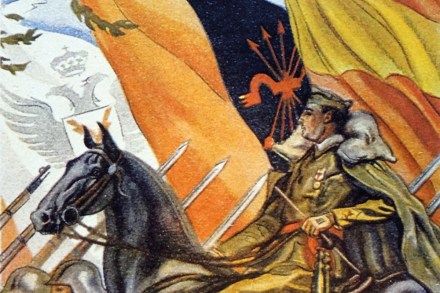
General Franco died on 20 November 1975, and with the 50th anniversary just passed, this biography – the first in years – of the man who ruled Spain with an iron fist for nearly four decades is timely, incisive and authoritative. Written by a former Madrid correspondent of the Economist, it’s also an up to date and highly accessible introduction to 20th-century Spanish history. Born in 1892 into a middle-class family, Francisco Franco shared a bedroom with his younger brother Ramon, who later won international fame as Europe’s ‘equivalent of Charles Lindbergh’. There were few signs, however, that eminence also awaited Francisco. A weedy child, who dutifully got by at school, he had a difficult relationship with his domineering Freemason father.

Jessica was the only Mitford worth taking seriously

Can there really be any point in yet another fat book about one of the Mitford sisters? Their antics have been appearing in print since the late 1940s, when the eldest – clever, waspish Nancy – displayed their family eccentricities in her sparkling novel The Pursuit of Love. Since then, by a rough count, there have been 15 biographies, individual and joint, including three of both Nancy and Jessica, two vast compendiums of correspondence and five autobiographies by four of the sisters (Jessica wrote two).

How the teenage Carole King struck gold

On 7 December 2015 the Kennedy Centre Honours were awarded to Carole King, George Lucas, Rita Moreno, Seiji Ozawa and Cicely Tyson. King sat by the White House Christmas tree during the afternoon reception wearing her medal and laughing as Barack Obama recited the most familiar of her thousands of song lines: ‘You make me feel like a natural woman.’ Obama grinned: ‘I think I just became the first president ever to say that... It sounded better when Aretha said it.’ That evening the tribute to King as a singer-songwriter included performances from James Taylor and the cast of the Broadway spectacular Beautiful: The Carole King Musical and concluded with an astounding performance by Aretha Franklin of ‘(You Make Me Feel Like) A Natural Woman’.

The inspiration for David Lynch’s mysterious, disquieting world

‘He was the true Willy Wonka of film-making – I feel like I won the golden ticket getting the chance to work with him!’ The speaker is Lara Flynn Boyle, who played Donna Hayward, the friend of the murdered Laura Palmer in David Lynch’s small-screen masterpiece Twin Peaks. That comparison, cited in John Higgs’s terrifically lucid and compact study of the filmmaker, who died in January, aged 78, is rather brilliant.

Unhappy band of brothers: the Beach Boys’ story

Film noir was the term coined by the French in the late 1940s to describe the genre of Hollywood crime movies which probed the darkness that lay in the shadows cast by all that bright Californian sunlight. The Beach Boys, who broke through in the early 1960s with a repertoire that hymned, in five-part harmonies, the Golden State’s promise of sun, sand and waves, bronzed bodies, beach-party ‘babes’, hot rods and open highways, were – and remain – the quintessential Californian band. But their story, an unhappy family saga featuring the three Wilson brothers (Brian, Carl and Dennis) and cousin Mike Love, is, like that of California’s itself, as dark as it is light. Their presiding musical genius, Brian, died in June.

Paul Poiret and the fickleness of fashion

Such was Paul Poiret’s influence that he is the only couturier whose clothes are known to have caused several fatal accidents. At a time (1910-11) when fashion was loosening up he persuaded chic women into the hobble skirt, a garment so narrow round the ankles that only tiny, mincing steps were possible, with the result that several tripped over when stepping down from a pavement and one toppled from a bridge into a river where, unable to swim from the constriction around her ankles, she drowned.  In Mary E. Davis’s book, however, this dangerous garment gets only a brief mention.

The lonely passions of Katherine Mansfield

Katherine Mansfield refused to be pinned down. Aged 17, she told a friend she planned to lead ‘all sorts of lives’, already chafing at the limitations of her parents’ bourgeois world. She warned her first lover that she liked ‘always to have a great grip of life, so that I intensify the so-called small things – so that truly everything is significant’. Living, to Mansfield, was a challenge to be confronted head-on, a restless and active process of ‘shedding and renewing’. Her passion for life fortified her through a horrifying succession of troubles. It fed her art; it also exhausted her.  ‘Life’, in its most capacious sense, is the subject of Mansfield’s fiction.

The dangerous charm of Peter Matthiessen

In 1951, the American author Peter Matthiessen moved to Paris. The scion of a wealthy Wasp family, he had studied at Yale and served in the navy, narrowly missing the second world war. He was then recruited to the CIA by James Jesus Angleton and sent to Paris, where he kept tabs on left-wing French intellectuals and expat Americans. As he later explained in a letter to a friend: When you’re 23, it seems pretty romantic to go to Paris with your beautiful young wife to serve as an intelligence agent and write the Great American Novel into the bargain. Weren’t you ever as young and dumb as that? While in Paris, Matthiessen helped to found the Paris Review with funding from CIA sources.

The young Tennyson reaches for the stars

Edward FitzGerald had a good story about rowing across Lake Windermere at the end of May 1835 with his old friend Alfred Tennyson. As they rested on their oars and gazed into the clear, still water, Tennyson recited some lines from his work in progress, ‘Morte d’Arthur’, describing how the Lady of the Lake fashioned Excalibur out of sight: ‘Nine years she wrought it, sitting in the deeps/ Upon the hidden bases of the hills.’ Then he gave himself a little pat on the back: ‘Not bad that, Fitz, is it?’ The lines are better than not bad, as they imagine an invisible process of creation by incorporating several fragments of earlier writing.

The short, restless life of Robert Louis Stevenson

The discriminating Argentinian novelist Jorge Luis Borges once revealed his fondness for ‘hourglasses, maps, 18th-century typography, etymologies, the taste of coffee, and the prose of Stevenson’ – a list that was quirky and eclectic, adjectives that neatly encapsulate Robert Louis Stevenson himself. The story has often been told – but it’s a good one – of how the wiry, velvet-jacketed Stevenson emerged from Edinburgh’s haute bourgeoisie to become a hugely successful writer, before ending his shortish, sickly life on the Pacific island of Samoa in 1894, a revered expatriate married to a wilful American woman a decade his senior.

The enigma of C.P. Cavafy

C.P. Cavafy, who had a very high opinion of his own work, would no doubt be gratified to learn that he is now one of the most admired poets of the 20th century. This is all the more remarkable because during his lifetime (1863-1933) he did not allow a single volume of his poetry to be published, preferring to circulate privately printed sheets and pamphlets among his admirers. He was also disinclined to co-operate with those who wanted to translate the poems from their original Greek into other languages; but in English alone there have now been more than 30 different volumes of his complete or selected poems.