Art

I’ve seen the future of AI art – and it’s terrifying

A few months back I wrote a Spectator piece about a phenomenal new ‘neural network’ – a subspecies of artificial intelligence – which promises to revolutionise art and how humans interact with art. The network is called Dall-e 2, and it remains a remarkable chunk of not-quite-sentient tech. However, such is the astonishing, accelerating speed of development in AI, Dall-e 2 has already been overtaken. And then some.  Just last week a British company called Stability AI launched an artificial intelligence model which has been richly fed, like a lean greyhound given fillet steak, on several billion images, equipping it to make brand new images when prompted by a linguistic message.

Chroma chameleon

From our US edition

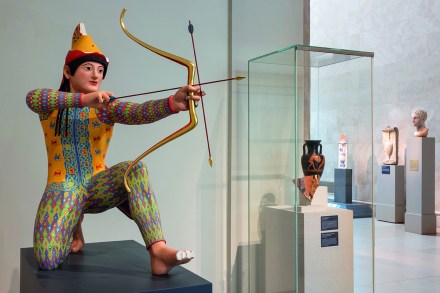
"Who knew the Greeks had such bad taste?” This comment was overheard at the preview for Chroma: Ancient Sculpture in Color, a head-turning exhibition at the Metropolitan Museum of Art. This slight wasn’t targeted at the current denizens of Greece, but, rather, their ancestors of yore. You remember the type: chiton-clad Athenians — let’s not forget the ladies in their peploi! — sauntering through the agora, pondering the nature of reality or, perhaps, the role of hoi polloi within a democratic society. They’re the folks whose aesthetic sensibilities were found wanting, at least to one denizen of twenty-first-century museum culture. What most of us know about life in antiquity is, I dare say, as broadly conceived as the above description.

chroma
white

Not your average Jo

From our US edition

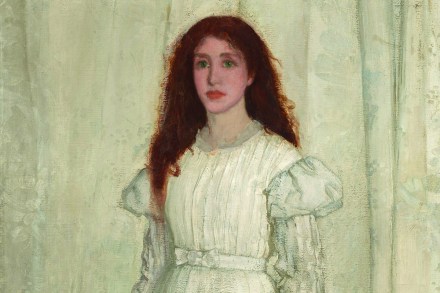
She appears in one of the most beloved paintings in Washington’s National Gallery of Art — “Symphony in White, No. 1: The White Girl” (1862) — but few people know her name. No longer. Joanna Hiffernan is now at the center of The Woman in White, an exhibition at the NGA that explores the close working relationship between James McNeill Whistler and his Irish model and mistress that produced some of the most beautiful and enigmatic paintings of the 1860s. “The White Girl” is a haunting full-length portrait of a young woman, with large blue eyes and Titian-red hair, in a white linen dress. She stands on a rug made from the pelt of a wolf (or is it a bear?

The dynamic genius of Milton Avery

From our US edition

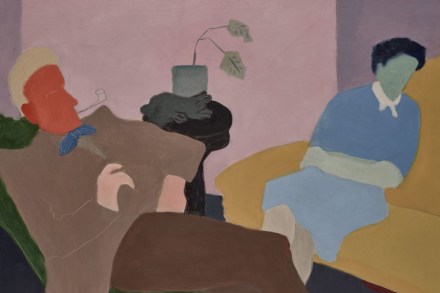
It’s hard not to feel slightly odd when standing in front of a Milton Avery painting. Take his 1943 work Hors d’Oeuvres as an example. The painting — currently on show at London’s Royal Academy’s exhibition, Milton Avery: American Colorist — is large, at nearly a meter across, and the background is what appears to be a coastal landscape, with a greenish sea and the curve of a bay appearing in the upper right-hand corner. In the foreground of the painting is a cream table and on it, a blue platter of food: the “hors d’oeuvres” of the work’s title. So far, it might be hard to understand what is so disconcerting about this painting.

Why Harry Hill’s little green aliens are popping up all over London

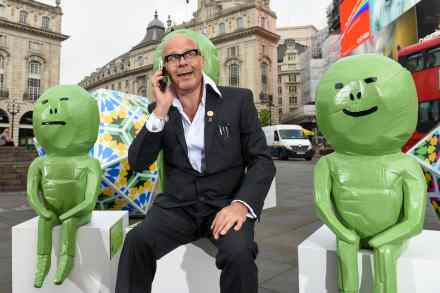
Sitting in a posh office overlooking the Royal Academy, the comedian Harry Hill is deploying one of his lesser known modes: introspection. ‘I suppose I’m one of a growing number of celebrities who do art,’ he says, one hand fiddling with his trademark oversized shirt-cuff. His point – which he returns to several times – is one of definition: as much as he enjoys making art, and as much art as he makes, he can never quite see himself as an artist. In his defence, he isn’t alone. After more than a decade as the face of one of the most-loved comedy shows this century, Hill can probably count himself among the ten most recognisable comics in Britain.

Philip Guston in the padded room

From our US edition

It was once a cliché of modern art that its principal aims included shocking its audience. Aesthetic aggression was the correlative of class warfare. It’s no accident, as the Marxists say, that avant-garde comes from the military lexicon. In painting, Gustave Courbet’s 1866 “L’origine du monde,” a rudely realistic, closely cropped view of an anonymous woman’s nude genitals, is often hailed as an early shot across the bow. Five years later, the artist would lead the Paris Commune in toppling over the Napoleonic Vendôme Column. For pugnacious creatives like Courbet and his descendants, consciousness-raising was always going to be a little bit uncomfortable. One can imagine how easily this gets out of hand.

guston
ornament

SoHo’s downtown drawings

From our US edition

Pity the poor Drawing Center. Founded in 1977 — or, rather, “born into the petri dish of the SoHo art scene in the 1960s and 1970s” — the Center was the pet project of Martha Beck, a former curator at the Museum of Modern Art. She felt that the medium of drawing, being underserved by the arts establishment, needed its own specialized venue. Over the years, this downtown gallery has proved its mettle, mounting a variety of historical and contemporary exhibitions, as well as making a point of reaching out to working artists, some of whom later went on to greater recognition. But that petri dish? It’s changed mightily since the heyday of industrial lofts rented on the cheap.

The one-note wonder

From our US edition

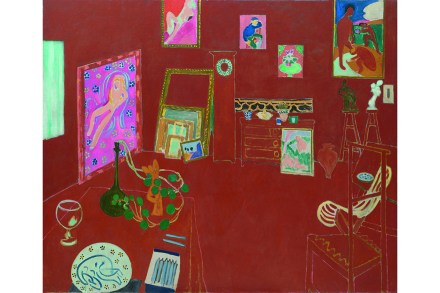
Art museums normally organize career surveys or thematic exhibitions, but this spring the Museum of Modern Art has departed from this practice to focus on a single work. Matisse: The Red Studio examines the pivotal painting of the same name that Henri Matisse (1869-1954) created in 1911. Exhibitions are normally years in the making, so while this one was in the works long before the Covid-induced lockdown, it offers a model for institutions struggling in the wake of the pandemic. Rather than expending scarce resources on an expensive blockbuster loan show, do a deep dive into something in your own collection. And what a dive this is.

matisse
cezanne

Playing the long game

From our US edition

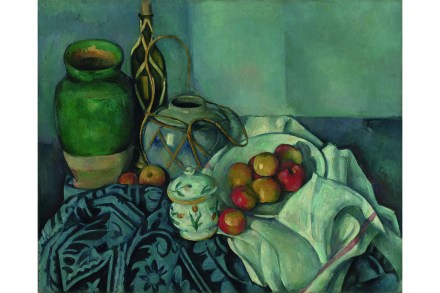
Back in the fall of 1995, on the centennial of Paul Cezanne’s breakout late-career exhibition at Ambroise Vollard’s avant-garde art gallery, a retrospective opened at the Grand Palais in Paris, titled simply “Cézanne.” That show traveled to the Tate in London in 1996 and then to the Philadelphia Museum of Art. Now, more than a quarter century later, another retrospective with a similarly spartan title has opened in the Windy City: a joint venture between the Art Institute of Chicago and Tate Modern.

The rise of the neo-Luddites

Yesterday, a pair of Just Stop Oil protesters glued themselves to a John Constable painting in the National Gallery, covering The Hay Wain with a printout of an alternative vision of England. The cart crossing the River Stour in Suffolk is perhaps Constable’s most famous painting. But instead of a bucolic, biscuit tin Albion, Just Stop Oil’s version shows the Stour tarmacked over, a belching power plant in the distance and a commercial jet overhead. The message is clear: our modern world is sick. I have some sympathy with these student activists, or at least I envy their certainty. Their view of the world is simple: bad things like fossil fuels, industrialisation, and consumerism can be stopped merely by taking a stand.

Bisexuality was the Bloomsbury norm

It’s been a century since the heyday of the Bloomsbury group, and now Nino Strachey, a descendant of one of the key families, has written a superb, sparky and reflective book charting the doings of the younger members of the artistic and intellectual coterie. While it is easy to identify Old Bloomsbury – familiar names include Lytton and James Strachey, Duncan Grant, David ‘Bunny’ Garnett, Virginia and Leonard Woolf, Vanessa and Clive Bell, Roger Fry, John Maynard Keynes, E.M. Forster and Desmond and Molly MacCarthy – naming the younger ‘Bloomsberries’ is a slippery task. Do we count Dora Carrington, who loved Lytton to distraction, and after his death found she could not live without him?

Deep water Winslow

From our US edition

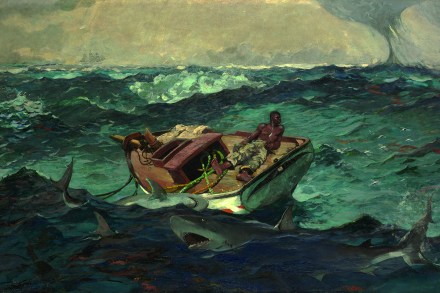
The advance buzz on Winslow Homer: Crosscurrents wasn’t good. “Woke Winslow” — that’s how observers, online and through the grapevine, pegged the Metropolitan Museum of Art’s new exhibition of paintings and watercolors by Winslow Homer (1836-1910). The stalwart purveyor of maritime adventure and manly pursuits, woke? One glance at the enlarged black-and-white photo displayed at the front end of Crosscurrents — a blurred portrait of Homer in his Maine studio — makes clear that the fusty man with the impatient glare is no one’s idea of a social-justice warrior. Looks aren’t everything, of course. Truth to tell, Homer’s art does touch upon important aspects of American history.

winslow homer
Hannah

Diaries from Eighties New York

From our US edition

Duncan Hannah, wild child of Andy Warhol’s 1970s, matured to the art world of Eighties New York. The following is an exclusive excerpt from his as-yet-unpublished diaries that chronicle a decade of growing up and getting down — of painting, writing, reading, heroin, AIDS, infatuations, sobriety, Reagan and more. February 15, 1984: Semaphore Gallery sold the painting “Christmas” that I painted on Christmas. Hooray! I was in a cab coming down Broadway with Greg Crane and Simon Lane. We stopped for a red light at Houston Street. Crane said “Oh my God, LOOK!” and pointed to the south side of the street. Above the New-Wave fruit-stand, illuminated in the darkness, was a giant billboard advertising my upcoming show at Semaphore.

artists

We are failing to curate the present

From our US edition

When I try to write a letter by hand, my hand has forgotten how to do it. I stumble at the end of words. I trip over letters I’ve known since I was five. It’s odd, too, because writing by hand is what I do. I am paid to letter the titles of books and draw offbeat, sophisticated hand-lettering for advertisements. I am a professional handwriter and I am losing my grip. Have I become obsolete or is it the pen? Writing manually has become abnormal. I now think onto my laptop’s screen via an arrangement of letters on a keyboard, an arrangement originally devised to insert a steadying difficulty into the typing sequence to protect the typist from speeds that might be dangerous. At one time it was believed that speed was dangerous, but now speed is the elixir.

Evelyn Statsinger’s otherwordly art

From our US edition

New York’s Upper East Side — 1018 Madison Avenue, to be exact — currently hosts another world at the Gray Gallery. It’s a universe with a near-scientific attention to detail. Plant stems are bisected and, in turn, bisect paintings like winding snakes; petals and branches are painted in such microscopic detail that they appear like the surface of some far-flung planet; and canvases are awash with such bright, clean lines they seem almost like subway maps of a particularly topsy-turvy city. The works — pastels, oil on canvas, and oil on linen — are those of Evelyn Statsinger (1927 – 2016), the deeply underappreciated artist who lived in New York, Chicago, and Michigan.

‘I came, I saw, I scribbled’: Shane MacGowan on Bob Dylan, angels and his lifelong love of art

We join Shane MacGowan, much like a character from one of his songs, in a world where prosaic, often harsh realities vie with feverish flights of fancy. The former Pogue conducts this interview remotely, ‘sitting on a vastly uncomfortable lime green leather chair, within reach of a grey bucket, in a small but surprisingly unspeakable room. In a corner, Jimi Hendrix is repairing some broken guitar strings, while in the kitchen behind me, Bono is loading the dishwasher and a leprechaun with a gold earring is rolling what he says is a cigarette. On the walls are a selection of my wife’s multidimensional angel paintings and one or two of my drawings. Clint Eastwood is on the telly and Maggie Barry is on the record player.

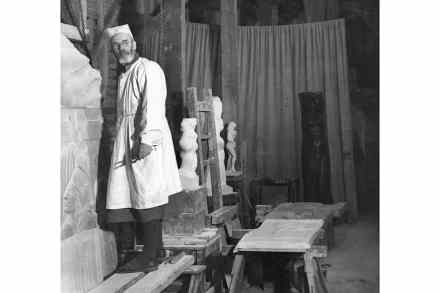
Why Christie’s is wrong to cancel Eric Gill

Eric Gill was an incestuous paedophile and his own letters prove it, but the value of his work can run into millions of pounds. So it was a surprise to hear rumours that auction house Christie’s will no longer be accepting his art. Will they really be turning away all Gills, even the masterpieces? I asked one Christie’s employee for confirmation. ‘Yes,’ they said. ‘It would not be consistent to refuse to sell the Gill trifles but continue to sell his masterpieces.’ The Christie’s press office said they wouldn’t comment, which is a shame because the decision raises interesting questions. Why single Gill out?

Can you tell which of these artworks was created by a computer?

Take a look at the four paintings on this page. If you are acquainted with modern art, you will probably assume, at a quick glance, that it shows four works by the Russian artist Wassily Kandinsky (1866-1944). However, whatever your knowledge of modern art, I suggest you look again, because not all of these works are by that great pioneer of abstract painting. More than one of them is an original image created by a computer model, which was asked to do a digital artwork in the style of Kandinsky. Which are the fakes? I’ll give you the answer at the end of the article. Before we get there, you need to know how a computer can make such startlingly echoic images, and what it might mean for art.

Blues for Pablo

From our US edition

What is there left to say about Picasso? This question, posed by a colleague apropos of Picasso: Painting the Blue Period, an exhibition on display at the Phillips Collection in Washington, DC, is inevitable. There are few cultural figures whose life and accomplishments have been as exhaustively accounted for as the man born — take a breath! — Pablo Diego José Francisco de Paula Juan Nepomuceno María de los Remedios Cipriano de la Santísima Trinidad Ruiz y Picasso. Innumerable exhibitions, books, scholarly tracts and films have been devoted to this relentlessly protean artist. Even after his death almost fifty years ago — Picasso died in 1973 at the age of ninety-one — he looms large in the public consciousness.

picasso

It’s a miracle this exhibition even exists: Audubon’s Birds of America reviewed

In 2014, an exhibition of watercolours by the renowned avian artist, John James Audubon, opened in New York. The reviews, from the New York Times to the Guardian, were unambiguously enthusiastic, celebrating the painter as a legendary genius who ‘exceeded the limits of his era’. Fast forward eight years, and a rather different vibe hangs over the latest outing of his bird portraits, one that reflects both the limits of that era and the limits of the man. Visitors to the National Museum of Scotland’s Audubon’s Birds of America are welcomed with an acknowledgment that the artist was ‘full of contradiction and controversy’. His charge sheet is substantial.