Art

Sajid Javid’s first task is to recognise that the price of a cultural asset lies in its value as art

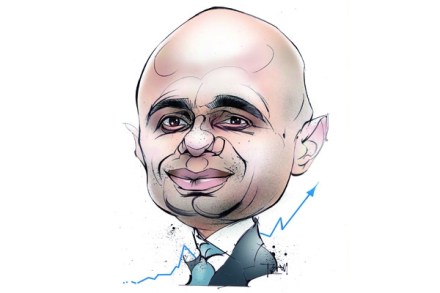
The suggestion, made by the poet Michael Rosen and others, that Sajid Javid is not sufficiently cultured to be Culture Secretary is as ludicrous as it is pompous. The secretary of state does not write poetry – even bad poetry. He decides how best to make the arts flourish, both as a source of spiritual value and revenue. Therein is a challenge – one that his predecessors have failed to meet. The nadir of Maria Miller’s lamentable ministerial career was not her recent non-apology or even the episode which saw her advisor appear to threaten a newspaper. No, it was the speech on culture in the age of austerity she gave last summer.
This beautiful new history of Kew Gardens needs a bit of weeding

Edward Bawden’s Kew Gardens is a beautiful book. Lovers of early 20th-century British art will find it hard to stop gazing at the painted board cover under the dustjacket. It is so sheenily brilliant that you want to frame it and hang it on the wall at once. Every page, including the endpaper plans of Kew, is visually perfect, and the book is an agreeable size. Peyton Skipwith, formerly of the Fine Art Society, and Brian Webb, the designer, have collaborated on beautiful books before; their track record is impeccable. Published by the V&A, their latest work is an utterly desirable object. Having had the privilege of being on a

A tipple and a scribble with Gerald Scarfe

Mr Steerpike longs for the day that he has a bar named after him, so he went to doff his cap to Gerald Scarfe at Scarfe’s Bar last night. Cartoonist Scarfe has spent the last four months decorating the bar at the Rosewood Hotel in Holborn. Politicos or royal junkies will love it: Farage, Brown, Cameron, Clegg and the first cartoon of wee baby George are all in evidence. ‘If the Prince of Wales can have a pub named after him, why shouldn’t I have a bar?’ says Scarfe, who treated me to a whistle-stop tour of his work. ‘There won’t be enough time to paint Maria Miller [before she

Eggcellent openings in Westminster

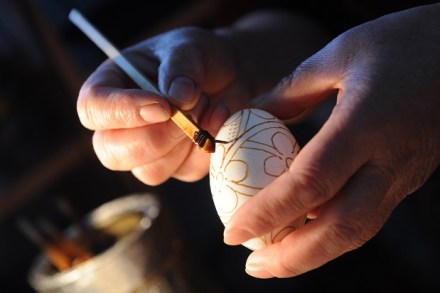
Westminster City Council is advertising the role (offered by the Westminster Adult Education Service) of tutor in ‘Ukrainian egg decoration’ – at £25 an hour. Anyone who thinks that the job would be a walk in the Royal Parks should think again. The advert says: ‘As well as being enthusiastic and motivated you need to have a teaching qualification (minimum PTTLS)’. Mr S better put his tiny ornate paintbrush away. He would have applied for the equally well remunerated ‘hula-hooper’ tutor too, were it not for the equally restrictive qualification barrier. Tristram Hunt must be so proud that teaching qualifications are being taken so seriously.

Julian Cooper's rock profiles

Like most ambitious artists, Julian Cooper has been pulled this way and that by seemingly conflicting influences. The son and grandson of Lake District landscape painters — his mother was a sculptor — he fell among abstractionists at his London art college, Goldsmith’s, in the late 1960s. But when I first saw his work in the early 1980s, he had emerged as a flagrant figurative painter, with a series of large canvases depicting scenes from Malcolm Lowry’s novel Under the Volcano. There was no subterfuge about these works; they went straight back to Manet and Degas, not as imitations but developments. Whether from heredity or early practice at his father’s

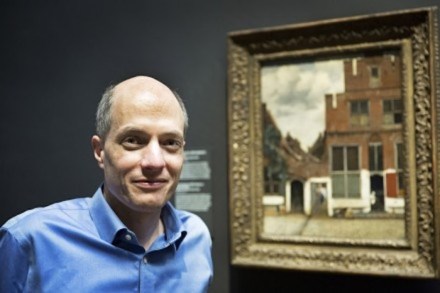
Alain de Botton: We need art to help us to live and to die

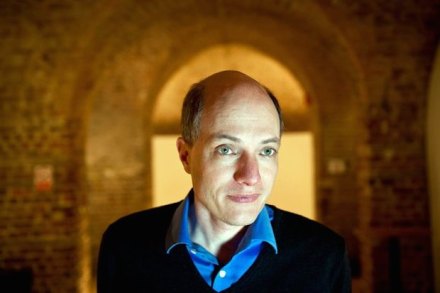
The world’s big national museums are deeply glamorous places. We keep quiet in their hallowed halls, we wander the galleries in reverence, we look at a caption here and there, but, sometimes, if we’re honest, deep in our hearts, we may be asking ourselves what we’re doing there. Art enjoys unparalleled prestige in the modern world, but the reasons for this are rarely explained in plain terms. Just why does art matter? When people want to praise art museums, they sometimes remark that they are our ‘new cathedrals’. This seems an extremely accurate analogy, because for hundreds of years, cathedrals were, just like museums, by far the most significant places

Caught between a New Age rock and a theory junkie hard place

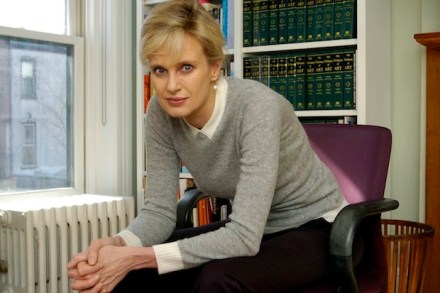
Siri Hustvedt’s new novel isn’t exactly an easy read — but the casual bookshop browser should be reassured that it’s nowhere near as punishing as the opening pages might suggest. In the ‘editor’s introduction’ we’re told that what follows is an anthology of writings by and about the late artist Harriet Burden — known to friends as Harry — with her own contributions taken from a series of notebooks labelled by letters of the alphabet: Notebook H, on Edmund Husserl, has pages on Husserl’s idea about ‘the intersubjective constitution of objectivity’ and the consequences of such an idea on the natural sciences… Q is devoted to quantum theory and its

Why Alain de Botton is a moron

It’s become too easy of late to be rude about Alain de Botton. His banal aphoristic “insights” and homilies on Twitter, his efforts to turn the media away from “meanness” (news should provide moral uplift and teach us how to be better people), his plea for museums to emulate churches by replacing their “bland captions” with a set of moral “commands”, thereby using the art in their collections to make us “good and wise and kind”, have all begun to pall somewhat. When did the playful essayist become so cloyingly dumb? And please, before I say another word, do let’s stop calling him a philosopher. He’s a businessman and a

The Picasso muse who became an artist

With her long blonde hair tied in a ponytail, Sylvette David is familiar from many of Picasso’s paintings. She met the artist in the South of France as a teenager and became one of his models – his muse but never his mistress — during the spring of 1954 (Picasso’s relationship with Françoise Gilot had ended and he hadn’t yet met Jacqueline Roque). A collection of drawings, paintings, metal sculptures and ceramics documenting their relationship can now be seen in the Kunsthalle Bremen’s exhibition Sylvette, Sylvette, Sylvette: Picasso and the Model (until 22 June). And in London, the Francis Kyle Gallery, 9 Maddox Street, W1, is showing some of Sylvette’s

France's cultural excess is immoral (but I still love it)

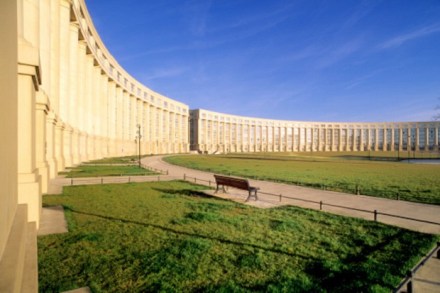
For a committed, if unsuccessful, capitalist, I enjoy French culture an embarrassing amount – every last state-funded drop of it. Give me five-act operas with cast lists the size of a small Chinese city, give me obscenely expensive works of public art, give me inhumane concrete estates, give me unintelligible modernist music and I’ll be drooling with pleasure all night. In fact, I’m seeing a five-act French opera with a cast list the size of a small Chinese city tonight in Bordeaux. That’s the kind of disgusting thing I like to do. In my defence, I am aware that what I am doing is immoral and what is being created should be

Four artists you ought to know — and a famous one you can know better

In this round-up of exhibitions in London’s commercial galleries, I feature three shows of little-known but mature contemporary British artists. There is a great deal of interesting and worthwhile art being made out there, but not enough of it comes to public attention. Most museums won’t show it, and there are only a handful of commercial gallerists who are prepared to back quality over proven popularity. In such a world, the quieter talents tend to get overlooked, so it is a particular pleasure to be able to draw your attention to the subtle small paintings of Liam Hanley (born 1933). Hanley paints in oil and draws in pencil on linen

Anything you can smash, I can smash better

Art is under attack. Another week, another expensive poke in the eye. Last Sunday, Miami artist Maximo Caminero destroyed a $1 million vase by Ai Weiwei in protest at the museum ignoring the work of local artists. Before this, there was Wlodzimierz Umaniec’s defacement of a Tate Modern Mark Rothko in the cause of ‘Yellowism’, which saw the  Pole jailed for two years. Then came the story of the kids caught clambering over a $10 million Donald Judd. It’s hard not to smile. The irony of it all is too delicious. An art form that has for 100 years demanded that practitioners shaft society’s norms is, in turn, having its

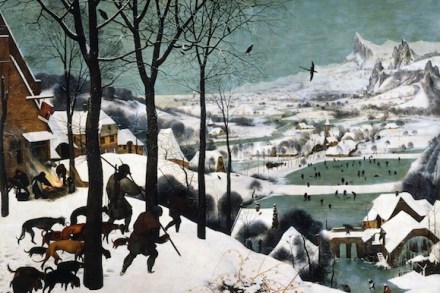
A spirit to warm Bruegel’s ‘Hunters in the Snow’

The ostensible subject matter is misleading, as is any conflation with his lesser relatives’ wassailing peasants and roistering village squares. But Pieter Bruegel the Elder’s work is profoundly serious. It has a formidable intellectual content, a Shakespearian emotional range: a sardonic and stoical view of the human condition. There are paintings — ‘The Triumph of Death’, ‘The Blind Leading the Blind’ — which descend from Hieronymus Bosch. There is also the marvellous ‘Fall of Icarus’. According to recent scholarship, the version we have is not a Bruegel, but a later copy. That is plausible; it looks later. Yet the composition is classic Bruegel. He would be drawn to any legend expressing

Take a look at John Maynard Keynes's armchair

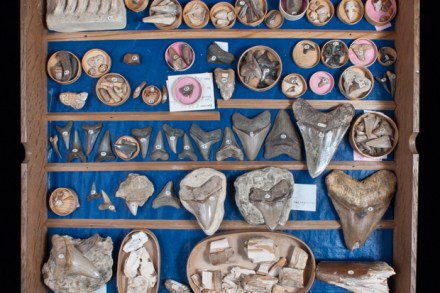
Discoveries: Art, Science and Exploration at Two Temple Place (until 27 April) is like a giant cabinet of curiosities. Maps, gizmos and memorabilia are spread across two floors of this glorious high-Victorian building on the Embankment. There are drawings from doomed polar expeditions, bones and teeth of fish from the Woodwardian Collection (see above), early botanical diagrams, hoards of medieval gold, the loot of empire (the Sufi snakes-and-ladders board in ebony and mother-of-pearl is memorable) and John Maynard Keynes’s armchair. The exhibits are drawn from the eight museums of the University of Cambridge. Much is made of the fact that this is the first time the university’s museums have collaborated

Painting Now doesn't represent painting now. Thank goodness

The death of painting has been so often foretold — almost as frequently as its renaissance — that any such prediction today is nothing short of foolhardy. Of course, painting is alive and well and living in London, but you wouldn’t know that from the current exhibition of five artists at Tate Millbank. (By the way, this is a paying display, the regular admission fee being £10. Not surprisingly, it was deserted when I visited. This sort of show, to do its job properly and communicate to the public at large, should be free.) According to the press release, each of the five artists ‘has adopted an approach to painting

Clarissa Tan's Notebook: Why I stopped drinking petrol

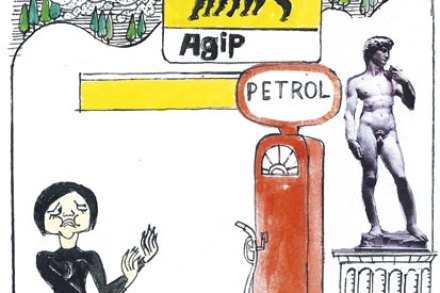
Florence was in fog the day I arrived. Its buildings were bathed in white cloud, its people moved as though through steam. The Arno river was a dense strip of dew. At the Piazzale Michelangelo, the statue of David was etched by the surrounding murkiness to a stark silhouette, the renaissance defined by gothic cloud. I peered through a telescope that overlooked the city and saw nothing for miles. My friend Alessandro told me this was unusual for sunny Tuscany, which made me feel quite pleased. Perhaps with each day that passed I would see less of Florence — the ultimate tourist experience. At a nearby cemetery, the milky arms

Art shows you simply mustn't miss in 2014

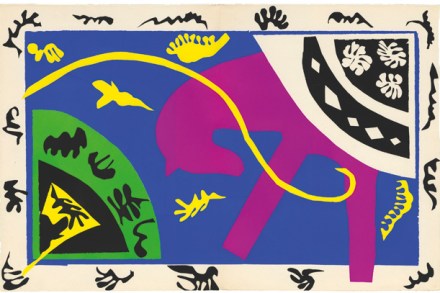
One of the great treats of the exhibiting year will undoubtedly be Henri Matisse: The Cut-Outs (17 April to 7 September) at Tate Modern. The last phase of Matisse’s productive career was devoted to making extraordinarily vivid images from painted paper cut with scissors, as the physical effort of wielding a paintbrush became too much for him. Matisse’s greatest strengths were as draughtsman and colourist, and the cut-outs combine these skills in abundant measure, releasing a new sense of joyous celebration almost unmatched in the history of art. The largest ever exhibition of the cut-outs, the Tate’s show will feature 120 works, many seen together for the first time. Unmissable.

The Turner Prize lives the myth of constant renewal

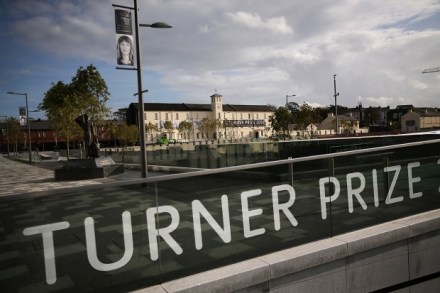
Let’s imagine for a minute that the Turner Prize is cancelled next year. Would anyone care? A few members of the artistic elite and a handful of artists perhaps, but beyond that? I don’t think they would. There are plenty of other valuable art prizes out there, after all. And no one has really taken it seriously for a while now. Each year the same, tired debates come out about how ‘art can be whatever it wants to be’, which is true, but also happens to be the least controversial thing you can say. So it’s off. Cancelled. No more queues of people waiting to see a light switch turn

Mass destruction in an age of mass media

Catalyst: Contemporary Art and War at the Imperial War Museum North (until 23 February) is alone worth a trip to Manchester. The exhibition shows how artists living in the age of mass media have explored conflict in the age of mass destruction. The most successful works are not those that ‘make a statement’ but those which address the viewer, usually by embarrassing their indifference and inspiring empathy. Taysir Batniji’s ‘Gaza Homes’ is a set of mock estate agents’ particulars for bomb-damaged houses. Captions about ‘well appointed’ rooms, ‘airy living space’ and ‘beach access’ are a joke in bad taste. Yet Batniji’s satire is so much more effective than ‘Photo Op’

What is the point of having a ‘city of culture’?

‘Hull has been named the 2017 city of culture. Better luck next year, Luton.’ So wrote the Telegraph’s Tim Stanley on Twitter. Nadine Dorries said: ‘Hull? City of culture? As one originating from Liverpool, a former recipient, I’m er, surprised but of course, delighted for Hull!’ That summarises the general reaction to the choice of the 2017 UK City of Culture. I’ve never been to the East Riding city, so I can’t comment on whether the widespread view of it as a dump is fair, but certainly lots of the cities that compete for this honour are certified Crap Towns. Dover? Stoke-on-Trent? These are not cities of culture, unless you