Art

Muslim magic

From our UK edition

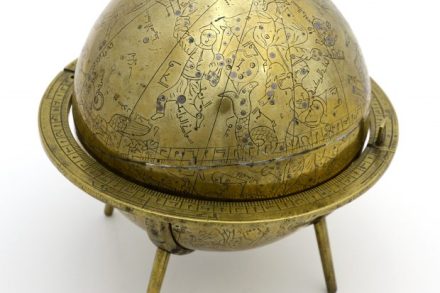
In 1402, when the Turkic conqueror Temur, better known in the West as Tamerlane, was poised to do battle with the mighty Ottoman Sultan Bayazid I, the greatest power in the Muslim world, he called in the astrologers. Knowing which side their bread was buttered on, the court officials duly pronounced that the planets were auspiciously positioned and gave a green light to attack. Temur was victorious. Not for nothing was he known as lord of the ‘Fortunate Conjunction of the Planets’. Half a century later, in 1453, Bayazid’s great-grandson Mehmet II stood at the gates of Constantinople. Anxious to galvanise his siege-weary troops, he summoned court astrologers, diviners and holy men to do their business.

Skinny dipping

From our UK edition

For a 21st-century gallery, a Victorian collection can be an embarrassment. Tate Modern got around the problem by offloading its Victoriana on to Tate Britain, but York Art Gallery decided to make the best of it. As the birthplace of William Etty, York found itself lumbered with a major collection of work by a minor Victorian artist whose reputation nosedived after his death. While Etty’s statue still dominates the gallery forecourt, most of his paintings languish in the stores. For contemporary audiences, though, he has a USP. An avid frequenter of the life room, Etty acquired a mastery of flesh tones and a penchant for painting nudes that many of his fellow Victorians regarded as pervy.

Room for inspiration

From our UK edition

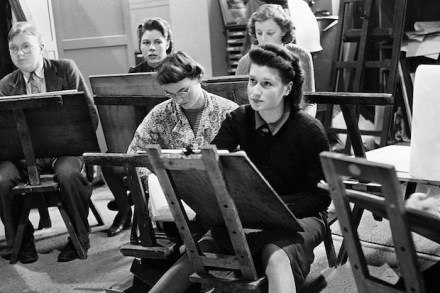
The curious thing about an art room is that you never remember the look of the place. Each summer, a school art room sloughs its skin: life drawings are unpinned from the walls, maquettes carried home for the holidays, canvases taken off easels, portfolios collected by school leavers, the whole place stripped of colour and finery. The room is white and empty again, a canvas primed for September. What stays from year to year and what lingers in the senses of former pupils is the smell. Chalk and charcoal, oils and turpentine, wet clay and slip mix, Swarfega jelly and Pritt Stick, sugar paper (a smell like damp hymn-books) and the heady, headachy vapour of hot glue guns.

High life | 25 August 2016

From our UK edition

OK sports fans, the Games are over, Uncle Sam and Britain hit pay dirt, and the prettiest girl of the Olympics was Morgan Lake, a black Brit high jumper who wins the High life gold medal for looks and proper demeanour. Here’s a tip for ambitious mothers: take a lesson from Morgan Lake — the name is perfect, no agent could have made it up — and instead of sending your daughters to Hollywood, where they’re more likely to end up as high-class hookers, you should guide them towards athletics and the high jump. Morgan Lake is café au lait, has a perfect body, and a very sweet innocent face. She didn’t place but was in the finals, having jumped over one meter ninety-four.

Peggy Guggenheim

From our UK edition

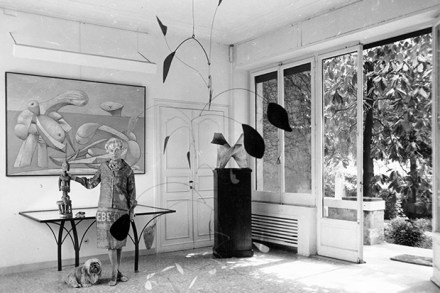
She had come a very long way from the shtetl, but Marguerite ‘Peggy’ Guggenheim was still the poor relation of her fabulously wealthy family. Although these things are, of course, relative. It was her uncle Solomon, enriched by mining, who first made the family’s name. Peggy’s father sank with the Titanic in 1912. Eventually Solomon’s museum, a Frank Lloyd Wright design as magnificent as it was absurd, became a New York landmark. Peggy never much cared for it, so she built her own elsewhere. Guggenheim was no one’s idea of a great beauty, but possessed enough lust, fortune and ambition to compensate. She moved to France just as traffic on the New York–Paris axis was becoming the standard model of the history of modern art.

Recycling the avant-garde

From our UK edition

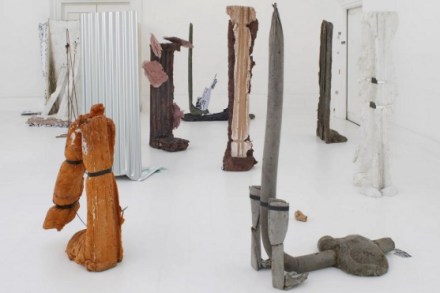
One overcast afternoon in late July I took a train to Norfolk. It seemed a good time and place to catch up on the state of the avant-garde. My goal was the British Art Show 8, currently spread over several venues in the centre of Norwich and due next month to move on to Southampton, the final resting-point on its slow progress around what remains, for the moment at least, the United Kingdom. Not having caught the exhibition at its previous stopping points, Leeds and Edinburgh, I thought this would be a suitable place to see it since Norwich is a town of art historical pedigree — home to Cotman, the Cromes and Michael Andrews.

Preaching in pictures

From our UK edition

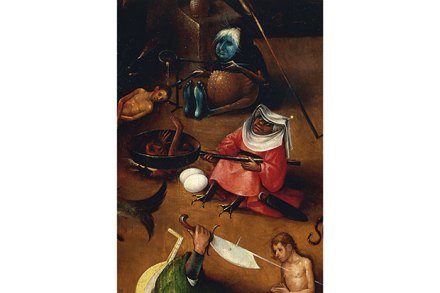
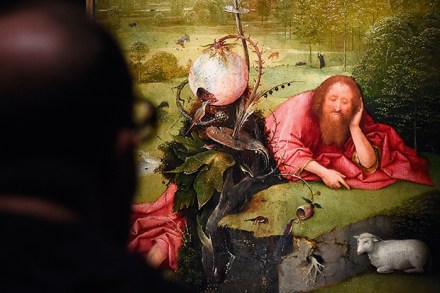
To call Nils Büttner a killjoy is perhaps a little unfair, but not very. The professor at Stuttgart’s State Academy of Art and Design has written a revisionist biography of Hieronymus Bosch: one which tells us that the Early Netherlandish painter wasn’t, as many over the centuries have suggested, the devil incarnate or Satan’s crazed representative on earth. Instead, his graphically disturbing visions of hell — infernal soups populated by hybrid monsters — were actually the product of a devoutly Catholic, medieval mind.

Heavenly bodies | 28 July 2016

From our UK edition

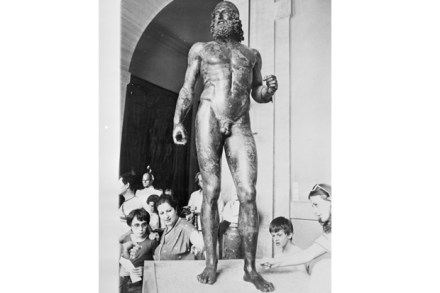
Initially it must have been a nasty surprise. On 16 August 1972 an amateur scuba diver named Stefano Mariottini was fishing in shallow waters just off the coast of Calabria. At about noon he was poking around some rocks when he saw part of an arm protruding from the sand. His first thought, a natural one, was that he had found a cadaver. On closer examination, it became clear that there was not just one body but two — and that they were made not of flesh but of metal. Mariottini’s discoveries are world-famous now, taking their name — the Riace bronzes — from the little resort near which he was swimming. In terms of classical sculpture, he had hit the jackpot. Bronze was the medium of choice for many of the most admired artists of the ancient world.

Dear Mary | 21 July 2016

From our UK edition

Q. Since my husband began to appear in the Rich List he has become much more popular with ‘artists’ in our wider circle and we receive enough private view invitations per year to last us a lifetime. My husband is a kind man and will often buy something he doesn’t particularly want just to be supportive. He recently made an appearance at a neighbour’s local show and bought the least awful picture he could see. Now we hear the girlfriend of this artist has been telling friends she is going to challenge my husband over his meanness because ‘it would have been no skin off his nose’ to have bought one of the bigger monstrosities.

Passing through Bologna

From our UK edition

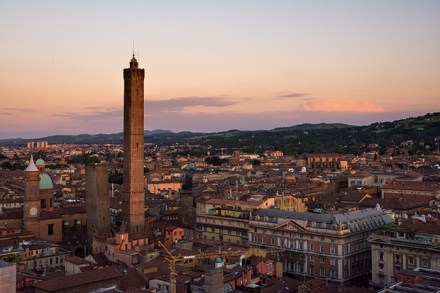
Sooner or later, no matter where you are travelling on Italian railways, you are likely to pass through Bologna Centrale. The city is the main junction between the north and south of the country, close to the route through the mountains. It always has been. The teenage Michelangelo stopped off while journeying between Venice and Florence, and — after a contretemps at the customs office, since Bologna was then a city state — carved some small sculptures for the Basilica of San Domenico. In 1786 Goethe spent a few days in this ‘venerable, learned’ place, ‘thronged with people’. It still is all those things. In the 21st century, however, not too many linger — as Goethe did — to look at the paintings or eat the marvellous food.

Twists, turns and good red herrings

From our UK edition

Jessie Burton’s first novel, The Miniaturist, set in 17th-century Amsterdam, read like a lantern-slide show. Her churches were by Pieter Saenredam, her town-houses those of Vermeer and Gerard ter Borch. Her kitchens and corridors and eaves-dropping maids came from Nicolaes Maes. She proved herself a painterly writer with an eye for the telling detail. The Miniaturist was inspired by a real work of art: Petronella Oortman’s dollshouse in the Rijksmuseum. Burton’s fictional Nella becomes the owner of a dollshouse filled with miniature furniture and family whose movements begin eerily to anticipate — perhaps exert malign influence over — events in the real house. Burton has pulled off a similar trick in her second novel, The Muse.

Cool and underground

From our UK edition

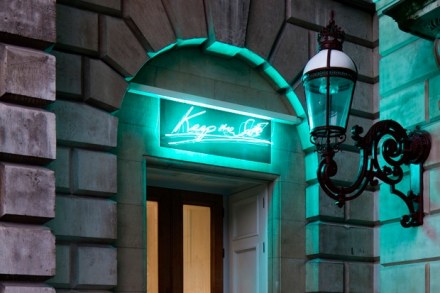
The Keeper’s House sits in the basement of Burlington House, a restaurant in disguise. It is quite different from the grand cafés of St James’s and Mayfair, which are raging exhibitionists with banquettes splayed like limbs. It is secretive and it knows, consciously or not, the tricks of children’s literature: the looking-glass, the wardrobe and the door. It is an 18th-century basement transformed, by magical whimsy, into a restaurant. To visit the loo is a quest for which you need a Gandalf, a hobbit and a lamp. Burlington House looks like an English mansion that stared at Palladio, had a panic attack and exploded.

Giving Tate Modern a lift

From our UK edition

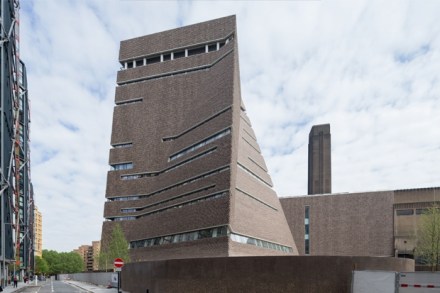
Tate Modern, badly overcrowded, has built itself a £260 million extension to spread everyone about the place more. This means that there are more galleries and other big rooms for various modish activities — 60 per cent more space, they say. It opens on 17 June with a total rehang throughout. But having been shown round the place, I’ve become transfixed by the lifts. When it opened in 2000 they never expected nearly five million visitors a year — which is well down on its 2014 Matisse-driven peak of nearly six million, but still twice as many as it was designed for. So when they called back Swiss architects Herzog and de Meuron to extend the gallery that brought them fame, moving people around better was high on their to-do list.

Dumbed-down ‘accessible’ writing is just as bad as obscurantist art-speak

From our UK edition

When the art critic Robert Hughes died in 2012, someone from the Times turned up on Channel 4 News to sing his praises. The journalist burbled on for a few flailing, hapless minutes and you were left wondering whether she’d actually ever read him. The great critic’s strength was apparently his, wait for it, 'accessibility'. Eschewing obscurantist art-speak – the desiccated argot of the art establishment – it seemed Hughes’ critical gifts lay in not being difficult to read. But who familiar with Hughes’ robust and sinuous prose would ever call it 'accessible'? It wasn’t. His facility with language was underpinned by a ferocious intellect, and it showed. Acuity and insight made him a tremendously exciting critic, not accessibility.

Last words | 5 May 2016

From our UK edition

This, my 479th, is to be my last contribution as a regular columnist to The Spectator. I have written here for 33 years and 4 months, a way of life really, and one I have greatly enjoyed. I thank Auberon Waugh in absentia for suggesting me to Alexander Chancellor in the first place; and Charles Moore for keeping me on in the early years, once we were up and running. I also thank three quite exceptional arts editors: Gina Lewis, Jenny Naipaul and the doyenne of these pages, Liz Anderson. Things have moved on from my habitual think pieces, outraged rants, ad hominem demolition of palpable idiots written in the back of aeroplanes.

Wings of desire

From our UK edition

Maria Sibylla Merian was a game old bird of entrepreneurial bent, with an overwhelming obsession with insects. Born in Frankfurt in 1647, she sacrificed her health and financial stability in pursuit of her passion. It carried her halfway across the globe and earned her lasting renown among a handful of cognoscenti. Merian was 15 when Jan Goedart published the first of his three volumes of Metamorphosis et historia naturalis insectorum and is unlikely to have seen the book until later. Goedart’s purpose, based on close observation of a range of insects, was a fuller understanding of insect life cycles. It was the same purpose to which Maria Merian devoted herself — even resorting to selling snakes, lizards, a tortoise and a crocodile to fund her compulsion.

Is it art or science?

From our UK edition

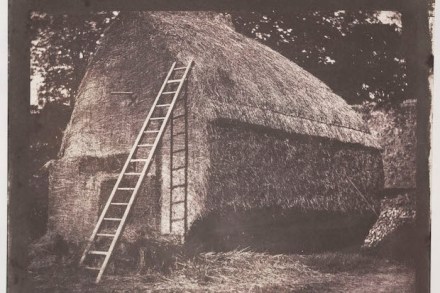
William Henry Fox Talbot had many accomplishments. He was Liberal MP for Chippenham; at Cambridge he won a prize for translating a passage from Macbeth into Greek verse. Over the years he published numerous articles in scholarly journals on subjects ranging from astronomy to botany. One thing he could not do, however, was draw well — and it was this inadequacy that changed the world. While on holiday in Italy in 1832, he became so frustrated by his failure to draw Lake Como satisfactorily using a pencil and a drawing aid known as the camera lucida — his efforts were well below GCSE art standard — that he resolved to find another way to preserve such views. The results are on show in an exhibition at the Science Museum, Fox Talbot: Dawn of the Photograph.

The delights of Hieronymus Bosch

From our UK edition

If you hope to inspire an appreciation of Renaissance art in your children, look to Hieronymus Bosch. Ideally, your children will not be sensitive types, nor prone to nightmares, but if they can handle a little, or indeed quite a lot, of fantasy, Bosch will blow their tiny minds. My four-year-old lad, Luca, definitely not a delicate chap, was deeply impressed by ‘The Garden of Earthly Delights’ when I showed him reproductions. He remains unmoved by Leonardo and bored rigid by Giotto, but Bosch snared him. I should hunt down a full-size poster and hang it in his room. I read somewhere that Leonardo DiCaprio snoozed beneath one as a boy, and look where it got him. Bosch fascinates everyone though, not just impressionable infants.

The Spectator’s notes | 7 April 2016

From our UK edition

However wicked tax evasion is and however distasteful some tax avoidance may be, people should imagine a world without tax havens and see if they really want it. The prime reason that tax havens exist is that taxes in most countries are too high. If they did not exist, the competitive element would be reduced, and taxes would go up even more. The EU constantly complains about ‘unfair tax competition’, by which it really means just tax competition itself. Tax avoidance is what most of us try to do (see next item). Resentment about it is largely because the rich find it easier to achieve than the rest of us. In my latest Notes, I mentioned that the theme of the South of England Agricultural Society this year is sheep. Last week, sheep entered our lives dramatically.

Round-up of new opera

From our UK edition

A mixed year so far for new opera. A few really dismal things have appeared from people who should know better. Did the world really need an operatic treatment of Dante’s Divine Comedy for orchestra and chorus? Louis Andriessen thought so; his La Commedia (2004–8) luckily only reared its drab head for one night at the Barbican. If you’re going to splurge as much money as opera often has to splurge, you have to ask yourself why. If you don’t, you create a situation in which operas come about merely because they can, often just to continue the tradition in the most inoffensive way possible. ‘Don’t mind me!’ says this kind of zombie opera.