Art

Some like it hot | 13 June 2019

From our UK edition

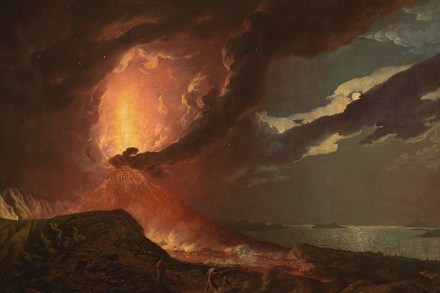
‘Playing God is indeed playing with fire,’ observed Ronald Dworkin. ‘But that is what we mortals have done since Prometheus, the patron saint of dangerous discoveries.’ There’s no Prometheus in the RWA’s new exhibition Fire: Flashes to Ashes in British Art 1692–2019, but there are plenty of flames, some dangerous, some not. The third in the Bristol gallery’s trilogy of shows on elemental themes, following The Power of the Sea (2014) and Air (2017), Fire features the most dramatic of the four elements, and the most fun to paint. Artists love playing with fire.

The portrait that Churchill couldn’t face

From our UK edition

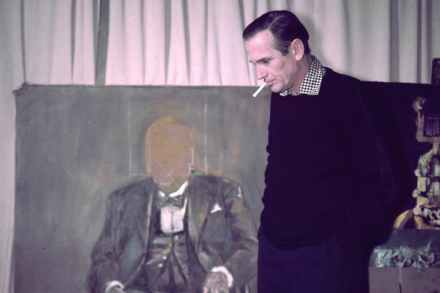
Winston Churchill was no Adonis but most of his portraitists did what they could to flatter him. However, when the British artist Graham Sutherland (1903–80) was commissioned to paint a full-length portrait of Churchill in 1954 for 1,000 guineas (about £27,000 today), paid by the House of Commons and the House of Lords, and to be presented in a lavish public ceremony, things did not go well. Sutherland was chosen not by Churchill but by members of the Houses of Parliament in honour of his 80th birthday. Churchill asked to be portrayed in his Knight of the Garter robes but the commissioners specified he be portrayed as he most commonly dressed when visiting Parliament.

A struggle not to scream

From our UK edition

Norway doesn’t have a world-class philosopher (Kierkegaard was Danish). Karl Ove Knausgaard declared at the end of his previous book that he is no longer a writer, and it looks as though he’s moving in to fill that space. A very modern space: a selfie space. Nietzsche observed that all philosophy is autobiography, and Knausgaard certainly qualifies, having written 4,000 pages of a multi-volume autobiography called My Struggle. Now he has given us a book on Edvard Munch, the Norwegian artist best known for painting ‘The Scream’. Munch wrote an almost Knausgaardian number of autobiographical pages in his private journals while recording the outer reality of his life in hundreds of self-portraits.

Why don’t we talk about Van Gogh’s Christian faith?

From our UK edition

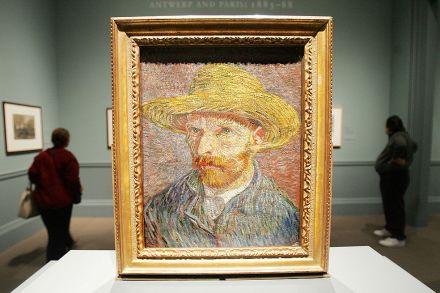
Vincent Van Gogh has been airbrushed by the secular arts media. I have not yet seen the new exhibition at Tate Britain about his London years, so I can only comment on the publicity I have read and heard. This arts chatter downplays, or even ignores, the central feature of his life at this time: his religious zeal. It gives the impression that he was dedicating himself to art, gearing up to be the archetypal creative genius. In reality he did not take art fully seriously in the mid 1870s: though he worked for an art dealer, his real passion was religion.

Art institutions should stop virtue-signalling about funding and focus on what they’re showing

From our UK edition

The ethics of the private patronage of arts institutions has never been straightforward issue. But as the preoccupation with transparency and corporate responsibility has grown, wealthy benefactors can nowadays turn from pillars of respectable society to moral pariahs in the blink of an eye. Such is the fate of the fabulously rich Sackler family, major philanthropists with fingers in arts institutions across the UK, in the face of mounting criticism over its close links to Purdue Pharma, the family-owned US pharmaceuticals giant and maker of the opioid painkiller OxyContin – the drug now the focus of outrage over the opioid epidemic that has made addicts of thousands in the US over the last two decades.

Small wonders | 21 February 2019

From our UK edition

When Henry VIII died in 1547, he left a religiously divided country to a young iconoclast who erased a large part of its visual culture. In a brief six years the government of Edward VI effectively whitewashed over England’s native heritage of sacred art, leaving a country already reliant on foreign painters for its royal portraits bereft of an artistic identity. Artistically speaking, Tudor England was the sick man of Europe — and the signs of recovery, when they first appeared, were tiny. Nicholas Hilliard, born in the year of Henry VIII’s death, paradoxically owed his art education to his family’s Protestantism.

After seeing Donald Trump fan art, your life will never be the same

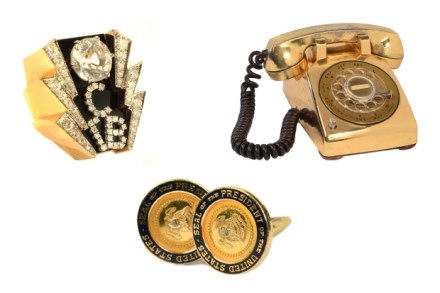
How does Donald Trump make you feel? For the oft-maligned sufferers of Trump Derangement Syndrome, incandescent rage might be the first emotion that springs to mind. Incredulity is a fairly common one too. Indeed, the 45th President causes a veritable rainbow of sentiments around the world. Perhaps one of the rarer ones, though, is the urge to create. But for some in the online artistic community, Donald Trump has served as muse to truly inspired works. Cockburn is delighted to welcome you back once more for a viewing of his private gallery, where this week we will be showcasing the boldest, finest, strangest Donald Trump fan art that the dark recesses of the internet has to offer. The images of President Trump span a number of different artistic styles.

donald trump fan art

Apocalypse Dau

From our UK edition

Dau is not so much a film as a document of a mass human experiment. The result is dark, brilliant and profoundly disturbing. For three years up to 400 people, only one a professional actor, lived for months at a time on a city-sized set specially built for the shoot near Kharkov, Ukraine. Modelled on the real Kharkov Institute of Experimental Physics between 1938 and 1968, every detail on the set was scrupulously in period, from the light fittings to the lavatory paper. The participants — who included a real-life Nobel Prize winner and famous orchestra conductor as well as real former KGB and prison officers — were required to live in role 24 hours a day, eating Soviet food, wearing Soviet underwear and undergoing Soviet-style total surveillance.

Inside the strange world of Fox News fan art

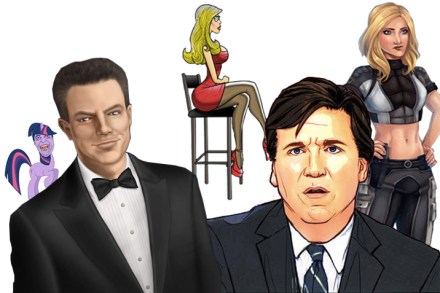
Fox News viewers go to some length to show their dedication to their favorite cable personalities. They might have Twitter alerts set up for whenever their preferred pundit says something, or they might go in to bat in the comments of a Facebook post. But then, some people really like heads they see on Fox. It gets their creative juices flowing, and inspires them to put pencil to paper. Cockburn is pleased to welcome you to his private gallery, where he’s been collecting the finest Fox News fan art the internet has to offer. Naturally, the higher profile personalities are depicted in a number of ways.

fox news fan art

More scenes from my life with Francis Bacon

From our UK edition

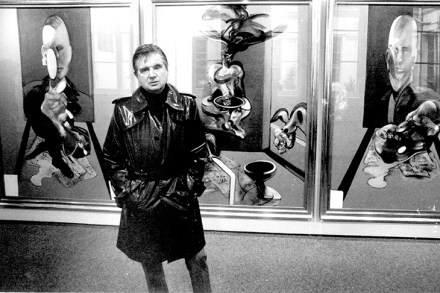
The case of Michael Peppiatt is a curious one. He first met Francis Bacon when he was an undergraduate at Trinity Hall, Cambridge, and visited Bacon for a student magazine. Something clicked and Bacon became his sugar daddy, immediately and for ever, though Peppiatt has said that no sex was involved. One can see what Peppiatt got out of Bacon: not cash per se, but many opportunities for money, an entrée to the great art world, a raison d’être for his pen, as well as free entertainment on a lavish scale. This he acknowledges gratefully. But what Bacon got out of Peppiatt is never quite clear. It certainly helped that Peppiatt was young, bright, and could match Bacon’s drinking. He must also have been attractive in an obliging, even submissive way.

The birth of minimalism

From our UK edition

The Spectator is responsible for many coinages. One of the most significant came in 1968, when an article by our 24-year-old music critic, Michael Nyman, appeared with the headline ‘Minimal Music’ (reprinted below). It was a wry joke about music that was more experimental than strictly minimal but it stuck and a musical style that, whatever you think of it, has rarely been matched in influence or reach was born. Walking home from the Fugs’ concert, organised by the Middle Earth at the Round House last week, I was shocked by the 4 a.m. silence — by its awesome superiority to a lot of modern music, and by its unfamiliarity.

There’s no place like Roma

From our UK edition

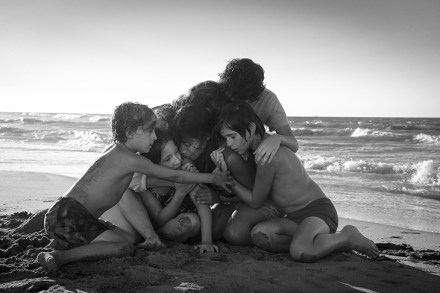
Roma is the latest film from Alfonso Cuaron (Gravity,Y Tu Mama Tambien, Harry Potter and the Prisoner of Azkaban) and you’ll probably already have heard that it’s wonderful, a masterpiece, magnificent, Oscar-worthy. But as I know you won’t believe it until you hear it from me (sigh, the responsibility is too much sometimes) I can confirm all of the above. At this point I should note that many cinephiles have complained that it deserves to be seen at the cinema, on a full-sized screen with full-sized sound, but as it’s a Netflix film (sneer, sneer) most won’t be able to watch it this way. I did see it at the cinema, at one of the very limited London showings (£18.50!

Moderne times

From our UK edition

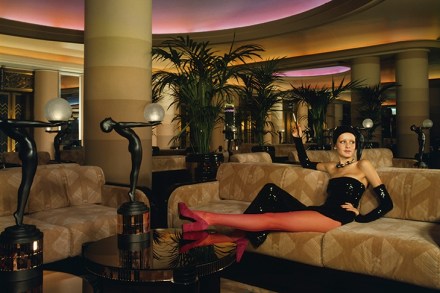
On 10 September 1973 the 1930s Kensington High Street department store formerly known as Derry & Toms reopened as Big Biba. It sold the dress designer Barbara Hulanicki’s distinctive look in furniture, paints and wallpaper, sports equipment and food, as well as her familiar fast fashion. If you had to define that aesthetic then, you’d have said it was campy and kitschy. But above all you’d have said it was deco, an increasingly familiar word for the between-wars moderne style in everything from buildings to jewellery. Derry & Toms itself was a 1933 moderne temple of commerce, slathered in stylised ironwork and bas-reliefs.

Stealing beauty | 22 November 2018

From our UK edition

The major releases this week are Robin Hood, as a big Hollywood retelling, and The Girl in the Spider’s Web, a reboot of the Stieg Larsson thriller franchise starring Claire Foy. But the film you want to see, even if you may not know it yet, is Hirokazu Koreeda’s Shoplifters. This is a film with no set pieces or major plot twists but it is wholly absorbing and it will steal your heart. (Among other things. There is a lot of stealing.) It won the Palme d’Or at Cannes and is the latest from the Japanese filmmaker who mostly turns his camera on to families (After the Storm, Our Little Sister, Nobody Knows, Like Father, Like Son). However, his family dramas are distinct from most family dramas as they do not suffer from a surfeit of drama. Or sentimentality.

Albers the austere

From our UK edition

The German-born artist, Josef Albers, was a contrary so-and-so. Late in life, he was asked why — in the early 1960s — he had suddenly increased the size of works in his long-standing abstract series, ‘Homage to the Square’, from 16x16 inches to 48x48. Was it a response to the vastness of his adopted homeland, the United States? A reaction to the huge canvases used by the abstract expressionist painters in New York? ‘No, no,’ Albers replied. ‘It was just when we got a station wagon.’ In Charles Darwent’s new biography, Albers (1888–1976) comes across as a man as frill-free as the art for which he’s famous.

Man bites man

From our UK edition

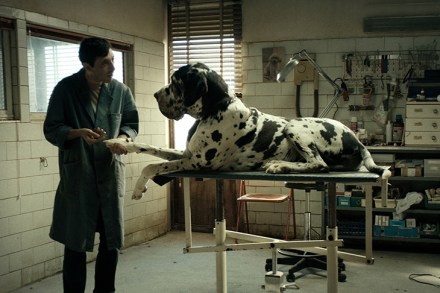
Matteo Garrone’s Dogman, which is Italy’s entry for the foreign language Oscar next year, is bleak, unflinching, oppressive, masculine (very), violent (shockingly) and basically everything you’d expect me to hate. Except I didn’t. It is out of the ordinary. It has a magical central performance. It is tense, as you wait for the little man to face down the big man, if he does. Plus there are lots of lovely dogs, which always helps, and none are harmed. Aside, that is, from the yapping chihuahua thrown into a freezer to shut it up. So there is that, too.

Hidden treasure | 30 August 2018

From our UK edition

In 1675 Lady Bedingfield wrote to Robert Paston, first Earl of Yarmouth. Never, she exclaimed, had she seen anything so fine as the latter’s mansion, Oxnead Hall. It was ‘a terrestriall paradise’, the ‘gardens so sweet — so full of flowers’, the house so clean. ‘Nor,’ she concluded, ‘did I ever in my life find anything in poetry or painting half so fine.’ Almost all this splendour vanished long ago. But its essence survives, compressed into a single painting, ‘The Paston Treasure’, currently the centrepiece of an exhibition at Norwich Castle Museum.

The sacred chickens that ruled the roost in ancient Rome

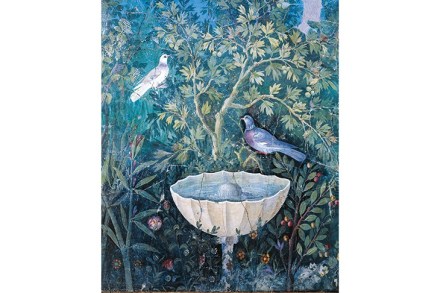
Even the most cursory glance at the classical period reveals the central place that birds played in the religious and political lives of the two key Mediterranean civilisations. Their gods, for example, were often represented in avian form, so that the Athenian currency bore an owl image, which was intended as a portrait of the city’s patron, Athene. ‘Owls to Athens’ was a proverbial expression, much like ‘coals to Newcastle’. From North Africa to the shores of the Black Sea there are still Greek temples dedicated to Zeus that are topped by weathering stone eagles as symbols of their supreme deity, while the imperial legions of Rome fought under an eagle standard for much the same symbolic reasons.

Winged messengers

Even the most cursory glance at the classical period reveals the central place that birds played in the religious and political lives of the two key Mediterranean civilisations. Their gods, for example, were often represented in avian form, so that the Athenian currency bore an owl image, which was intended as a portrait of the city’s patron, Athene. ‘Owls to Athens’ was a proverbial expression, much like ‘coals to Newcastle’. From North Africa to the shores of the Black Sea there are still Greek temples dedicated to Zeus that are topped by weathering stone eagles as symbols of their supreme deity, while the imperial legions of Rome fought under an eagle standard for much the same symbolic reasons.

Mourning glory | 17 May 2018

From our UK edition

They enter two by two. Grannies, mainly. Headscarved, mainly. Some locking arms. A bit glum. Like rejects from Noah’s ark. Passing through two vertical beams of light, they appear then disappear, shuffling into the darkness. From concrete caves, they begin to wail for the dead. We’re witnessing Artangel’s latest extraordinary commission, ‘An Occupation of Loss’, by Taryn Simon. The piece draws together professional mourners from all corners of the earth — China, Armenia, Ghana, Ecuador — and deposits them under a block of flats in Islington High Street. The Azerbaijanis wallop their thighs as they wail. The Venezuelans sob behind full face veils, the fabric vibrating in sympathy. Some pace in circles, nervously fingering bits of cloth.