Architecture

From Prussia with love

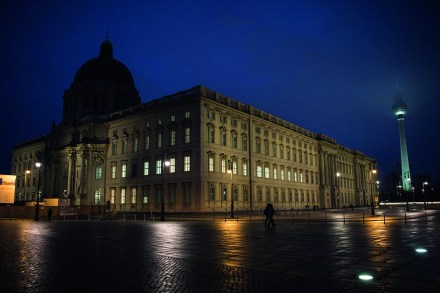
‘What a loss is the excellent Humboldt. You and Berlin will both miss him greatly,’ Prince Albert wrote to his much-beloved daughter Vicky, Crown Princess of Prussia, on news of the death of the author, explorer and celebrity Alexander von Humboldt in 1859. ‘People of this kind do not grow upon every bush [‘an den Blumen’] and they are the grace and glory of a country and a century.’ After some delays and bad luck, the grace and glory of the Humboldt name flourishes once again with the opening of the Humboldt Forum. Annoyingly digital to begin with, the launch in January of the Forum signaled the culmination of Berlin’s Museum Island restoration program and, with it, the crowning of the capital’s place within contemporary European culture.

humboldt

The sorry history of London’s Hoover Building

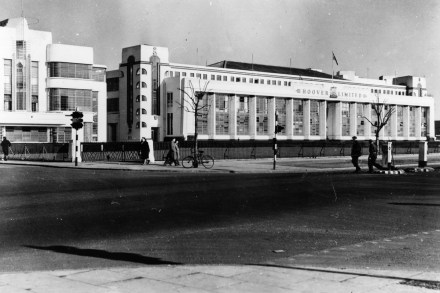
In the early Thirties, when impoverished Americans were cramming into shanty towns called ‘Hoovervilles’, another Hoover created an industrial building of rare magnificence in west London. Driving into London from Heathrow airport, we see acres of nondescript suburbs. The Hoover Building at Perivale, about five miles from the West End, still astounds. Set back from the road in well-manicured gardens, this art deco masterpiece rises in brilliant white (due to the use of a cement called Snowcrete), its façade laced with angular green trim and sunburst decoration. The Hoover Building was the British factory of the Hoover Company, the Ohio-based vacuum-cleaner manufacturer.

hoover

Skyscraper squats and a lesson from India: the future of British architecture

From our UK edition

Not long ago, if you asked discreetly in the right Hackney pub, you would be put in touch with a character called Syd the Squatbroker. For as little as £150, he would gain access to the roof of an abandoned council tower block with a set of fireman’s keys. Then Syd (nom de guerre of a carpenter from Harlow) would abseil down to a window, gain entry and open an empty flat. Sometimes he would cut through heavy steel squat guards using oxyacetylene cutting gear. Latter-day squatbrokers aren’t yet abseiling down the Shard or Canary Wharf’s glass and steel phalluses to liberate underused office spaces and thereby help solve London’s housing crisis, but you’d think they must be tempted. Post-Covid, home working is becoming permanent.

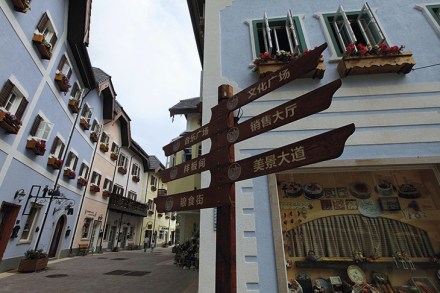
A passion for pastiche: China’s Potemkin villages

From our UK edition

Closely inspect No. 23 Leinster Terrace, Bayswater and you might notice the house has no letter box. Push at the door and you might find it stuck; force your way in and you might find you plummet 40 feet through open space down an obsolete ventilation shaft on to the tracks of the District Line. The house is a fake; a five-storey façade; an architectural trompe l’oeil disguising a disused steam outlet on the London Underground. (Or, as the estate agent might yell down to you, the property combines an airy open-plan design with excellent transport links right on the doorstep.) Flaws notwithstanding, the white stucco frontage — owned and pristinely maintained by TfL— is, like its neighbours, Grade II listed. And the chameleon-like No.

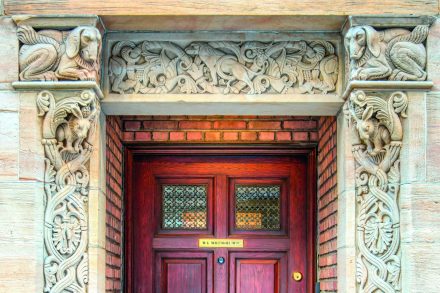
The perception of doors

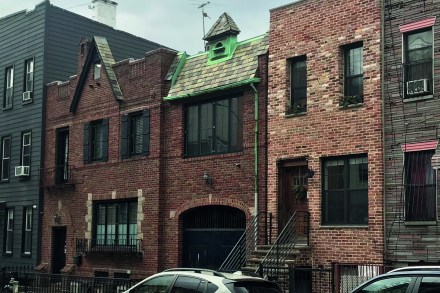
The architectural historian Andrew Alpern has for decades done the dirty work when it comes to pre-war New York apartments. Others have presented glossy coffee-table books full of newly commissioned professional photographs. Alpern has focused on the practical details of apartment design, especially floor plans, which tell us so much about how people actually live in their apartments, or at least were originally meant to. His Apartments for the Affluent (1975), Historic Manhattan Apartment Houses (1996) and New York Apartment Houses of Rosario Candela and James Carpenter (2002) are essential compendia; anyone with an interest in New York residential architecture, especially of the magnificent variety, must have them. The more industrious uptown real estate agents also find them useful.

doors

The death of the Southbank Centre

From our UK edition

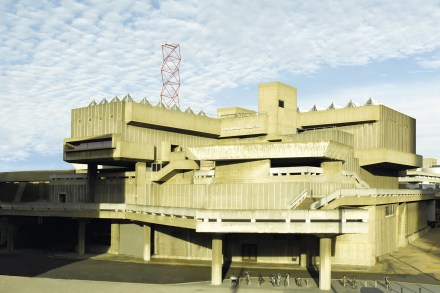
The one thing everyone agrees is that the Southbank Centre is in deep trouble. In May, the institution made an unusually public plea for government help. Management predicted the best-case scenario was ending the financial year with a £5 million loss, having exhausted all reserves, used the £4 million received from the furlough scheme and having gobbled up the remainder of its Arts Council grant. All the while, with the exception of the Hayward Gallery, the 21-acre site on London’s Thameside, incorporating both the Royal Festival Hall and the Queen Elizabeth Hall, remains closed. It was pitiful news, but there was worse to come. With no concerts, performances, talks or readings, drastic staff cuts are in the offing.

Clean lines and dirty habits: the Modernists of 1930s Hampstead

From our UK edition

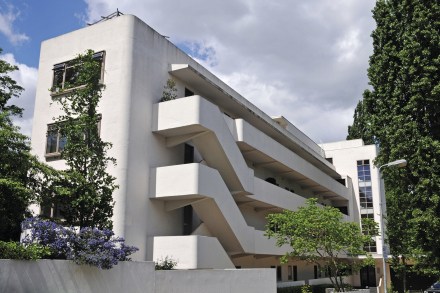
With its distinctive hilly site and unusually coherent architecture (significantly, most of it domestic rather than civic), Hampstead has always had a singular character. But it is as much a state of mind as an address. Although two of England’s greatest native artists, Keats and Constable, made it their home, over the past three centuries Hampstead has notably attracted waves of exotics: French, Spanish and Jewish. These immigrants, struggling with heavy baggage labelled ‘high culture’, have had a huge influence on the neighbourhood.

Trump should build to last

Will the government finally stop giving the concrete finger to popular taste by erecting ugly, expensive and unsustainable buildings with taxpayers’ money instead of fostering a civic architecture that speaks the language of American democracy?The leaking of a draft directive that calls for a return to ‘Classical and traditional styles’ in major public buildings in Washington DC has occasioned outrage and contempt from the expected quarters: architects who know best and journalists to whom the exterior of a public building is an obstacle to be surmounted on the way into the corridors of power. But the traffic circus known as Dupont Circle is not about to become a Roman circus, with lions of the Senate fighting each other with net, trident and rolled-up order papers.

build

From cartoons to stage design: the genius of Osbert Lancaster

From our UK edition

‘Bigger,’ said Sir Osbert Lancaster when asked the difference between his work for the page and for the stage. ‘Definitely bigger.’ For almost 40 years Lancaster was the ‘pocket cartoonist’ for the Daily Express. He had remarked to the features editor that no English newspaper had anything to match the little column-width cartoons of the French papers. ‘Go on,’ said the editor, ‘give us some.’ On 1 January 1939, Lancaster gave them the first of around 10,000 line-drawn cartoons. His subjects were the war, the Blitz, the weather, Stalin, Hitler and Dr Spock, the Swinging Sixties, the Common Market, the test tube baby and the topless swimsuit.

The man who built Britain’s first skyscraper

From our UK edition

In 2011 Britain’s first skyscraper was finally given Grade I listing. The citation for 55 Broadway — the Gotham City-ish home of Transport for London, which sprouts up from St James’s Park Station — said that the building was important in a number of ways: its architect Charles Holden, the designer of Senate House and a range of breakthrough modernist Tube stations in the 1930s, was increasingly recognised as major. The building’s scale and structure were pioneering for London in 1929. And the sculpture on its otherwise plain façades was by important artists including Jacob Epstein, Eric Gill and the young Henry Moore (his first work on a public building and a rare figurative human-in-motion figure).

Vegas dreamtime

From our UK edition

It’s to be expected. You take photographs in order to document things — Paris in the case of Eugène Atget in the late 19th and early 20th centuries, the shacks of the American south in the case of Walker Evans in the 1930s — and these documents then acquire a quality of elegy. What is extraordinary is the speed with which this happens, the brevity of the ‘then’. As soon as the images emerge in the developing tray — even, conceivably, the moment the shutter is clicked — they are imbued with how they will be seen in the future. The photographs in Fred Sigman’s book Motel Vegas were commissioned in the mid-1990s in order to record the signage of once-thriving motels on Fremont Street in Las Vegas.

Bolection

From our UK edition

A pleasant menagerie of words grazes in the field of architectural mouldings (the projecting or incised bands that serve useful and aesthetic purposes): gadroon, astragal, larmier and rabbet, but none is chunkier or more mysterious than bolection. Bolection mouldings cover joints, especially between surfaces of different levels, such as round the panels of a door. Such three-dimensional things are hard to describe clearly in words. No one knows the origin of bolection and even its proper form is uncertain: balection, belection, bilection, bolexion. It sounds like the Liberal Democrat attitude to Brexit. Gadroon derives from the name of a round convex fold sewn into a piece of textile, found as goderon in 14th-century French.

An idea made concrete

From our UK edition

Was the Bauhaus the most inspired art school of all time or the malignant source of an uglifying industrial culture which has defiled our cities? Two books look at its influence abroad after 1933 when the Nazis put the jackboot in. The Bauhaus was nothing if not modern — even if ‘modern’ is now a historical style label and the Bauhauslers were as trapped in their historical circumstances as we are in our own. This was noticed and ridiculed by Tom Wolfe in his 1981 squib, From Bauhaus to Our House, a book as bristling with cheerful spite as with clever wordplay. Although not quite so simple, the Bauhaus was dedicated to the idea that the prospects for all mankind could be determined by engineering and metaphors of engineering.

What next for Notre Dame?

From our UK edition

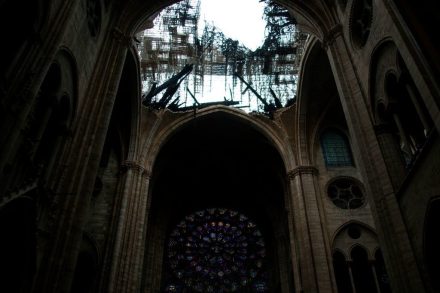
Notre Dame is only important from a Shakespeare’s-birthplace point of view. Architecturally it is a nullity beside the cathedrals of Beauvais and Laon, Albi and Marseille, Rouen and Clermont-Ferrand (a sinister marvel of black tufa). The ashes of the cathedral are now the site of a proxy struggle between some of the greatest fortunes on the planet. The struggle has begun with the architectural competition announced by the widely loathed Macron and the so far less loathed PM Édouard Philippe. How will the competition be conducted?

The ugly truth

From our UK edition

Timothy Hyde’s Ugliness and Judgment: On Architecture in the Public Eye is not about why we find things ugly. It’s not even about what ugliness is, or why our understanding of what it is see-saws so violently. We don’t learn why people once loathed John Nash’s All Souls at Langham Place, one MP calling it ‘a horrible object’, or what insanity led Edwin Lutyens to condemn — as ‘an ugly angle’ — roofs slanted at 45 degrees. The mud-slinging doesn’t interest Hyde. How the slung mud shapes us excites him much more. Arguments over ugliness, he contends, are never just about aesthetics. They’re a proxy for social, political, even theological, concerns.

Keep the modernists away from the Notre-Dame restoration

One heartening if dimly consoling result of the disastrous fires that swept through Notre-Dame cathedral has been the willingness of politicians and philanthropists to pledge their financial and institutional support towards its reconstruction. Yes, some of them might have an eye on acquiring good PR. Yes, believers might question the nature of their attachment. Still, it good to know that people will not watch the decline of beauty and tradition with absolute indifference. The reconstruction, though, will be fiercely contested. Already, modernists are sidling into the conversation with progressive platitudes and philistinic schemes. You might think the widespread shock and sadness that the fire caused represented love and admiration for Notre-Dame as it was.

notre-dame restoration

Keep politics out of art

From our UK edition

If you want to lose friends and alienate people in the art world, try telling them you support Britain leaving the EU. As someone on the left, I’ve always argued a left-wing case for leaving. It is, to say the least, an unfashionable position, usually met with anxious looks, sullen silence or overt hostility from one or other artist, curator or art bureaucrat. That the art world should be against Brexit should come as little surprise.

‘Working late at the Bauhaus’

From our UK edition

Walter Gropius (1883–1969) had the career that the 20th century inflicted on its architects. A master of the previous generation in the German-speaking lands, Otto Wagner, could create his entire oeuvre without venturing outside the city limits of Vienna. Gropius found himself thrust into one unprecedented role after another, uprooted and exiled repeatedly. His work was carried out wherever he landed — in Germany, England or America. Despite the huge disruptions of history, he displayed extraordinary single-mindedness. From the 1914 Fagus factory onwards, his buildings argued for the modernist position of function over ornament. By the time of his death, in America, the vast majority of practising architects, if not the public, were converted to his position.

Home truths | 21 February 2019

From our UK edition

The creation of a commission to examine beauty in new building created a stir in the media, with the chairman subjected to a hate storm of unusual turbulence even by the standards that he regularly has to endure. Hate storms arise when powerful interests are threatened, and this was no exception. There is hardly a person in this country who is not aware of what Milan Kundera has called the ongoing ‘uglification of our world’ and who does not hope that something might be done about it. No one I talk to denies the need for a large number of new houses. But they all hope that this need can be reconciled with our deep-seated desire for beauty. Kant wrote that in judgments of beauty we are ‘suitors for agreement’.

Maps of the mind

From our UK edition

MacDonald ‘Max’ Gill (1884–1947) is less well known than his notorious brother, Eric. But was he less of a designer, less of an artist? The son of a Brighton clergyman, his career was built on a sequence of remarkable connections. The architect Halsey Ricardo, a descendant of the economist, was his tutor. While working for church builders Nicholson and Corlette, Gill very likely met Edwin Lutyens at the Art Workers’ Guild. And for Nashdom, the neo-Georgian house Lutyens built in 1909 for Prince Dolgorouki at Burnham in Buckinghamshire, Gill drew an imaginative ‘Wind Map’. Somewhere between illustration and cartography, this was a pointer of what was soon to come from his pen and brush.