Architecture

The architecture of the Elizabeth Line

From our UK edition

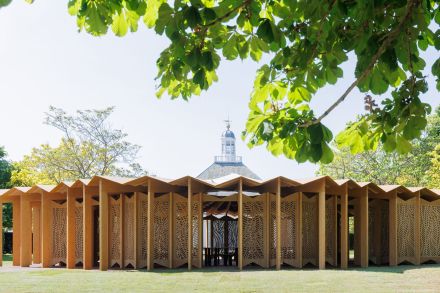
There was much to celebrate last year on the architecture front – the end of the pandemic brought the opening of long-delayed projects ranging from the Academy Museum of Motion Pictures in Hollywood to the Taipei Performing Arts Centre in Taiwan. But there was one construction project that stood head and shoulders above the rest in size and ambition, and that was the transport link formerly known as Crossrail.  The Taipei Centre may have been seven years late and the Academy Museum (now home to Judy Garland’s red slippers and R2D2, among other artefacts) more than a couple of decades in gestation, but that is nothing compared with London’s Elizabeth Line, which was first proposed in the 1940s.

Gorgeous Georgians: the timeless appeal of Regency properties

From our UK edition

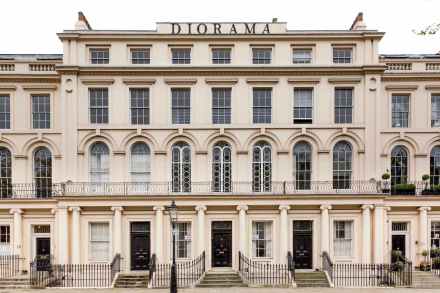
In the early years of the 19th century, the extravagant, spoiled and hard-partying Prince Regent had a surprisingly good idea. Encouraged by pals like Beau Brummell, and with the financial backing of the property developer James Burton, the future King George IV hired the architect John Nash to design a new London neighbourhood. His vision was for a series of magnificent streets, many in terraces styled like modern sugar-coated palaces, on Crown-owned land just north of central London. These ‘Regency’ homes would encircle a brand new park which, modestly, the future King would name after himself.

How King Charles saved Cornwall

From our UK edition

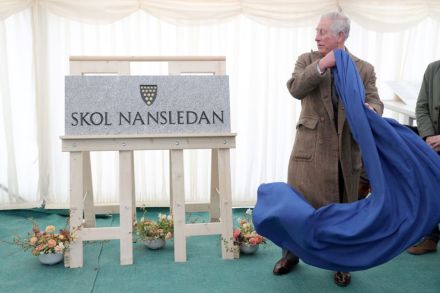
I’m a 30th generation Cornishman. I’m so Cornish my mum can make Cornish pasties blindfolded, my maternal grandmother was employed aged nine to break rocks in a Cornish tin mine (she was a ‘bal maiden’), and my second cousins founded Cornish Solidarity, which is the very-lightly-armed wing of Mebyon Kernow (the Cornish Plaid Cymru). Nonetheless my visits to the county are infrequent, probably because I am not overly fond of rain.  However, on my most recent visit I noticed that something in Cornwall has changed.

Hot property: 10 buildings to look forward to in 2023

From our UK edition

Every year produces a number of ‘firsts’ and ‘mosts’ in architecture – and 2022 was no different. Most obviously, at least for residents of New York, the world’s skinniest skyscraper, with sixty storeys of single apartments stacked to a height of 435 metres, was completed on ‘billionaire’s row’ in Manhattan, perhaps becoming the ultimate example of ‘form following finance’ in the construction annals.

Is this Britain’s most historic house?

From our UK edition

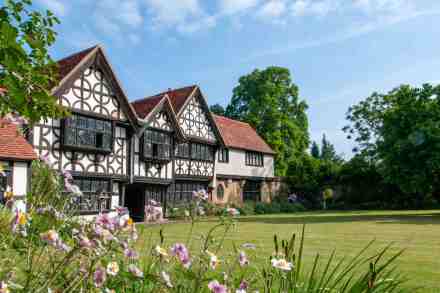
Hyperbole in estate agents’ brochures isn’t unusual – but when it comes to a write-up for Great Tangley Manor, which has gone on the market for £8.95 million, overkill is almost impossible. Believed to be the UK’s oldest continuously inhabited property – its Saxon foundations date from 1016 – the Grade I-listed moated manor house, in the village of Wonersh in the Surrey Hills Area of Outstanding Natural Beauty, comes with an extraordinary roll call of associated famous names. From the spheres of royalty, art, literature, garden design and even America’s Gilded Age, all have played their part in shaping secluded Great Tangley into a country house with a compelling story.

The buildings Richard Nickel championed

Perusing the listings of a recent auction, I noticed an intriguing, relatively flat piece of copper-plated cast iron featuring intricate foliate and geometric designs. It was a baluster designed by the firm of Adler & Sullivan in 1893 for the old Chicago Stock Exchange. The 1972 demolition of that building, thanks to the “urban renewal” undertaken by many progressive American cities during the mid-twentieth century, led to this bit of architectural salvage coming up at auction many years later. It also led to the death of an idealistic photographer and activist named Richard Nickel. When Nickel (born in 1928) was killed on April 13, 1972, his body was not recovered for weeks.

nickel

Battles royal: how Charles has influenced British architecture

From our UK edition

It is the evening of 30 May 1984. The country’s leading architects have assembled at Hampton Court to celebrate the 150th anniversary of the body that represents their interests, the RIBA. It is a sea of black polo necks, masculine chit-chat and clinked glasses. Given that the ‘R’ in RIBA stands for ‘Royal’ – albeit an honour actually awarded by William IV in 1837, three years after the Institute of British Architects’ founding – it is perhaps no surprise that a royal has been drafted in to politely murmur some congratulations over dinner. Yet what happened next was most certainly not expected.

The hateful sterility of new-build houses

From our UK edition

Where do you stand on new houses? You know, the little red boxes you see massed along the sides of motorways or clustered on what used to be flood plains? They’re hateful, aren’t they? Now, I know many people (my mother included) who own perfectly lovely new houses – and these houses are indeed all very lovely, and I bow to their pragmatism in putting basic necessities such as effective heating and draught-free corridors above the concerns of taste or aesthetics. But I can’t do it. Whether it’s down to the fact that the windows are a funny shape and as impossible to open as those on an Airbus, or that there are fire doors everywhere with nasty brass handles, or that the ceilings are too low, I could not tell you.

Why I admire Saudi Arabia’s monstrous new city

From our UK edition

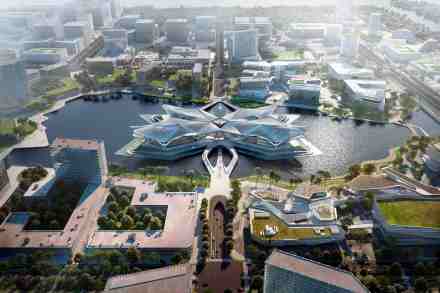
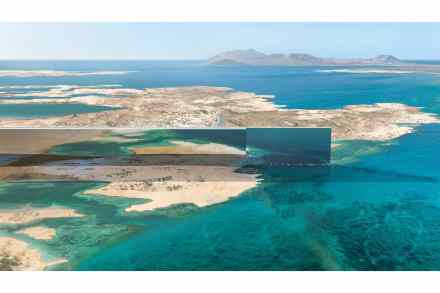
The Kingdom of Saudi Arabia wants me to know that it is building a new city. Its adverts follow me around the internet. ‘Imagine a traditional city and consolidating its footprint, designing to protect and enhance nature.’ I’m imagining. Their city ‘will be home to nine million residents, and will be built with a footprint of just 34 square kilometres. And we are designing it to provide a healthier, more sustainable quality of life’. According to its website, this new town ‘is a civilisational resource that puts humans first’. Which all sounds vaguely nice, if also nicely vague (although as I happen to be a human myself, I do appreciate the gesture). That is, until you see what they actually mean by this.

The enduring appeal of Arnos Grove station

From our UK edition

It's not in Whitehall nor Westminster; not on the central London tourist trail. Instead it’s ten miles away, on the wrong side of the North Circular, an obscurity in the suburbs, rarely visited for its own sake. But Arnos Grove Tube station is one of the masterpieces of 20th century British architecture – and this week it celebrates its 90th anniversary. Until September 1932, the northern branch of the Piccadilly line ended at Finsbury Park. Then five new stations were built: Manor House, Turnpike Lane, Wood Green, Bounds Green and, finally, Arnos Grove, all commissioned by Frank Pick and designed by Charles Holden. Suddenly it was only 20 minutes to Leicester Square.

The rise of the ‘neo-Geo’ country pile

From our UK edition

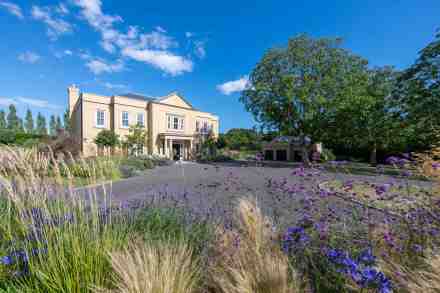
The Queen’s wedding gift to Prince Andrew and Sarah Ferguson in 1986 was a brand new 12-bedroom house in the Berkshire countryside. Sunninghill Park was an unfortunate mash-up of architectural styles, from its Tudor-ish chimneys to its vaguely Arts and Craftsy roofline and the monumental columns flanking its entrance. And how we laughed. It was the first time a royal had lived in a new build since Queen Victoria’s son Prince Albert moved into Bagshot Park in Surrey in 1879. The Duke and Duchess of York’s property was instantly nicknamed ‘SouthYork’ thanks to its resemblance to Southfork, the Ewing family ranch in Dallas.

Sixteen cathedrals to see before you die

From our UK edition

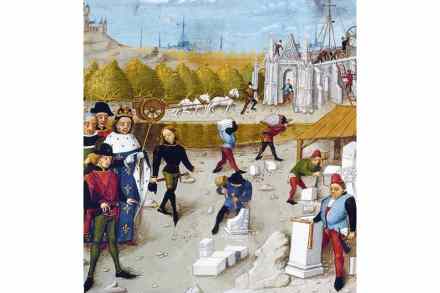
There can be no clearer illustration of the central role that great cathedrals continue to play in a nation’s life than the outpouring of grief that greeted the catastrophic blaze in Notre-Dame in 2019. President Macron described the building as ‘our history, our literature, our imagination, the place where we experienced all our greatest moments’. Indeed, it is impossible to conceive of any major European city without a cathedral at its heart. Emma J. Wells has written an accessible, authoritative and lavishly illustrated account of the building of 16 of ‘the world’s greatest cathedrals’.

How the quarrelsome ‘Jena set’ paved the way for Hitler

From our UK edition

Today, the German city of Jena, 150 miles south-west of Berlin, is the world centre of the optical and precision industry; but in the 1790s it spawned an even more marketable commodity. It was then a small medieval town on the banks of the river Saale with crumbling walls, 800 half-timbered houses, a market square and an unruly university. Here, in the philosophy department, Johann Gottlieb Fichte, a young professor inspired by Immanuel Kant and the French Revolution, proclaimed from the pulpit his theory of the ‘Ich’. ‘A person,’ he roared, ‘should be self-determined.’ In an age of absolute power and the divine right of kings, the idea of free will was an incendiary device and Fichte freewheeled his way through each lecture.

The lost charm of London’s St Giles

From our UK edition

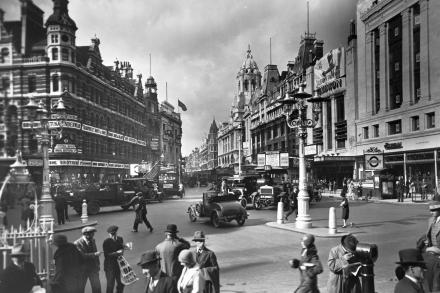
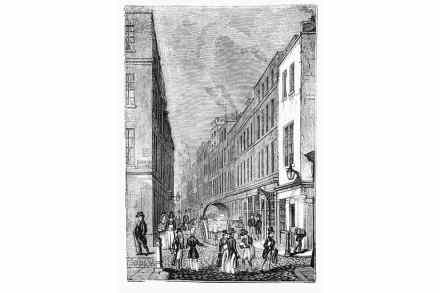
London's architectural landscape is changing at such a pace that it's hard to remember what's been lost beneath the acres of tarpaulin. Buildings I must have walked past a thousand times and that I could have sworn were important landmarks have been disappearing at an alarming rate. Despite the devastation there appears to be little in the way of pushback from harried, post-pandemic Londoners. How quickly we forget what our eyes once took for granted; the familiar razed without a second glance. The area known as St Giles, just east of Charing Cross Road and south of New Oxford Street, has suffered more ignominy than most.

Why Merseyside is the natural home for a Shakespearean theatre

From our UK edition

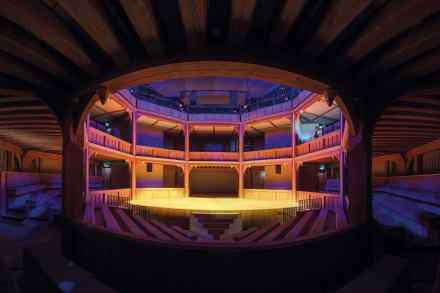
Prescot is a neglected little town in Merseyside noted for having Britain’s second narrowest street and for its Brazilian waxing salon. It’s now also home to Shakespeare North, a game-changing new theatre. This handsome, modern brick building overlooking a Jacobean church has a light, airy, unfussy interior – a stairway to heaven. You leave the modern world and enter an octagonal cocoon, modelled on a 1630 playhouse, built of slowly splitting green oak, the limbs all pegged together, not a nail in sight. The seats (two tiers) accommodate between 320 and 470 people, depending on the configuration of the stage. Its acoustic is spot-on and it feels cosy but not claustrophobic. The sound and lighting technology is modern but it can be candlelit if need be.

The beauty of gasholders

From our UK edition

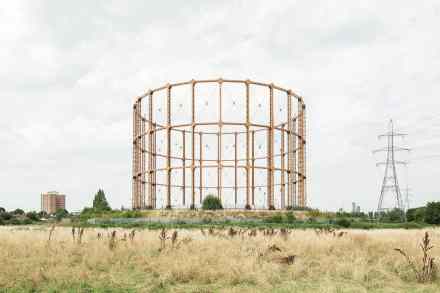
On 25 October 1960, a Boeing pilot aiming for Heathrow accidentally landed at an RAF base, only realising his error when the runway turned out to be alarmingly short. Disaster was averted, but the near-miss caused some embarrassment, and the minister of aviation had to answer questions in the House. What had confused the pilot, it emerged, was the advice from air traffic control to start his descent ‘in line with the gasholder’. He had picked the wrong one. Ever since, the gasholders near Heathrow and RAF Northolt have had painted on them, in 50ft-high letters, ‘LH’ and ‘NO’. There is a surprising amount of strange lore about these industrial relics, which once kept the nation’s homes and factories lighted and warm.

A play for bureaucrats: David Hare’s Straight Line Crazy reviewed

From our UK edition

It’s good of Nicholas Hytner to let Londoners see David Hare’s new play before it travels to Broadway where it belongs. Few Brits will know the subject, Robert Moses, an urban planner of the 1920s who built the roads and bridges that gave New Yorkers access to seaside resorts in Long Island. This is a play for bureaucrats. Nit-picking and box-ticking are the main points of interest. Squiggles on forms. Correct signatures at the bottom of proof-read documents. Hare is copying George Bernard Shaw and his script is a celebration of rhetoric above all other qualities. Dialogue-junkies will enjoy the screeds of quickfire chatter that keep the play motoring along. And like Shaw, Hare omits many of the elements that make a drama feel lifelike.

Sex and politics in the precincts of St Paul’s Cathedral

From our UK edition

In the tight dark maze of alleys that wind between the Thames and St Paul’s the pleasures of the living are intertwined with those of the distant dead. Try it for yourself on a late Saturday afternoon. Start by immersing yourself in the eerie darkness of the Temple of Mithras (ancient stones, reconstructed Roman voices calling for strong drink, a pagan pit beneath the guileless Bloomberg building); emerge and cross over to the Roman Watling Street, where you will see tribes of Essex women – Boudicca’s spiritual daughters – with faces of bronze, brandishing not fire but fags and lighters outside busy pubs and bars.

The genius of Iannis Xenakis

From our UK edition

This year is the centenary of the birth of Iannis Xenakis, the Greek composer-architect who called himself an ancient Greek stuck in the contemporary world. His instrumental music at times suggests an alien species trying to communicate with us through our musical instruments, his electronic music a distressed animal on the receiving end of amateur dentistry. For his part, Xenakis said that music ‘must aim… towards a total exaltation in which the individual mingles, losing his consciousness in a truth immediate, rare, enormous and perfect’. Of all the post-war European firebrands, Xenakis remains the most influential today.