Jonathan Meades

Angus Colwell, Paul Wood, Andrew Rule & Jonathan Meades

From our UK edition

26 min listen

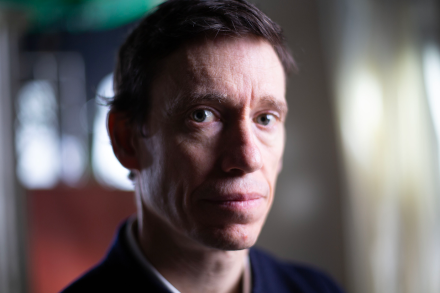
On this week’s Spectator Out Loud: Angus Colwell ponders why young Brits seem to aspire to be more Australian; Paul Wood analyses the daring plan to reclaim the Chagos islands; Andrew Rule explains why to read is to love; and finally, Jonathan Meades declares that John Vanbrugh defies taxonomy as events kick off to mark the 300th anniversary of his death. Produced and presented by Patrick Gibbons.

The genius of John Vanbrugh

From our UK edition

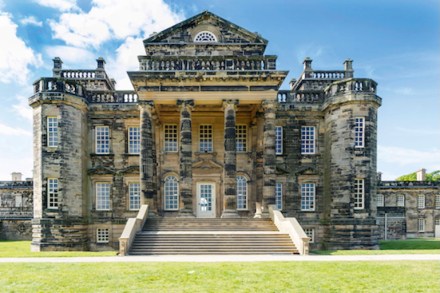
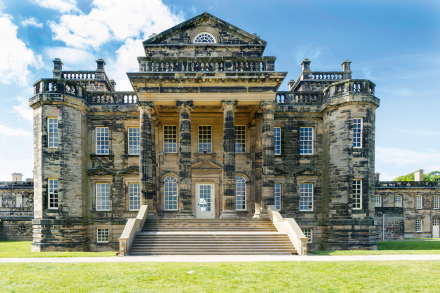
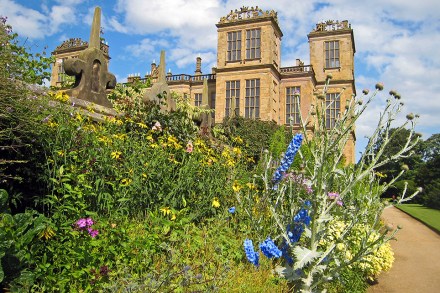
Van’s genius, without Thought or Lecture,Is hugely turn’d to Architecture. Jonathan Swift’s dismissive jest has never been forgotten. It may not be as vituperative as ‘A Beautiful Young Nymph Going to Bed’ but it is there ready for duty whenever the skirmish between the principals’ proxies is resumed in all its petty self-importance. It’s England, so social class looms. While Vanbrugh strode with ease among kings and bitchy duchesses, heavily made-up Foppingtons and grand cru horizontales, the resentful Hawksmoor – his collaborator – lurked in the shadows meekly giving great forelock and not receiving the commissions he deserved.

The gloriously impure world of Edward Burra

From our UK edition

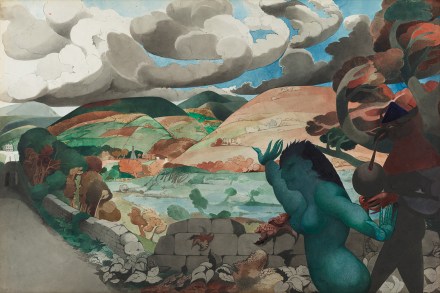
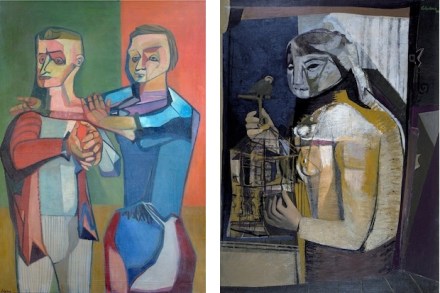
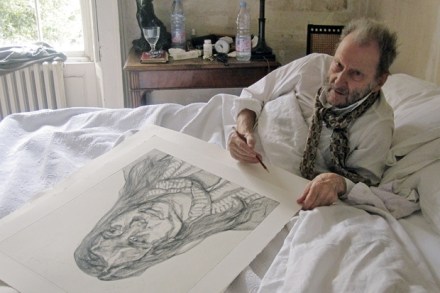
Every few years the shade of Edward Burra is treated to a Major Retrospective. The pattern is long established: Edward who? Forgotten genius, sui generis, well known for being unknown save by beardy centenarians and art tarts with ginny voices. Why have I never heard of this man? LGBT-ish avant la lettre, Polari-ish. After the show inhumation beckons again and he will disappear into an obscurity that cannot be relieved until the curatocracy once more lets loose the dogs of hype. George Melly and Dan Farson are no longer around to peal his name and Jane Stevenson’s impeccable and often funny biography suffers from its subject’s being a forgotten genius, sui generis, unknown save… etc. In later years Burra was the very picture of a different neglect: physical.

Art deco gave veneer and frivolity a bad name

From our UK edition

The jazz style was the blowsy filling between the noxious crusts of two world wars. More than 30 years passed between its flourishing and its remonikered second coming as art deco, no longer gaudy ephemera, now a legitimate addition to the inventory of fashions. The coinage was initially ascribed to the antique dealer John Jesse. It is, more probably, Bevis Hillier’s. He was a scholar of the style, then organiser of its first retrospective, far ahead of the game, in Minneapolis-St Paul in 1971.

British architecture according to the Great Man school of history

From our UK edition

Simon Jenkins has, over the years, assembled a winsome array of higher coffee-table books about the kind of building which welcomes National Trust mobility scooters and the beige brethren aboard them. This is a man who knows the cardigan market. And he knows his stuff, mostly. He subscribes to a version of the Great Man school of history, which casts the great man as an exigent client who believes himself the maker or author. But, sadly, the grim-faced Bess of Hardwick did not install the glazing herself. And another promoter ever anxious for an attribution, God Almighty, did not personally carve his supplicants’ chantries. It might be his house, but he delegated the design.

A familiar OE-led balls-up: Rory Stewart’s The Long History of Ignorance reviewed

From our UK edition

In my next life I intend to have my brain removed in order to become a telly executive. You know: ‘where ignorance is bliss/ ’Tis folly to be wise’ (Thomas Gray, OE). Such ignorance is a state which, happily enough, Rory Stewart, OE and a fully tooled-up Mob from rent-a-thinker (what one of those executives, without a hint of irony or faint praise, once called ‘television intellectuals’) are just now kicking around in the hope that they may rehabilitate it and release it from its sty of obloquy. Rory is a very keen type – what used to be called an all-rounder – and, despite his protestations otherwise, he is untouched by the piggiest ignorance, and addresses his audience and contributors with the zeal of a scoutmaster.

The art of menus

From our UK edition

There is, of course, no endeavour, no craft, no profession, no trade that neglects to ‘reflect society’. This is a commonplace. The collective narcissism of considerate builders, for instance, claims that hod carriers and brickwork reflect society. The contention of Menu Design in Europe is kindred. Graphic artists, restaurateurs, decorators and chefs have, through two centuries, expanded their capabilities according to the milieux in which they have practised. Menus are, then, not merely functional lists, they are self-advertisements, exhibitions, seductions and, occasionally, desirable objects that are apparently collectible. Indeed this book has the unmistakable feel of an obsessive’s scrapbook, a completist’s trophy.

What next for Notre Dame?

From our UK edition

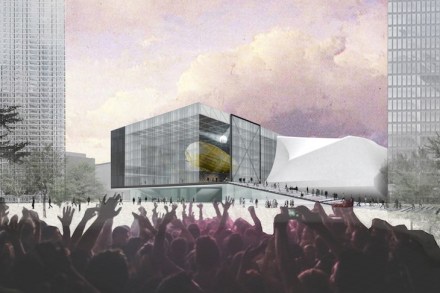
Notre Dame is only important from a Shakespeare’s-birthplace point of view. Architecturally it is a nullity beside the cathedrals of Beauvais and Laon, Albi and Marseille, Rouen and Clermont-Ferrand (a sinister marvel of black tufa). The ashes of the cathedral are now the site of a proxy struggle between some of the greatest fortunes on the planet. The struggle has begun with the architectural competition announced by the widely loathed Macron and the so far less loathed PM Édouard Philippe. How will the competition be conducted?

What you see is what you get

From our UK edition

The Wellcome Trust puts on some of the most engaging exhibitions in London and holds in its permanent collection a number of fine works. Its roots are in biomedical research, but those roots have, with modification, sprouted so many disciplines and areas of tangential enquiry that it makes perfect sense to have commissioned Iain Sinclair to write about the physical and psychological effects of buildings and places on the health of the people who inhabit them, pass through them, long to get out of them, represent them, think about them. Sinclair’s approach is not that of a sociologist, an off-the-peg analyst of urbanism (density good, sprawl bad) or a travel writer on a journey to ‘find himself’ (in the way that they wearyingly will).

The Bilbao effect

From our UK edition

Twenty years ago I wrote of the otherwise slaveringly praised Guggenheim Museum in Bilbao: I’m in a minority of, apparently, one. It strikes me as a consummate gimmick… a fantastically elaborate and rather wearisome joke. Has mankind spent all these centuries perfecting Euclidean geometry and orthogonal engineering in order to have it overthrown by massively expensive crazy cottages clad in titanium? Apparently mankind has. So much for the building. What of the ‘Bilbao effect’, an epithet that I am accused of having coined (I can’t remember, but it’s inappropriate because there is, typically, no effect).

Concrete cuckoo

From our UK edition

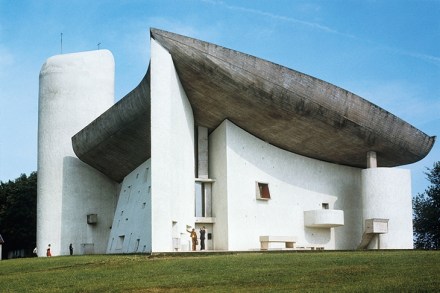
The Catholic Church’s Second Vatican Council provides a salutary example of a tiny ‘elite’ foisting ‘anti-elitist’ practices on the ‘non-elite’ — and coming a cropper. Vatican II’s dates are important. The Council was convened in 1962 and concluded in December 1965. These were the high years of the most uncompromising architectural modernism and, just as pertinently, of the craze for theatre-in-the-round, whose champions considered the proscenium arch to be an authoritarian (very possibly ‘fascist’) instrument inimical to ‘participation’. Rome’s neophilia left much of the clerisy bewildered. It was admitting temporal fashions to a spiritual domain. Maynooth’s head was spinning.

Wall eyed

From our UK edition

Any impressively long wall is bound to cause us to recall the midfield dynamo and philosopher John Trewick. In 1978 Big Ron Atkinson took his bubble-permed West Bromwich Albion team to China on some sort of goodwill tour. The lads’ diplomacy evidently rested in their feet, for when Trewick was asked by the BBC crew documenting the tour what he thought of the Great Wall, he replied: ‘When you’ve seen one wall you’ve seen them all.’ Good try, John, but not quite accurate. He would, however, have been on the money had he alluded to the common state of mind among men who commission immense walls (paranoiac) and to the loss of life that is, without exception, occasioned by the construction of the things (considerable).

This history of the YBAs confirms their ahistoric arrogance and boundless incuriosity

From our UK edition

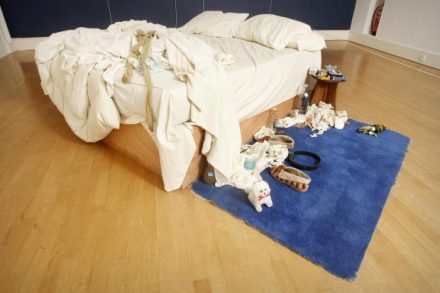
Artrage by Elizabeth Fullerton. Thames & Hudson. 288pp. £24.95 Thames & Hudson is no longer a publisher much associated with writing. You do not expect its books on art and applied art to be wrought with the brio and elegance of Susie Harries or Rosemary Hill, Crook or Summerson. Which is, perhaps, just as well because Elizabeth Fullerton's text is catastrophically clumsy. According to the author note she graduated from Oxford with a degree in modern languages: one must assume that English was not among them.

Wet dream

From our UK edition

Utopia dons some unlikely guises, crops up in some odd places. On the sea wall a couple in their teens stood clutching their baby and gazing half a mile across the opaque river to where streets run down to the shore: spires and warehouses, inns and gables announced a town. The boy asked me if I knew over there. He said that that was where they wanted to go to, where they wanted to be. There’s so much happening over there. Not like here. Here there were only vast ships, big sheds, cranes, mean houses. And nothing to do. No life. We were between Tilbury Fort and a pub called the World’s End. On the other side of the water was hope. These kids were on the money. The object of their longing was Gravesend.

Gaudy! Bright! Loud! Fun!

From our UK edition

In any epoch most of what is built is mediocre, though we may not realise it at the time because our neophilia persuades us of merit where there is none. Equally, we may fail to distinguish the few exceptions — those instances where architects and builders have ascended to a higher standard of mediocrity or have even escaped its dulling clasp. It takes time for public taste to catch up with architects’ taste. Today, 40 years after brutalism dissipated in an assault of bien-pensant hostility and oil crises, few weeks pass without a new book or blog hymning its sublimity, energy and gravity. It is, of course, all a bit late. Much of the finest work has already been destroyed.

The art of Jonathan Meades

From our UK edition

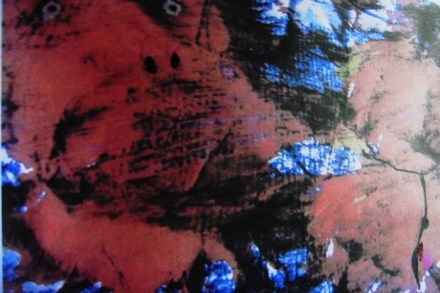
Ape Forgets Medication: Treyfs and Artknacks Londonewcastle Project (28 Redchurch Street, E2), until 23 April Process, means, method: it was these rather than the results which initially fascinated me. There was an unmistakable exhilaration in discovering that I was not merely learning a new language but that I was creating a language peculiar to myself. Given that it was non-verbal the word 'language' is inappropriate. In every instance the words, the capricious titles I have appended to the works (the treyfs and artknacks) came after. Treyf signifies that which is not kosher. Artknack is a neoligism which suggests arts, a knack or facility, a knicknack or cheap bling, arnaque (French for a scam).

Jonathan Meades on god, football and brutophilia – and why his memoir was 17 years late

From our UK edition

This is a transcript of a talk, 'Composing the Past', given by Jonathan Meades at the Assembly Rooms in Edinburgh on 26 August 2015, about writing An Encyclopaedia of Myself, which won the Spears Memoir Prize and was shortlisted for the PEN Ackerley award The most recent film I made was on the sculptural neo-expressionistic architecture of the late 50s, 60s and early 70s - known as brutalism after the French for raw concrete, beton brut or bru, depending on how costive with consonants the speaker is. This film has had bizarre and unintended consequences. Forty years ago two fine comic actors, both now dead, John Fortune and John Wells, collaborated on a novel called A Melon For Ecstasy. The title comes from a Turkish proverb: 'A woman for duty, a boy for pleasure, a melon for ecstasy'.

A 50-year infatuation

From our UK edition

The subject of the least characteristic essay in this engrossing collection of meditations on painters, painters’ lives, painting and reactions to painting is René Magritte — whose best work David Sylvester rather rashly claimed induces ‘the sort of awe felt in the presence of an eclipse’. Julian Barnes discusses what he calls the artist’s doctrine (doctrine?) of ‘elective affinities’, which proposes the antipodes of Lautréamont’s ‘chance encounter on a dissecting table of a sewing machine and an umbrella’. Thus in the painting of that name a birdcage is filled not with a random safety razor or knuckleduster but with a giant egg.

Dedicated follower of fascism?

From our UK edition

The ‘revelations’, 50 years after he drowned, that Le Corbusier was a ‘fascist’ and an anti-Semite are neither fresh nor startling. Indeed they’re old hat. And it defies credibility that the authors of three recent books about this tainted genius were ignorant of what anyone with even the frailest interest in architects’ foibles and tastes has been aware of for years. Not that this has deterred them; nor has it deterred newspapers from filleting the books for supposedly sensational titbits. What next? The hot news that the cuckold Carlo Gesualdo murdered his wife and her lover? That Jean Genet has been discovered to have been, you know, on the light-fingered side?

The more deceived

From our UK edition

Louis the Decorator and his chums in the antiques trade use the word ‘airport’ adjectivally and disparagingly. It signifies industrially produced folkloric objects (prayer mats, knobkerries, masks, toupins, necklaces, tribal amulets, djellabas etc) which are typically sold by hawkers to departing holidaymakers. This is the basest level of fakery and is ignored by the otherwise doggedly catholic Noah Charney. Its defining characteristic, however, is tellingly akin to that of the multi-million-dollar scams that fascinate him in The Art of Forgery. The duped party is often not all that duped.