Revd Steve Morris

Are angels real?

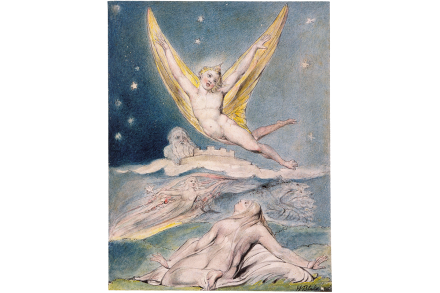
One day while out walking, William Blake saw angels sitting in the trees: “bright angelic wings bespangled every bough like stars.” He was eight years old. His fascination – some have called it an obsession – with angels lasted for the rest of his life. When he sat to have his portrait painted by Thomas Phillips, the two men began to argue about who painted a better angel, Michelangelo or Raphael. Phillips, not unreasonably, suggested that since Blake had never seen even an engraving by Michelangelo, he was not qualified to give an opinion on the matter. “But I speak from the opinion of a friend who could not be mistaken,” replied Blake. “And who may he be, I pray?” asked Phillips. “The Archangel Gabriel, sir.

Womb service: the politics of surrogacy

From our UK edition

37 min listen

On this week's episode: In her cover piece for The Spectator, journalist Louise Perry questions whether it is moral to separate a newborn child from their surrogate. She is joined by Sarah Jones, head of SurrogacyUK and five time surrogate mother, to debate the ethics of surrogacy (01:07). Also this week: In the books section of the magazine Olivia Potts reviews several recent books all of which seem to warn against the dangers of our food system and what we are eating. She is joined by Henry Dimbleby, author of Ravenous: How to Get Ourselves and Our Planet Into Shape, to ask if anything is safe to eat these days (14:29).

How to find the Holy Grail

From our UK edition

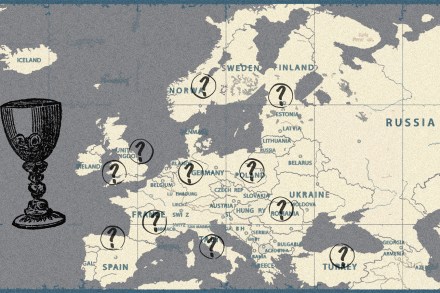
If you visit Valencia Cathedral, you will find, in the old chapter house converted into a chapel, the Holy Grail, made up of a humble agate stone and kept safely behind glass. But if it is really the cup used by Christ at the Last Supper (and the Vatican recognises the possibility that it is), why are so many people still searching for it? Christopher Dawes believes he might have the Grail at home on his mantelpiece in Brentford There are too many theories about its true location to keep track of. Could it be in the Basilica of San Isidoro, León, given as a present to the King of Spain by an Andalusian emir? Was it taken to Glastonbury by Joseph of Arimathea and buried, causing a spring to flow that offers eternal youth? Is it hidden in a secret room in the Vatican?

My hunt for the Holy Grail: Damned drummer Rat Scabies interviewed

From our UK edition

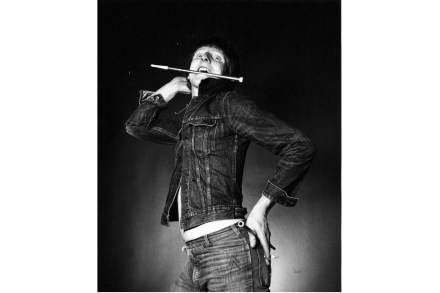
Most former punks end up touring the nostalgia circuit or cropping up at conventions. Not Christopher John Millar, aka Rat Scabies. When Scabies hit middle age, the legendary drummer with the Damned began to hunt for the Holy Grail. ‘We all started off criticising government and I’ve ended up looking for pixies,’ explains Scabies. In 2005, the music journalist Christopher Dawes wrote a rollicking account of a trip he took with Scabies to the epicentre of it all, Rennes-le-Château, a tiny village atop a rock overlooking the River Aude in the Languedoc. Rat Scabies and the Holy Grail has taken its place as a minor gonzo classic. Dawes lived across the road from Scabies in Brentford and gradually got drawn into a world of odd theories and strange coincidences.

Christmas Special

From our UK edition

90 min listen

Welcome to the special Christmas episode of The Edition! In this episode, we look at five major topics that dominated the news this year and the pages of The Spectator. First up a review of the year in politics with our resident Coffee House Shots' team James Forsyth, Katy Balls and Isabel Hardman. We discuss how Boris seemed to make such a strong start to the year through the vaccine rollout, but squandered this goodwill with several own goals. We also touch on some of the big political moments of the year: Partygate, the Owen Paterson affair and of course Matt Hancock. (00:39) Next, we go global and look at three of the major powerhouses that took headlines this year. The EU, who ends the year in a panic over Russia, extreme Covid measures, and upcoming elections.

The history of the American Memorial Chapel

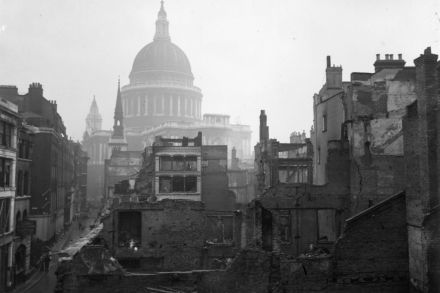
The clipped voice on the old television newsreel tells us that November 27, 1958 was a gray old London day. The Queen, accompanied by Vice President Richard Nixon, was dedicating and opening the American Memorial Chapel at the far east end of the City of London’s great cathedral. Ordinary men and women from all over Britain paid for the chapel by public subscription. It was the least we could do. It was a miracle that the cathedral had survived the Nazi Blitz almost intact. One part of the cathedral was hit by a bomb in October 1940, and it was on that site that eighteen years later the Memorial Chapel was built. The Chapel is dedicated to the 28,000 American people who were stationed on British soil and died in World War Two, many of them on D-Day.

chapel

The strange magic of the mountain hare

From our UK edition

The numbers of the dear old mountain hare in England are becoming perilously depleted. A researcher, Carlos Bedson, has suggested there may be only 2,500 left in the Peak District. Warmer weather seems to be finishing them off. It is time to appreciate them and their cousins, the brown hare, more and to look after them. I was in my thirties when I’d head up on to Saddleworth Moor with my father-in-law to watch the white-furred mountain hares. We didn’t say much, we just took in the old magic of those beautiful creatures. I’m not the only one to love hares. That great English poet and hymnodist William Cowper suffered from severe depression and many breakdowns. It was adopting three leverets as pets that began to turn the mental tide.

Is this the end for Trumpism?

From our UK edition

28 min listen

What are the latest developments in the US presidential election? (01:15) - Lara is joined by the Spectator's economics correspondent Kate Andrews and the Spectator US's editor Freddy Gray, who is currently in Pennsylvania.What is it like to care for a disabled child during a time of lockdown? (09:19) - The journalist Sam Carlisle discusses the lack of support for her daughter Elvi with the Education Select Committee Chairman Robert Halfon. And finally, should churches keep their doors open throughout the pandemic? (20:42) - Journalist Laura Freeman thinks so, and considers the issue with Reverend Steve Morris from St Cuthbert's Church in North Wembley.Presented by Lara Prendergast.

The sorry history of London’s Hoover Building

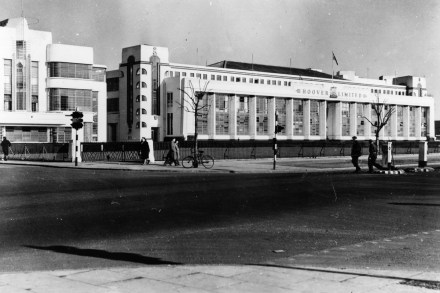
In the early Thirties, when impoverished Americans were cramming into shanty towns called ‘Hoovervilles’, another Hoover created an industrial building of rare magnificence in west London. Driving into London from Heathrow airport, we see acres of nondescript suburbs. The Hoover Building at Perivale, about five miles from the West End, still astounds. Set back from the road in well-manicured gardens, this art deco masterpiece rises in brilliant white (due to the use of a cement called Snowcrete), its façade laced with angular green trim and sunburst decoration. The Hoover Building was the British factory of the Hoover Company, the Ohio-based vacuum-cleaner manufacturer.

hoover

Douglas Murray, Steve Morris, and Toby Young

From our UK edition

19 min listen

On this week's episode, Douglas Murray reads his column on how if everything is racist, then nothing is; Reverend Steve Morris campaigns for the return of the British holiday camp; and Toby Young on his new dating website for lockdown sceptics.

Here’s Nicola: can Boris Johnson stop Scottish independence?

From our UK edition

36 min listen

Poll after poll is showing the surge in support for Scottish independence - so what can Boris Johnson do about it? (00:35) Plus, how many more pandemics does nature have in store for us? (13:20) And finally, is it time to bring back the British holiday camp? (28:00).With our Scotland Editor Alex Massie; commentator Angela Haggerty; author of The Pandemic Century Mark Honigsbaum; ecologist Peter Daszak; Reverend Steve Morris; and historian Kathryn Ferry.Presented by Cindy Yu.Produced by Cindy Yu and Sam Russell.

Ghost riders in the sky

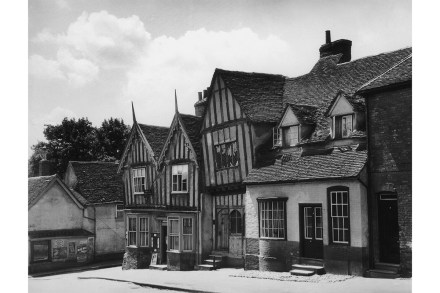
Christmas Eve 1944, and the airfield near the tiny Suffolk village of Lavenham shook with the noise of bombers from the 487th Bomb Group, part of the 8th US Army Air Force. The commanding officer, leading more than 2,000 aircraft from various airfields, was brigadier general Frederick Walker Castle, and today was to be his 30th and final mission. Over Allied-held territory in Belgium, Castle’s B-17 Flying Fortress developed engine trouble. Dropping back from the bomber stream so as not to slow it down, he refused to jettison his bomb load on the Allied troops below. He was a sitting duck. After repeated fighter attacks, his plane on fire and in a tailspin, Castle ordered his crewmen to bail out.

lavenham

In this time of modern contagion, I find myself turning to ancient prayers

From our UK edition

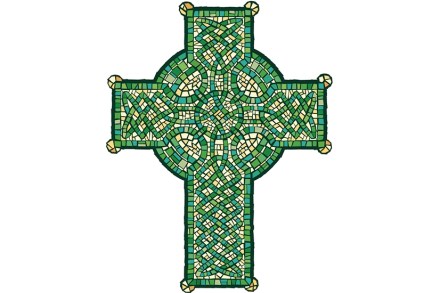
There is an ancient Celtic prayer that is as relevant today as it was all those centuries ago: Be Thou between me and all things grisly, Be Thou before me in all things mean, Be Thou between me and all things gruesome Coming darkly towards me. We live in a grisly time and don’t quite know what to do with the gruesomeness of it. This little prayer, whose origin is sometime between the 5th and 9th century, has that sense of foreboding that we are feeling in these dark days too. For the Celtic Christians, the darkness was all too real. They were a largely rural people, living in turbulent feudal times, but they understood much about the practicalities of life and how to turn concerns and desires into prayers. Celtic Christianity started after the Romans left Britain in 410.

In the cart of the city

This article is in The Spectator’s January 2020 US edition. Subscribe here.New York City It’s the Sunday before Memorial Day outside the Metropolitan Museum of Art and the street is filling up with families. Navy servicemen and women stop for a friendly word and a photo. But a tragedy is happening here and there’s nothing anyone seems able to do about it. Elizabeth Rossi, a retired disabled Marine veteran in her early forties, runs a hot-dog stall outside the museum. She served in Operation Iraqi Freedom. ‘On my first day we were bombed; you never forget that,’ she says. Her father, Dan, also a disabled vet, runs the van next door. But they feel that they have been rejected by the city of New York and the world around them.

food cart

The wonder of Whitby

From our UK edition

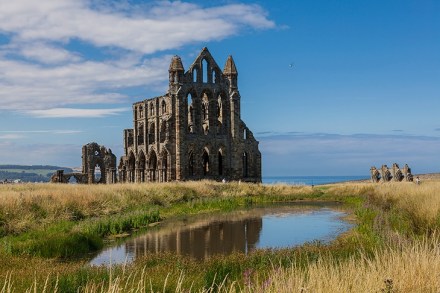
The 199 steps up to the ruins of Whitby Abbey are a pilgrimage; they always have been. And any good pilgrimage takes effort. Count Dracula (also acquainted with the north Yorkshire town) cheated — he climbed the steps in the guise of a black hound. These days, with its new £1.6 million museum and visitor centre, our vampire friend would find a ground-floor café and gift shop. Knowing English Heritage, there is probably a bowl of water for dogs, which would have kept the Count happy. Whitby is a surprise, with a history that puts it at the heart of Britain’s spiritual and literary life. It’s also a vibrant fishing port, somewhere you can pick up a Whitby smoky — smoked herrings — made in a backstreet smokehouse.

Holy cats

From our UK edition

It is claimed that the prophet Muhammad loved cats. His favourite was called Muezza and he would do without his cloak on a cold day rather than disturb his sleeping pet. Muhammad was not alone in finding these creatures beguiling. Indeed, despite there being no mention of them in the Bible, cats have a prestigious holy pedigree in Christianity too. The medieval mystic St Julian of Norwich locked herself away in a room attached to a church, dispensing prayer and advice to those who passed. It was a tough calling for she was alone, anchored to the church — which was why she was known as an anchoress. Her one companion was her tabby who would sit with her while she prayed with the lonely, the desperate and the conscience-struck.