Geoff Dyer

Cinema has reached a nadir in the new Mission: Impossible

From our UK edition

You have to time your arrival at cinemas carefully if you want to avoid the high-volume, rapid-fire edits of trailers for upcoming mind-rot. That’s conceptually impossible with Mission: Impossible – The Final Reckoning. The first half an hour is a debrief in the form of an extended trailer of highlights from previous missions. At one point during this hyper-extended prelude Tom Cruise and a pal sneak into a disused London tunnel, as if to an underground club. This planted the seed that the rest of the film would be an all-action allegory of a group of friends’ determined efforts to get into the Entity, a sinister Berlin nightclub whose bouncers had previously denied them admission.

Geoff Dyer – the Proust of prog rock and Airfix

From our UK edition

39 min listen

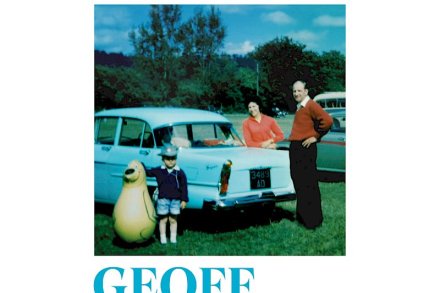
My guest in this week’s Book Club podcast is Geoff Dyer, who’s talking about his memoir Homework, in which he describes growing up as an only child in suburban Cheltenham, and how the eleven-plus and the postwar settlement irrevocably changed his life – propelling him away from the timid and unfulfilled world of his working-class parents. Geoff, in this new book, bids fair to be the Proust of Airfix models and prog rock.

How I fell in love with the blues

From our UK edition

I was never into the blues that much. I listened to a bit of Roy Buchanan and Rory Gallagher but only as accidental overspill from rock. I knew the Rolling Stones’s sound came out of their love of the blues but what they added was more important (to me) than what they took. And then there was Eric Clapton. In common with a discerning portion of the British population, I loathed Clapton after his drunken endorsement of Enoch Powell’s rivers-of-blood speech. Even if I’d somehow let that slide, I could never forgive him for ‘Tears in Heaven’ which was like having a bucket of oversweetened bilge water poured over one’s head.

This is cinema as car ad, says Geoff Dyer: News of the World reviewed

From our UK edition

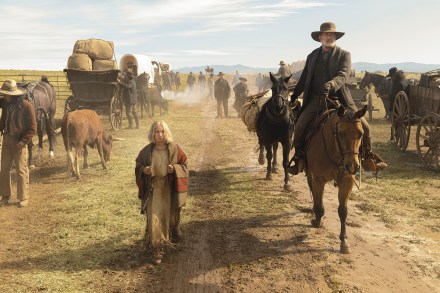
It’s a premise with plenty of previous. Children whose parents were murdered by Indians on the frontier of the American west are abducted and then adopted by the tribe. Their plight is appalling — female captives were raped as a matter of course — but sometimes the hostages forget their mother tongue and come to relish the nomadic life of the plains. Another round of trauma follows when the adopted guardians are in turn massacred and the orphans are returned to the alien captivity of civilisation. The famous abduction of Cynthia Ann Parker by Comanches in 1836 and the prolonged attempts to find her — followed by her attempts to escape from her rescuers — served as source material for John Ford’s The Searchers.

I was born to be on this Bob Dylan podcast, says Geoff Dyer

From our UK edition

Podcasts will soon be like porn. Every interest, desire or idle flicker of curiosity will have been anticipated and catered for. Whatever you’re into there’ll be a podcast devoted to it, waiting to make itself heard. That’s easy for me to say because I’ve already found my perfect match: Is It Rolling, Bob? in which ‘Actors Kerry Shale and Lucas Hare talk to interesting people about Dylan’. Since nothing is more interesting than Dylan it follows that there is nothing more interesting than this podcast. I was alerted to it by my friend the writer Rob Doyle who had heard about it from his dad. (My friends, increasingly, are the children of my contemporaries; is this what Bob meant by staying for ever young?

On photography, shrines and Maradona: Geoff Dyer’s Neapolitan pilgrimage

From our UK edition

At the Villa Pignatelli in Naples there is an exhibition by Elisa Sighicelli: photographs of bits and pieces of antiquity from, among other places, the city’s Archaeological Museum. Put like that it doesn’t sound so interesting but the results are stunning. Walking through the Archaeological Museum after seeing the exhibition it was difficult to discover the original objects from which Sighicelli’s samples were taken. One instance, a tight crop of fingers pressing into a calf, is from a highly elaborate, much restored and augmented sculpture with so much going on — a naked swirl of bodies, a rearing horse, a sympathetic doggy — it’s hard to imagine how she found it in the first place.

Vegas dreamtime

From our UK edition

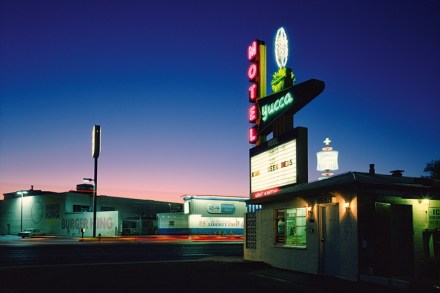
It’s to be expected. You take photographs in order to document things — Paris in the case of Eugène Atget in the late 19th and early 20th centuries, the shacks of the American south in the case of Walker Evans in the 1930s — and these documents then acquire a quality of elegy. What is extraordinary is the speed with which this happens, the brevity of the ‘then’. As soon as the images emerge in the developing tray — even, conceivably, the moment the shutter is clicked — they are imbued with how they will be seen in the future. The photographs in Fred Sigman’s book Motel Vegas were commissioned in the mid-1990s in order to record the signage of once-thriving motels on Fremont Street in Las Vegas.

Geoff Dyer: How I write

From our UK edition

In the sixth form we’d get assigned essays to be written over the Christmas holidays. I always did these right away, either on Friday night or Saturday morning. Not because I liked writing but because the homework cast such a blight over the holiday that it was best to get it over with. I look back on that period as a precocious summit of self-discipline. I’d love to recapture that iron resolve now, more than 40 years later, when it takes longer and longer to settle down to things, to fight off the dread of having to concentrate, when it seems likely that the only parole from this life sentence of homework will come with dementia or death.

Diary – 4 August 2016

From our UK edition

I was born in 1958 and turned 58 in June, so for the next five months my age coincides with the year of my birth. Does any significance attach to this pleasing symmetry? If you were born in 1904 then the numerological rhyme would be achieved at four years old, before you were in any position to appreciate it. If you were born in 1990 then the chances are you will never manage this brief docking of age and year; of course the odds are better than they would have been if you were born in 1890 but it’s unlikely you’ll feel some pivotal moment has been reached. Which is how it seems to me.

Beat echoes

From our UK edition

Laid out flat, running the length of the exhibition, the original scroll of Jack Kerouac’s On the Road forms the spine of the large Beat Generation show at the Pompidou Centre in Paris. Even for those familiar with the published version of the manuscript seeing this holy relic — the founding document for all sects of Beat worshippers — is a powerful experience. For about a minute. It’s everything else — the movies, the posters, the paraphernalia — that takes the time and generates an exhibition on such a tremendous scale. But how could it not sprawl? You start with the writers — Kerouac, Allen Ginsberg and William Burroughs — and before you know it there’s jazz, Neal Cassady, the Merry Pranksters, acid, you name it.