Architecture

Keep the modernists away from the Notre-Dame restoration

One heartening if dimly consoling result of the disastrous fires that swept through Notre-Dame cathedral has been the willingness of politicians and philanthropists to pledge their financial and institutional support towards its reconstruction. Yes, some of them might have an eye on acquiring good PR. Yes, believers might question the nature of their attachment. Still, it good to know that people will not watch the decline of beauty and tradition with absolute indifference. The reconstruction, though, will be fiercely contested. Already, modernists are sidling into the conversation with progressive platitudes and philistinic schemes. You might think the widespread shock and sadness that the fire caused represented love and admiration for Notre-Dame as it was.
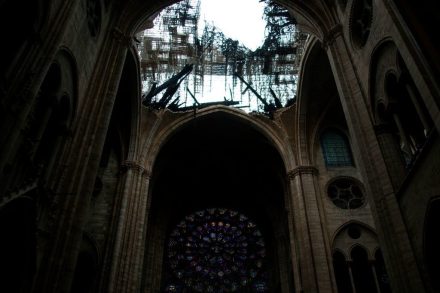
notre-dame restoration

Keep politics out of art

From our UK edition

If you want to lose friends and alienate people in the art world, try telling them you support Britain leaving the EU. As someone on the left, I’ve always argued a left-wing case for leaving. It is, to say the least, an unfashionable position, usually met with anxious looks, sullen silence or overt hostility from one or other artist, curator or art bureaucrat. That the art world should be against Brexit should come as little surprise.

‘Working late at the Bauhaus’

From our UK edition

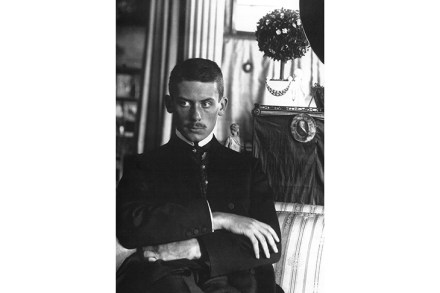
Walter Gropius (1883–1969) had the career that the 20th century inflicted on its architects. A master of the previous generation in the German-speaking lands, Otto Wagner, could create his entire oeuvre without venturing outside the city limits of Vienna. Gropius found himself thrust into one unprecedented role after another, uprooted and exiled repeatedly. His work was carried out wherever he landed — in Germany, England or America. Despite the huge disruptions of history, he displayed extraordinary single-mindedness. From the 1914 Fagus factory onwards, his buildings argued for the modernist position of function over ornament. By the time of his death, in America, the vast majority of practising architects, if not the public, were converted to his position.

Home truths | 21 February 2019

From our UK edition

The creation of a commission to examine beauty in new building created a stir in the media, with the chairman subjected to a hate storm of unusual turbulence even by the standards that he regularly has to endure. Hate storms arise when powerful interests are threatened, and this was no exception. There is hardly a person in this country who is not aware of what Milan Kundera has called the ongoing ‘uglification of our world’ and who does not hope that something might be done about it. No one I talk to denies the need for a large number of new houses. But they all hope that this need can be reconciled with our deep-seated desire for beauty. Kant wrote that in judgments of beauty we are ‘suitors for agreement’.

Maps of the mind

From our UK edition

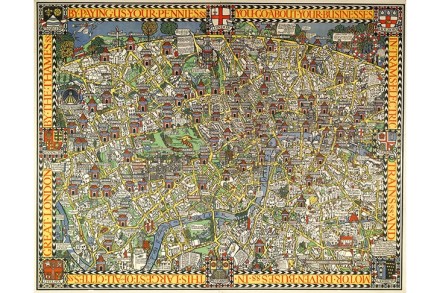
MacDonald ‘Max’ Gill (1884–1947) is less well known than his notorious brother, Eric. But was he less of a designer, less of an artist? The son of a Brighton clergyman, his career was built on a sequence of remarkable connections. The architect Halsey Ricardo, a descendant of the economist, was his tutor. While working for church builders Nicholson and Corlette, Gill very likely met Edwin Lutyens at the Art Workers’ Guild. And for Nashdom, the neo-Georgian house Lutyens built in 1909 for Prince Dolgorouki at Burnham in Buckinghamshire, Gill drew an imaginative ‘Wind Map’. Somewhere between illustration and cartography, this was a pointer of what was soon to come from his pen and brush.

Moderne times

From our UK edition

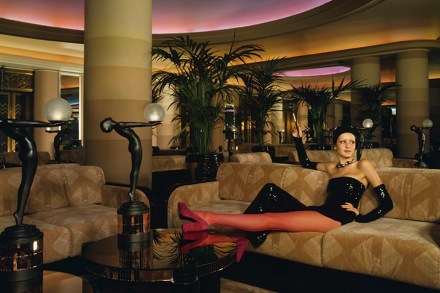
On 10 September 1973 the 1930s Kensington High Street department store formerly known as Derry & Toms reopened as Big Biba. It sold the dress designer Barbara Hulanicki’s distinctive look in furniture, paints and wallpaper, sports equipment and food, as well as her familiar fast fashion. If you had to define that aesthetic then, you’d have said it was campy and kitschy. But above all you’d have said it was deco, an increasingly familiar word for the between-wars moderne style in everything from buildings to jewellery. Derry & Toms itself was a 1933 moderne temple of commerce, slathered in stylised ironwork and bas-reliefs.

The madness of Charles III

From our UK edition

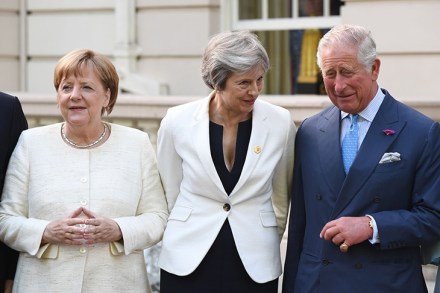
Republicans hate to admit it, but the stability brought by the long reign of that most careful of monarchs Elizabeth II has helped Britain manage the decline from empire to middle-ranking power surprisingly well. As the Treason Act of 1351 is no longer in force, and to ‘compass or imagine’ the death of the sovereign no longer carries the death penalty, I can state the obvious. Her Majesty is 92. She is entering her last days as Brexit threatens the peace in Ireland and the union with Scotland, and divides England and Wales into hostile camps. A vigorous PR campaign is underway to persuade us that now is not the worst possible moment for her zealous and under-educated son to succeed. The Prince promised the BBC that he would stop interfering in politics when he became king.

An ambivalent icon

From our UK edition

Immigrants to the United States in the late 19th century discovered in Upper New York Bay, after a long, uncomfortable trans-Atlantic journey, a real portal and a symbolic one. There was Ellis Island: designer, William A. Boring. Then there was the Statue of Liberty on neighbouring Bedloe’s Island: designer, Frédéric-Auguste Bartholdi. The first was a practical introduction to America, where you got processed; the second a more mystical one, where you got inspired. It’s a good moment to publish an account of the Statue of Liberty, perhaps the world’s most famous sculpture. One reason: in London there’s an evolving debate about what a monument should be, stimulated by the clumsy Holocaust Memorial proposed near Parliament.

Walpole’s world

From our UK edition

We can’t know what Horace Walpole would make of the continuing popularity of serendipity, a word he coined in 1754 to describe the accidental happy discovery of a Renaissance portrait he had long been seeking. In 2001 it became the title of a romantic comedy and this year of a song by a South Korean boy band, which has had 74 million hits on YouTube. But we can imagine that he would be pleased that his lifelong effort to leave his mark on posterity has been so successful. He was born (in 1717) with the proverbial silver spoon in his mouth, the youngest son of the all-powerful Sir Robert Walpole, 1st Earl of Orford and effectively Britain’s first prime minister.

Houses of ill repute

From our UK edition

Architects and politicians have a lot in common. Each seeks to influence the way we live, and on account of that both, generally, are reviled. But architecture is more important than politics. Unless you are an anchorite or a polar bear, it’s unavoidable. And it lasts longer. The best architecture affects our mood. Exaltation, if you are lucky. And the worst influences our behaviour: a riot with burning Renaults, if you live in a French banlieue. But, as a new exhibition at the Wellcome Collection suggests, architecture may also, in one way or another, affect our health. At ground level, this is quite obvious. Damp, foul air, extreme temperatures, bad drains, structural collapse, fire risks, asbestos and socially hostile environments can all, alas, be experienced in buildings.

Living the highly expensive life

From our UK edition

It was Le Corbusier who famously wrote that ‘A house is a machine for living in’ (‘Une maison est une machine à habiter’). But it was a visit to a masterpiece of his great rival among modernist architects — Ludwig Mies van der Rohe — that brought home to me how literally accurate that celebrated aphorism was. His Villa Tugendhat at Brno is one of the great monuments of early modernism. To run smoothly, however, this luxurious dwelling required almost as much machinery as a small ocean-liner. The building has been restored with rigorous scholarship to look exactly as it did when its first owners, Fritz and Grete Tugendhat, moved in 88 years ago.

Putting our House in order

From our UK edition

My earliest memory of a mosque is being with my father in London’s Brick Lane Mosque. He was a member of its management committee and that gave me, an infant, the right to roam freely the four floors — including its vast basement — as I waited for him to finish meetings. I remember seeing Hebrew writing on a plaque on the top floor. There were mezuzahs on doors, respectfully preserved by the Muslim elders. I played with my brother on the second floor amid the dusty ebony pews left over from the mosque’s days as a French Huguenot church. European Judaism, Christianity and Islam were woven into the historical fabric of Brick Lane Mosque. At weekends, I learned how to recite the Quran in Brick Lane.

Academic questions

From our UK edition

What is the Royal Academy? This question set me thinking as I wandered through the crowds that celebrated the opening of the RA’s new, greatly extended building. After all, there is nothing else quite like this institution anywhere else in the world. It was a terrific party: a mêlée of artists, journalists, politicians and media types such as I have not seen since the inauguration of Tate Modern 18 years ago (with the unexpected addition of DJs and high-volume music). The whole gang was there, and rightly so. This is a significant addition to the amenities of London, including, among other things, two new suites of galleries at 6 Burlington Gardens, behind Burlington House.

The greenhouse effect

From our UK edition

The glasshouses at Kew Gardens are so popular that they can be quite unbearably busy at weekends. And why shouldn’t they be? They’re beautiful structures and the plants they shelter are so marvellous that they deserve the attention they get, whether from botany nerds, schoolchildren, or millennials dressed for Instagram and posing for selfies in the steamy leafy heat. But for the past five years, the biggest member of the Kew family has been closed to the public. Hidden under an enormous awning that the botanic gardens boasts could have covered three Boeing 747s (one of those area-the-size-of-Wales facts that mean very little), the Temperate House has been undergoing a lengthy restoration.

The evanescence of everything

From our UK edition

Think of the work of Claude Monet and water lilies come to mind, so do reflections in rippling rivers, and sparkling seas — but not buildings. He was scarcely a topographical artist — an impressionist Canaletto, even if Venice was among his themes. Nonetheless, Monet & Architecture at the National Gallery is an intriguing experience. Before I saw it, the suspicion crossed my mind that this was the solution to a conundrum that must puzzle many galleries. Namely, how to put together another Monet exhibition without it being the same as all the others? An institution such as the National Gallery could not just borrow a lorry-load of Monets and shove them up on the walls — although quite a lot of visitors might be happy enough with that.

The highs and hellish lows of superstructuralism

From our UK edition

Amid the thick of the Crimean war, Florence Nightingale dispatched a plea to the Times deploring the lethal conditions of British military field hospitals. Ten times more soldiers were dying from diseases like cholera and dysentery than from battle wounds. Shocked, the War Office commissioned 49-year-old Isambard Kingdom Brunel to design the world’s first prefabricated hospital. Components were manufactured to Brunel’s specifications in Gloucestershire then rushed to Turkey for erection. He took the commission on 16 February 1855 and fewer than five months later, the new Renkioi Hospital could accept 300 patients (2,200 by March 1856). Infection rates collapsed. Nightingale called it ‘magnificent’. The new architecture of prefab had triumphed.

Rats in the ballroom

From our UK edition

At first blush this looks like one of those run-of-the-mill coffee-table books published just for the Christmas market — expensively produced, replete with beautiful photographs, a text as undemanding as the tinkling notes of a cocktail-bar pianist, and the whole thing massively heavy. It is a beautiful — and heavy — book, with fine photographs by Luke White. But what distinguishes it is the skill and acuity with which James Stourton has written the commentary, making it a serious and engrossing work of history. His text takes the form of an introductory essay on the changing nature of diplomacy over the centuries, a model of elegant concision, followed by the histories of 26 embassies and ambassadorial residences scattered around the globe.

Turkish delights | 30 November 2017

From our UK edition

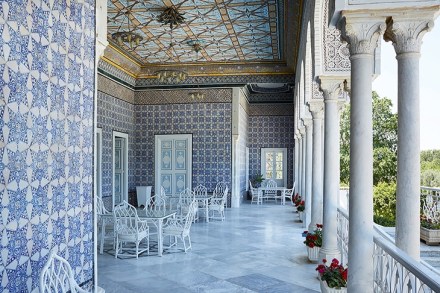
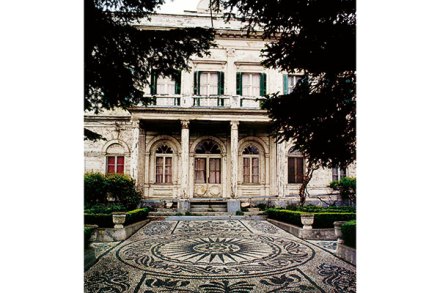
Patricia Daunt’s collection of essays is a fascinating exploration of some of Turkey’s most beautiful and evocative places, from the crumbling grandeur of Count Ignatiev’s Russian embassy summer villa on the upper shores of the Bosphorus to the remote and fog-bound manor houses of the Black Sea. But the Palace Lady’s Summerhouse is much more than a beautifully illustrated book: it’s about the people who lived — and live — in these buildings, and a portrait of the vanishing worlds they represent. We meet the gentlemanly descendants of a dynasty of grand viziers who quizzically watch the maritime traffic of the modern world passing by their ancestral waterside palace.

More secrets and symbols

From our UK edition

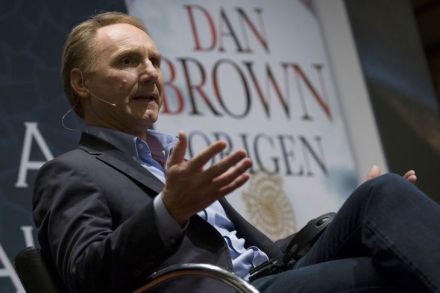
Being reflexively snotty about Dan Brown’s writing is like slagging off Donald Trump’s spelling: it just entrenches everyone’s position. In a world where a quarter of people read literally no books in any given year, can we give each other a break on this kind of thing? If you found Angels and Demons good fun, thoroughly enjoyed The Da Vinci Code (as I unironically did), but despised Inferno for the worthless piece of rat doodah that it was, then the good news is that Brown is back on form here. Origin is brisk, fun and filled with adorably pointless Wikipedia paragraphs; and what’s at stake is endearingly grandiose. Here, the premise is atheism vs religion.

The old ways

From our UK edition

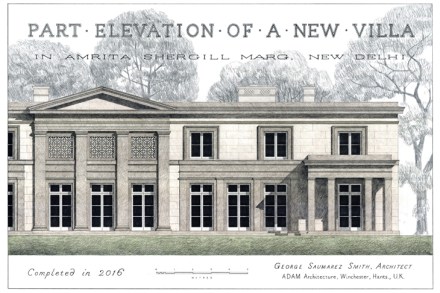
I’m sitting across a café table from a young man with a sheaf of drawings that have an archive look to them but are in fact brand new. His Jacob Rees-Mogg attire — well-cut chalk-stripe suit and immaculate tie — sets him apart from the others in the room, who are mostly architects and architectural fellow travellers like me. We don’t dress like that. But George Saumarez Smith is indeed an architect, a very good one. He just happens to be a trad. A traditionalist, mostly a classicist. And now is very much the time of the architectural trads. They have crept up on us. There’s a revival going on, and I’m very happy about that.