Tristram Hunt

Tristram Hunt is director of the Victoria & Albert Museum.

How Damien Hirst ruined Devon

From our UK edition

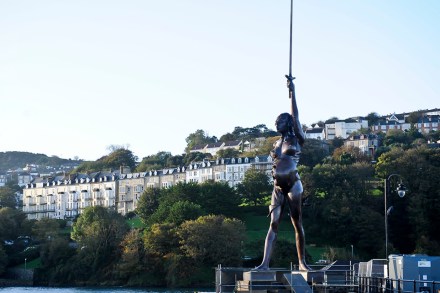
There are few better locations to resist la rentrée than the wilds of Exmoor. The late August heather and gorse. The hidden coves. The bracken and this year’s superb crop of blackberries. Then the rain. So much rain (though of course the reliably incompetent South West Water still has a hosepipe ban in place). The only blot on the landscape remains Damien Hirst’s ill-conceived 65ft statue of ‘Verity’ – a flayed pregnant woman, with her innards on show, standing on a pile of books and holding a sword – which dominates Ilfracombe’s harbour. It exemplifies the worst of public-private art, lacking any meaningful connection to the history or culture of north Devon.
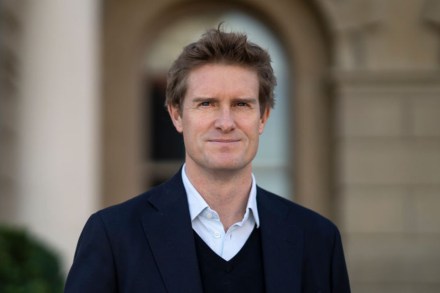
Tristram Hunt: How to repatriate art

From our UK edition

At the start of last year, the Leopard Inn in Burslem, the scene of the celebrated meeting between potter Josiah Wedgwood and engineer James Brindley to agree the navigation of the Trent and Mersey Canal, ‘went on fire’. Close by, the Wedgwood Institute, founded by William Gladstone in 1863 as a design school, and proudly decorated with terracotta panels narrating the art of ceramics, stands empty. And last week, a 10ft-high red-brick bust of Wedgwood, designed by Vincent Woropay for the 1986 Stoke-on-Trent Garden Festival, was knocked down. By using weathered brickwork to sculpt Wedgwood’s coiffured hair and penetrating gaze, Woropay captured both the aesthetic delicacy of his subject and the might of the Industrial Revolution.

At the V&A, we’ve done some Marie Kondo-style reordering

From our UK edition

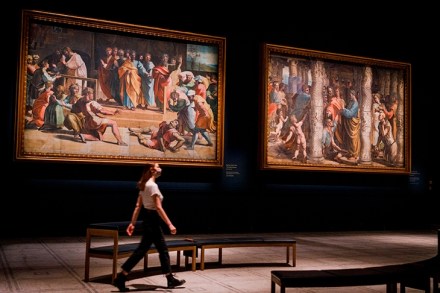
‘We humour them when they suggest absurd reforms, we placate them with small material comforts, but we heave sighs of relief when they go away and leave us to our jobs.’ I am glad to say that the approach adopted by one of my predecessors, Eric Maclagan, to the visiting public is no longer preferred policy at the V&A. Instead, this week we are desperate to welcome the British people back to their collections. For the past five months, South Kensington has felt too much like Miss Havisham’s mansion, with lots of dust sheets, unexplained noises and an overpowering sense of loss.

From Prussia with love

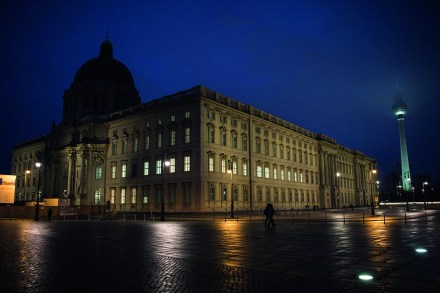
‘What a loss is the excellent Humboldt. You and Berlin will both miss him greatly,’ Prince Albert wrote to his much-beloved daughter Vicky, Crown Princess of Prussia, on news of the death of the author, explorer and celebrity Alexander von Humboldt in 1859. ‘People of this kind do not grow upon every bush [‘an den Blumen’] and they are the grace and glory of a country and a century.’ After some delays and bad luck, the grace and glory of the Humboldt name flourishes once again with the opening of the Humboldt Forum. Annoyingly digital to begin with, the launch in January of the Forum signaled the culmination of Berlin’s Museum Island restoration program and, with it, the crowning of the capital’s place within contemporary European culture.

humboldt

Ignore the activists – Humboldt’s Enlightenment project deserves celebrating

From our UK edition

‘What a loss is the excellent Humboldt. You and Berlin will both miss him greatly,’ Prince Albert wrote to his much-beloved daughter Vicky, Crown Princess of Prussia, on news of the death of the author, explorer and celebrity Alexander von Humboldt in 1859. ‘People of this kind do not grow upon every bush [‘an den Blumen’] and they are the grace and glory of a country and a century.’ After some delays and bad luck, the grace and glory of the Humboldt name flourishes once again with the opening of the Humboldt Forum.

As V&A director, I won’t save Clive of India

From our UK edition

‘Pray for us St Sebastian that we may deserve to pass through this pestilence,’ reads the inscription on a 15th-century reliquary imploring the patron saint of plague victims to assist Augsburg as the city faced another disease outbreak. Today, this exquisite silver offering — set with rock crystal, pearls and sapphires — sits alone in the Medieval and Renaissance Galleries of the V&A, patiently awaiting the return of the British public after our own Covid plague. During lockdown, curators have been selecting objects charting the design response to coronavirus — most notably, the NHS rainbows — which might join our existing collection of 18th-century smallpox mourning rings or 1993 Keith Lewis Aids brooch.

Diary – 7 February 2019

From our UK edition

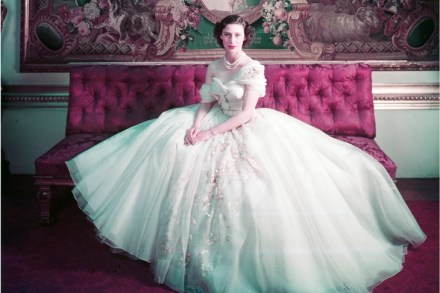
‘There is no other country in the world, besides my own, whose way of life I like so much,’ enthused the great French couturier Christian Dior. ‘I love English traditions, English politeness, English architecture. I even love English cooking.’ And that was in the 1950s. If pre-sales for the V&A’s Christian Dior: Designer of Dreams are any indication, the English seem super keen to return the love. Though I say so myself, this is a stunning exhibition, from the post-war New Look — condemned by Stafford Cripps for its anti-austerity ethos (a rather different Labour party in those days) — to the clean, sculptural chic of Maria Grazia Chiuri.

Diary – 28 March 2018

From our UK edition

On the gently lapping shores of the Persian Gulf, in the steely shadow of the Burj Khalifa, I bump into former chief inspector of schools Sir Michael Wilshaw: I in my dishevelled blue trunks, he in his well-fitted white T-shirt (always strong on uniforms). We are guests of the Varkey Foundation’s global summit on education and skills. Whilst I am there to explain the V&A Museum’s new programme to support design teaching in industrial communities, Sir Michael is still rightly beating the drum for strong leadership and high standards. Aged 72, he remains a model of Carlylian workfulness, mentoring headteachers in Argentina while supporting a multi-academy trust in Derby.

A spectre of Spanish revenge haunts Boris Johnson and the Brexit gang

From our UK edition

I used to long for mid-October when I could say goodbye to the hot rooms, cold buffets, and warm white wine of party conference season. But ever since I swapped politics for the world of museums, I have happily rediscovered those autumnal weeks of blackberries, spider webs and London returning to life after summer. At the V&A, we opened our new opera exhibition, tracing the art form’s development from Monteverdi’s Venice to Shostakovich’s Moscow. At the British Museum, the Scythians have been reviving the art of ancient Siberia. And around the capital, Frieze Art Fair has been drawing the world’s aesthetes to London. What we don’t yet know is how Brexit will affect this cultural leadership.

Diary – 12 October 2017

From our UK edition

I used to long for mid-October when I could say goodbye to the hot rooms, cold buffets, and warm white wine of party conference season. But ever since I swapped politics for the world of museums, I have happily rediscovered those autumnal weeks of blackberries, spider webs and London returning to life after summer. At the V&A, we opened our new opera exhibition, tracing the art form’s development from Monteverdi’s Venice to Shostakovich’s Moscow. At the British Museum, the Scythians have been reviving the art of ancient Siberia. And around the capital, Frieze Art Fair has been drawing the world’s aesthetes to London. What we don’t yet know is how Brexit will affect this cultural leadership.

Diary – 22 September 2016

From our UK edition

'Are you here to seek political asylum?’ asked a clever young student after my lecture at the National University of Singapore. It has certainly not been a great start to the political year: the Boundary Commission abolished my constituency and Jeremy Corbyn’s office declared me a ‘non-person’ by placing me on a list of 13 undesirable MPs deemed to have insulted the Dear Leader. In many ways, Singapore felt a good place to be. Here the role of the Workers’ party is not really to challenge the ruling People’s Action party for power: they play the part of perpetual opposition. Which is eerily close to where Labour is heading.

Theresa May has done a poor job of stealing Labour’s clothes

From our UK edition

‘I don’t think we are a charity.  We are a successful, multi-national educational institution,’ explained the public school head to me. And he was right. As it happens, he was a highly progressive head committed to using the wealth and resource he enjoyed to collaborate with an under-performing local academy.  For the first time, their partner school now had maths graduates teaching physics and a new range of language options.  But he had no doubt that he should not be in receipt of charitable status and tax relief.  Which is why one of the few components of Theresa May’s school reforms I can support is the Prime Minister’s determination to introduce ‘stronger, more demanding public benefit tests for independent schools.

Labour’s England problem

From our UK edition

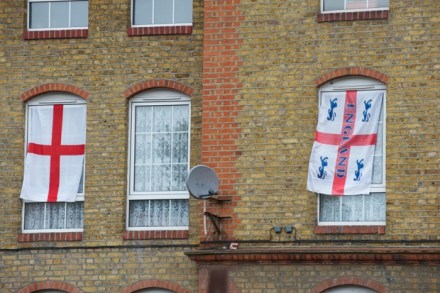
In the window of a council house on a working-class estate in Exeter was a sticker bearing the cross of St George and a simple warning: ‘If this flag offends you, why not consider moving to another country?’ For some canvassers working on Labour MP Ben Bradshaw’s 2015 campaign, such a symbol naturally meant the dreaded ‘A’ on the canvas sheet: ‘Against Labour’. In fact, it was a household of solid Labour voters — supporting a party far too often offended by the flag. The truth is that the Labour party has an English problem. While members might just about embrace Britishness, too many feel queasy about Englishness — with all those connotations of ethnicity and chauvinism.

Diary – 14 January 2016

From our UK edition

Whatever you do, don’t allow your six-year-old to be caught short at Crewkerne station. With the rain pouring and the wind howling, my daughter needed the loo. But it was locked. And no staff anywhere to be seen. So I pressed the ‘Help’ button on one of those machines that have replaced stationmasters. ‘How can I assist you?’ responded a warm South Asian voice. ‘Er, we need someone to open the loo at Crewkerne.’ ‘Where exactly are you?’ she came back, sounding lost. ‘You know, in Dorset, after Yeovil. On the Exeter line. How far away is the help centre?’ I was thinking Bristol, maybe Swindon. ‘Oh, we are in Mumbai,’ she declared.

I’m sure the Queen could cope with a new English national anthem

From our UK edition

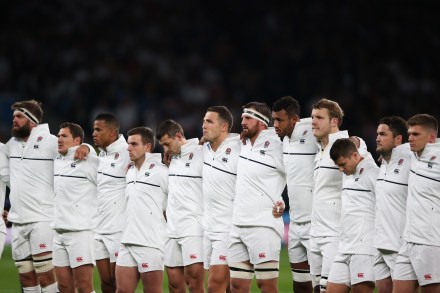
‘Thy choicest gifts in store / On her be pleased to pour.’ The prospect is upon Twickenham and Wembley regulars of the end of that second tricky verse. This week, Labour MPs packed into the Commons Chamber to support Toby Perkins’s English National Anthem Bill, which proposes replacing ‘God Save the Queen’ with an English anthem at English sporting events. Given that Wales has ‘Land of my Fathers’ and North Britain (sic) ‘Flower of Scotland’, then why not, say, Blake and Parry’s ‘Jerusalem’ for the English? The Express and the Mail say we shouldn’t be ‘rude’ to the Queen, but the modern elision of monarchy and nation is a relative novelty.

Welcome to the era of emoji politics, where debate and rationality are suffocated

From our UK edition

I break off the family holiday to campaign for my colleague Liz Kendall in the Labour leadership election. In Ipswich and Colchester, I found party members not so smitten by Corbynmania. In both constituencies, more people voted Tory than Labour: it remains unclear to me why heading further left would appeal to them. At every leadership election since the demise of Tony Blair the party has chosen a more left-wing candidate, and while Neil Kinnock might have ‘got his party back’, the country got a Tory government back. What is also evident is the anger among party members who have spent years delivering leaflets and are being called ‘Tories’ for not supporting Corbyn by people who joined the party weeks ago.

Diary – 3 September 2015

From our UK edition

‘Devon, Devon, Devon/ Where it rains six days out of seven.’ Nothing beats a British seaside holiday. And north Devon is especially blessed when it comes to vibrant weather patterns. We have watched in awe this summer as high-pressure systems from the Continent have collapsed in the face of sturdy Atlantic lows and extreme weather warnings punctuated the news. Our companion in all this has been the Met Office, whose forecasts are dashingly presented by the hunky Tomasz Schafernaker. So it was a shock to see the third-rate bureaucrats running the BBC replace it with some cheap and rather remote New Zealand outfit.

Here’s why we should save the Wedgwood Museum

From our UK edition

A public appeal has been launched to save the Wedgwood Museum pottery collection, which is being sold to pay off the ceramics firm's pension bill. The museum entered administration in 2010 after the firm collapsed and its £134m pension debts were transferred to the museum trust. The Art Fund said it had raised about £13m to buy it, but that a further £2.7m was needed by 30 November in order to save the collection.  Here's why we need to save this museum: We are fairly certain that the late Robert Maxwell never met the even later Josiah Wedgwood, but Cap’n Bob’s nefarious legacy is now being keenly felt by Wedgwood’s descendants.

Caught between Marx and a monster

From our UK edition

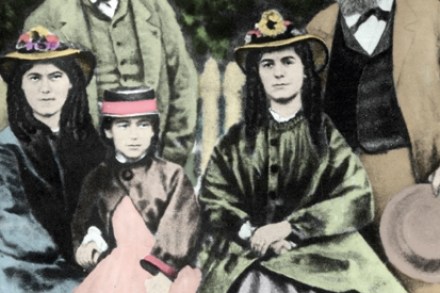
‘Curious to see Mrs Aveling addressing the enormous crowd, curious to see the eyes of the women fixed upon her as she spoke of the miseries of the dockers’ homes, pleasant to see her point her black-gloved finger at the oppression, and pleasant to hear the hearty cheer with which her speech was given.’ So Labour MP Robert Cunninghame Graham described Karl Marx’s youngest daughter, Eleanor, giving a speech to 100,000 demonstrators in Hyde Park at the height of the 1889 dock strike. ‘Brilliant, devoted and beautiful,’ agreed the trade union leader Ben Tillett. ‘During our great strike she worked unceasingly — a vivid and vital personality, with great force of character, courage and ability.

Tristram Hunt’s diary: Why has Gove allowed a school that makes women wear the hijab?

From our UK edition

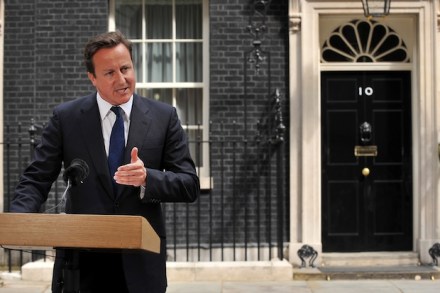
ONE OF THE MINOR sociological treats of being appointed shadow education secretary is a frontbench view of David Cameron’s crimson tide — that half hour journey, every Question Time, during which the Prime Minister’s face turns from beatific calm to unedifying fury. It starts at 12.04 with the merest ripple of annoyance in his shiny, placid countenance. At 12.07, the ripple has become a swell of irritation, still far out to sea, at anyone daring to question the wisdom of government policy. By 12.10, it is a wave of indignation and wounded amour propre at the wilful duplicity of his opponents. And by 12.14, the crimson tide is crashing over the rocks of the dispatch box, back and forth for the next quarter of an hour. Close up, it is a marvel to behold.