Benjamin Riley

Wining and walking in Turin and Genoa

Turin at the end of August is pleasingly melancholic. The city has emptied after the feast of Ferragosto on August 15 and won’t fill up again till September. Solid bourgeois streets, with eighteenth- and nineteenth-century buildings now housing banks, are deserted save for the occasional confused tourist. What brings others to Turin in August I cannot say. For me, it was a wedding in Milan at the end of the week and the prospect of a little vacation ahead of it. Turin was a whim. I was meant to meet a college friend in Genoa on Monday, but my Sunday-night redeye from New York was canceled. Saturday was the only option, and so I was left at a loose end. Options abounded: I could stay overnight in Milan and head to Genoa with my friend the next day.


turin

Scotland by sleeper

Traveling internationally these days is a bit like how Dicky Umfraville, a character in Anthony Powell’s Dance to the Music of Time, describes aging: being punished for a crime one hasn’t committed. After taking my pre-departure COVID test, alerting the British government to my whereabouts for the next week (no small undertaking given I’d be in a different bed every night), and proving all this plus my vaccination status to the British Airways check-in desk at JFK, I finally settled in my seat and supplemented my mandatory mouth-muzzle with an eye mask as though bound for Gitmo, not Heathrow. An hour into the flight, the woman in front of me started bawling: a panic attack brought on by mild turbulence.

scotland

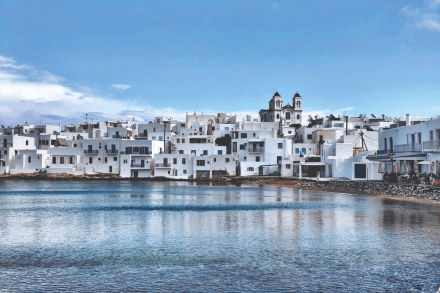
Paying the ferryman in Greece

It was not an auspicious start. Arriving at JFK the specified three hours before my departure to Athens I was met with a check-in line stretching out the door. The man behind me, in traditional dress and with a shocking amount of luggage for a single traveler, kept shouting ‘Senegal!’ Two hours later, check-in for my flight was closing. I was still at least half an hour away from the desk and so I shamelessly cut the line, earning myself a tongue-lashing from a dyspeptic German but also a boarding document one minute before the flight closed.

greece
chippendales

Where did all the Chippendales go?

It all began with the orders. In the preface to his Gentleman and Cabinet-maker’s Director (1754), Thomas Chippendale started with ‘an explanation of the five Orders’ — those foundations of all architecture, the Tuscan, Doric, Ionic, Corinthian, and Composite. ‘Without an acquaintance with this science,’ he continued, ‘the cabinet-maker cannot make the designs of his work intelligible.’ Nearly two hundred years later, Evelyn Waugh said much the same thing. Writing in 1938 in Country Life, Waugh noted that by learning the orders of architecture, ‘you can produce Chippendale Chinese; by studying Chippendale Chinese, you will produce nothing but magazine covers.’.

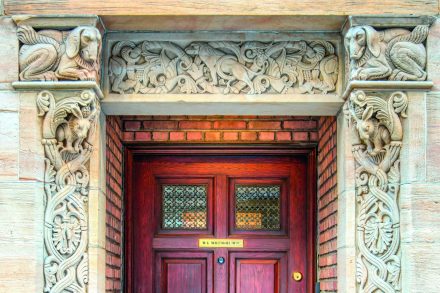
The perception of doors

The architectural historian Andrew Alpern has for decades done the dirty work when it comes to pre-war New York apartments. Others have presented glossy coffee-table books full of newly commissioned professional photographs. Alpern has focused on the practical details of apartment design, especially floor plans, which tell us so much about how people actually live in their apartments, or at least were originally meant to. His Apartments for the Affluent (1975), Historic Manhattan Apartment Houses (1996) and New York Apartment Houses of Rosario Candela and James Carpenter (2002) are essential compendia; anyone with an interest in New York residential architecture, especially of the magnificent variety, must have them. The more industrious uptown real estate agents also find them useful.

doors

Digging for clams on the Jersey Shore

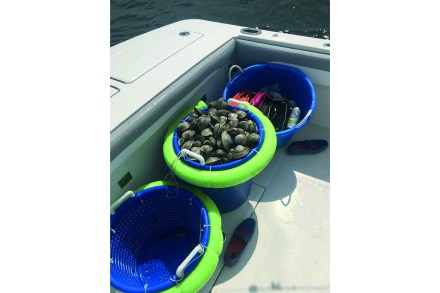
When you find one, you’re sure to find more. No, not roaches. Clams. In shallow, sometimes reedy bay water, you walk like a duck through a mud and sand mixture until you feel something hard underfoot. It could be a rock or it could be a root. But if God wills it, it will be a clam. You dig down, sometimes six inches into the muck. If, at bottom, there appears a hardshell clam (M. mercenaria) — with a white-gray-beige shell striated and sometimes mottled — then chances are there are more about. Many more. This past Fourth of July a team of us set out in three boats from the top of New Jersey’s Barnegat Bay. The first spot proved a bust, yielding fewer than 10 clams among more than a dozen clammers. We upped anchor and spun around to another site.

clams

No smokes without buyer

In late March I left New York, fleeing the mayor more than the virus. Sunlight being the best disinfectant and I having parents to see, I grabbed a tube of disinfecting wipes and flew to Palm Beach, Florida. After seven weeks of sunny inanition, I prepared to leave and return home. Among my objectives was the fulfillment of a request by a New York friend to pick up a carton of cigarettes for him at Florida prices. Though not a smoker, I sympathize with the tax-burdened as a rule. Entering the Palm Beach Publix supermarket, surely the only Publix with valet parking, I made straight for the tobacco counter, having been advised by my nicotine-addict friend that the store was known to carry his off-piste brand, Carlton 100s.

i-95

Epicenes and epicures

The last time I saw Paris, it was the early spring of 2017. A pallor hung over the city, the grands boulevards had lost their charm and downcast Parisians hurried about the streets with uncharacteristic alacrity. The day I arrived, a letter bomb exploded at the IMF’s headquarters on the Avenue d’Iéna, blocks away from where I was sitting on the terrace of a café on the Avenue Kléber. That the bomb turned out to be from Greek anarchists and not the usual Islamist suspects was little comfort; it had already ruined my café express. Two days later, a French-born Muslim took a female soldier hostage at Orly airport. A standoff ensued, with him holding a pistol to her head while her comrades aimed at his. ‘Put down your weapons!

paris

An old master who still feels new

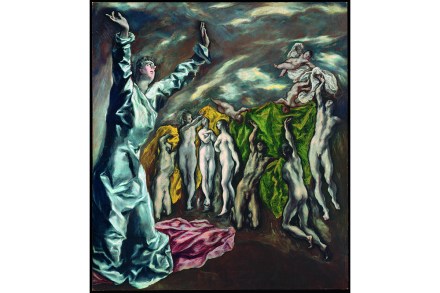
This article is in The Spectator’s March 2020 US edition. Subscribe here. Velázquez prized his work, but El Greco’s reputation fell quickly after his death in 1614. Another Spanish painter, Antonio Palomino (1655-1726), called The Greek ‘contemptible and ridiculous, as much for the disjointed drawing as for the insipid colors’. In the 1800s, ‘The Burial of the Count of Orgaz’, now regarded as one of his masterpieces, lay rolled up in the basement of a Toledo church.

el greco

Cape of many colors

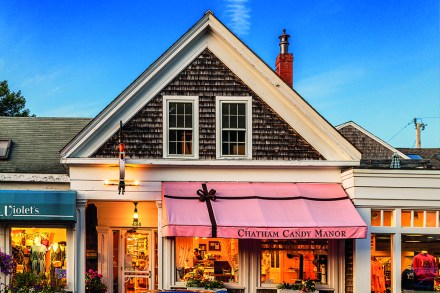
This article is in The Spectator’s February 2020 US edition. Subscribe here. The pretty, preppy town of Chatham, Massachusetts sits more or less at the elbow of Cape Cod, just after the swollen bicep of Hyannis and just before the Cape’s forearm tapers upward to Wellfleet’s freshly disembedded oysters, Truro’s schools of Subaru station wagons and Provincetown’s shallow-swimming shoals of gays. People who’ve never seen the Cape assume that it’s universally charming in an Olde Newe Englande sort of way: shingled houses and lobstermen, homely pubs with whaling paraphernalia on the walls and yellowed photos of Norman Mailer behind the bar. But, like any 340-square-mile place, it’s multifarious.

chatham cape cod

For duck’s sake: New York’s foie gras ban is classic political posturing

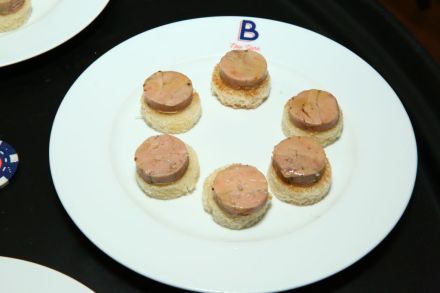
This article is in The Spectator’s December 2019 US edition. Subscribe here. Drown the Yquem and bury the Burgundy! Cover up the caviar! Abscond with the escargot, and for good measure lock away the langoustines! The class war is coming to New York City. On October 30, the city council, taking a break from doing nothing about the homeless and the garbage, passed a law prohibiting the sale of foie gras — fattened duck or goose liver — beginning in 2022. Of the 51 members, 42 voted in favor and 30 signed on as co-sponsors.

duck foie gras

Hog wild in Indiantown

This article is in The Spectator’s inaugural US edition. Subscribe here to get yours. My old college roommate and I were sitting on a 180-pound wild male boar. Neither of us were habitual hoggers. It was our first rodeo. Florida Route 710, the Beeline Highway from Palm Beach to Indiantown, is a two-lane straight shot out of the tropics and into the scrub near Lake Okeechobee. In the Twenties, a Baltimore banker, S. Davies Warfield, built a railroad into central Florida from Palm Beach. Up went Indiantown’s gridded streets and houses, and the Mission Revival-style Seminole Inn, where Warfield’s niece Wallis Simpson stayed both before and after marrying Edward VIII. But Warfield’s plans were scuppered by two hurricanes and the Depression.

hog

The glory that was the Low Countries, the disaster that is the European Union

In 1983, ten European heads of state, signing the Solemn Declaration on European Union, declared a goal of ‘ever closer union’ — something Belgium, in its role as home-nation to the EU, has been abetting ever since, but which the democratic publics of the EU’s constituent nations keep blocking at the ballot box. Since 1954, visitors to the Frick Collection have been attempting an ever closer union with the Flemish master Jan van Eyck’s Virgin and Child, with Saints and Donor (c. 1441–43), but have been blocked by a forbidding console table, which guards and obscures van Eyck’s work in the Boucher ante-room. Europe’s ‘ever closer union’ has been a disaster for democracy.

exeter madonna petrus christus van eyck