Architecture

In praise of the Dome

From our UK edition

London’s City Hall stands empty. The bulbous, Foster + Partners-designed ‘glass testicle’ — in Ken Livingstone’s words — occupies one of the best sites in the capital: Thames-side, squaring off to the Tower of London, and overlooking Tower Bridge. But in December, its occupiers — the Mayor, the London Assembly and the Greater London Authority — deserted their glitzy £43 million headquarters for a cheaper building more than five miles east at the Royal Docks in Newham. It took them less than 20 years to outgrow their purpose-built home. According to the architectural commentator John Grindrod, City Hall is a giant glass-and-steel metaphor.

Abstract and concrete: the beauty of brutalism

From our UK edition

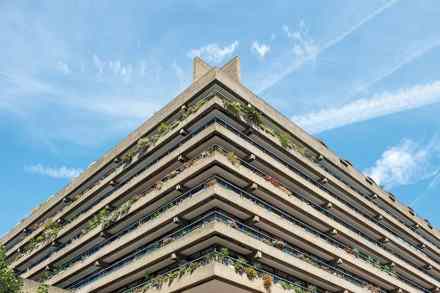
Nothing divides the British like modernist architecture. Traditionalists are suspicious of its utopian ambitions and dismiss it as ugly; proponents romanticise it, yearn for the civic principles that built it and gloss over its failings; the young see period charm in flat roofs and straight lines, while the old associate them with deprivation; the wealthy mostly avoid it — and many people have no choice but to live in it. Nearly 100 years after Le Corbusier set out his five points of modern architecture the British are still arguing about its merits, partly because we still live with so much of it: housing, offices and civic and industrial buildings. Two new books may change our perspective — or at least convince us that neither side is entirely right.

The Georgians feel closer to us now than the Victorians

From our UK edition

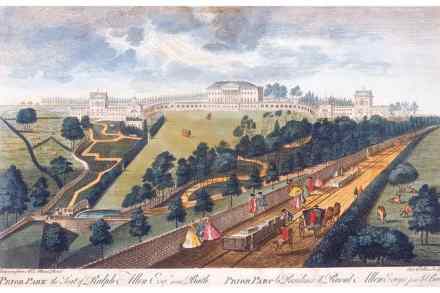
‘The two most fascinating subjects in the universe are sex and the 18th century,’ declared the novelist Brigid Brophy when the ban on Fanny Hill was lifted in 1963. Penelope Corfield’s big, handsome, enjoyable book goes a good way to illustrating Brophy’s assertion. Part source book, part interpretive history of the long 18th century (1688-1837), it is also a guide and gazetteer to the continuing presence of Georgian England in our towns and minds. The world before 1688 is largely unfamiliar to us. The 18th century, however, with its lovable rogues, its introduction of constitutional monarchy, its rights of man and its sexual libertines, is akin to ours.

A keepsake – and to-do list – of Europe’s greatest cathedrals

From our UK edition

In his new book on Europe’s cathedrals, Simon Jenkins begins with the claim that the greatest among them are our most important European works of art. Greater than the paintings of El Greco or Berthe Morisot? More momentous than the buildings of Mies van der Rohe or Norman Foster? More important than the organ music of J.S. Bach or the Duruflé Requiem? Still, I see his point.

Prague by design

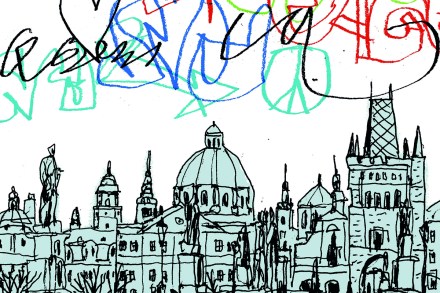
Prague has a graffiti problem. This becomes apparent as the train pulls towards the nineteenth-century Masarykovo Nadrazi station, through the old industrial east of the city. Huge derelict warehouses, some from the communist era, others much older, are covered top to bottom in scrawls and daubs amidst collapsed roofs and glassless windows. It’s unlikely to stay this way for long, though; Prague’s answer to gentrification is swiftly transforming previously rundown areas of the city, making it worth a venture off the beaten track. For all the genteel architecture at its heart, the graffiti is a sign of a city unafraid to show discontent. Trapped behind the Iron Curtain for so long, progress was, for decades, conducted at the whim of communist governments.

prague

It’s a wonder any of our great country houses survived the 20th century

From our UK edition

One of Adrian Tinniswood’s recent books, The Long Weekend, is a portrait of country house life in the interwar years. Hedonistic, carefree, fuelled by an army of servants, such an existence now seems a distant dream. In this companion volume he takes the story further, looking at what happened to the country house after 1945. (By country house, he does not mean ‘The Old Rectory’ or ‘The Elms’ but something that tends to end in ‘Hall’, ‘Park’, ‘Court’ or ‘Castle’). Immediately after the war, the outlook for these splendid buildings was bleak.

Scotland by sleeper

Traveling internationally these days is a bit like how Dicky Umfraville, a character in Anthony Powell’s Dance to the Music of Time, describes aging: being punished for a crime one hasn’t committed. After taking my pre-departure COVID test, alerting the British government to my whereabouts for the next week (no small undertaking given I’d be in a different bed every night), and proving all this plus my vaccination status to the British Airways check-in desk at JFK, I finally settled in my seat and supplemented my mandatory mouth-muzzle with an eye mask as though bound for Gitmo, not Heathrow. An hour into the flight, the woman in front of me started bawling: a panic attack brought on by mild turbulence.

scotland

The Sunday Feature is one of the most consistently interesting things on Radio 3

From our UK edition

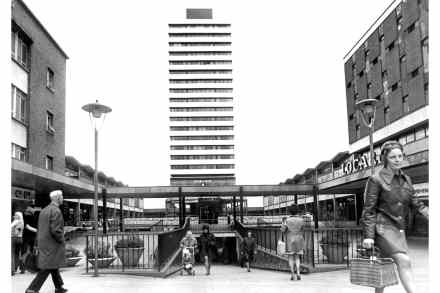
The story is likely apocryphal — and so disgraceful I almost hesitate to tell it — but it goes like this. On the night of 14 November 1940, as more than 500 Luftwaffe rained bombs on the people of Coventry, the newly appointed city architect Donald Gibson was watching the fires. Gibson had been appointed to the newly created position of ‘city architect’ three years earlier by the radical Labour council that had come to power in a local election. His job was to modernise what was then Britain’s best-preserved medieval city, and build the ideals of social justice and equality into the city’s brick and mortar.

Absurd and amusing, solemn and scholarly: Charles Jencks’s Cosmic House reviewed

From our UK edition

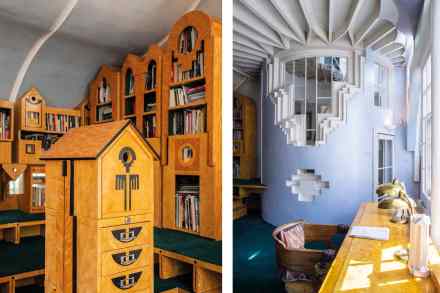
An editor once told me: always look at the loos. It was remarkable, she said, how many grand cultural projets, having spent a fortune on the atrium, the concert hall, the galleries, spent pennies on the bogs. The smallest rooms at Charles Jencks’s Cosmic House are among the loveliest loos in London with windows on to the garden and a ‘Jencksiana’ mirror over the sink. This was the Baltimore-born writer, critic and landscape designer’s take on the ‘Serliana’ window devised by the mannerist architect Sebastiano Serlio and it recurs throughout this mad and marvellous post-modern house. Jencks died in 2019 leaving his house on Lansdowne Walk in Holland Park as a stucco memorial. From the pavement, there isn’t much to distinguish No.

Why I will miss our mighty cooling towers – and I suspect I am not alone

From our UK edition

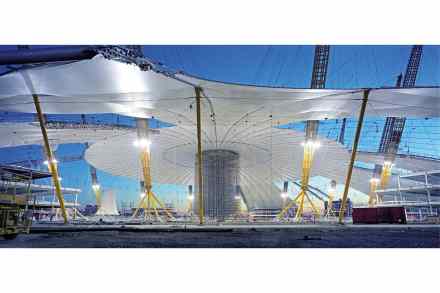
One afternoon earlier this summer we drove through Rugeley in Staffordshire. There, looming above the A51, were the cooling towers of the power station: a pinkish red, resembling terracotta, with curving convex sides, like modernist vases on a pharaonic scale. At 385 feet high, they were a little taller than the dome of St Paul’s Cathedral. We remarked on how surprisingly good they looked as we passed them on 4 June, en route to a spot in the Staffordshire countryside where we were going to stay. On 6 June there was a distant rumble like thunder but we thought little of it. However, that evening when we glanced at the horizon there was a gap where the towers had been.

The National Trust has lost the language of architecture

From our UK edition

Press officers, breathe easy. This is not another column attacking the National Trust. Actually, I tell a lie. It is. But my complaint isn’t bullying or slavery or LGBTQ+ery or even chocolate Easter eggery. It is more single and specific: the National Trust does not speak architecture. Or if it does, it’s keeping shtum. Since the great May reopening, I’ve dragged my husband around half a dozen National Trust properties, landscapes and gardens (he hardly ever protests, always pays for tea). We’ve done Stourhead, Oxburgh, Ickworth, Lacock, Cobham Woods and Disraeli’s Hughenden Manor. In the gap between lockdowns last year, we did Sissinghurst and Knole. I cannot fault the car parks, the rhododendrons or the second-hand bookshop in the Oxburgh potting shed.

Cuomo by design

'Please. I beg you. It’s not worth seeing. Avert your eyes. It’s all laptop screensaver crack smoke. Just please don’t make me write about Hunter Biden’s artworks.' Such were this critic’s fevered thoughts as the news of New York governor Andrew Cuomo’s resignation came across the Twitter-tape. And so we turn to another artist manqué. This time, he is a builder, a builder of works on the order of the Romans of the 1930s. And now, these works will remain unappreciated (such is the fate of true artists). So, let’s appreciate. 'Excelsior', this governor scrawled across the edifices and tunnels and apps of his numinous creation. 'Ever Upward', he helpfully provided just beside it in translation. 'It’s Latin!

design Andrew Cuomo (Getty Images)

Hugely pleasurable – a vision of summer: Jennifer Packer at the Serpentine Gallery reviewed

From our UK edition

We need to talk about Eric. In Jennifer Packer’s portrait of her friend and fellow artist, Eric N. Mack sits on a yellow chair that might have been borrowed from Van Gogh’s bedroom. He’s wearing excellent odd socks, one pink to rhyme with his shoes, the other yellow matching his trousers and chair. But it’s Eric’s face that’s most compelling. Like the ‘Mona Lisa’, Eric’s expression is inscrutable. He might be thinking about what’s for tea, the crisis in pictorial representation or, quite likely, nodding off. This enigmatic quality is intentional. ‘When I painted Eric, I wanted accuracy, but I also wanted to privilege his subjectivity and privacy,’ says Packer.

The disgraceful decision to remove Liverpool’s heritage status

From our UK edition

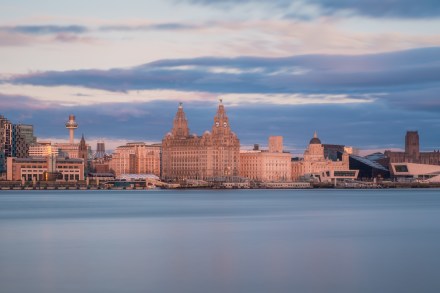
Unesco has cancelled the ‘World Heritage Status’ of the Necropolis at Memphis and the Giza Pyramid because a Radisson Blu hotel has been built in neighbouring Cairo. That’s not true, but for a similarly absurd reason Liverpool has been de-listed from heritage Valhalla by word-mincing bureaucrats. Not many Liverpudlians will care about this imbecilic and ignorant decision – Liverpool is the capital of itself and does not look to London, still less to Paris or Brussels. The tragedy here is not Merseyside’s status, but Unesco’s blindness. In recent years, Liverpool has demonstrated exactly the mixture of respect for the past and optimism for the future that all great cities need.

Letters: We can’t build our way out of the housing crisis

From our UK edition

Excess demand Sir: Liam Halligan (‘The house mafia’, 26 June) treats us to an exposé of the shoddy products of the mass housebuilders. In the course of his article, however, he accepts as given that the solution to the housing crisis is to build more houses. The problem, however, is not one of deficient supply; it is a problem of excess demand, driven by ultra-low interest rates, kept so low for so long that the result has been an out-of-control housing boom. The young are being prevented from buying a house, not because housebuilders hoard land and refuse to build, but because buyers with access to eye-watering amounts of borrowed money have forced prices so high that they are now out of reach of most.

Why is modern architecture so ugly?

From our UK edition

In Chesham and Amersham last week, Tory voters punished the government, not only for building on greenfield sites, but for allowing the construction of too many ugly, badly designed buildings. The British public are fed up with modern architecture. Despite polls that prove this time and time again, architects simply ignore people’s views. Indeed, if the public has the temerity to criticise their latest works, there is uproar — as I have discovered to my cost. At a dinner in late 2019, I asked Norman Foster, the ‘starchitect’ of such things as London’s widely derided City Hall and the Berlin Reichstag, if he was pleased by the government’s new Building Better, Building Beautiful Commission.

Bricks and pieces: the blight of London’s fake facades

From our UK edition

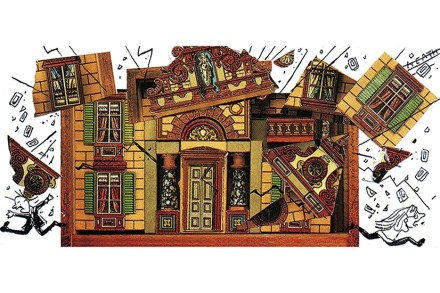
‘I found Rome a city of bricks and left it a city of marble.’ So Augustus is supposed to have said. What would an emperor of London say today? ‘I found the capital a city of bricks and left her a city of rubble’? London bricks are falling down. Across the capital, brick facades are coming off in chunks. Like the Cadbury chocolate Flake, this is the crumbliest, flakiest brickwork. I was all for the new brick city. I’m a brickwork bore. Away with glass, away with steel! Build back better, build back brick. When I saw brick buildings going up in new developments I cheered. I will bang on to anyone who will listen (most don’t) about fitness of materials, our vernacular heritage and the handsome nobility of London stock brick.

The magnificent fiasco of Mies van der Rohe’s Farnsworth House

From our UK edition

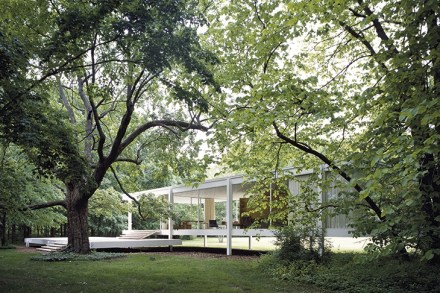
John Ruskin believed the most beautiful things are also the most useless, citing lilies and peacocks. Had he known about the Farnsworth House in Plano, Illinois, a rural community 50 miles west of Chicago, he might have suggested it too. Except this modernist building of 1951 is an evolved expression of the emerging industrial culture Ruskin so despised. But it is several other things too, notably an example of fraught transactions between architect and client. The Farnsworth test case became a trial whose transcript ran to 3,800 pages. Of all relationships, except that between a firing squad and its target, the architect-client example is the one most predictably headed for calamity.

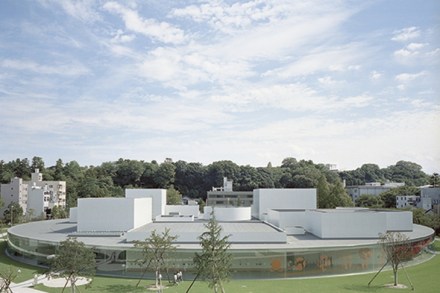
From temple to labyrinth — the art museum today

From our UK edition

At a certain point, the critic Robert Hughes once noted, at the heart of American cities churches began to be replaced by museums. Much the same occurred elsewhere in the world in the later 20th and early 21st centuries. Museums have sprouted from the earth in many diverse forms and numerous places. Enormous sums have been lavished on them. Vast processions of visitors file through their doors like medieval pilgrims — or at least they did before the pandemic struck. Once, there was widespread agreement as to what should go inside these temples of the arts: old master paintings, ancient carvings, the best and noblest artefacts humanity has produced. This consensus, however, has evaporated.

Time for Tudorbethan

You’ll find them all over the boroughs of New York City. Multiple-dwelling buildings, usually large apartment blocks, slapped with a faux-Tudor façade defined by fake gables hiding a flat roof. They aren’t particularly attractive buildings. Even 100 years after most were built, they come off as self-conscious, a bit tacky, imparting to the viewer a dreaded feeling of secret working-class shame — a befuddling reproduction of a reproduction. They say New Yorkers never look up. But even during short journeys through Queens or parts of Brooklyn, New Yorkers are bound to have noticed examples, even if they don’t give it much thought.

tudorbethan