Architecture

Letters: Burnham is a master brand-builder

From our UK edition

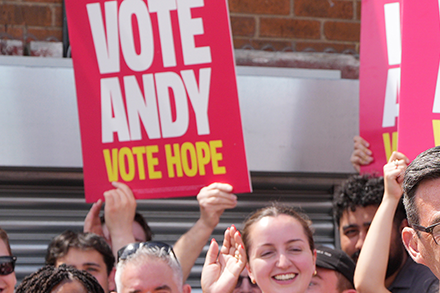
Telling stories Sir: As a filmmaker by training and a marketer by profession, I couldn’t agree more with your leading article (‘Northern soul’, 27 June) on the absence of narrative in our politics. The appeal of figures such as Burnham and Nigel Farage lies in the storyworld they build around themselves – be it via pints shared down the pub, off-the-cuff honesty, or a Monty Python line landing in the Commons. But the PM who stays the course, as any brand-builder learns the hard way, must know two things: their own story, well enough to tell it plainly; and the people they speak to, well enough for them to make it their own. Aim a dull narrative at everyone and you reach no one; tell a story worth sharing and both left and right will see themselves in it.

Are good people made by good surroundings, or the other way round?

From our UK edition

How can Britain cut its spiralling benefits budget and the number of alienated youths spending taxpayer-generated monies on frivolous consumer goods, facing off against the police and making life unpleasant for those of us not involved in creating poverty porn documentaries? Traditional answers – such as colonising Africa or declaring war on, let’s say, Russia – are off the table. Drones, AI and our defence budget mean that there is no prospect of a Crimean War II, led by the kind of martial Britons who so frightened the Duke of Wellington on the Peninsular campaign. What then? Britain’s current problem is one that the heroes of Joad Raymond Wren’s scintillating book never had: a complete want of thinking outside the box.

The uprising against ugly cities

From our UK edition

Arriving in Oslo, the Barcode District is unavoidable. It is so named because its blocks are laid out like dominos – each design a tawdry, throwaway joke. But the Norwegians have had enough. With a spate of such controversies, Oslo has become an epicentre for an architectural uprising against the uglification of cities. Its Nordic Symposium on Beauty in Architecture has become an annual meeting point for plotting the insurgency. Unlike on this side of the North Sea, where traditional and classical architecture found a champion in the King, Scandinavia’s counterrevolution is led by ordinary citizens.

The mostly untold story of the brutalist Obama Presidential Center

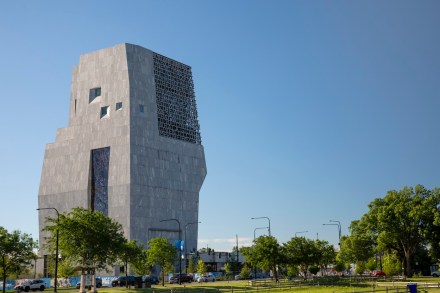
A dozen years in the making, the $1 billion Obama Presidential Center had its public unveiling in Chicago today. It became the sought-after ticket for liberal politicians and celebrities who want to ignore the presence of Orange Man Bad in the White House. Indeed, Donald Trump wasn’t even invited, no doubt much to the relief of former presidents George W. Bush, Bill Clinton and Joe Biden who all showed up. The performers included Bruce Springsteen, Bono and Jennifer Hudson. They were celebrating a most unusual building, and one the mainstream media has shown remarkably little interest in looking into. Its brutalist near-windowless features have been compared to a 225 foot World War Two flak tower. Britain’s Guardian even noted it was “like a Klingon prison.

The real ‘Thucydides Trap’ Beijing and Washington must avoid

These are good times to be a scholar of the classical world. Last summer, Donald Trump issued an order that all federal architecture needed to be “beautiful,” noting that the Founding Fathers “wanted America’s public buildings to inspire the American people and encourage civic virtue.” George Washington and Thomas Jefferson had therefore “consciously modeled the most important buildings in Washington, DC, on the classical architecture of ancient Athens and Rome.” It was time to go back to these principles, said Trump. From now on “classical architecture shall be the preferred and default architecture for Federal public buildings” in the District of Columbia.

How the office has come to haunt us

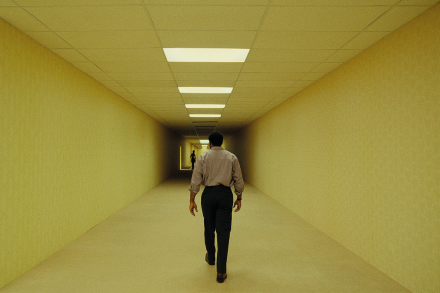
Should we hop on a call? Let’s touch base. Let’s take this offline. Let’s circle back to your last slide deck. Let’s get those action items actioned by close of play. We need stakeholder buy-in. We need deliverables. We need to make sure you’re aligned with company culture. We’re concerned you’re not leveraging your core competencies. After careful consideration, management has made the difficult decision to terminate your contract. We’re committed to helping you with this transition. Corporate jargon is zombified language. These euphemisms and elisions are the soulless husks of words, meant to blunt the sharp edges of human emotion (sorry – ‘maintain professionalism’). And they often leave you feeling a sneaking sense of dread.

Get ready for the ugliest building in the City of London

From our UK edition

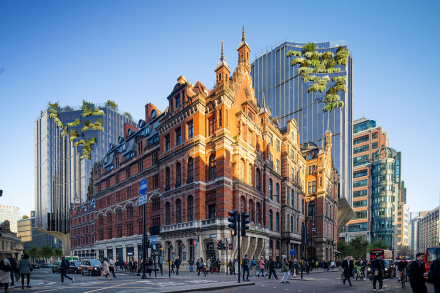
The City of London is not noted for its beauty. Most great European cities expect their historic streets to retain visual integrity, their modern buildings to show some respect for their old. London’s planners, such as they are, have little use for such concepts. A few ancient churches cling to life in the footings of skyscrapers. The odd pub slinks nervously down a back alley. Anyone seeking historic London should look elsewhere. Meanwhile, competition for the ugliest City building is intense, but an outright winner is in the offing. Permission has just been given for a true monster to sit over Liverpool Street Station. The speculative development, backed by Network Rail, is for a 19-storey L-shaped cliff to tower over the Great Eastern hotel on Bishopsgate.

The dirty secrets of the Royal Festival Hall

From our UK edition

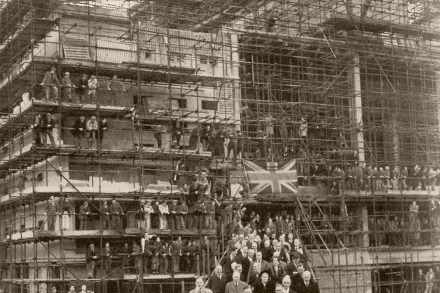
The Festival of Britain – that much mythologised moment of national renewal – is wheeled out every time the country goes through an identity crisis. An echo of the Great Exhibition, the 1951 South Bank extravaganza was spoofed by Tony Blair in his millennium plans and Theresa May in her entirely forgotten ‘Festival of Brexit’. With the country currently in a bit of a state, the Festival’s 75th anniversary this month comes at a fitting moment. Several lessons can be learnt by looking closer at the only part of the Festival to survive: the Royal Festival Hall.

In praise of Trump’s architecture

I was in Budapest last month, where the city’s castle is now being rebuilt in its old neo-Baroque style. The plan is to create a near-exact replica of the complex as it stood before the city’s siege in 1945, when it was reduced to rubble during the fighting. So much of the original was destroyed that whole wings – like the palace of the Archduke Joseph – will have to be rebuilt from scratch.  The new complex has been accused of being a sort of Disneyland. This isn’t helped by the fact that many of its structures are made largely out of concrete, with the baroque facades added later as an outer shell. Yet there is a deeper reason. The project is much too self-conscious.

Trump ballroom library

The man who rescued the Notre-Dame

From our UK edition

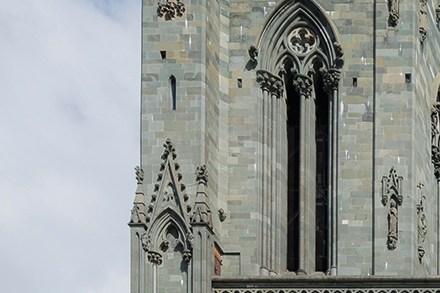
The Notre-Dame de Paris has had several close shaves down the years – even before the 2019 fire that nearly obliterated it. The revolutionaries temporarily turned it into a ‘Temple of Reason’, then a grain warehouse; some of it was even sold for scrap. It only became the recognisable Gothic fantasy and French national icon that we know today largely down to the efforts of architect Eugène-Emmanuel Viollet-le-Duc, who headed its definitive restoration from 1844 to 1864. Following the cathedral’s 2024 rebirth, Bard Graduate Center is now hosting the most comprehensive exhibition in the Anglosphere of the architect’s work. Viollet-le-Duc kept superhuman working hours: 6 a.m. to midnight.

Why Hitler’s suave architect escaped the noose at Nuremberg

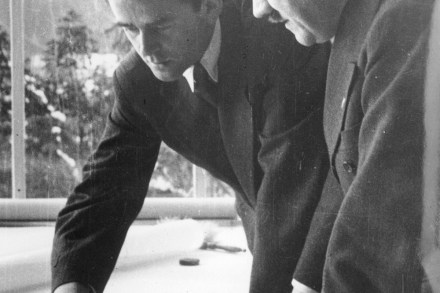
At the Nuremberg trial of the main Nazi war criminals, one man stood out: Hitler’s favourite architect and later armaments minister, Albert Speer. He cut a gentlemanly figure in a gallery of rogues. The strutting, smirking Hermann Goering reminded Rebecca West, who attended the trial, of ‘a tout in a Paris café offering some tourists a chance to see a black mass’. Julius Streicher, the Jew-baiting brute, was like ‘a dirty old man of the sort who gives trouble in parks’. On the same bench, all declaring their innocence in the face of overwhelming evidence of monstrous crimes, were the lantern-jawed SS leader Ernst Kaltenbrünner, the sour-faced ex-champagne salesman Joachim von Ribbentrop, Fritz Sauckel, the thuggish slave labour chief, and the rest of the sorry gang.

The genius of John Vanbrugh

From our UK edition

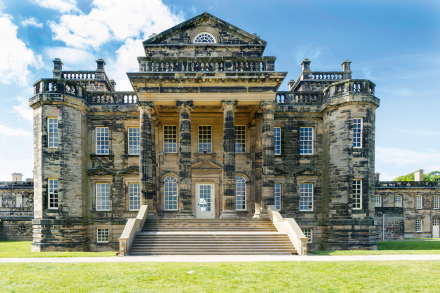
Van’s genius, without Thought or Lecture,Is hugely turn’d to Architecture. Jonathan Swift’s dismissive jest has never been forgotten. It may not be as vituperative as ‘A Beautiful Young Nymph Going to Bed’ but it is there ready for duty whenever the skirmish between the principals’ proxies is resumed in all its petty self-importance. It’s England, so social class looms. While Vanbrugh strode with ease among kings and bitchy duchesses, heavily made-up Foppingtons and grand cru horizontales, the resentful Hawksmoor – his collaborator – lurked in the shadows meekly giving great forelock and not receiving the commissions he deserved.

Beautiful interiors can’t guarantee a beautiful marriage

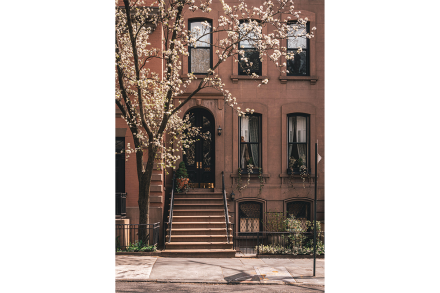
I remember poring over the photos when they first appeared in Architectural Digest in early 2023. Even back then, before Lily Allen wrote what Rolling Stone called “the most brutal album of the year,” I knew in my gut that her marriage to that actor guy she met on Raya – whatshisface? David Strangerbeard? – wouldn’t last. Because looking at the pictures of their house made me feel queasy. There was something off about it. It just wasn’t right. It didn’t bode well. It’s not that the house wasn’t gorgeous. It was – and still is – spectacular. A double-width brownstone in the slouchiest artisanal urban village on Earth: Carroll Gardens, Brooklyn.

Labour’s war on heritage

From our UK edition

Britain’s heritage is slowly going up in smoke. Medlock Mill was Manchester’s oldest standing textile mill until it burnt down in June. It joins Grade I-listed Woolton Hall – destroyed by a catastrophic fire in August. But it’s not just the buildings that are under threat, but the entire system designed to protect them. Prior to the disaster, the architect Stephen Hodder had proposed gutting the mill and converting it into a 37-storey block of student flats. A coalition of concerned citizens and conservation charities fought for a stay of execution by applying for the mill to be listed. After reviewing new archaeological evidence, Historic England concurred and recommended it for Grade II.

Unesco are idiots

From our UK edition

Of all the moronic decisions made by cultural organisations over the past 50 years, probably the most insulting and retrograde is the decision, in 2021, by Unesco to strip Liverpool of its world heritage status. Unesco said the development of the docks amounted to an ‘irreversible loss’. The regeneration of the waterfront, including the building of Everton’s new £500 million stadium, was blamed for destroying Liverpool’s ‘outstanding universal value’.  I walked up Liverpool’s Regent Road for half an hour to see for myself. Doing so took me through one of the most derelict wards in the country, the old docklands. I didn’t pass another human being for a good 20 minutes, only cars screaming. There was some majesty in the buildings. The Tobacco Warehouse is beautiful.

The Romans would have known that AI can’t replace architects

From our UK edition

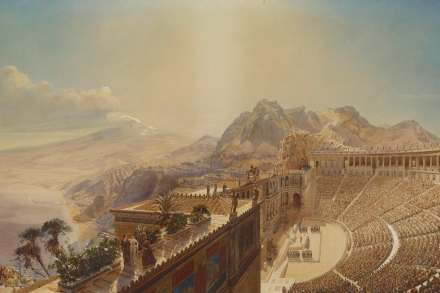
Architects are thrilled about AI, confident that it will take us into an exciting new world at the flick of a switch. The Roman architect Vitruvius begins his ten-book De architectura (c. 25 bc) by describing an architect’s education. Craftsmanship – continuous and familiar practice – must go hand in hand with theoretical skill and method. He must be a man of letters so that he can draw on precedents; proficient in drawing and geometry; and a master of rule and compass. Optics will teach him how to use the sun to best effect in lighting rooms. He must also be good at arithmetic to cost his buildings. He must be a historian, to explain why columns and ornaments look as they do, and a philosopher, high-minded, urbane, cherishing a good reputation.

The triumph of classical architecture

From our UK edition

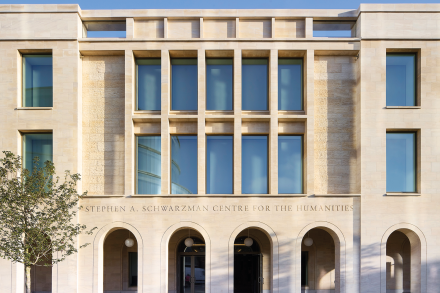
It is very hard to imagine the University of Oxford ever constructing a modernist building again. This is the significance of the new Schwarzman Centre for the Humanities. In its sheer scale, in its prominence both within the city centre and within the university – the first multi-department, purpose-built structure to open in its history – it is the most important building to be erected in Oxford in half a century and an endstop to an architectural era. One can imagine that its use of a restrained classicism won’t just influence the architectural aesthetics of Oxford but also of other universities within historical cities, both in the UK and internationally. Its impact is all the more profound given its radical – in Oxford terms – proposition.

An unheroic hero: Ginster, by Siegfried Kracauer, reviewed

From our UK edition

Siegfried Kracauer (1889-1966) made his name as a film theorist. His critical writings have long been available in English, and now his fiction is finally getting its due. The first of his two novels – published in Germany in 1928, five years before Kracauer fled the rise of Nazism – uses as its title his journalistic pseudonym. The protagonist inherits other autobiographical details, too, starting from the opening sentence: ‘When the war broke out, Ginster, a young man of 25, found himself in the provincial capital of M.’ Germany’s descent into the Great War is sketched in vividly cubist images. One character ‘consisted of three spheres stacked on top of one another to form the outline of a bowling pin’; another’s ‘figure possessed the amiability of a rectangle’.

Centuries of cross-currents between Christianity and Islam

From our UK edition

Among the many colourful and captivating characters who people Elizabeth Drayson’s authoritative, fascinating account of 1,300 years of shared Islamic and European history is Abbas ibn Firnas, born around 810 in what is now southern Spain but was then the Muslim-ruled emirate of Cordoba. An innovative scientist who is remembered as the father of aeronautics and optics, he attempted an Icarus-like experiment in early flight which did not go well. Luckily, he survived to conduct important work on corrective reading glasses. The there is Adelard of Bath, born around 270 years later in the south-west English city. Also a scientist, he made long journeys throughout the Middle East and the eastern Mediterranean in an effort to learn from Arab scholars.