The Festival of Britain – that much mythologised moment of national renewal – is wheeled out every time the country goes through an identity crisis. An echo of the Great Exhibition, the 1951 South Bank extravaganza was spoofed by Tony Blair in his millennium plans and Theresa May in her entirely forgotten ‘Festival of Brexit’. With the country currently in a bit of a state, the Festival’s 75th anniversary this month comes at a fitting moment.
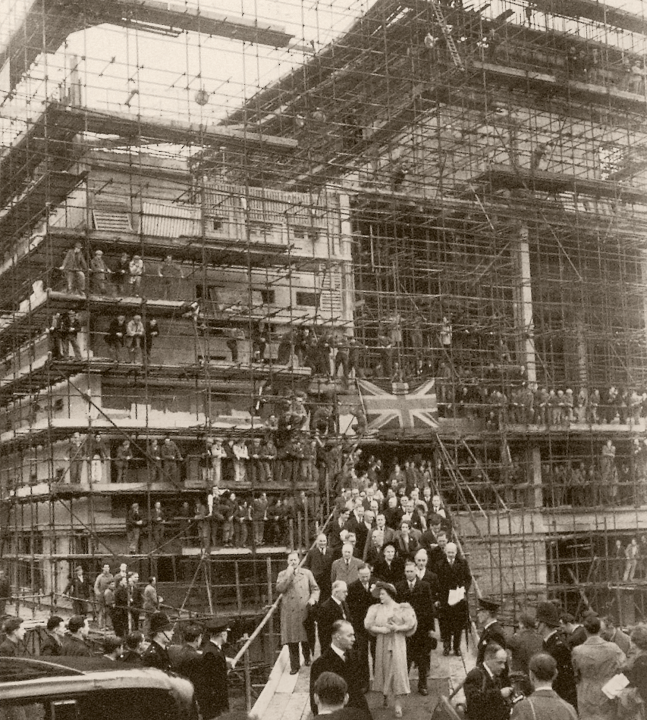
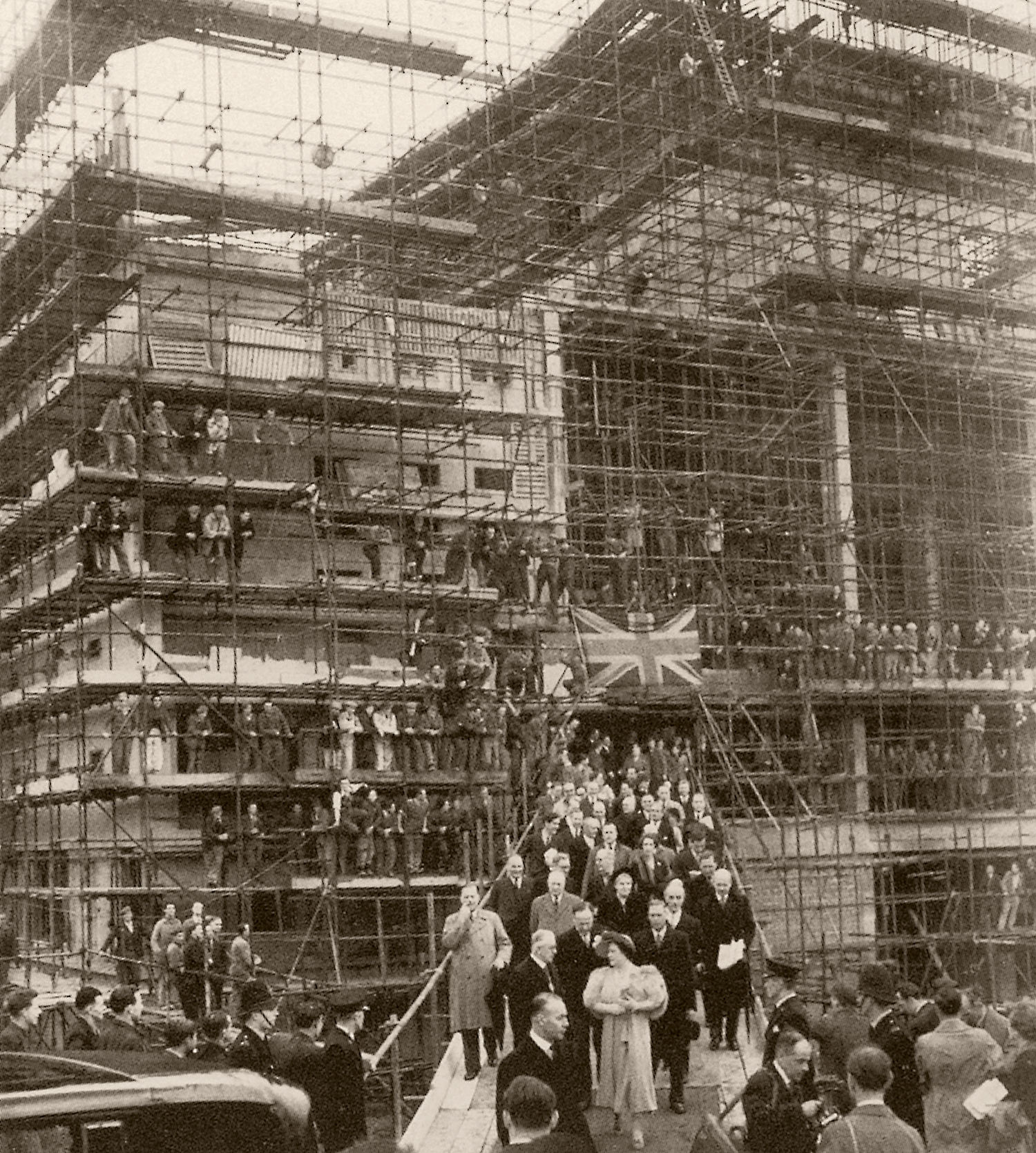
Several lessons can be learnt by looking closer at the only part of the Festival to survive: the Royal Festival Hall. Designed to be the Festival’s permanent concert venue, the building’s nostalgic mid-century stylings – sweeping lines and Net-&-Ball patterned carpets – smoothed over the arguments that were raging behind the scenes.
Michael Frayn infamously caricatured the culture war that was fought over the Festival as a battle between the herbivores and carnivores, a familiar divide between ‘the radical middle-classes, the do-gooders; the readers of… the Guardian, and the Observer’ and ‘the readers of the Daily Express; the Evelyn Waughs’. The Festival was the herbivores’ victory lap. After the gloom of war, it offered a feelgood story powered by Attlee’s vision of Britain: a new welfare state, nationalised industries, modern technology.
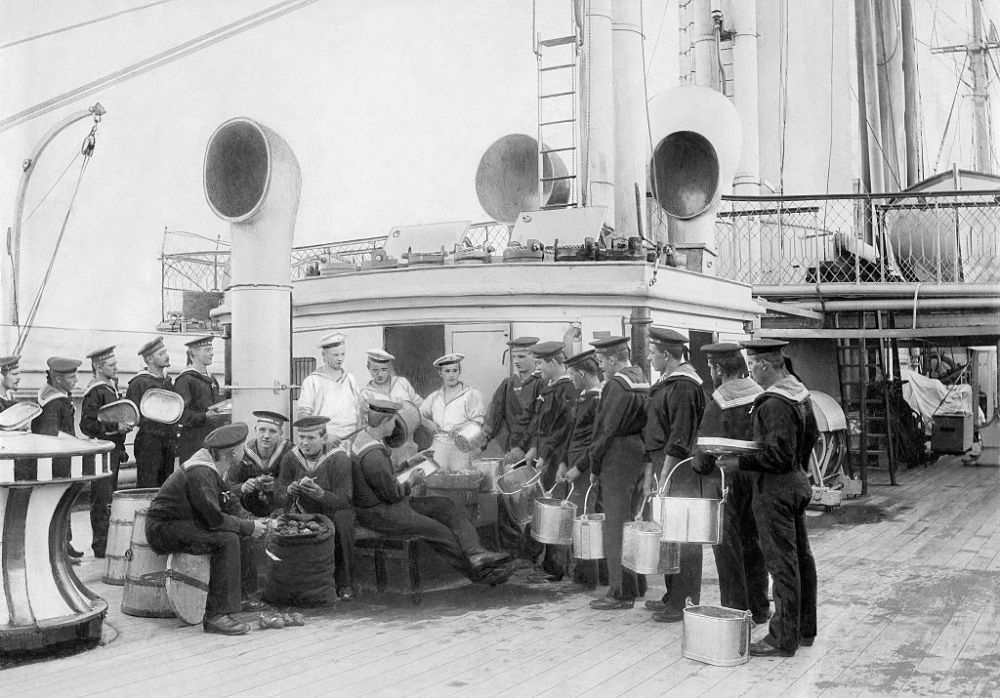
Churchill is said to have called the Festival ‘three-dimensional socialist propaganda’. The likely apocryphal quote is forgivable: the Festival’s methods were Bolshevik-tinged. Its agitprop seductively spread the herbivore revolution through avant-garde art, design and architecture. This included Soviet-style mobile displays. A 100-strong lorry fleet, for example, carried a portable show across the country, and the Festival’s floating exhibition on HMS Campania was an agit-steamer in all but name. A hint of this progressive social engineering lives on in the Royal Festival Hall’s auditorium, designed to ensure great views for all, except if you happen to be in one of the boxes – the Royal Box has the worst view of the lot.
Exiled European designers infused the Hall with their radical ideas, both aesthetic and political. But despite the Festival’s international influences, its sense of the national was uncompromising. Herbert Morrison, the Labour government’s Festival tsar, pitched it as a ‘national display illustrating the British contribution to civilisation’, with exhibits under the themes of ‘the People’ and ‘the Land’. Unlike today’s public-arts patronage that recoils from any mention of the nation, this instinctive patriotism will no doubt fill Blue Labourites with wistful longing.
Even within the stylistic straitjacket of the Royal Festival Hall’s placeless modernism, the architects adorned it with the nation’s gifts, from employing homegrown designers – such as Robin Day, Hilary Bourne and Barbara Allen – for its furniture and textiles, to choosing native materials such as Portland stone for its façade and Derbyshire fossil marble for its foyers. This is in notable contrast to Sir Giles Gilbert Scott’s reconstruction of the Blitzed-out House of Commons, completed only months before, the gothic interiors of which were recreated using timbers intentionally sourced from across the British Empire – a last gasp of the idea of Westminster as the ‘Imperial Parliament’. With the Empire and its subjects slipping away, the Festival gave a confident answer to the question of Britain’s national identity – a contrast to the legal and constitutional fudges of the time.
Before anything could happen, however, a few arms had to be twisted to assemble a 11-hectare site in central London upon which the government could stamp its will. The obliteration of neighbourhoods that this entailed was spun as a benevolent act. (This was the paternalistic side of herbivore do-goodism.) The London County Council’s own publication condemned the South Bank site as ‘dismal dilapidation’, and the Festival as ‘an admirable new broom wherewith to sweep away the tangled squalor’. In parliament, the government admitted to the human cost of the project: ‘Buildings are being torn down and their occupants are having to be provided with or are having to find fresh accommodation at a time when accommodation is so tight.’ All of which meant even more requisitioning. For the greater good of providing ‘a tonic to the nation’, cautions from the opposition were drowned out: ‘If these lands are taken for this purpose and persons are again displaced by this taking of lands, what is proposed to be done about them?’
Such collateral damage became the new normal as town plans were pushed through across the country under the urgency of post-war reconstruction. But as is too often the case, the government created more problems than it solved. Who can blame the ‘dismal dilapidation’ of the South Bank when it had been left in planning limbo for so long? There had been decades of protracted negotiations before the Festival for new bridges, a railway terminus, new embankments, civic centres. All had failed. Conveniently for Morrison, who had been involved in negotiations in various guises (including as head of the LCC), the Festival was an opportunity to clean up his own mess and leave a legacy for his political career. Yet as soon as the summer was over, the temporary pavilions were quickly and unsentimentally dismantled, leaving the Royal Festival Hall stranded in a non-place as various organs of government reverted to their usual prevarication over redevelopment plans.
Far from a ‘wasteland’, London had lost a unique neighbourhood – homes, pubs, trades and industries all existing cheek-by-jowl on the River Thames. The fact that a special volume of the Survey of London was released to coincide with the Festival suggested that there was much worth recording. There were, for example, the handsome Regency-era houses (now demolished) of various industrialists, curiously still attached to their factories. The Survey also uncovered the wider area’s rich history as a recreational resort for all classes – from pleasure gardens to music halls, theatres, and even a circus. As is often the case, the best cultural districts are spontaneous: the Festival’s pedantic reincarnation of what was already there felt rather more like organised fun.
London lost a unique neighbourhood when the Royal Festival Hall was built
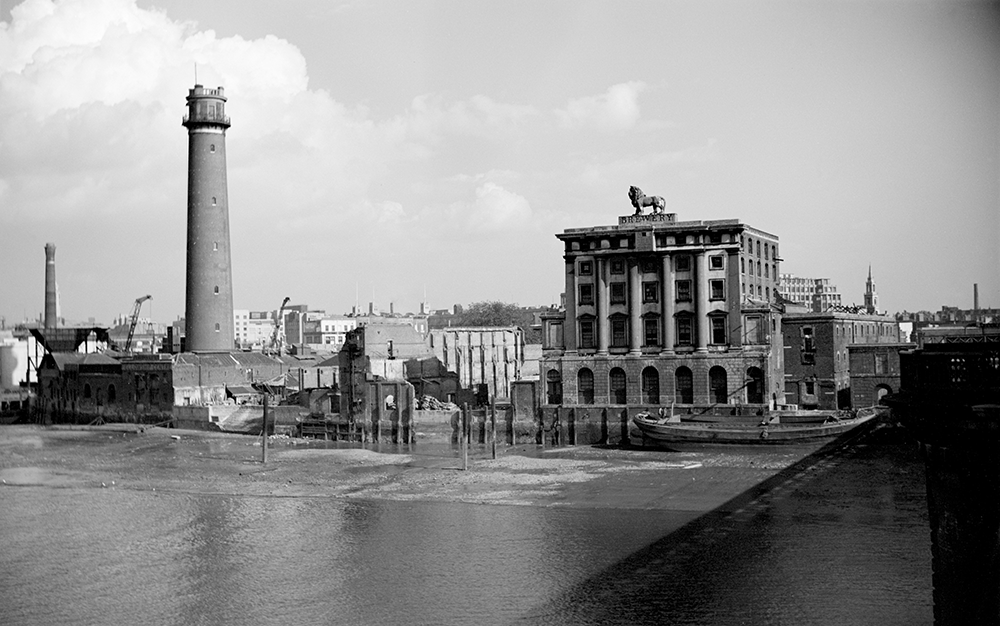
There is an irony, too, in sweeping aside heritage to contrive a sense of national identity from scratch. The Royal Festival Hall required the demolition of a much-loved Thameside landmark, the Red Lion Brewery, with its imposing colonnaded riverfront façade crowned by a statue of a lion fashioned out of Coade stone – a locally made artificial material. Today it would certainly have been retained and restored. Such was the public affection for it at the time that King George VI personally intervened to rescue it, and as a result the lion is the only part of the Brewery to survive, now standing guard on Westminster Bridge. With this postwar playbook being dusted off again for another new-town building spree, quirky old places may again be sacrificed for the bland and new.
But perhaps time does heal most wounds. The Royal Festival Hall has aged far more gracefully than its newer brutalist neighbours – the Queen Elizabeth Hall, Hayward Gallery and Purcell Room, all finally listed on their seventh attempt. But what has done more to restitch the Royal Festival Hall into the collective mental map of London was Ken Livingstone’s decision to keep its foyers open to the public, all day, every day, since the 1980s. While many have sacralised this contribution to London’s public realm – whereby one could simply be in the space without being required to buy anything – what’s often forgotten is that the move had a more calculated agenda: eroding class barriers to the arts.
From its earliest days, the RFH was deemed excessively bourgeois; the hunch was that a parallel programme of exhibitions, cheap catering and free jazz concerts could convert foyer visitors into first-time concertgoers. The Greater London Council went as far as to meticulously collect data on the socioeconomic class, age bracket and gender of all visitors to prove their hunch was right. And it worked. It’s a contrast to today’s cack-handed attempts to shoehorn ‘inclusivity and relevance’ at every opportunity. The Arts Council could learn from the GLC’s practical approach that, best of all, didn’t interfere with the actual art.
The Royal Festival Hall endures as a reminder of what a state with conviction could be capable of. It may provide Anglo-Gaullists with a homegrown role model for how to curate the national story as a cultural and political project. Just be prepared to accept all the unintended consequences.
Royal Festival Hall: A Living Icon is edited by Eleanor Jolliffe and Sandy Rattray and published by Merrell Publishers. On 3 May, the Royal Festival Hall celebrates its 75th anniversary with the event You Are Here.





Comments