Peter Jones

Did Plato invent women’s lib?

From our UK edition

One could go on endlessly about what the ancients have done for us, but one of the most interesting things is that Plato could be said to have invented women’s lib, though it seems to have taken 2,500 years to catch on. Since most ancient states were at war much of the time, putting the male population especially at risk, women had to commit to the production line as soon as possible if the state were to survive. But Socrates, in Plato’s dialogue The Republic, portrays a utopia in which women shared the same status as men. The ruling class of this state are called Guardians and Plato likens them to dogs hunting and protecting the flock, an activity in which female dogs engage just as much as male dogs (though the males are stronger).

Rome vs Jeff Bezos’s yacht 

From our UK edition

Rumour has it that Jeff Bezos, the founder of Amazon, is selling his agreeable little yacht Koru because it will not fit into places like Monaco and Venice and costs far too much to run. Poor old Jeff! Had he studied Classics, he would have known this was not a wise project. In 240 BC, we are told, Archimedes designed for Hiero II, tyrant of Syracuse, the cargo boat Syracusia, protected by fearsome armaments, carrying 400 tons of grain and 500 tons each of pickled fish, wool and other cargo. It had interior panelling of cypress, ivory and aromatic cedar. Multi-coloured mosaics re-telling the Iliad covered the three floor-levels. There was a temple to Aphrodite, the ship’s guardian deity, and statues and artworks were liberally scattered about.

The Romans would tax anything 

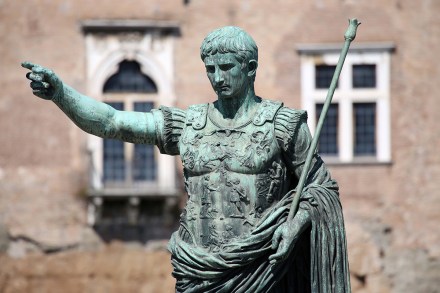
When Nero committed suicide in ad 68, he left Rome deep in debt after military campaigns, building himself a fabulous ‘Golden House’, and the great fire of Rome (AD 64). His successor Vespasian, who fought his way to power in late ad 69, set to work at once. A hard-working man of humble origins and simple tastes, Vespasian was well suited to the task: ‘He got up early, even when it was still dark, and read the letters and the official breviaria’ (‘reports’; Latin brevis, ‘brief’). He sold off some imperial estates and nearly doubled provincial taxes, while extending Roman citizenship.

Zack Polanski must dream of Athens’s radical democracy 

From our UK edition

A Greek essayist c. 420 BC argued that Athens’s radical democracy, giving the vote to every adult male citizen, resulted in the poor having total power to impose their will on the rich. Zack Polanski, leader of the Green party, must dream of such a world. The essayist agrees that, since the poor row the ships which control the Athenian empire, they have a right to enjoy political power which allows them to serve their own interests in the weekly Assemblies. But he thinks that, while the educated rich are most concerned about what is just and good, the common poor are ignorant, disorderly good-for-nothings. Their power simply ensures that they can satisfy their own lawless needs.

How to become a god: a user’s guide

From our UK edition

Even the most Magaddicted Maga supporter might have had doubts about Donald Trump depicted as Jesus healing a sick man with his touch, however thrillingly realistic. The trend in Greco-Roman culture for linking mortals with gods was started by Alexander the Great in Persia. In 334 BC, Alexander took his terrifying Macedonian army into Anatolia (Turkey), where Persian power met Greek, and after nine years had conquered most of their vast empire as far as Pakistan. He knew that there was much more to running an empire than conquering an army: one had to win over the people and that meant winning over their leaders, especially the Persian aristocracy at the heart of the governing elite. So he began wearing Persian regal dress and holding court in Persian style.

Space travel, ancient Greek style

Apollo, Artemis and Orion have not been named at random. The first two are brother and sister, and all three are known in myth as hunters – which is what the astronauts are. Ancient Greeks would have been very envious of them. The satirist Lucian (c. AD 125-180) had great fun with space travel. In his True History, he describes how he sets off with his companions to sail the Atlantic when suddenly a typhoon whirls them up to the Moon, but after many adventures he is able to return and describe what he saw. There are no women, but men act as wives. They produce children in the calf of the leg. The children are born dead but brought to life by breathing in the wind. Men then become husbands. Their noses run with honey and when they exercise, they sweat milk.

What do you do with a captured soldier?

From our UK edition

What do you do with a captured soldier? In 255 BC, fighting the Carthaginians, the Roman consul and general Marcus Atilius Regulus was taken prisoner near Tunis. They sent him back to Rome, having sworn an oath that he would ensure the release of some important Carthaginian prisoners; but if he failed, he himself would return to Carthage. Regulus went back, informed the Senate of his mission, took no part in the discussions or the vote, except saying that the prisoners were fine, active young officers, while he was bowed with age. The Senate decided not to return them, and Regulus made his way back to Carthage, well aware of the consequences.

The Trumpian appeal of a Trojan horse

Given the tonnage of missiles launched at Iran, it seems remarkable how relatively few Iranians have been killed. But the Americans have no interest in wasting multi-million-dollar ordnance on pain-in-the-ass innocent bystanders. However, Donald Trump is now considering a land invasion. That would have been unwise, as the ancients knew. Understanding all about the problems of land assaults against defended cities, the ancients often preferred to lay siege. That could be a long and wearisome business and did not necessarily guarantee success. Troy was besieged for ten years, but it took the trick of the wooden horse to take it. So when the Persian king Darius (c.

What does liberalism mean any more?

From our UK edition

A discussion has broken out about the end of liberalism and emergence of the age of the tyrant. Our political term ‘liberalism’ refers to civil liberties, constitutional government, free trade and so on. It used to mean something very different. ‘Liberalism’ comes from the Latin word līber, ‘free’ (nothing to do with liber, short i, ‘book’). The noun lībertās carried the full range of words relating to the idea of ‘freedom’. But the adjective līberālis referred to the status of a human being in the full meaning of that word, who was not a slave, a non-person, without rights of any sort, but gentlemanly, well educated, noble, magnanimous, munificent, lavish.

The ancient Greeks are to blame for the Oscars

From our UK edition

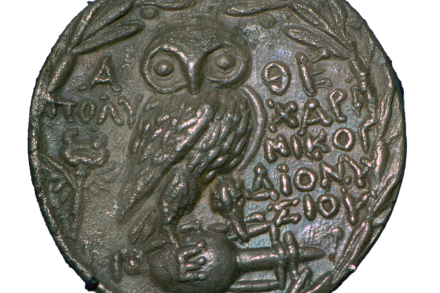
The Oscars mark the end of the awards season, with their annual rituals of self-applause to which actors are so addicted, as Oscar nominees are to the $350,000 gift bags. The ancient Greeks are to blame. Greek luvvies and athletes formed the world’s first trade unions to wring from their sponsors privileges and guarantees which make the Olympic Committee look like beginners.  The luvvies’ worldwide union, founded in the 3rd century bc, lasted 600 years. It came to be called the ‘Artists [some said ‘Toadies’] of Dionysus’. They negotiated freedom of travel and immunity from military service, taxation and arrest, and came from all over the Greek-speaking world to perform.

How the poor survived in ancient Rome

Those for whom the welfare state does not provide as much welfare as they would like might care to reflect on the plight of the Romans, for whom there was no such thing as the welfare state. A superb monograph by Kim Bowes, Surviving Rome: The Economic Lives of the Ninety Percent, drawing on papyrus and other finds from across the Roman and Egyptian worlds, shows in fascinating detail how the poor survived. She defines the poor as the c. 90 per cent who ‘worked with their hands’, most of whom were farmers renting their farm (rents were not cheap). One Soterichos rented a number of small, scattered plots, with small yields, and died in debt. His wife and children budgeted carefully and started breeding farm animals (very profitable).

Greek tips on how to beat Iran

In 500 BC, Persia (modern Iran) was the most powerful state in the known world, ruling an area of more than two million square miles from the Balkans and Egypt to central Asia (nearly half of the world’s population). In 499 BC, Athens and a number of other Greek states rebelled against its empire and incredibly defeated it in the ensuing Persian Wars (390-379 BC). The Greek historian Herodotus (d. c. 425 BC) wrote up those wars after travelling extensively around the whole region. He was as fascinated by different cultures as he was by the war itself, contrasting the Persian way of life with the Greek. For example, he said that Persians did not put up statues or temples or altars, or treat their gods as human in nature, as the Greeks did.

Is Al Carns rich enough for the Romans?

From our UK edition

Some Labour MPs are demanding that Colonel Alistair Carns, a former Royal Marine who served in the military for 24 years and was awarded the Military Cross for his service in Afghanistan, become leader of the party. The Romans would have approved, but might have felt he was not quite rich enough. Rome fought its rivals for control over the only resources anyone had: land and its products and people. The more territory a state controlled, the more powerful it would be. Those doing the fighting were led by the phenomenally wealthy landowners who, combining political authority with military command, controlled the Senate. Success in the field of battle virtually guaranteed an influential political career.

How the Romans picked their friends

From our UK edition

What a lot of friends Jeffrey Epstein appears to have had! But what did friendship mean to him? Was it simply a matter of reciprocal benefits and obligations? In the ancient world, such interactions were a matter of life and death for the poor (there was no such thing as the welfare state), and of political success or failure for the wealthy and ambitious. But many thought there was far more to real friendship than such purely practical considerations. For Aristotle, having a friend was ‘one of the greatest goods, because there is an unbreakable connection between friendship and virtue, since friends do not wrong one another: justice and friendship are either identical or very close to each other’.

Why not privatise tax collection?

From our UK edition

Twice a year the taxman comes to call, exhibiting all the bossy incompetence one expects from the government machine. Why not do as the Romans did, and privatise it? After all, one would surely rather give one’s money to a publican, even if a sinner. The publicanus, as the name suggests, was a public servant, i.e. a contractor for public works of any kind. Indeed, from early on, wars were fought, roads built and mines worked on the back of service contracts offered out to hopeful bidders, as was the right to gather dues from harbours and toll stations.

The Romans would have known how to deal with Epstein

From our UK edition

To look through Jeffrey Epstein’s curriculum vitae on Google is to be left goggling at how this revolting creature could have gained credence among so many influential people. Roman censors would surely have dealt with him in pretty short order. Their job was to keep an eye on the moral and financial standing of every Roman in the state. For those who did not live up to the standard expected of a citizen, a mark (nota) was put next to his name on the census rolls, resulting in humiliation and loss of political status. Extravagantly flashing one’s wealth about, bad parenting, cruelty, disgusting behaviour, disreputable business practices, cowardice on the battlefield and suchlike would lead to infamia (public ignominy) and expulsion from official positions.

Where Trump would have stood on Athens vs Sparta

From our UK edition

In 416 BC in its war against Sparta, Athens instructed the fleet to break the small island of Melos’ alliance with its enemy. The Athenian historian Thucydides constructed the ensuing debate between the two, here very briefly summarised. Melos: Whatever we say or do, it looks as if we will face either war or slavery. Athens: If that is your attitude, we may as well stop now. Melos: But there is such a thing as fair play and just dealing. You too might need that one day. Athens: We’ll take that risk. But our aim is to preserve you and your city. Melos: Can we not be neutral? Athens: That would be a sign of our weakness. Melos: Will this not make you more enemies than friends? Athens: We are more concerned about those we have not yet subdued.

Only divine intervention can save Labour

From our UK edition

A party that can foretell the future stands a very good chance of success. Given Labour’s record of U-turns, they cannot even foretell the present. A state’s success in the ancient world depended on its mastery of natural resources: the more land and people you controlled, the more powerful you were. So states were frequently at war and naturally sought the favour of the gods – by consulting oracles, entrails and flights of birds, or striking lucky by means of dreams, omens, sneezes, odd events and suchlike. However, there were no guarantees. ‘A prophecy is the guess of a sensible man’ (Euripides), ‘No good has ever come from prophecy’ (Aeschylus). Menander hit the spot, when a character desired ‘A future not as I wish, but to my benefit.

The ancient case for a referendum on assisted dying

From our UK edition

One rather hopes the assisted dying bill will be talked out in the House of Lords. We have no say on matters of government policy, sovereignty, international law (and much else). But this bill is far too controversial, and personally significant, for MPs alone to adjudge. We need a touch of democratic Athens, whose citizens determined all political and legal outcomes. Citizen arbitration was used to settle most cases. Take Neaira. Not an Athenian, she had been trafficked from birth, but saving what money she earned, she eventually bought her freedom, with help from a large sum donated by the Athenian Phrynion. But she tired of him touting her around high-class orgies, took what she reckoned she was entitled to, and walked out.

What a shame Andrew Tate didn’t live in ancient Greece

Has any public figure of recent memory ever admitted to feeling shame for anything they have said or done? As a moral term ‘shame’ appears to have disappeared almost entirely from normal discourse (bar the self-satisfied ‘fat-shaming’). That tells us much about ourselves. Aristotle discusses the term in some depth. He does not see it as an active virtue, but rather as a ‘condition involving a range of feelings’, which he defines as: ‘A kind of pain and agitation concerning the class of evils, whether present, past or future, that seem to bring a person into disrespect’. His definition is well in tune with the evidence of ancient Greek literature, in which the presence or absence of shame puts your reputation at stake.