Calvin Po

The dirty secrets of the Royal Festival Hall

From our UK edition

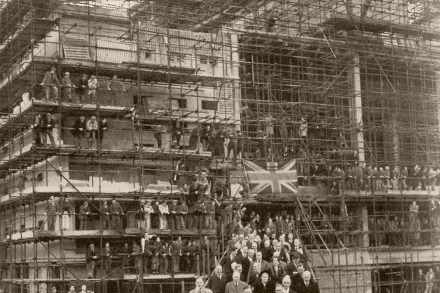
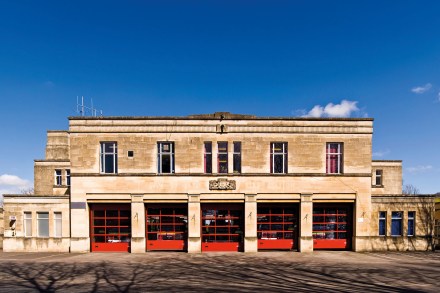
The Festival of Britain – that much mythologised moment of national renewal – is wheeled out every time the country goes through an identity crisis. An echo of the Great Exhibition, the 1951 South Bank extravaganza was spoofed by Tony Blair in his millennium plans and Theresa May in her entirely forgotten ‘Festival of Brexit’. With the country currently in a bit of a state, the Festival’s 75th anniversary this month comes at a fitting moment. Several lessons can be learnt by looking closer at the only part of the Festival to survive: the Royal Festival Hall.

The man who rescued the Notre-Dame

From our UK edition

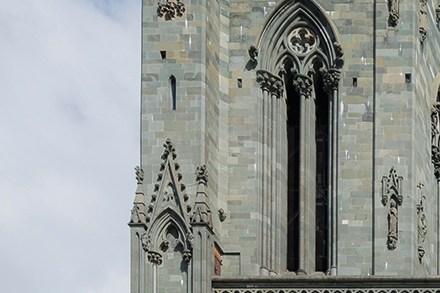
The Notre-Dame de Paris has had several close shaves down the years – even before the 2019 fire that nearly obliterated it. The revolutionaries temporarily turned it into a ‘Temple of Reason’, then a grain warehouse; some of it was even sold for scrap. It only became the recognisable Gothic fantasy and French national icon that we know today largely down to the efforts of architect Eugène-Emmanuel Viollet-le-Duc, who headed its definitive restoration from 1844 to 1864. Following the cathedral’s 2024 rebirth, Bard Graduate Center is now hosting the most comprehensive exhibition in the Anglosphere of the architect’s work. Viollet-le-Duc kept superhuman working hours: 6 a.m. to midnight.

What’s the greatest artwork of the century so far?

From our UK edition

15 min listen

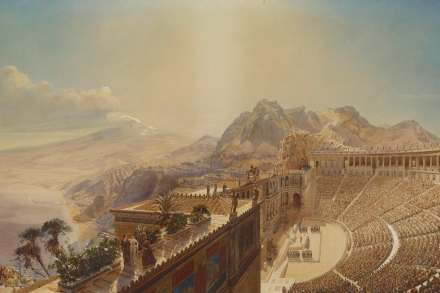
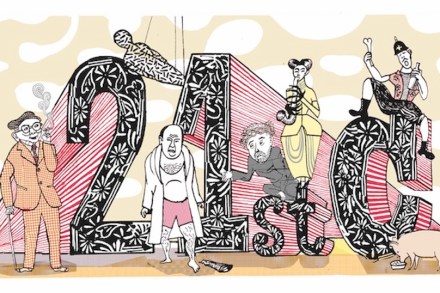
For this week's Spectator Out Loud, we include a compilation of submissions by our writers for their greatest artwork of the 21st century so far. Following our arts editor Igor Toronyi-Lalic, you can hear from: Graeme Thomson, Lloyd Evans, Slavoj Zizek, Damian Thompson, Richard Bratby, Liz Anderson, Deborah Ross, Calvin Po, Tanjil Rashid, James Walton, Rupert Christiansen and Christopher Howse. Produced and presented by Patrick Gibbons.

John Power, Madeline Grant, Ysenda Maxtone-Graham, Calvin Po & Gus Carter

From our UK edition

33 min listen

On this week’s Spectator Out Loud: John Power examines the rise in drug abuse and homelessness on British streets; Madeline Grant explains the allure of Hollywood radical Sydney Sweeney; Ysenda Maxtone Graham laments the rise of the on-the-day party flake; Calvin Po warns of a war on Britain’s historic architecture; and Gus Carter reads his Notes on the brasserie chain Browns.

Labour’s war on heritage

From our UK edition

Britain’s heritage is slowly going up in smoke. Medlock Mill was Manchester’s oldest standing textile mill until it burnt down in June. It joins Grade I-listed Woolton Hall – destroyed by a catastrophic fire in August. But it’s not just the buildings that are under threat, but the entire system designed to protect them. Prior to the disaster, the architect Stephen Hodder had proposed gutting the mill and converting it into a 37-storey block of student flats. A coalition of concerned citizens and conservation charities fought for a stay of execution by applying for the mill to be listed. After reviewing new archaeological evidence, Historic England concurred and recommended it for Grade II.

A gallery that refuses to dumb-down

From our UK edition

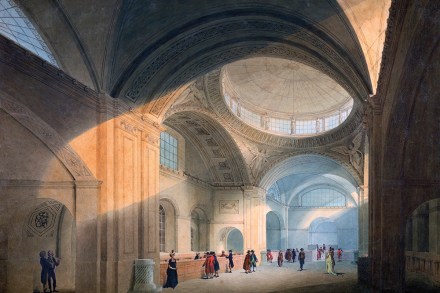
The DNA of Dulwich Picture Gallery is aspirational, in the sincerest sense. Opening in 1817 when private collections were still the norm, it’s the world’s first purpose-built public art gallery. (It’s also a credible contender for inspiring the design of the red telephone box.) After a significant reworking, and the addition of a new children’s space and sculpture garden, the Gallery is again hoping to redefine what it means to make art accessible. The Grade II*-listed building was Sir John Soane’s utterly original embodiment of the dying wish of the founders: for their collection of old masters to ‘go down to Posterity for the benefit of the Public’.

Max Jeffery, Tanya Gold, Madeline Grant, Matthew Parris and Calvin Po

From our UK edition

29 min listen

On this week’s Spectator Out Loud: Max Jeffery tracks down the Cambridge bike bandit (1:10); Tanya Gold says that selling bathwater is an easy way to exploit a sad male fetish (5:38); Madeline Grant examines the decline of period dramas (10:16); a visit to Lyon has Matthew Parris pondering what history doesn’t tell us (15:49); and, Calvin Po visits the new V&A East Storehouse (23:08).  Produced and presented by Patrick Gibbons.

V&A’s new museum is a defiant stand against the vandals

From our UK edition

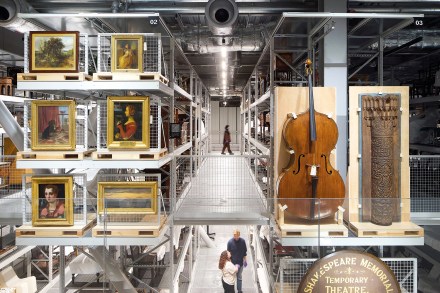
In last week’s Spectator, Richard Morris lamented museum collections languishing in storage, pleading to ‘get these works out’. There’s an alternative solution: bring the public in. V&A East Storehouse, which opened last weekend, was designed by New York architects Diller Scofidio + Renfro to do just that. The museum’s collections were previously holed up in the creaking, late-Victorian Blythe House. The government decided to sell it in 2015, leading the V&A to find a new home in the Olympics’s former Broadcasting Centre in Hackney Wick, a big box since rebadged as Here East, an ‘innovation campus’. The Storehouse’s entrance indeed blends in with the startups and students sharing the building.

The National Trust’s plans for Clandon Park are a travesty

From our UK edition

In April 2015, a fire raged through Clandon Park, destroying much of the 18th-century Palladian mansion’s prized interiors. Contrary to all expectations, the National Trust, its custodian, announced plans to keep the Grade I-listed building ‘as a ruin’. Architects Allies and Morrison would ‘creatively curate’ the celebrated property as ‘a country house laid bare’, adding a modern roof and walkways, but otherwise leaving the interior in its half-charred form. Last month, Guildford Council waved through the plans unanimously. It was a landmark decision. Without any fanfare, a sweeping precedent was set for how we restore damaged buildings – one that throws out the lauded example set by Windsor and Notre-Dame – with incendiary implications for our architectural heritage.

The architectural provocations of I.M. Pei

From our UK edition

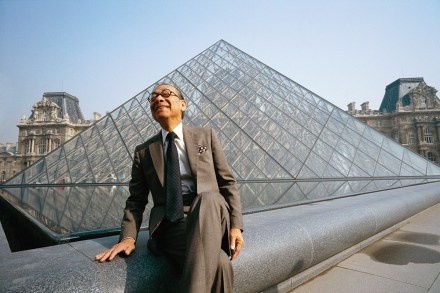
When first considering architects for the new Louvre in 1981, Emile Biasini, the project’s head, liked that I.M. Pei was both ‘Chinese as well as American: Chinese in his respect of the past, and American in the way of radical solutions’. His controversial glass pyramid ignited much debate about which side won out. These entanglements, between traditionalism and modernity, East and West, would come to characterise both Pei’s Louvre and his six-decade career. After a seven-year gestation, the first comprehensive retrospective of the architect, at Hong Kong’s M+ museum, finally offered a longer view. Despite calling America home, Pei felt a duty to help China find its own architectural language Pei’s prolific career had a head start.

Who should win the Stirling Prize?

From our UK edition

The Stirling Prize is the Baftas for architects, a moment for auto-erotic self-congratulation. Awarded by the Royal Institute of British Architects, its premise is straightforward: it’s for Britain’s best building of the year. But this year, it seems the prize committee has struggled even with this. Among the six projects shortlisted for this ostensibly nationwide prize, four are in London and a couple could barely even be considered buildings at all. The most tenuous nominee for a ‘best building’ – yet one with the best bookies’ odds – is the Elizabeth Line by Grimshaw Architects. One of the most expensive infrastructure projects in Europe with a much-delayed opening, it remains frustratingly unreliable.

Forget monetary policy, the Bank of England’s greatest crime was architectural

From our UK edition

In 1916 the Bank of England committed what Nikolaus Pevsner was to call the greatest architectural crime to befall London in the 20th century. It decided to demolish much of its own building, designed by the great Georgian neoclassical architect John Soane. Soane’s lost masterpiece is the subject of the latest series from the essential architecture podcast About Buildings and Cities. The podcast, started in 2016 by presenters Luke Jones and George Gingell as a hobby, has slowly become a fan-funded staple for architects, offering a re-evaluation of the received wisdoms about the canon and some affable banter along the way. He built a rich ‘internal world’, lit by roof lanterns that crown dramatic vaulted spaces Soane worked on the Bank of England for almost 50 years.

Why architectural modernism was championed by the rulers and the ruled

From our UK edition

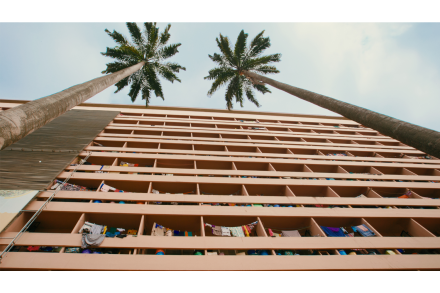
My childhood in Hong Kong was shaped by a particular style of building: market halls with brise-soleils sheltering us from the glare; housing-block stairwells with perforated blockwork letting in dappled light and breeze; classrooms accessed from open-air decks, with clerestory windows cross-ventilating the stale, sticky air. In this sub-tropical ex-British colony, these features defined its mid-century municipal buildings. While the investment in public amenities has since been portrayed as ‘pacification’ to shore up consent for British rule, it also undeniably nurtured – in the wake of a ravaging Japanese occupation – the explosion of Hong Kong’s middle class. This included my parents, who were raised, schooled and housed in such postwar colonial architecture.

Max Jeffery, Lisa Haseldine, Christopher Howse, Philip Hensher and Calvin Po

From our UK edition

43 min listen

This week: Max Jeffery writes from Blackpool where he says you can see the welfare crisis at its worst (01:29); Lisa Haseldine reads her interview with the wife of Vladimir Kara-Murza, whose husband is languishing in a Siberian jail (06:26); Christopher Howse tells us about the ancient synagogue under threat from developers (13:02); Philip Hensher reads his review of Write, Cut, Rewrite (24:34); and Calvin Po asks whether a Labour government will let architects reshape housing (34:42).  Produced by Oscar Edmondson and Margaret Mitchell.

Will a new Labour government let architects reshape housing?

From our UK edition

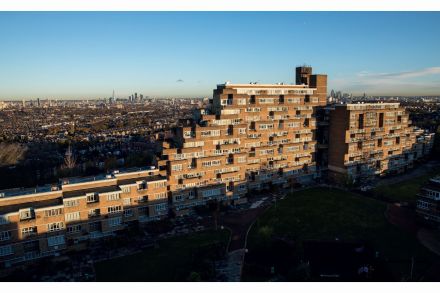
‘We make our buildings, and afterwards they make us,’ Winston Churchill said in 1924 in a speech to the Architectural Association. This was flattery of the highest order, designed to butter up the audience of budding architects and inflate their sense of how much power they had to shape society. It’s remarkable then, 100 years later, how powerless architects have become when it comes to the biggest architectural crisis of our time: housing. According to the Royal Institute of British Architects, only 6 per cent of new homes in the UK are designed by architects. Everything else is dealt with by volume housebuilders, with the top three alone building 25 per cent of them, churned out from identikit designs.

The art of not taking out the bins: Madelon Vriesendorp, at the Cosmic House, reviewed

From our UK edition

‘I was really angry at this fly,’ the artist Madelon Vriesendorp explains with a grin as I hold out my hand to shake hers, which is in a splint. ‘I jumped onto the bed to swat it, fell over and broke my wrist.’ Vriesendorp is showing me around her latest exhibition, which follows a long list of achievements: she co-founded the ground-breaking architectural practice OMA, and her illustrations of architectural theory defined its visual language for a generation. Now in her late seventies, she’s still characteristically unserious, except about one thing: ‘I’m very serious about jokes.

Has all the charisma of Chernobyl: Manchester’s Aviva Studios reviewed

From our UK edition

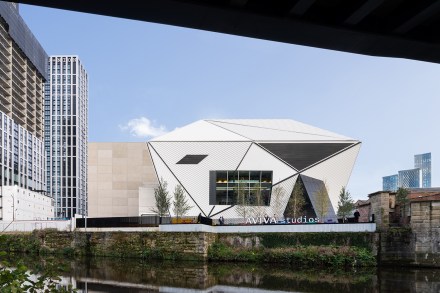
There is a (possibly apocryphal) story about William Morris, where he spends most of his time in Paris inside the Eiffel Tower’s restaurant because ‘that is the only place where you can’t see the damned thing’. Aviva Studios risks a similar fate. Designed by architects OMA as the permanent performance venue for the Manchester International Festival and headquarters for its organisers, Factory International, it’s been savaged by critics and citizens alike for its ugliness. But not unlike the Eiffel Tower, it is from within that one can really witness the spectacles it has in store.

I’m not convinced Thomas Heatherwick is the best person to be discussing boring buildings

From our UK edition

Architects are often snobby about – and no doubt jealous of – the designer Thomas Heatherwick, who isn’t an actual architect yet still manages to wangle important building commissions. And he knows this. In his documentary for BBC Radio 4, Building Soul, where he examines what he calls the ‘blandemic’ in today’s architecture, he asks to interview fellow Spectator writer Jonathan Meades, who responds: ‘The last person who should be doing a series on urbanism is a designer.’ Heatherwick wears this as a badge of honour. Indeed, qualifying as an architect is no guarantee of quality – check out the past nominations for the Carbuncle Cup, the now defunct prize for the ugliest building in Britain.

Stone is the solution to many of our architectural problems

From our UK edition

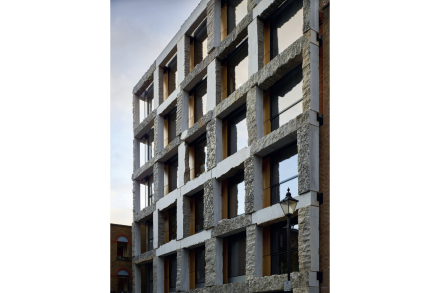
The story of ‘The Three Little Pigs’ is hammered into us all from an early age. But its moral lessons obscure its more literal advice about building: skimping on materials is a false economy. It’s a lesson learned too late for schools built with reinforced autoclaved aerated concrete (Raac). Who would’ve predicted that concrete made cheaper by cutting it with air, puffed up like a Malteser, would end up crumbling like one too? It’ll soon prove that the initial cost savings of Raac will be wiped out multiple times over once the risk to life and expensive, disruptive repairs have been taken into account. Getting materials wrong almost cost the little pigs their bacon. Is it any surprise that we are returning to building in solid, dependable masonry?

Our great art institutions have reduced British history to a scrapheap of shame

From our UK edition

Let’s indulge in some identity politics for a second: I am from Hong Kong, born as a subject of the last major colony of the British Empire, minority-ethnic, descended from Chinese refugees, now living here in exile. This summer, both the National Portrait Gallery and Tate Britain are presenting new displays that are meant to reflect the ‘inclusive’ and ‘diverse’ identities of Britain. Supposedly, I fit nicely among their target audience. In reality, as an immigrant looking to be included in this nation, I am perplexed by my visits.