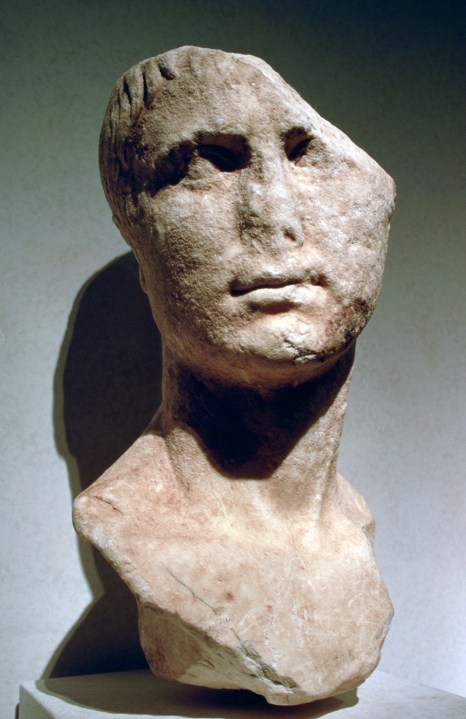
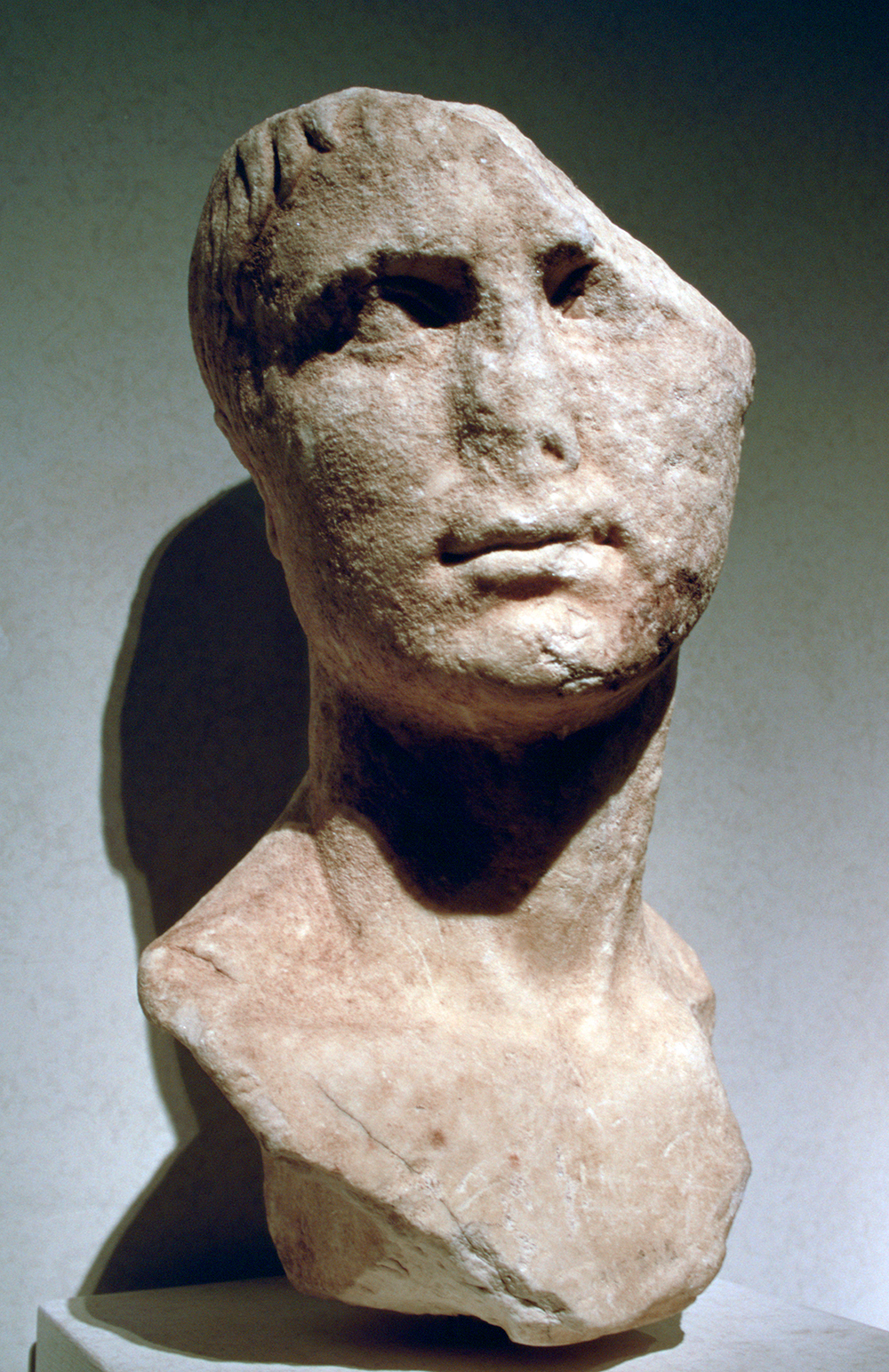
Any readers of Robert Harris’s new novel who aren’t ancient historians might be surprised to discover what an important figure Marcus Vipsanius Agrippa was: Caesar Augustus’s right-hand man since they were at school together; the builder of some of Rome’s most significant buildings; the winning commander in several battles that changed history; even, as Harris puts it in an afterword, ‘the effective co-ruler of the Roman world for many years’.
Happily, that same afterword also suggests that such ignorance of Agrippa’s achievements isn’t necessarily our fault – because Augustus ‘all but effaced his closest comrade from the official record’. This, of course, leaves a handy gap for the novelist to fill. But how to fill it? The only clue to Agrippa the man (‘his inner life a blank’) that Harris can find is a single inscription by him in ‘terse, plain, no-nonsense language’ – and that’s the language he adopts for Agrippa’s narrative voice. It’s a decision that certainly plunges us deep into the mind of a bluff, unillusioned observer of his own life and of the more dazzling people around him – but that comes rather at the cost of storytelling liveliness.

Most dazzling of all to the young Agrippa is Julius Caesar, the great-uncle of his school pal, who takes them both under his eagle-like wing as teenagers. He also charges Agrippa with protecting the more fragile Octavius (as Augustus then was) when he takes them to war. Having accepted the charge with enthusiasm, Agrippa sticks to the role of ‘loyal friend, perpetual second in command’ for the rest of the book, with varying and neatly delineated degrees of fondness, resentment, resignation and pride.
As ever, Harris has done his research, although some was prepared earlier for his Cicero trilogy, with which there are moments of straight overlap. He then guides us through decades of Roman civil war and endlessly shifting alliances with his customary deftness. Along the way, we do get some wider thoughts on how power operates. But on the whole Agrippa has too much sheer incident to negotiate for him to offer anything more mind-boggling than ‘power makes monsters of us all’. So it is that there are lots of sentences such as ‘We should leave a token force here to continue the siege and move the bulk of the army back down south to head off Lucius before he can reach Salvidienus’; and perhaps excessive detail on the precise location and construction and function of individual aqueducts.
Occasionally, Agrippa – or possibly Harris – seems to sense this problem himself, regularly promising to spare us too many specifics of military campaigns and architecture, before failing to. At one stage, he gives his young wife an impressively thorough description of the Battle of Actium – presumably not unlike the one he previously gave us – and sees ‘a tremor of boredom flicker across her face’. Admittedly, these jokes at Agrippa’s expense are quite funny. Nonetheless, they also serve to highlight rather than solve the lack-of-liveliness issue.
Agrippa’s regularly emphasised ‘humble beginnings’, his feeling that however high he rises he’ll always be an outsider, and the evident admiration of the book’s author means the result is sometimes reminiscent of Hilary Mantel’s Wolf Hall. More often though, it’s like a hugely extended version of The Rest is History podcast– no bad thing in itself, you might argue, but not really enough to make for a fully satisfying novel.
Harris’s best work – Fatherland, An Officer and a Spy, The Ghost – generally has a certain animating anger to it. Agrippa, by comparison, feels essentially workmanlike. Granted, as workmen go, Harris is enough of a pro that he’s unlikely ever to produce a novel which doesn’t keep us turning the pages. Here, however, he comes pretty close.





Comments