Notes on...

The politics of long hair

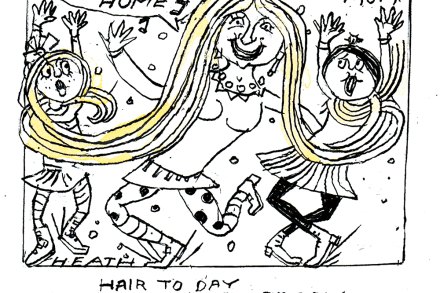
What is the literal cut-off point for women having very long hair (and by ‘long’ I mean where it almost goes into the lavatory bowl)? Is it the age of 30? Forty? Fifty? Try 65 – the age I am now. If this strikes you as grossly inappropriate, in theory I’m with you. The unspoken rule is that the older you get the shorter your hair should be. Nobody I know within ten or even 20 years of me has hair as long as mine. What can I say? As with wearing inappropriately coloured nail varnish, it is just another small act of defiance women d’un certain âge can employ to remind this cruel world that we do actually still exist. My hair has been this length for so long it has become part of my identity: how I see myself in the universe.

Make mine a Moka pot

It’s strange the things that can trigger amity or affection. At the beginning of the capsule/pod coffee-maker craze, when George Clooney, with his come-to-bed eyes, was seducing the world with Nespresso machines, I bonded with my eldest daughter’s Italian boyfriend over the Bialetti Moka pot. Notwithstanding the expense and waste of the capsule coffee-makers, I need at least three pods to get the lights on in my head in the morning. I’ve never had a good coffee from any of them. Contrast that with the cute, economical, environmentally friendly little Moka, the smallest of which – one cup – costs about £20 and, depending on the quality and freshness of the coffee used, makes a better cup than any café or restaurant.

Make mine a BuzzBallz

There are always new ways for drinks companies to make alcohol seem even more exciting. Smirnoff has added gold leaf to some of its vodkas (apparently it’s both real and edible); cans of Dragon Soop and Four Loko deliver heart attack-inducing combinations of sugar, caffeine and alcohol; and the appropriately named Aftershock is rumoured to crystallise in your stomach for a few hours before reverting back to liquid form to release a second wave of alcohol into your bloodstream. (This is almost certainly an urban myth, but Aftershock drinkers remain convinced.) The latest fad was created during one woman’s postgraduate degree – and has since transformed the experience of partygoers across the world. Behold BuzzBallz.

Washing up is an artform

Right, who’s doing the washing up? It’s 6 p.m. on Christmas Day and the table, which was meticulously set for 12, is now a mess of paper hats, gravy spills and glasses – so, so many glasses. Just don’t go into the kitchen, where you’ll find, in no order at all: six saucepans (unsoaked), 12 plates, one grater, 12 bowls, three baking trays, two sieves, four ceramic dishes, one warm turkey carcass and at least 17 bone-handled knives which absolutely cannot go in the dishwasher. There are vague murmurings that someone should probably do something about it. I hate to say it, but if you haven’t done any of the basting or the chopping or the stirring, that person is you. But this is not a skivvy’s job.

The art of the party trick

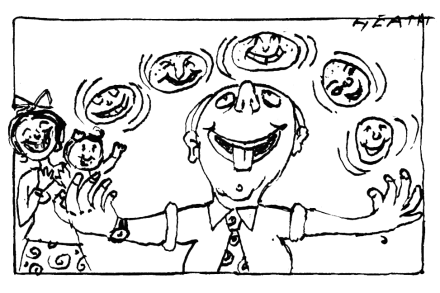
I’ve decided I need a party trick. This thought occurred to me at a recent dinner party as I watched my mother effortlessly tie a cherry stem into a knot with her tongue. So ensued 20 minutes of entertainment as everyone thought that they too would give it a go. No one succeeded, and my mother remained the undisputed champion. But when the floor was opened to any other demonstrations, I had nothing.  My failure to inherit any sort of skill is a bit of mystery since my father also has an arsenal of party tricks. While most of his peers spent their early twenties in clubs and at parties, he was at circus school. He can juggle countless random objects with ease and balance all manner of household items on any limb. The art of the party trick is a precise one.

Why are we so suspicious of magpies?

I started counting magpies during my brief, doomed time as a history teacher. Trudging in every morning, the grim prospect of Weimar Germany with the Year 11s ahead, I began to take note of the number I spotted. If, on first sight, I spied only one, I knew I would have a terrible day. If I saw two, it would be lovely. If I spotted one, saluted furiously, said ‘Hello Captain’, told him the date, and then saw two, I might be all right. I’m not usually superstitious (I’m pessimistic enough to assume that everything usually turns out for the worst), so I’m not sure where this habit came from. Unfortunately, it is very hard to shift. Crossing St James’s Park each morning to reach the Spectator office means navigating a minefield of awkward salutes and mumbled hellos.

How the hyphen turned political

When Buckingham Palace announced that its errant prince, Andrew, would be known as boring old Andrew Mountbatten Windsor, some surprise arose at the initial omission of the hyphen from his surname. The hyphen is, unlike King Lear’s whoreson zed, a necessary thing; without it, names float, unmoored, unsure whether they are attached to first name or surname. The hyphen, despite Lord Tennyson’s ‘idiotic’ hatred of them in his younger years, is a bringer of joy. It joins disparate parts, meaning, as it does, ‘under one’, from the Greek ‘huph’ hen’. It is the most comforting of punctuation marks, despite its ephemerality, slipping, fawn-like, in and out of usage. Who now writes mantle-piece or black-berries?

How Browns lost the battle of the brasseries

Last month, the founder of the Browns restaurant chain was charged with killing his mother. Shocking news, but it feels somehow appropriate. Browns is the traditional lunch spot for families looking to feed their student child, the place where 2.2s are revealed and doomed university girlfriends introduced. Many parents have found themselves spending hundreds on lunch only to be told their far greater investment has been wasted on dreams of becoming a club promoter. Steak frites, please, with a side order of murderous intent. Browns began in Brighton, but only really got going when it spread to Oxford and Cambridge in the 1980s. Bristol got one in the early 1990s, decking out a neo-Byzantine library next to the Wills Memorial Building.

How not to train a truffle dog

For the first time in decades, King Charles has a new pet dog, a lagotto Romagnolo called Snuff. Queen Camilla is said to have given him the puppy, perhaps more for her benefit than his. She is thought to be mad about foraging for fungi, especially in the area surrounding her home in Wiltshire, where the chalky terroir is famous for an abundance of Burgundy truffles. Snuff is the perfect breed to find them. The lagotto hails from my home region of Emilia Romagna, and in recent years the dogs have surpassed pigs as the go-to tool for truffling. I can only surmise too many fingers were lost retrieving a precious truffle from a 200lb swine.

How the Northern line brought T.E. Lawrence to The Spectator

If only the Northern line could get its act together. Last week saw further buffing of its reputation as the ‘Misery line’, with signalling problems that disrupted journeys for days and kept engineers baffled. But it could all be so different. The Northern could be famous for having the deepest station (Hampstead, 192ft), the highest point above ground level (the Dollis Brook viaduct, where the line runs 59ft above the road) and indeed the final station when the whole network is listed alphabetically (Woodside Park). It also has the only station with a single-syllable name. I’ll leave you to work that one out. Clue: it’s not, as someone once suggested to me, Oval. In fairness, the line’s delays have sometimes been for more charming reasons.

Would you spend £30 on a Charlie Bigham’s ready meal?

Ready meals: the after-work time-saver, the dinner-party cheat – or a poor imitation of proper, cooked food? The proto-ready meal – an entire meal that can be cooked in its packaging, with little or no preparation – was invented in 1945 and called the Strato-Plate, but used only in aviation and military settings. The first mainstream ready meal was the TV dinner. The story goes that in 1953, an American company, Swanson, who produced frozen, oven-ready poultry and pies, had 260 tons of turkey left over after lacklustre Thanksgiving sales.

Confessions of a skip-diver

Call me disgusting, but I like rubbish, and I like it best from a skip. I am also in good company. In his 1967 poem, ‘The Bin Men Go on Strike’, Raymond Queneau riffs on the fantasy of bins stuffed with works of art, the ‘Mona Lisa’ lying askew by the spent toothpaste tube, or a Géricault smeared with pigeon shit, jettisoned by an ignorant philistine. This is an elaborate joke, bien sûr, designed to make us reconsider aesthetics in general, but its point holds: can we conjure art from the soiled and fragmented? Can we overturn economic values – and even meaning – as the ragpickers or, as Baudelaire had it, the chiffoniers of our time? I like to think so. Skip-diving, or the practice of helping oneself to objects from a skip, is on the rise.

My personalised number plate is worth more than my car

A poll has confirmed what most people know already – personalised number plates are vulgar, divisive and a complete waste of money. As my friend William Sitwell wrote in the Telegraph: ‘Having a personalised number plate is a self-proclaimed label of rich, smug self-satisfaction and bad taste.’ I could not agree more. The only problem is that I am the proud owner of a personalised number plate and wouldn’t part with it for all the money in the world – or, rather, let’s say it would have to be at least six figures with a two at the start.  That’s because 1CMG has been in my family for 60 years.

Let them eat swan

How to react to Nigel Farage’s suggestion that immigrants are killing and eating swans? You can react like LBC’s Iain Dale, who said that ‘Reform UK might have peaked in the polls’. You can react like Times Radio’s Adam Boulton, who said that Farage was ‘in danger’ of repelling voters by ‘copying memes’ from Donald Trump. You can react like Reform’s Andrea Jenkyns, who said that swan eating was a ‘serious issue’. Or you can think, as I did: ‘Mmm, I wonder what swan tastes like.’ ‘Quite fishy’ is the surprising answer. I don’t know that from experience, but because of Americans, who can eat swan but choose not to.

What will love and literature become in the age of the Ring doorbell?

Knock, knock. Who’s there? Well, according to the app it was the Evri man at 10.27, the Yodel man at 11.17, the post lady at 13.44 and the nursery-run mum with double buggy at 15.22. What romance, what mystery in the age of the Ring doorbell? Every coming and going, every missed parcel and key fumble is filmed, timestamped and sent to my husband’s phone with a notification. We resisted Ring for two years. Two years of a broken doorbell and delivery drivers hammering on the door. Over the summer we caved and now the house is monitored night and day. ‘Must make it difficult,’ I mused to Andy as we reviewed the footage on the first evening, ‘for anyone to have affairs any more.

The joy of guided walks

‘You should be pointing at things with an umbrella for a living,’ said my brother. He’d come to visit me in London and we’d been wandering the West End. The rain never appeared, but my umbrella seemed a natural implement with which to indicate the sights we passed. The Odeon Leicester Square, for instance, where I told Steve the story about Michael Caine (born Maurice Micklewhite) choosing his new surname: the cinema had been showing The Caine Mutiny. Or Piccadilly, so named because it was home to a tailor who’d made his fortune from pickadils, the ruffed collars worn by Elizabeth I, Walter Raleigh and the like. Or 3 Savile Row, on whose roof the Beatles played their last ever gig.

Save our sausages!

Who first thought of grinding up all those little unused odds and sods from an animal carcass and stuffing them into a bit of intestine? Many people, apparently. Sausages are one of those products which, while seemingly not intuitive, emerged independently all around the world thousands of years ago. As far as we can tell, sausages have been produced since we began butchering animals. The first record of sausage-making is from around 2,000 bc: an Akkadian cuneiform tablet from Mesopotamia mentions intestines filled with forcemeat. Sausages feature in The Odyssey as a simile for Odysseus tossing and turning in bed (‘When a man besides a great fire has filled a sausage with fat and blood and turns it this way and that and is very eager to get it quickly roasted’).

The discombobulating delight of made-up languages

I wasn’t supposed to understand Potato language. It was my parents’ speech device employed when wishing to discuss certain apparently secret subjects in front of my brother and me. While chewing over some esoteric topic, they would suddenly lapse into Potato language, a.k.a ‘P-language’ or just ‘P’. Being a young child, the subject matter didn’t interest me – I was more intent on trying to figure out why on a whim they’d switch to speaking a discordant, discombobulated version of our every-day language. Unbeknown to them, from the age of about seven I gradually became bilingual in P and by ten, I was fluent. As I grew older, I realised the point of converting to P was to discuss topics not intended for our ears.

Wanted: a flatmate for the Pope

Pope Leo XIV has announced, though not in the form of a bull, that he will be sharing the Apostolic Palace not just with God, but with flatmates. (Being American, he probably refers to them as ‘roomies’.) While this might seem an odd move for God’s Vicegerent on Earth, even the sacrosanct precincts of the Vatican City are not, it seems, immune from the housing crisis. Living hugger-mugger places the Holy Father on a par with almost everyone who’s ever lived. Jesus ‘roomed’ with his apostles, after all, and for centuries kings and queens slept among their attendants. The Pope won’t be advertising for his companions, I imagine, but even so, one does wonder. Will he plump for the best genuflecter, or the one most likely to replace the loo roll?

The Liberal MP who put the ‘bank’ in bank holiday

Why are you enjoying a bank holiday this month, as opposed to a ‘general’ or ‘national’ holiday? It’s because the man who invented them knew that employers might be tempted to ignore titles which were vague. But if the banks were forced to close, trade would become impossible. That man was the Liberal MP Sir John Lubbock, one of those 19th-century figures who sound as though they were invented by Michael Palin. He had three sisters and seven brothers, two of the latter playing for Old Etonians in the 1875 FA Cup final. Sir John was a friend of Charles Darwin – such a good friend, indeed, that when the naturalist became depressed, Lubbock was the only visitor allowed to see him.